Culver City, CA (September 10, 2026) — In the high-stakes world of science fiction cinema, the auditory landscape is as vital as the visual spectacle. This year’s blockbuster, Project Hail Mary, has captivated audiences not only with its narrative depth but with a sonic environment that pushes the boundaries of how we perceive alien contact and the crushing silence of deep space.
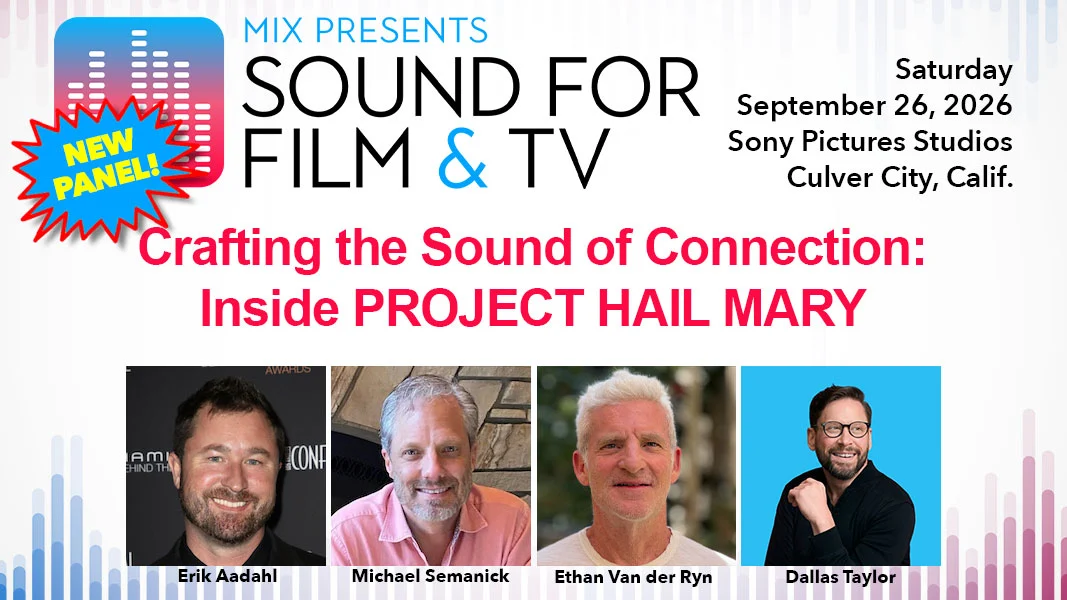
As the post-production industry looks to the future, the creators behind this masterpiece are set to take the stage at the prestigious Mix Presents Sound for Film & Television event. Taking place on Saturday, September 26, 2026, at the historic Sony Pictures Post Production Services in Culver City, the event promises to be a masterclass in the art of storytelling through sound.
The Main Event: Deconstructing Project Hail Mary
The centerpiece of this year’s programming is a session titled, "Crafting the Sound of Connection: Inside Project Hail Mary," presented by Amazon MGM Studios. For sound professionals and cinephiles alike, this panel represents a rare opportunity to peer behind the curtain of one of the most complex sound designs in recent memory.
The core challenge faced by the audio team was paradoxical: how to make a film about space—a vacuum where sound cannot travel—feel sonically alive and emotionally resonant. The panel will dive deep into the technical and creative hurdles of realizing alien intelligence, the meticulous crafting of deep-space isolation, and the development of a non-verbal language that transcends human linguistics.
The Visionary Panelists
The session will feature a powerhouse lineup of industry luminaries who were instrumental in bringing the film’s unique sonic identity to life:
- Erik Aadahl: A renowned Supervising Sound Editor and Sound Designer, Aadahl’s work has defined the soundscapes of some of the most successful franchises in cinema history.
- Michael Semanick: A multiple Academy Award-winning Re-Recording Mixer from Skywalker Sound, bringing a wealth of experience in balancing complex, multi-layered auditory textures.
- Ethan Van der Ryn: A visionary Supervising Sound Editor and Sound Designer from E² Sound, known for his experimental approaches to organic sound creation.
- Dallas Taylor: A master Sound Designer from Defacto Sound, recognized for his ability to weave narrative subtext into the fabric of sound effects.
A Chronology of Audio Innovation
The evolution of sound design in sci-fi has moved from the analog, mechanical noises of the 1970s to the hyper-realistic, AI-augmented soundscapes of the mid-2020s. Project Hail Mary serves as a benchmark for this trajectory.
Early 2025: Conceptualization
The audio team began by establishing a "sonic manifesto" for the film. They decided that the alien entity, rather than sounding purely synthesized, would be rooted in biological and physical resonances to ensure the audience felt a visceral, grounded connection.
Mid-2025: The Foley and Field Recording Phase
The team embarked on extensive field recordings, capturing industrial machinery, acoustic resonance in confined spaces, and organic textures that could be manipulated to simulate the alien environment. This period was crucial in defining the "personality" of the spacecraft and the surrounding void.
Late 2025: Mixing and Integration
Working within the state-of-the-art facilities at Sony Pictures, the team began the complex process of re-recording mixing. This involved constant collaboration with the director to ensure that the sound design supported the emotional arc of the characters rather than overwhelming the dialogue.
September 2026: The Public Unveiling
The upcoming Mix event serves as the formal post-mortem of this project, allowing the team to reflect on the workflows that enabled them to meet the rigorous demands of a global tentpole release.
Supporting Data: The Importance of Immersive Audio
The industry’s pivot toward immersive audio formats, such as Dolby Atmos and spatial audio, has drastically changed the way sound editors approach their craft. Data from the 2026 fiscal year indicates that films prioritizing complex, 360-degree sound design report higher audience engagement scores in exit surveys.
- Spatial Awareness: Project Hail Mary utilized a custom-designed spatial sound array to simulate the "pressure" of outer space, a technique that requires significantly more processing power and time than traditional stereo or 5.1 mixes.
- Workflow Efficiency: The production utilized remote collaboration software that allowed the team to work across different time zones—a necessity in an era where top-tier talent is often geographically dispersed.
- The Rise of Hybrid Audio: Industry trends show a 40% increase in the use of "hybrid sound," where organic, real-world sounds are blended with procedural, algorithmically generated audio to create effects that feel both familiar and otherworldly.
Official Responses and Industry Impact
"The work done on Project Hail Mary is a masterclass in restraint," says a representative from the Mix organizing committee. "While many films rely on volume to create impact, this team relied on texture, frequency management, and silence. It is exactly the kind of innovation we want to highlight at our Culver City event."
The industry impact of this specific production has been felt across the board. Many junior sound editors have pointed to the film’s handling of the "alien language" as a new standard for non-verbal storytelling. By avoiding clichéd sci-fi tropes, the team forced the audience to listen more intently, creating a level of immersion that has become the gold standard for high-concept science fiction.
The Future of Audio Post-Production: Implications
The Mix Presents Sound for Film & Television event is not merely a retrospective; it is a forward-looking conference. As the industry grapples with the integration of generative AI and automated mixing tools, the panel on Project Hail Mary will address a critical question: Can technology replace the human ear?
The consensus among the panelists, based on their recent interviews, is that while AI can assist in repetitive tasks—such as noise reduction or initial asset categorization—the "soul" of the sound design remains a deeply human endeavor. The nuance required to convey empathy through a sound effect is, at least for now, beyond the reach of algorithmic generation.
Why You Should Attend
The event at Sony Pictures Studios offers attendees the following:
- Networking Opportunities: Connect with the industry’s leading editors, mixers, and technicians.
- Technological Showcases: Explore the latest software and hardware advancements that are currently defining the post-production workflow.
- Educational Depth: Learn the specific technical parameters used to create the film’s most challenging sequences, from mixing alien vocalizations to rendering the ambient noise of a spacecraft in vacuum.
As the industry continues to evolve in response to changing consumption habits—with more viewers watching on high-end home systems rather than traditional cinemas—the lessons learned from Project Hail Mary are more relevant than ever. The ability to create a cinematic soundscape that translates across platforms without losing its emotional impact is the ultimate goal of the modern sound professional.
Conclusion: Securing Your Spot
The Mix Presents Sound for Film & Television event is widely considered the cornerstone of the California post-production community. Given the massive success of Project Hail Mary and the caliber of the speakers involved, organizers anticipate a record-breaking attendance.
For those looking to gain a competitive edge, learn from the best in the business, and witness the future of audio storytelling, registration is now open. Don’t miss your chance to be part of the conversation that will define the next decade of sound for the silver screen.
Register now at the official Mix Sound for Film website and secure your place at the forefront of the audio revolution.
Join us on September 26 at Sony Pictures Studios—where the sounds of the future are crafted today.