In the historic heart of Venice, where centuries of artistic tradition collide with the future, a groundbreaking multidisciplinary exhibition is challenging the boundaries of sensory perception. Matriclysm: An Archaeology of Connections Lost, the most ambitious visual arts project to date from singer-songwriter and visual artist Jewel, has transformed the Salone Verde into a laboratory of "neuro-ceutical" art. By fusing real-time oceanic data and celestial electromagnetic signals with high-fidelity soundscapes, the exhibition—presented in association with the Crystal Bridges Museum of American Art—offers an immersive experience that is as scientifically rigorous as it is emotionally profound.
At the core of this installation lies a sophisticated audio architecture powered by Meyer Sound. Through the precise deployment of MM-4XP loudspeakers and MM-10XP subwoofers, managed by a Galileo GALAXY Network Platform, the exhibition creates a living, breathing soundscape that mirrors the constant flux of the natural world.
The Architectural Foundation: A Symphony of Data
Matriclysm is a sprawling presentation encompassing sculpture, painting, tapestry, and installation, but it is the auditory component that provides the exhibition’s nervous system. The show, which opened on May 7 and is scheduled to run through November 22, 2026, coincides with the Venice Biennale. With an estimated 800,000 visitors expected over its duration, the exhibition serves as a significant cultural bridge between American contemporary art and the international stage.
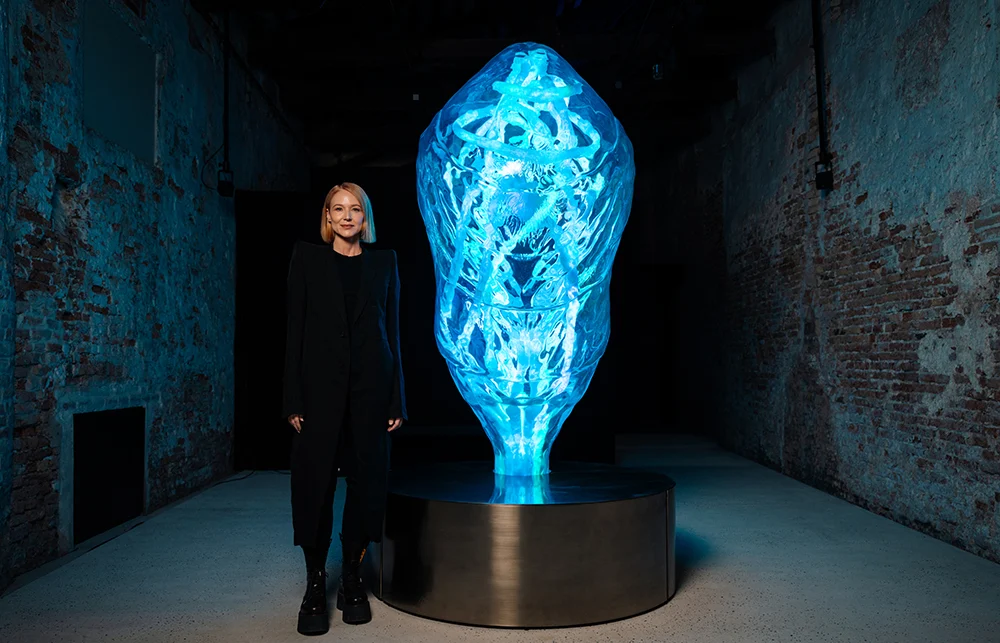
The exhibition is anchored by three major sculptural pieces, with Heart of the Ocean serving as the primary centerpiece. This eight-foot resin and steel sculpture—a mesmerizing structure embedded with 60,000 LEDs—acts as a three-dimensional abstraction of a chrysalis or a modern reimagining of Botticelli’s Birth of Venus. However, the sculpture is not merely a visual object; it is a data-driven instrument.
Chronology of Creation: From NASA Feeds to Artistic Vision
The realization of the Heart of the Ocean soundscape was a multi-year collaborative effort. Jewel worked in tandem with NASA’s Chelle Gentemann and UC Berkeley’s Greg Niemeyer to curate a vast library of open-source data. This data tracks the physical conditions of the Atlantic Ocean, including salinity, seismicity, wildlife patterns, precipitation, and wave height.
The composition follows a precise 12-minute cycle that mimics a descent into the deep ocean. The journey begins at the wind-driven surface, informed by real-time NOAA feeds, before transitioning through the wind-mix and midnight layers. As the audio descends into the "abyss," the sonic floor is shaped by seismic data. This is not a pre-recorded loop; it is a living mix that shifts based on the incoming data streams.
Producer Lester Mendez built the initial sound palette, which was then passed to Los Angeles-based film score mixer Warren Brown. Together with Jewel, Brown sculpted the final experience, layering these sounds into an immersive, ever-changing environment. By the time the composition returns to the surface, the visitor has experienced a sonic representation of the ocean’s depth and power, a feat of engineering that requires constant, real-time adaptation.
Technical Precision: The Meyer Sound Integration
The challenge for Warren Brown was to create a "big theatrical feel" within the intimate confines of a gallery space. The solution was a dual quadraphonic system that eschews the traditional approach of having sound emanate from the sculpture itself.
"The speakers from Meyer Sound are the perfect finishing touch to bring my artistic vision to life," says Jewel. "By superimposing a rhythmic layer of sound and music that, quite literally, translates electromagnetic cosmic signals and real-time oceanic data to mind-altering brainwaves, I hope the show might help remind us how it feels to be in harmony."
The "Neuro-Ceutical" Technique
Jewel’s term "neuro-ceutical" refers to the deliberate design of the soundtrack to influence human brainwave states. The audio is engineered to be non-literal; for example, data tracking dolphin movement is not represented by dolphin calls, but by abstract, synthetic tones designed to evoke the sensation of that movement without relying on cliché.
The technical setup includes:
- Eight MM-4XP Point Source Loudspeakers: Positioned in a dual quadraphonic array, with four at ear height and four elevated to create a dome effect.
- Four MM-10XP Subwoofers: Providing the foundational depth required for the seismic data layers.
- Galileo GALAXY Network Platform: The engine that manages the signal processing, ensuring the audio remains crisp, directional, and responsive to the incoming data streams.
"In the Meyer Sound world, I always think of a stadium or a big concert; this is a much smaller scale, much more intimate," notes Brown. "Here, you get a really good sense of direction without a lot of speakers. They’re really small and really powerful."
Beyond the Ocean: The Pleiades and Seven Sisters
While Heart of the Ocean dominates the narrative, the Seven Sisters installation offers a complementary celestial experience. This installation features seven hand-blown glass orbs, crafted by Jewel at the Toledo Museum of Art, representing the Pleiades constellation.
Accompanied by an overhead array of MM-4XPD cardioid point sources, the installation converts electromagnetic data from the stars into sound. Much like the ocean installation, the sound in the Seven Sisters gallery is a direct translation of cosmic information, illustrating the versatility of the Meyer Sound systems in translating abstract, high-dimensional data into tangible human experience.
Official Perspectives and Artistic Implications
The implications of Matriclysm extend beyond simple aesthetics. By making the invisible forces of the ocean and the cosmos audible, Jewel is attempting to reconnect the audience with the "lost connections" of the natural world.
"Because the ocean’s always moving and always changing, the mix is always moving and always changing—it’s not static," says Warren Brown. This lack of stasis is key to the exhibition’s success. Visitors are not merely observing a sculpture; they are standing inside a living data-stream.
From an curatorial perspective, the exhibition demonstrates that the future of gallery installations lies in the integration of high-fidelity audio engineering. By utilizing professional-grade concert equipment in a fine art context, the creators of Matriclysm have achieved a level of clarity and immersion that standard gallery sound systems simply cannot replicate.
Conclusion: A New Frontier for Art and Technology
As Matriclysm continues its run in Venice, it stands as a testament to the power of interdisciplinary collaboration. It is a rare instance where the rigid, often cold nature of big data is softened by the warmth of artistic intent, supported by the invisible, yet essential, presence of advanced acoustic technology.
By bridging the gap between NOAA data, NASA satellite feeds, and the emotional resonance of sound design, Jewel has created more than an art show; she has created a meditative space that forces the viewer to acknowledge their place in a wider, interconnected system. With the aid of Meyer Sound’s precision-engineered hardware, Matriclysm succeeds in turning the ephemeral nature of data into an enduring, visceral experience that lingers long after the visitor leaves the Salone Verde.
Whether it is the rhythmic thrum of the deep ocean or the ethereal vibrations of the Pleiades, the exhibition proves that when art is allowed to breathe through the medium of sound, it can effectively alter the human state—reminding us of our place within the community of the world.