NEW YORK, NY — In a move that signals a significant shift in professional audio production, Sennheiser has officially commenced shipping the Spectera SKM handheld transmitter. This launch is more than just a new product arrival; it represents the final piece of the puzzle for the company’s ambitious Spectera Wireless Multichannel Audio System (WMAS). By integrating the SKM into the broader Spectera ecosystem, Sennheiser is effectively challenging the long-standing limitations of narrowband wireless infrastructure, offering a glimpse into a future where RF planning is streamlined, reliable, and profoundly flexible.
Main Facts: The Power of the Spectera SKM
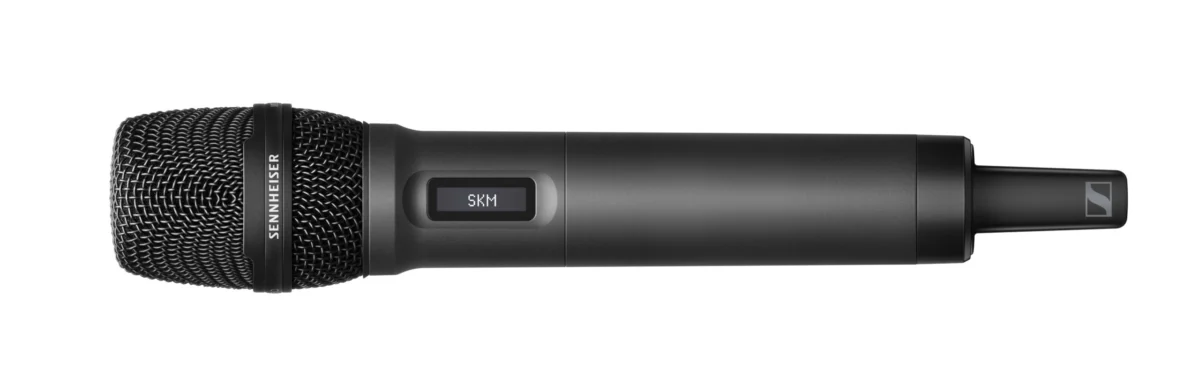
The Spectera SKM is engineered to meet the grueling demands of high-level broadcast, live performance, and theater production. At its core, the device is designed to work in seamless harmony with the Spectera Base Station, utilizing bidirectional communication that transforms the relationship between the transmitter and the receiver.
Perhaps the most critical specification for live sound engineers is the system’s ultra-low latency, clocked at a mere 1.0 milliseconds. This performance metric ensures that performers and speakers experience zero perceptible delay, a critical factor in complex audio environments. Beyond speed, the SKM offers robust, industrial-grade construction, featuring a durable metal chassis and an intuitive OLED display that provides essential, real-time data at a glance.
Security is paramount in modern professional environments, and the SKM addresses this with built-in AES-256 encryption. Whether used for a high-profile corporate keynote or a live televised awards show, the system ensures that audio signals remain secure and interference-free.
Chronology: From Concept to Commercial Reality
The path to the Spectera SKM release began with Sennheiser’s realization that the traditional "one transmitter, one receiver" narrowband model had reached its technological ceiling. As spectrum becomes increasingly crowded due to the proliferation of mobile data and other wireless services, sound engineers have faced a mounting crisis in frequency coordination.
- Early Development: Sennheiser’s research and development teams focused on "Wireless Multichannel Audio Systems" (WMAS) technology, shifting away from the rigid constraints of narrowband frequency allocation.
- Initial Spectera Rollout: The introduction of the Spectera Base Station and the SEK bodypack established the foundation of the ecosystem. These early components proved the viability of the wideband approach, allowing for multiple audio channels to exist within a single wideband carrier.
- Beta Testing and Industry Feedback: Throughout the development cycle, the system underwent rigorous testing in real-world scenarios, from bustling theater districts to complex studio environments, ensuring that the integration of the handheld unit would meet the same standards as the bodypack.
- The Final Piece (September 2026): With the official shipping announcement on September 25, 2026, the Spectera ecosystem is now complete. The SKM serves as the definitive handheld component, allowing engineers to transition fully into the wideband workflow.
Supporting Data: Technical Specifications and Integration
The technical prowess of the SKM is rooted in its versatility and its ability to communicate constantly with the Base Station.
Continuous Monitoring and Remote Management
Unlike legacy wireless systems, the SKM employs an integrated control channel that is always active. This provides the engineer with a wealth of telemetry, including:
- Battery Status: Precise monitoring of the BA 70/BA 70 2.2 rechargeable batteries, ensuring no unexpected power failures during critical segments.
- RF Performance: Real-time analysis of Received Signal Strength (RSSI) and RF interference levels.
- Audio Integrity: Instant feedback on audio levels and link quality.
The ability to perform remote configuration—adjusting microphone gain or changing filtering parameters from the sound booth—saves valuable time during soundchecks and rehearsals. Furthermore, the capacity for over-the-air firmware updates ensures that the device remains current with the latest software enhancements without needing to be physically tethered to a computer.
Compatibility and Range
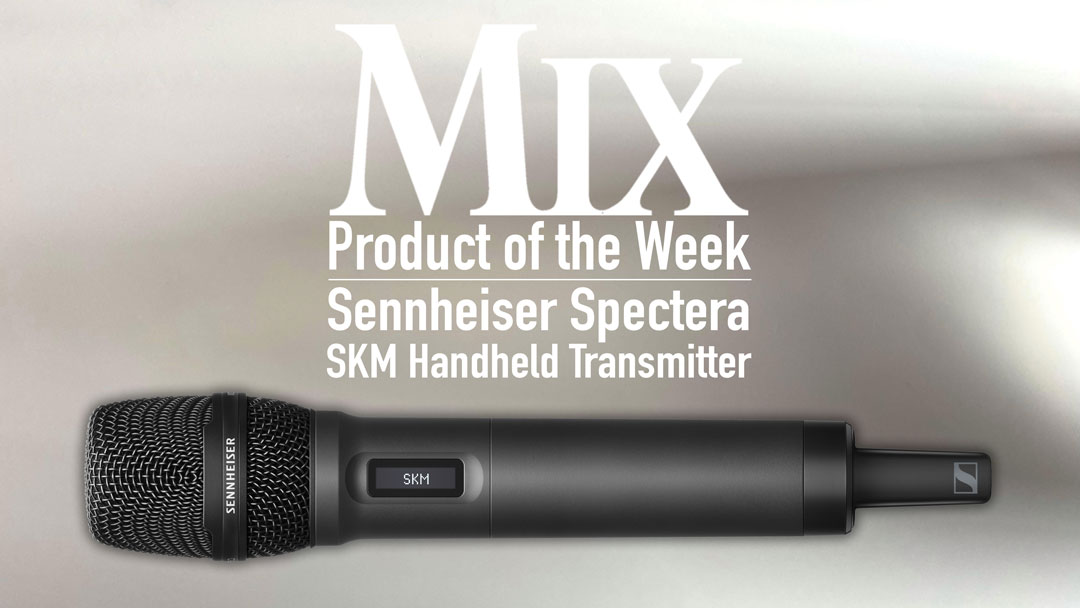
Sennheiser has ensured that the SKM is compatible with the industry’s most respected microphone capsules. Users can utilize the Sennheiser MMK 965-1, MMD 945-1, and MME 865-1, alongside the high-fidelity Neumann KK 104 A and KK 105 A capsules. This compatibility makes the Spectera system an easy transition for engineers who are already committed to specific sonic profiles.
The system is available in two major frequency ranges: the UHF spectrum (470–608 MHz and 630–698 MHz) and the 1.4 GHz band (1350–1400 MHz and 1435–1525 MHz). With a street price of approximately $2,000, the unit is positioned as a professional-grade investment for production houses looking to future-proof their inventory.
Official Perspectives: Redefining RF Planning
The shift to WMAS is, according to Sennheiser, the most significant change in wireless audio since the invention of the wireless microphone. In traditional narrowband systems, every microphone requires its own discrete frequency, which must be carefully coordinated to avoid intermodulation distortion. This process is time-consuming and prone to failure in congested RF environments.
By using the Spectera system, an engineer can treat the SKM as a module within the wider wideband system. This eliminates the need for individual frequency coordination for every single channel. The result is a much more stable environment where dropouts are minimized, and the physical setup of the wireless rack is simplified. "We are moving from a world of ‘managing frequencies’ to a world of ‘managing data,’" noted one industry insider close to the product’s development.
Implications for the Future of Sound
The arrival of the Spectera SKM has profound implications for the professional audio industry.
1. Simplification of Complex Shows
For major productions like the Super Bowl halftime show or multi-stage festivals, the reduction in required frequency coordination is a game-changer. Fewer antennas, less cabling, and a smaller rack footprint mean faster setup times and more reliable performance.
2. The Shift to Digital Ecosystems
The integration of the SKM signifies a broader industry move toward "Software-Defined Wireless." As audio gear becomes more like IT hardware, the ability to update firmware, manage settings remotely, and monitor diagnostics in real-time will become the baseline expectation for all professional equipment.
3. Economic Impact
While the initial cost of migrating to a Spectera system is significant, the long-term savings are clear. Reduced labor hours in frequency management, decreased reliance on complex distribution amplifiers, and the durability of the metal-cased SKM units represent a lower total cost of ownership over the lifecycle of the product.
4. Setting a New Standard
With the SKM now in the wild, the pressure is on competitors to match the latency and the bidirectional telemetry offered by the Spectera system. Sennheiser has set a high bar, and it is likely that we will see a surge in "wideband" offerings across the pro audio landscape in the coming years.
Conclusion
The launch of the Sennheiser Spectera SKM handheld transmitter is a landmark moment for the company and the audio industry at large. By completing the Spectera ecosystem, Sennheiser has provided a comprehensive, reliable, and technologically advanced solution to the challenges of modern wireless audio.
As we move forward into 2026 and beyond, the adoption of WMAS technology will likely define the next generation of live production. For the sound engineer, the benefit is simple: less time spent troubleshooting RF interference and more time focusing on what truly matters—the quality of the sound. The Spectera SKM is not just a microphone transmitter; it is a vital component in a smarter, faster, and more robust wireless future.