
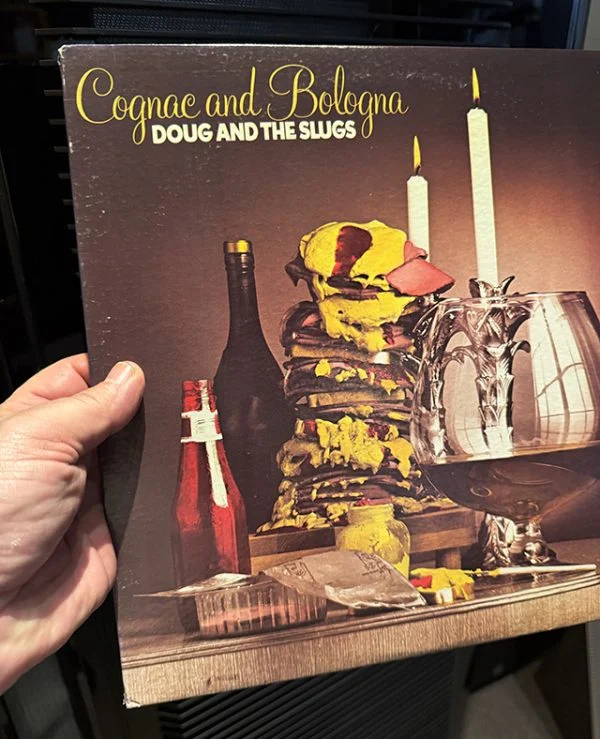
March 18, 2026 — When music enthusiasts discuss the pantheon of iconic Canadian rock acts, a familiar list usually rolls off the tongue: the progressive grandeur of Rush, the soaring arena-rock hooks of Triumph, the gritty anthems of April Wine, the whimsical eccentricity of Max Webster, or perhaps even the spoken-word eccentricities of William Shatner. Yet, beyond these towering commercial exports lies a vibrant, idiosyncratic undercurrent of Canadian music history that often waits to be stumbled upon by chance.
For many record collectors, finding this hidden treasure happens in the dusty bins of independent suburban record shops, far from the band’s native Vancouver roots. Such was the case for one audiophile who discovered Doug & The Slugs years ago in a Milwaukee record store—a purchase driven entirely by the irresistible allure of a wacky album cover and a delightfully strange band name. Decades later, as physical media makes a resilient cultural comeback and digital high-resolution streaming platforms open archival vaults, the legacy of Doug & The Slugs deserves a fresh evaluation. Equal parts quirky new wave, infectious power-pop, and sophisticated pop-rock craftsmanship, their catalog remains a sparkling gem of late-20th-century Canadian music.
Main Facts: The Enduring Appeal of Doug & The Slugs
At their core, Doug & The Slugs were an anomaly in the Canadian music landscape of the late 1970s and 1980s. Fronted by the charismatic, Fedora-wearing Doug Bennett, the band combined sharp lyrical wit, vaudevillian stage presence, and a slick, highly polished musical delivery that bridged the gap between punk’s raw energy and the sophisticated sheen of new wave and power-pop.
Despite never achieving the massive, stadium-filling international status of contemporaries like Rush, Doug & The Slugs carved out a fiercely loyal following. They achieved significant Canadian radio success and earned a reputation as one of the hardest-working, most entertaining live acts of their era.
Today, discovering their music requires little effort beyond a smartphone or a quick trip to the local crate-digging spot. Thanks to modern high-resolution streaming services like Qobuz and Tidal, listeners can dive deep into the Slugs’ discography with pristine clarity. Alternatively, physical media enthusiasts can easily unearth clean vinyl copies on marketplaces like Discogs or within used record store bargain bins for the remarkably modest price of about five dollars. It is an affordable entry point to a criminally underappreciated musical treasure trove.
Chronology: The Rise, Reign, and Legacy of a Cult Band
To understand how Doug & The Slugs evolved from a local Vancouver novelty into a cross-Canada staple, it is necessary to retrace the timeline of their remarkable journey.
The Formative Years (1977–1979)
Doug & The Slugs were officially formed in Vancouver, British Columbia, in 1977 by singer-songwriter Doug Bennett and a rotating cast of talented musicians who shared his vision of blending humorous, slice-of-life lyricism with irresistible pop grooves. Vancouver’s music scene at the time was a fertile breeding ground for punk and new wave, but Doug & The Slugs chose to stand apart by injecting theatricality, swing rhythms, and polished pop structures into their sound. They weren’t singing about bleak urban decay or teenage angst with a scowl; instead, they offered upbeat, slightly cynical, yet joyful observations on modern life, relationships, and societal quirks.
Commercial Breakthrough and Peak Era (1980–1984)
The band hit their stride in the early 1980s with the release of their debut studio album, Cognac and Baloney (1980). Propelled by tracks that showcased stellar musicianship and clever songwriting, the album established the band’s signature aesthetic. Unlike many independent releases of the era, the recording quality was remarkably crisp, showcasing tight horn arrangements, driving keyboards, and intricate guitar work.
Throughout the early ’80s, the band capitalized on this momentum with subsequent releases and relentless touring schedules. They secured heavy rotation on Canadian radio stations and MuchMusic, delivering memorable singles such as "Too Bad," "Making It Work," and "Day by Day." Their music videos captured Bennett’s endearing, eccentric persona, solidifying their status as pop culture fixtures north of the border.
Later Years and the Loss of Doug Bennett (1985–2004)
As the 1980s progressed, changing musical tastes and industry pressures slowed the band’s commercial momentum, though they continued to record, tour, and entertain devoted audiences. Tragedy struck the band and the Canadian music community when founder and frontman Doug Bennett passed away in October 2004 at the age of 52 following a battle with cancer. Bennett’s death seemingly signaled the definitive end of the band’s active chapter, leaving behind a rich recorded legacy that fans continued to cherish in secret.
The Modern Revival and Archival Reassessment (2005–Present)
In the years following Bennett’s passing, surviving members of Doug & The Slugs occasionally reunited to celebrate the music and honor their late frontman’s memory. Concurrently, a new generation of music lovers, vinyl collectors, and digital audiophiles began rediscovering the catalog. The inclusion of their albums on modern lossless streaming services like Qobuz and Tidal has introduced their meticulously produced tracks to global ears, prompting a critical reassessment of their technical and artistic merits.
Supporting Data: Production Quality, Availability, and Market Value
A common misconception among modern listeners is that cult bands from the late 1970s and 1980s indie scenes suffer from lo-fi production values or amateurish instrumentation. Doug & The Slugs shatter this expectation.
Audio Engineering and Craftsmanship
Musically, the band was exceptionally tight. Their arrangements often featured complex layers of keyboards, crisp percussion, dynamic basslines, and punchy horn sections that required top-tier studio engineering to capture effectively. Listening to albums like Cognac and Baloney on a high-end audio setup reveals a surprising depth of field, excellent channel separation, and a warm, balanced mix that holds its own against major-label releases of the same period. The production is clean, deliberate, and undeniably well-played, proving that the band took their craft seriously even while maintaining a tongue-in-cheek public persona.
Accessibility and the Secondary Market
For modern consumers, engaging with the Doug & The Slugs catalog is remarkably frictionless, spanning both digital and physical realms:
- High-Resolution Streaming: Audiophiles utilizing platforms such as Qobuz and Tidal can stream albums in lossless FLAC and high-resolution formats, allowing the intricate production details, sparkling high frequencies, and rich low-end to shine.
- Vinyl and Physical Media: For those who prefer tactile formats, the secondary market remains remarkably forgiving. Due to healthy pressing runs in Canada during the 1980s, clean vinyl copies of their records can regularly be sourced on platforms like Discogs or within local independent record shops for roughly $5. In an era where vintage vinyl prices have skyrocketed for classic rock staples, Doug & The Slugs remain an incredible bargain for crate-diggers and casual listeners alike.
Official Responses: Perspectives from Artists, Fans, and Critics
While major international music publications rarely featured cover stories on Doug & The Slugs outside of Canada, the critical consensus among Canadian music historians and industry insiders has always been overwhelmingly positive.
"Doug & The Slugs possessed a rare combination of accessible pop sensibilities and sharp, idiosyncratic humor. They didn’t fit neatly into the punk box, nor were they standard arena-rockers. They occupied a brilliant space entirely of their own creation, backed by musicianship that was deceptively sophisticated."
— Canadian Music Retrospective Journal
Fans who stumbled upon the band—whether through a childhood memory of a Canadian radio broadcast or by pulling a bizarre album cover from a bin in Milwaukee, Chicago, or Seattle—frequently report an immediate, unexpected connection. The universal charm of Bennett’s lyrics transcends geographic boundaries, turning accidental listeners into lifelong devotees.
Furthermore, surviving members of the band have repeatedly expressed gratitude for the ongoing digital renaissance of their catalog, noting that platforms like Tidal and Qobuz have allowed their music to travel far beyond the borders of Canada to reach ears that might never have encountered a physical vinyl copy.
Implications: What the Rediscovery of Doug & The Slugs Means for Music Culture
The steady re-evaluation and digital revival of cult acts like Doug & The Slugs carry several broader implications for contemporary music consumption, archiving, and collecting culture.
1. The Democratization of Music Discovery
In the pre-internet era, regional acts often remained trapped within geographic boundaries unless secured by a major international distribution deal. Today, streaming algorithms, digital archives, and global marketplaces like Discogs break down these historical borders. A record bought on a whim in Milwaukee can instantly find new life, appreciation, and analytical discussion online, proving that great art always finds its audience eventually.
2. The Value of Mid-Tier Vinyl Preservation
As major-label vinyl reissues become increasingly expensive—often retailing upwards of $30 to $40 per LP—the thriving market for $5 vintage records offers a sustainable alternative for music enthusiasts. Acts like Doug & The Slugs remind collectors that exceptional musicianship, high production standards, and genuine artistic passion are not exclusive to superstar platinum-selling acts. The bargain bins of independent record stores remain treasure troves for adventurous listeners willing to judge an album by its wacky cover.
3. Preserving Canada’s Musical Mosaic
Canada’s contribution to global popular music extends far beyond the stadium-filling giants. By keeping the recorded legacies of eccentric, regional innovators like Doug & The Slugs alive on streaming platforms and physical turntables, music lovers ensure that the full spectrum of cultural history is preserved. These artists form the vital middle tier of the musical ecosystem—the quirky, brilliant connectors who made the local scenes vibrant and unpredictable.
Ultimately, whether you are streaming Cognac and Baloney in pristine lossless audio on Qobuz or pulling a well-loved copy from a dollar bin in your local record shop, Doug & The Slugs stand as a testament to the joy of unexpected musical discovery. They remind us that sometimes, the best records in your collection are the ones you took a chance on simply because the art was wacky, the band name was cool, and the music, beautifully, spoke for itself.