By [Author Name]
Published: September 2026
Main Facts: Capturing Lightning in a Bottle
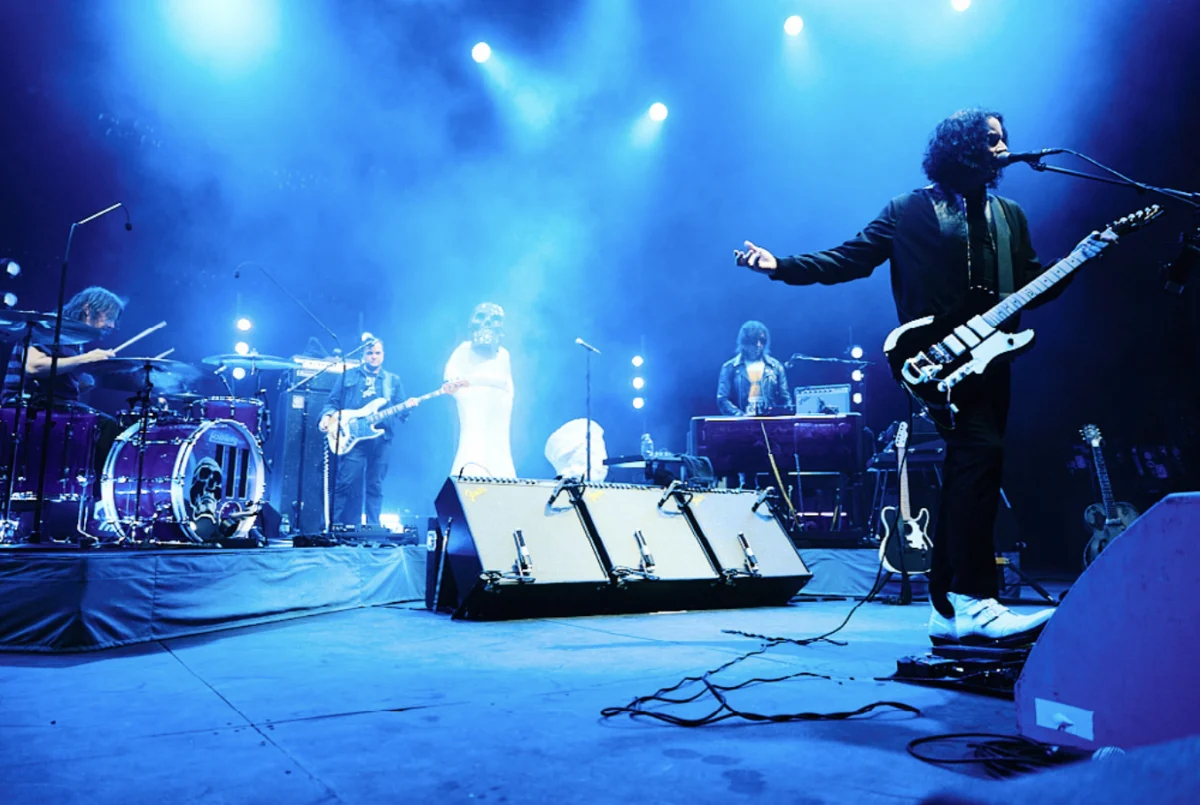
The life of a Front of House (FOH) audio engineer is rarely a tranquil endeavor, but mixing for rock icon Jack White is an exercise in high-stakes audio balancing. White—whose legendary career spans seminal work with The White Stripes, The Raconteurs, The Dead Weather, and an illustrious seven-album solo catalog highlighted by his 2026 release, Frozen Charlotte—has spent the better part of the year traversing the globe. The grueling 2026 international itinerary has seen the artist bounce wildly between massive festival stages like Coachella, intimate underplay gigs in cramped underground clubs, and prestigious mid-to-large-scale venues such as the Brooklyn Paramount and Toronto’s RBC Amphitheatre.
At the helm of this auditory tempest is Hanford Pittman, White’s FOH engineer since 2024. Stepping into a tour defined by blistering stage volumes, a revolving-door setlist, and an aggressive rejection of automated backing tracks or timecodes, Pittman has mastered the art of reacting in real-time. Operating a robust touring audio package supplied by Clair Global and prepped by Clair Nashville and Britrow, Pittman treats the live mixing console not as an instrument of sterile clinical correction, but as a dynamic paintbrush. For Pittman, the directive is simple yet terrifying: capture the raw, unadulterated energy of the moment, protect the transients, and translate a wall of authentic rock-and-roll chaos into a deeply engaging sonic experience for thousands of fans.
Chronology: From the Desert to the Tour Bus
Pittman’s path to the pinnacle of live sound engineering was anything but linear. Growing up amid the shifting landscapes of the California desert, his initial ambitions pointed toward a career as a working musician. Following his high school graduation, he relocated to Los Angeles to immerse himself in the local scene. However, as the milestone of his 30th birthday approached, the financial realities of an artist’s life caught up with him, necessitating a pivot toward steady income.
The School of Hard Knocks
Pittman took a job as a security guard at the historic Troubadour in West Hollywood. Rather than simply punching a clock, he used his off-days to shadow the venue’s veteran audio engineers, absorbing everything he could about signal flow, gain staging, and room acoustics. His dedication eventually paid off when the venue offered him his first official sound shift.
"I grew up in the combat audio school of hard knocks, dealing with loud bands on small stages," Pittman recalls of his formative years in the Los Angeles clubs of Silver Lake and Echo Park during a vibrant era for indie music. "I was lucky enough to have so many opportunities to do sound, constantly learning and failing."
Soon, Pittman transitioned to life on the road, taking on multi-hat roles—initially serving as Tour Manager and FOH engineer, and later as Production Manager and FOH—for indie rock outfit Warpaint. Unafraid to tap the brains of industry veterans, he seized every opportunity during support slots.
"They allowed me to grow as a mixer as their career was also taking off," says Pittman. "They did a lot of rad support tours where I’d ask the headliner’s engineers a million questions. I was pretty shameless about it. A lot of my learning was done by messing up and trying to find hacks around things, asking people, and then just growing and learning while I was on the tour bus."
Building a Reputation in New York and Nashville
As his reputation grew, Pittman expanded his resume, mixing FOH for American multi-instrumentalist BORNS and Swedish pop sensation Tove Lo. Seeking new horizons, he relocated from the West Coast to New York City. A defining moment arrived when he toured with electronic duo Purity Ring in support of Katy Perry.
During that three-month stretch, Pittman crossed paths with acclaimed FOH mixer Toby Francis and systems engineer Paul Jump. "I’d bug Toby and Paul every day. I watched their show every night for the three months we were on the tour. I asked all the questions. They were probably very happy to get rid of me, actually," Pittman jokes. "I learned a lot of stuff from them."

When the COVID-19 pandemic reshaped the live entertainment industry, Pittman relocated to Nashville. Through Francis, he connected with Robert Bull, an account executive at Clair Nashville. Bull recommended Pittman to country star Maren Morris’s management team, anchoring him as her FOH engineer from 2021 through 2024.
The turning point arrived in 2024 when Jack White’s camp reached out for temporary fill-in dates while regular FOH engineer Brad Madix was unavailable. When subsequent scheduling conflicts permanently sidelined Madix for the 2025 and 2026 touring cycles, Pittman stepped up to take the reins full-time.
Supporting Data: Inside the FOH Rig and Workflow
Transitioning from the pop and country sectors—where timecoded automation, playback tracks, and rigid snapshot-based mixing are standard operating procedure—required a massive mental and technical readjustment for Pittman.
"To get ready for those first shows, I bought every album of every band Jack was ever in, and I just started listening to them 24/7 to try and get a handle on everything," Pittman explains. "There is no setlist; you never really know what he’s going to play once he hits the stage. The way he weaves the set together every night is mind-blowing. I’m just mixing in the moment, following his lead, and trying to replicate the art and the chaos that he wants to present for the day."
The Console and Outboard Infrastructure
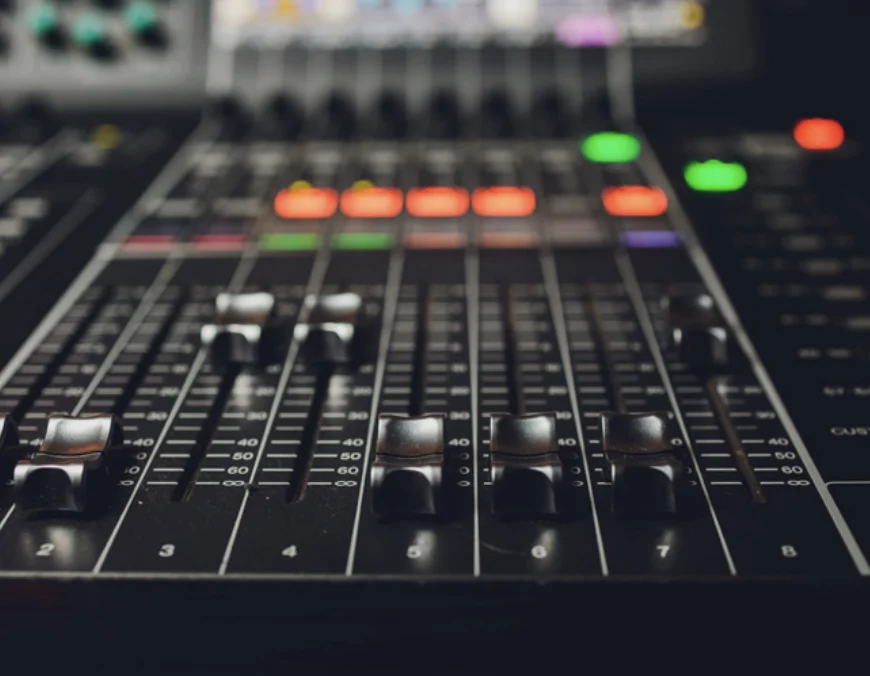
For the 2026 tour, Pittman’s control surface of choice is a Yamaha Rivage PM3, supported by a Yamaha DSP-RX-EX engine, a stage-side Yamaha RPio622, and RPio222 expansion racks used to manage his extensive outboard gear complement.
"The summing on that desk is incredible," Pittman notes. Initially forced to adapt to the PM3’s historical limitation regarding group-to-group mixing—routing groups strictly to the left/right master bus—Pittman found he preferred the directness of the workflow. Because many of the early shows involved cramped underplay venues with minimal real estate at FOH, Pittman initially mixed entirely "in the box," utilizing Yamaha’s onboard Neve, Eventide, and Bricasti plug-ins.
A standout software tool in his arsenal is Yamaha’s DaNSe dynamic noise suppressor. Deployed on the drum kit to manage powerhouse drummer Patrick Keeler—who routinely punishes every square inch of his cymbals—DaNSe intelligently attenuates bleed without introducing the unnatural artifacts typical of traditional, hard-trigger noise gates.
Outboard Processing for Arena-Sized Character
As the tour scaled up to larger venues in 2026, Pittman integrated a curated selection of analog outboard gear to infuse individual stems with distinct sonic character:
- Drums: An API 2500 bus compressor feeding into a Maag Audio EQ4. The API delivers a punchy, classic rock drum footprint, while the EQ4 smooths out high-frequency harshness from the cymbals.
- Bass: A dual-processor chain utilizing a Neve OptoFET. The FET handles the upper-frequency transient bite, while the Opto circuit smooths out the low end for a rounder tone.
- Keyboards: An Allen Smart C2 compressor paired with a Maag Audio EQ4. Because keys and guitars frequently occupy overlapping frequency bands, Pittman uses the Maag’s side-chain EQ capabilities to carve out space, widening the keyboard stereo image to ensure absolute clarity.
- Guitars: A Tube-Tech CL 1B optical compressor paired with a Bettermaker passive equalizer.
- Vocals: Routed through a Neve Diode compressor into an elysia Xfilter for subtle sweetening, complemented by vintage analog time-based effects including a 1970s Furman Spring Reverb and a Maestro Echoplex EP-3, alongside onboard Bricasti and Eventide algorithms.
- Master Bus: An SSL Bus+ catching roughly 3 dB of transient peaks, followed by a Chandler Limited EQ for low-end warmth and high-end sparkle, terminating into a Bettermaker Limiter 2.0 to catch stray peaks for the final presentation.
Official Responses: Navigating Stage Volume and the "Yes" Mentality
Mixing a rock show of this magnitude means coming to terms with immense acoustic energy generated directly on stage. The physical setup includes twelve d&b audiotechnik M2 stage monitors, two V-SUBs paired with V7s for side fills, and a backline bursting with roaring guitar amplifiers and an unbridled acoustic drum kit. Remarkably, the band refuses to alter their input list or stage footprint when shifting down from large amphitheaters to tiny club underplays.
Pittman views his position not as an opportunity to police the musicians, but as an exercise in unconditional service:

"I have a very loud band, and that’s the gig. It is not my place to ask them to turn down, and I would never. I was told once that in this position, we’re in the service industry: everything’s a yes and you just have to figure it out."
This philosophy defines his everyday mixing strategy. Rather than fighting the physical reality of a roaring stage, Pittman leans into it, ensuring that the room breathes organically with the performers:
"My approach has always been, how can I help you create your art? So you learn to work around it, how to mix with a loud stage. With all my players, if they’re laying into their instrument, I want the room to feel that. If they’re backing off, I want it to be able to breathe. Everything they’re doing is on purpose and in the moment."
Implications: The Core Philosophy of Live Sound
For Pittman, the daily compromises inherent to live mixing—balancing room reflections, managing unpredictable stage bleed, and riding faders without a safety net—are secondary to the emotional contract between artist and audience.
In smaller, highly reverberant spaces, restraint is often the ultimate tool. "Sometimes my mix being quieter is the best move because the reflections will make it loud. Other times, I just need to bully it," he admits. Yet, his North Star remains remarkably consistent: "Every day is a compromise in live sound, but I always ask myself, can the audience hear Jack’s vocal? Can they hear him soloing? If the audience can feel what’s happening on stage, then you know you’re in the right place as a mixer."
As a lifelong music enthusiast, Pittman regards his role not merely as technical execution, but as a gateway to emotional release for fans seeking refuge from the modern world:
"Music isn’t just about what you hear, but also the emotion behind it. I want the fans to have a great time and forget about how messed up the world is for the duration of the set. That’s why I’m in this industry; I’m still a fan, I still go to concerts, and I love that 90-minute escape. It’s a great privilege to be able to play a small part of that for other people."
Jack White’s international tour continues across North America and Asia throughout the fall of 2026. Fans and audio professionals can follow Hanford Pittman’s road journey via Instagram at @manvmaschine.