Main Facts
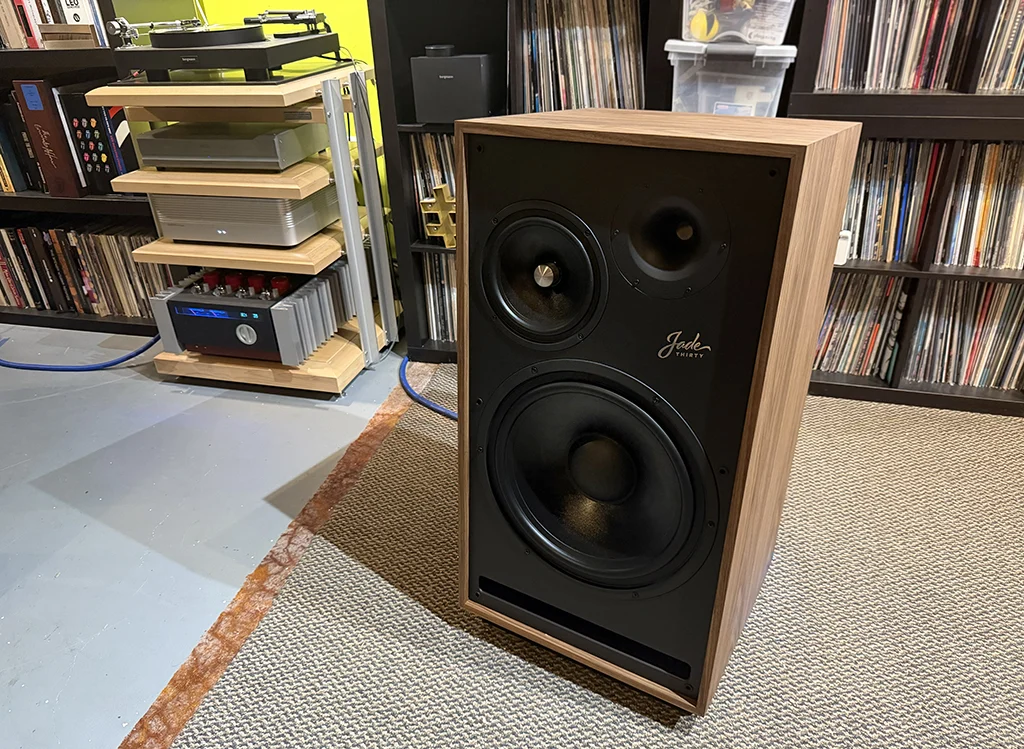
In the upper echelons of high-end audio, gear is frequently analyzed through a microscope of microscopic detail, ultra-low distortion metrics, and ruler-flat frequency responses. Yet, a persistent paradox plagues the hobby: the more analytical a system becomes, the harder it can be to simply sit back, crack open a beverage, and enjoy a sprawling playlist of poorly mastered classic rock, lo-fi indie, or compressed streaming tracks. Enter the Pylon Jade 30—a formidable three-way loudspeaker anchored by a massive 15-inch woofer that has quietly disrupted the category of "chill-out, non-audiophile" music delivery.
Priced at $9,995 per pair, the Jade 30s have claimed a coveted Product of the Year accolade, fundamentally challenging preconceived notions about what a large-format, high-sensitivity speaker can achieve. Historically, this sonic and aesthetic territory—dominated for decades by icons like the reimagined JBL L100—was defined by a trade-off: you gained dynamic slam and effortless output at the expense of absolute refinement, or vice versa. The Pylon Jade 30s, however, appear to eclipse their historical and contemporary peers by blending the visceral, chest-thumping energy of vintage studio monitors with the sonic sophistication, imaging, and tonal purity expected from modern high-end engineering.
At the core of the Jade 30’s design philosophy is an uncompromising commitment to proprietary engineering. Rather than relying on off-the-shelf catalog drivers, Pylon has developed its own custom-built driver complement housed within a meticulously crafted cabinet that includes built-in stands. Boasting an impressive 93dB/1-watt sensitivity rating, these speakers are engineered not only to sound effortless across a wide array of amplification partners—from robust hybrid integrateds to flea-watt Single-Ended Triode (SET) tube amps—but also to integrate seamlessly into real-world living spaces without demanding draconian room-treatment protocols or agonizing micro-placement.
Chronology: From Concept to Critical Acclaim
The journey of the Pylon Jade 30 to North American shores and critical prominence reflects a broader shift in the high-end audio landscape toward products that prioritize musical engagement over sterile precision.
- Design and In-House Development: Pylon, an established European manufacturer known for vertically integrating its manufacturing processes—from cabinet construction to proprietary driver design—set out to build a modern loudspeaker that captured the soul of classic monitor aesthetics while leveraging contemporary acoustic modeling. The goal was simple yet immensely difficult: build a large-format transducer that could handle massive power transients while remaining utterly forgiving and engaging at low-to-moderate listening volumes.
- European Rollout and Initial Reception: Upon their initial release in Europe, the Jade series quickly generated underground buzz among reviewers and dealers alike. The combination of a striking real-wood veneer finish, integrated stands, and a formidable 15-inch low-frequency driver immediately drew comparisons to legendary vintage studio monitors, but with vastly superior upper-octave coherence and lower distortion metrics.
- North American Distribution and Debut: Through strategic partnerships with high-end specialists such as Suncoast Audio, the Jade 30 made its way across the Atlantic. Reviewers and industry insiders immediately took notice of the speaker’s ability to bridge the gap between high-end audiophile performance and unbridled, foot-tapping fun.
- Recent Late-Night Listening Sessions: During a recent late-night evaluation session at the publication’s testing facility—featuring staffer Chris Harr alongside primary listening panels—the speakers were subjected to grueling, multi-genre marathons. Ranging from high-resolution digital files to heavy vinyl rotation, the speakers consistently proved that high-performance audio does not require clinical detachment.
- Upcoming Expos and Market Presence: The Jade 30 is slated for prominent exhibition at major industry events, most notably the upcoming AXPONA (Audio Expo North America) in Chicago, where attendees will have the opportunity to experience the speakers driven by world-class electronics.
Supporting Data and Technical Specifications
To truly understand how the Pylon Jade 30 achieves its unique sonic signature, one must examine the engineering choices and associated hardware utilized during rigorous evaluation periods.
Acoustic Architecture & Transducer Design
- Configuration: 3-way floorstanding/stand-mounted hybrid design.
- Low-Frequency Driver: A massive 15-inch proprietary woofer capable of moving substantial volumes of air with minimal excursion, translating into deep, authoritative bass response without the sluggishness often associated with oversized diaphragms.
- Sensitivity: 93 dB @ 1 Watt / 1 Meter. This exceptionally high sensitivity rating makes the Jade 30s extraordinarily friendly to low-power tube amplifiers, SET designs, and low-wattage class-A solid-state gear.
- Frequency Balance: Expertly tuned to offer a seamless blend of analytical correctness and relaxed musicality, avoiding the overly bright "analytical" trap while steering clear of a slow, syrupy, or bloated presentation.
Ancillary Equipment Matching
During extensive testing cycles, the Pylon Jade 30s were paired with a diverse array of top-tier amplification topologies to test their versatility:
- Pathos Inpol Heritage: An 80-watt-per-channel hybrid integrated amplifier that provided immense current delivery, crystalline midrange purity, and iron-fisted bass control.
- Western Electric 91E: A legendary 12-watt-per-channel Single-Ended Triode (SET) amplifier. The Jade 30’s high sensitivity allowed the 91E to sing effortlessly, showcasing astonishing micro-dynamics, vocal presence, and harmonic richness.
- Quad 33 / Classic Amplification: Selected for subsequent testing phases to evaluate how the speakers handle vintage-voiced electronics and lower-power solid-state topologies.
Physical and Commercial Metrics
- MSRP: $9,995 USD per pair.
- Setup Logistics: Feature integrated stands for optimized physical alignment; designed for rapid unboxing and deployment (estimated at roughly 10 minutes with two-person assistance).
- Finishing Options: Premium, high-grade veneers that rival furniture-grade craftsmanship, ensuring high aesthetic approval from non-audiophile partners and family members.
Official Responses and Industry Perspectives
The reception of the Pylon Jade 30 within the high-end audio community highlights a growing weariness toward overly clinical gear. Industry insiders and reviewers have been vocal about the speaker’s refreshing design ethos.
In evaluations conducted by reviewing staff, the sentiment surrounding the Jade 30 has been overwhelmingly enthusiastic. Staffer Chris Harr, participating in a recent listening marathon, noted the striking dichotomy between massive reference systems and the Jade 30s: while ultra-high-end reference rigs demand absolute concentration, the Jade series is "cooler than cool to just hang out and spin anything you can think of."
Retail partners, such as Mike Bovaird of Suncoast Audio, have emphasized the speaker’s unique market positioning. In an era where consumers are increasingly looking to simplify their systems without sacrificing emotional engagement, the Jade 30 offers a rare combination of visual presence, high-efficiency compatibility, and acoustic forgiveness.
Furthermore, Pylon’s corporate philosophy—emphasizing vertical integration and European manufacturing standards—has earned the company immense respect. By keeping the design, driver manufacturing, and cabinet assembly closely monitored under one roof, Pylon avoids the supply-chain inconsistencies and markup inflation typical of brands that outsource components globally. This manufacturing control directly translates into the exceptional build quality, flawless veneer work, and acoustic coherence observed in the final product.
Implications for the High-End Audio Market
The arrival and subsequent commercial success of the Pylon Jade 30 signal several broader implications for the audiophile hobby and the loudspeaker manufacturing industry at large:
1. The Rejection of Clinical Fatigue
For years, the race for lower distortion figures and hyper-detailed high-frequency reproduction led many manufacturers down a path of producing speakers that sound astonishing on three audiophile demonstration tracks, yet cause listening fatigue within twenty minutes of playing standard commercial recordings. The Jade 30 proves that music lovers are craving a return to natural tonality, dynamic ease, and non-fatiguing long-term listenability. By refusing to sacrifice warmth for artificial detail extraction, Pylon has charted a blueprint for future loudspeaker design.
2. The Renaissance of High-Sensitivity Designs
High-sensitivity loudspeakers (90dB and above) have historically been pigeonholed into niche categories—either massive, prohibitively expensive horn systems or vintage restorations. The Jade 30 demonstrates that modern engineering can deliver high sensitivity, wide dynamic windows, and deep bass extension in a cabinet that fits comfortably into a modern living room. This opens up exciting possibilities for enthusiasts who wish to explore low-power tube amplification—such as low-wattage SET and class-A designs—without sacrificing scale, impact, or low-end authority.
3. Redefining Value at the $10,000 Price Point
At $9,995 per pair, the Jade 30 occupies a fiercely competitive segment of the market. Yet, by offering proprietary drivers, furniture-grade cabinetry, integrated stands, and a level of dynamic scaling usually reserved for systems costing twice as much, Pylon has redefined what consumers should expect at this price point. For many enthusiasts, the Jade 30 may well represent an "off-ramp" from the endless upgrade cycle—a final destination loudspeaker that makes every genre of music sound compelling, alive, and thoroughly enjoyable.
As the industry gathers for events like AXPONA, products like the Pylon Jade 30 serve as a vital reminder of why people fell in love with high-fidelity sound in the first place: not to measure the equipment, but to feel the music.