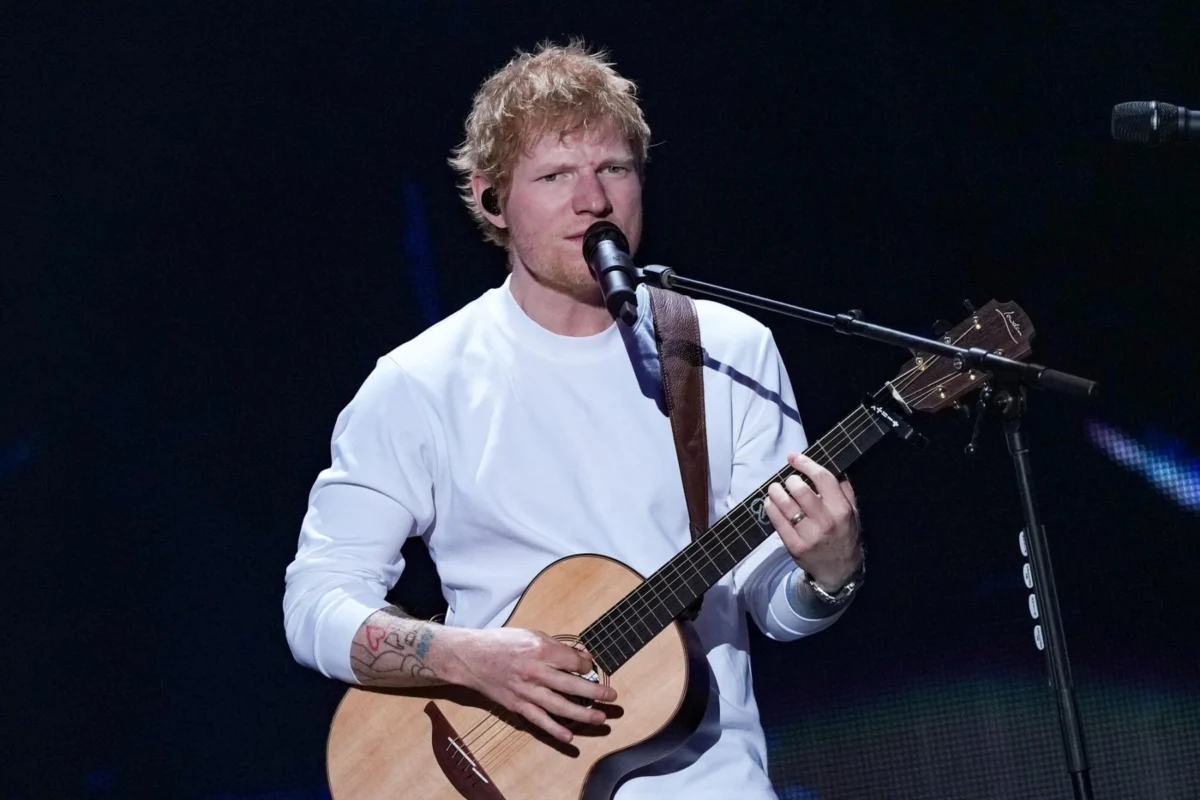
The intersection of high-profile global entertainment and geopolitical activism has reached a fever pitch. In a move that has sent shockwaves through the music industry, Seattle-based rapper Macklemore was removed from his opening slot on Ed Sheeran’s "Loop Tour" following a series of onstage statements regarding the ongoing conflict in Gaza. The fallout from this decision has expanded rapidly, prompting a chain reaction of cancellations from other supporting acts and raising critical questions about the power dynamics between stadium owners, promoters, and artists.
The Trigger: MetLife Stadium and ‘Hind’s Hall’
The controversy finds its roots in a pair of performances at New Jersey’s MetLife Stadium earlier in September. Macklemore, who has been an outspoken critic of the Israeli government’s military campaign in Gaza, utilized his platform during the tour to perform his viral protest anthem, "Hind’s Hall." The song, released in May 2024, serves as a direct commentary on the humanitarian crisis in the Middle East and student-led protests on university campuses.
During his sets, Macklemore explicitly declared "Free Palestine" from the stage. These statements drew immediate, vocal criticism from high-profile figures in the music industry, including P!nk and Boy George. While artists often utilize the stage for political expression, the intensity of the backlash—and the swiftness of the corporate response—marked a departure from standard industry protocol.
Chronology of a Tour in Turmoil
The removal of Macklemore from the tour was not an isolated incident but the result of a coordinated ultimatum issued by powerful venue operators.
- Early September: Macklemore performs two shows at MetLife Stadium, integrating pro-Palestine messaging into his set.
- Mid-September: Robert Kraft, the owner of the Kraft Group and Gillette Stadium, reportedly initiates contact with Ed Sheeran.
- Sept. 14: Macklemore officially confirms his removal from the tour via Instagram. He reveals that Kraft and other stadium owners issued a "collectively" agreed-upon ultimatum: if Macklemore remained on the lineup, the tour would be barred from performing in their venues.
- Sept. 15: Ed Sheeran issues a statement clarifying that the decision to drop the rapper was made by the promoter and venue stakeholders, not by him personally.
- Sept. 16–17: A cascade of secondary effects begins. Acts including Finneas, Lukas Graham, and Aaron Rowe announce their departure from the tour in solidarity, citing a refusal to participate in the "silencing of artists." The backing band Beoga also exits the tour.
Official Responses and Corporate Stances
The narrative surrounding who exactly "pulled the plug" has remained complex, with various stakeholders offering differing accounts.
Robert Kraft, in a formal statement, defended the decision by citing what he described as a "broader history of antisemitic rhetoric and imagery" associated with Macklemore’s recent actions. Kraft stated that the decision to exclude the rapper from the upcoming September 25 and 26 dates at Gillette Stadium was made to avoid crossing a line that he deemed "deeply offensive and hurtful to the Jewish community."
Conversely, Ed Sheeran sought to distance himself from the administrative decision. "Macklemore coming off tour was the promoter’s decision, it was not mine," Sheeran stated. "Macklemore’s contract for the tour was with the promoter, not me."
The promoter, Messina Touring, echoed this sentiment in a statement shared with Rolling Stone, emphasizing the logistical reality of the threat: "We have been notified by venues on the upcoming U.S. tour dates that they will not allow a concert to take place with Macklemore on the lineup, which would result in the cancellation of the tour and impact hundreds of thousands of fans."
Implications for Live Music and Free Speech
The current crisis represents a rare, large-scale collision between venue autonomy and artistic freedom. While small clubs and theaters have historically seen cancellations due to political friction, the involvement of major NFL stadium owners—who hold significant leverage over global tours—sets a troubling precedent for the industry.

The Legal Landscape of Performance Contracts
The situation has reignited debates regarding the "morality clauses" often found in performance contracts. As seen in the recent legal battle between M.I.A. and Kid Cudi, the degree of "creative control" afforded to an artist can be a major point of contention. M.I.A.’s lawsuit, which centers on the assertion that her political views were known to the promoter and that she maintained contractual creative freedom, suggests that the legal system may soon be forced to determine whether a political stance constitutes a breach of contract.
In the case of Macklemore, the financial implications are equally murky. Depending on the force-majeure provisions within his agreement with Messina Touring, he may or may not be entitled to his guaranteed fee for the canceled dates. However, for the other openers who voluntarily withdrew—Finneas, Lukas Graham, and Aaron Rowe—it is widely understood that their decision to leave likely voids their compensation, marking a significant financial sacrifice in the name of their principles.
The "Slippery Slope" of Venue Censorship
This incident raises the question: To what extent should venue owners dictate the content of the performances they host? Historically, the relationship between a promoter and a venue has been strictly commercial. However, as stadiums increasingly act as "gatekeepers" to the public square, their ability to blacklist artists based on political viewpoints could lead to a sanitized landscape of live performance where only "neutral" artists are permitted to play in the largest, most profitable venues.
Industry analysts note that this is not entirely unprecedented but rarely executed with such coordinated force. When The Chicks faced backlash for their comments regarding George W. Bush in 2003, they were eventually blacklisted by radio stations and faced slow ticket sales, but they were rarely barred from physical venues by the owners themselves in the same manner. The modern involvement of corporate sponsors and stadium conglomerates adds a layer of economic pressure that makes the current environment significantly more hostile to controversial speech.
Looking Ahead: The Future of the Loop Tour
The immediate future of Ed Sheeran’s tour remains precarious. With multiple opening slots now vacant and the loss of his backing band, the logistics of continuing the tour are becoming increasingly difficult. Sheeran faces the difficult choice of proceeding with a diminished show or navigating the search for new acts willing to step into a volatile environment.
Furthermore, the silence from major corporate sponsors—who have, in the past, abandoned artists like Ye (Kanye West) when faced with controversy—suggests that the industry is in a "wait and see" mode. Should the tour continue, it will likely serve as a case study for how future tours handle the intersection of global politics, venue control, and the growing demand for artists to take public stands on sensitive issues.
As of this writing, the next scheduled date in Philadelphia remains on the calendar, but the industry remains on high alert. The "Macklemore incident" has transformed from a simple tour schedule change into a defining moment for the music industry, one that will likely reshape how artists, promoters, and venue owners negotiate the boundaries of political speech in the years to come.
Reporting contributed by Bill Donahue and Dan Rys.