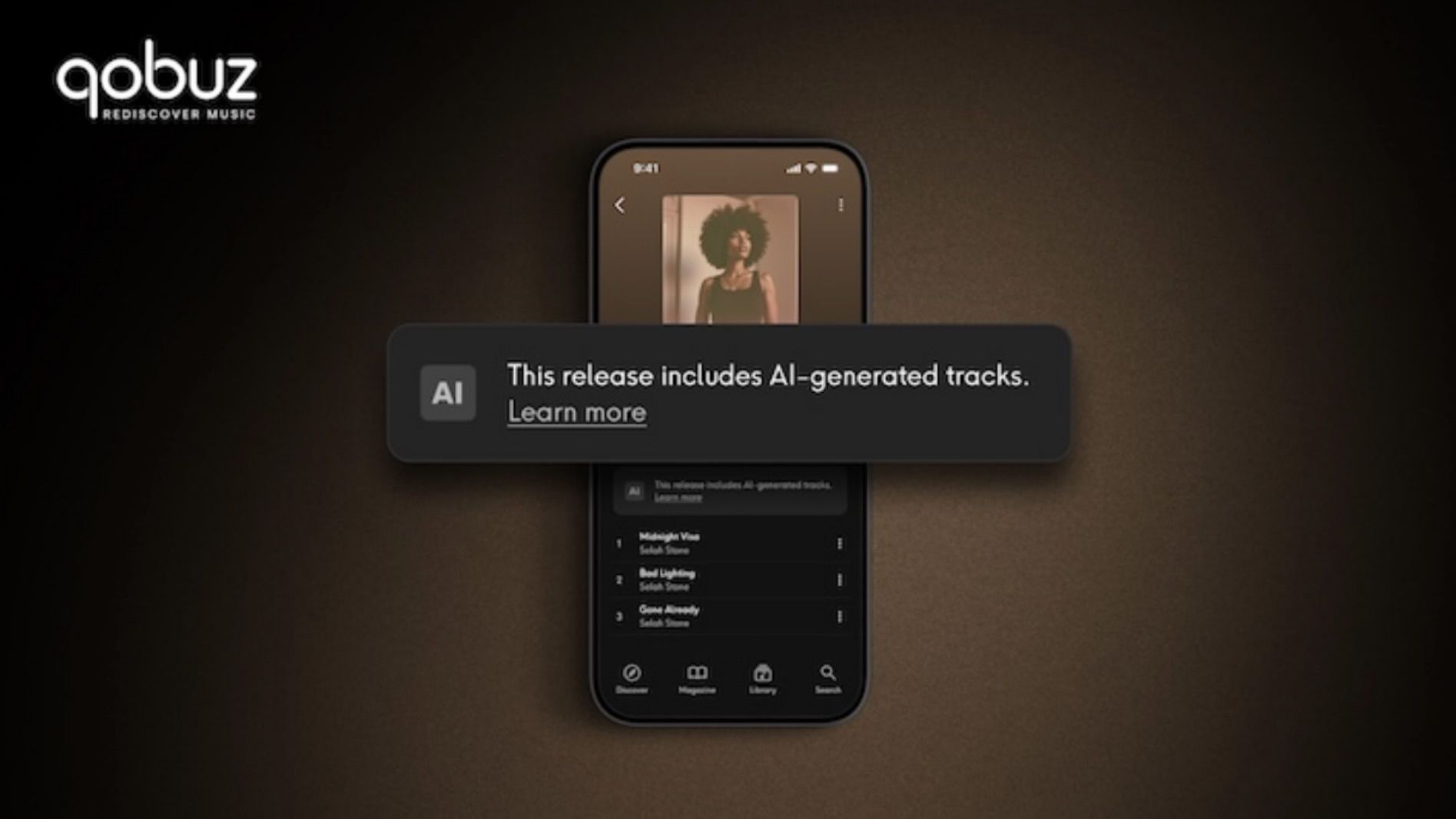
PARIS — In a decisive move to uphold its "human-centered" ethos, French high-resolution music streaming service Qobuz has officially rolled out a new labeling system designed to identify and tag AI-generated music. The initiative delivers squarely on promises made in the platform’s recently established AI charter, aiming to arm subscribers with the transparency needed to navigate an increasingly synthetic digital audio landscape.
While platforms across the streaming economy grapple with how to handle the influx of machine-made audio, Qobuz is taking a hardline stance. Beyond merely labeling tracks, the service is actively ring-fencing its editorial and algorithmic discovery engines, ensuring that human artistry remains the focal point of the listening experience.
Main Facts: What Qobuz is Changing
Under the newly implemented policy, tracks identified as being generated by artificial intelligence will feature a distinct tag visible to users. This system is designed to give listeners immediate context regarding the provenance of the audio they are streaming.
Crucially, the implementation goes deeper than simple surface-level labeling. Qobuz has confirmed that any content detected as AI-generated will be strictly barred from all editorial selections. This includes prestigious platform showcases such as:
- Our Selections
- New Releases
- Qobuzissimes
- Albums of the Week
- Curated Qobuz playlists
- Personalized algorithmic recommendations
By walling off these promotional and discovery vectors, Qobuz is signaling that while machine-made content may exist on the platform, it will not be artificially boosted or equated with human-created art.
Georges Fornay, Deputy CEO of Qobuz, emphasized the philosophy driving the update. "Today, the challenge is no longer just detecting AI-generated music, but enabling listeners to identify it clearly," Fornay said. "At Qobuz, this transparency — which is our hallmark — comes with a core conviction: musical discovery must remain guided by human choices. Everyone should be able to know what they are listening to and make informed choices."
Chronology of the AI Wave in Streaming
The battle lines between streaming services and AI-generated audio have been drawn rapidly over the past few years, transforming from a futuristic hypothetical into a daily operational challenge.
- Early 2023: The mainstream breakthrough of generative AI models allows bad actors to rapidly churn out low-quality, synthetic tracks. These tracks are frequently uploaded to digital service providers (DSPs) en masse, designed primarily to game streaming payout systems through automated botnets.
- Late 2023 – 2024: Major streaming ecosystems begin noticing abnormal traffic spikes. Platforms like Deezer and Spotify report that millions of automated, zero-listening-activity tracks are clogging search engines. Platforms start implementing basic detection filters, though labeling policies remain inconsistent.
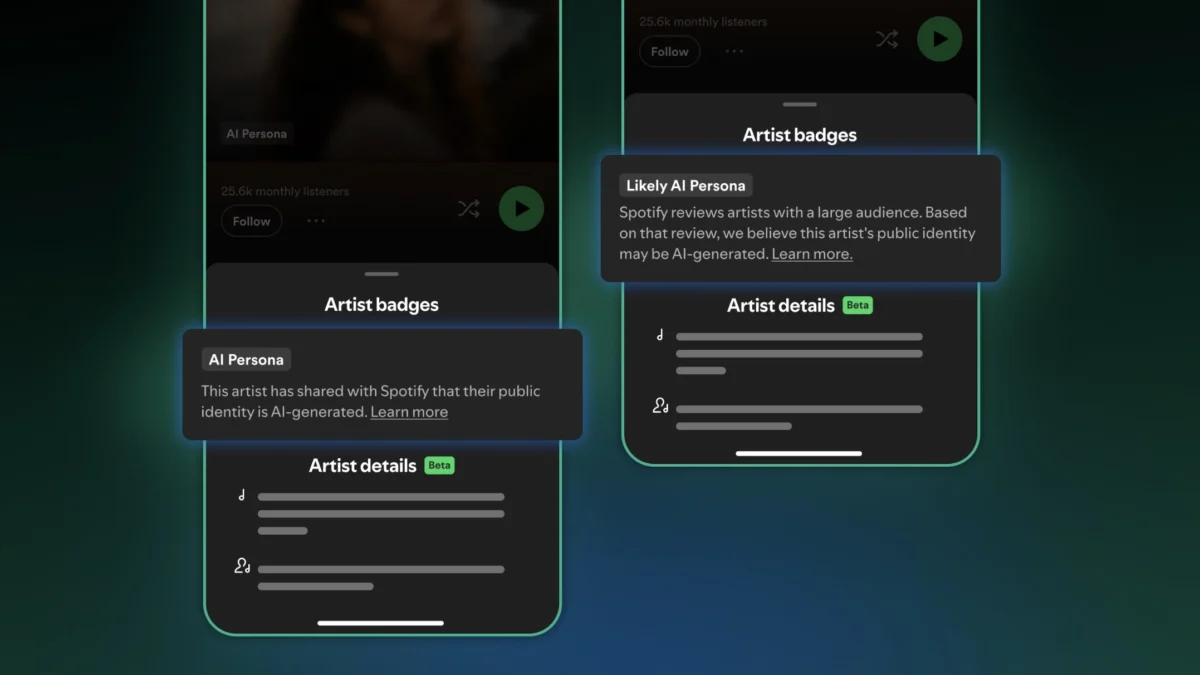
- Mid-2024: Competitors begin moving toward standardization. Tidal, Deezer, and Spotify introduce various forms of identification for AI-infused tracks, while Apple Music commits to rolling out a formal "Made With AI" label later in the year.
- Late 2024 / Early 2025: Qobuz formalizes its stance by publishing its comprehensive AI charter, laying the groundwork for the technological tools required to police its catalog without compromising its fidelity-focused brand identity.
- Today: Qobuz officially launches its user-facing AI tags and exclusion protocols, combining automated fraud detection with proactive catalog cleansing to maintain its exceptionally low ratio of synthetic streams.
Supporting Data: The Scale of the Problem
The economics of music streaming have long incentivized bad behavior, but the marriage of streaming fraud and generative AI has exponentially accelerated the threat. Qobuz’s internal data reveals stark metrics regarding the scope of the issue and how the platform compares to its larger industry peers.
The Low-Water Mark of AI Streams
According to company figures, AI-generated streams account for a remarkably low 0.38 percent of total music consumption on Qobuz. By comparison, other major services—such as Deezer—have publicly stated that AI-generated streams typically constitute between 1 percent and 3 percent of the total music consumed on their platforms. Qobuz attributes its lower percentage to a combination of its audiophile subscriber base, stringent curation, and proactive filtering.
The Fraud Connection
Perhaps the most telling data point released by Qobuz is the direct correlation between synthetic audio and platform manipulation. The company reports that 60 percent of all tracks currently identified as AI-generated have also been deemed fraudulent by its internal detection algorithms.
Rather than serving as legitimate artistic expressions, the vast majority of AI tracks arriving at the platform are engineered as financial exploits. To combat this, Qobuz has already purged four million tracks from its search engine—content that was flagged as entirely AI-generated and registered zero listening activity from human users.
Official Responses and Industry Context
Qobuz is far from alone in attempting to police the digital floodgates, but its strategy leans heavily into its identity as a boutique, high-end streaming provider focused on fair compensation and pristine audio quality.
Major competitors have taken varying paths:
- Spotify has implemented backend identification protocols and manages synthetic voice clones on a case-by-case basis, balancing user-generated mashups against malicious copyright infringement.
- Deezer was among the first to pioneer automated AI detection tools to protect its royalty pool, seeking to redistribute funds away from bot-driven artificial streams and back toward human creators.
- Apple Music has taken a measured approach, pledging a dedicated "Made With AI" label to keep consumers informed as native generative tools become more deeply embedded in modern digital audio workstations (DAWs).
Qobuz’s latest crackdown draws a sharp line between creative experimentation and outright financial malfeasance. The company stated that the outright removal of tracks from its catalog will be "reserved for fraud," reinforcing its "longstanding commitment to fair compensation for artists."
When fraudulent practices are definitively flagged, Qobuz’s policy is absolute: affected streams are retroactively excluded from reporting and royalty distributions, and the offending content is scrubbed entirely from the platform’s database. This ensures that subscription revenue is shielded from bad actors attempting to siphon funds away from legitimate musicians, songwriters, and producers.
Implications for the Future of Music
The integration of AI tags on Qobuz and other streaming giants marks a philosophical turning point for the music industry. As generative audio tools become increasingly sophisticated—blurring the line between human performance and synthetic generation—the burden of proof is shifting to platforms to maintain trust.
1. The Redefinition of Curation
In an era of infinite content, where tens of thousands of tracks are uploaded to DSPs daily, algorithms are no longer enough. By explicitly walling off AI tracks from editorial spotlights like "Albums of the Week," Qobuz is betting that human curation is its most valuable differentiator. For audiophiles and dedicated music fans, knowing that a human being consciously vetted an album carries immense value.
2. The War on Streaming Fraud
The intersection of AI and financial fraud poses an existential threat to the streaming royalty model. If left unchecked, automated bot networks streaming infinite loops of zero-cost, AI-generated noise can dilute the already slim margins available to working musicians. Qobuz’s aggressive purging of four million dead-weight tracks proves that platform hygiene is no longer optional—it is a prerequisite for economic survival.
3. Empowering the Listener
Ultimately, the introduction of transparency tags shifts agency back to the consumer. While some listeners may be curious about the capabilities of artificial intelligence in creative fields, others actively seek out human vulnerability, emotion, and lived experience in their music. By providing clear markers, Qobuz ensures that listeners do not unknowingly consume and support algorithmic constructs masquerading as human art.
As British sound engineers and industry veterans have increasingly warned, discounting the emotional and experiential depth of human-made art comes at a severe cultural peril. With its new transparency tools, Qobuz is drawing a clear line in the sand: technology should serve the art, not replace the artist.