The landscape of personal audio is currently dominated by a deluge of multi-driver hybrid configurations and high-displacement dynamic drivers. Amidst this technological arms race, a new South Korean entrant, MAKINAaudio, has made a bold statement with its debut product, the T-100B. Priced at $149.00, this single balanced armature (BA) universal in-ear monitor (IEM) arrives as a deliberate throwback to a more purist philosophy. While the market pushes for complex driver arrays, MAKINAaudio suggests that through precise electronic engineering and careful tuning, a single, high-quality armature can deliver a level of coherence and fidelity that often eludes its more complicated counterparts.
Main Facts: The Anatomy of the T-100B
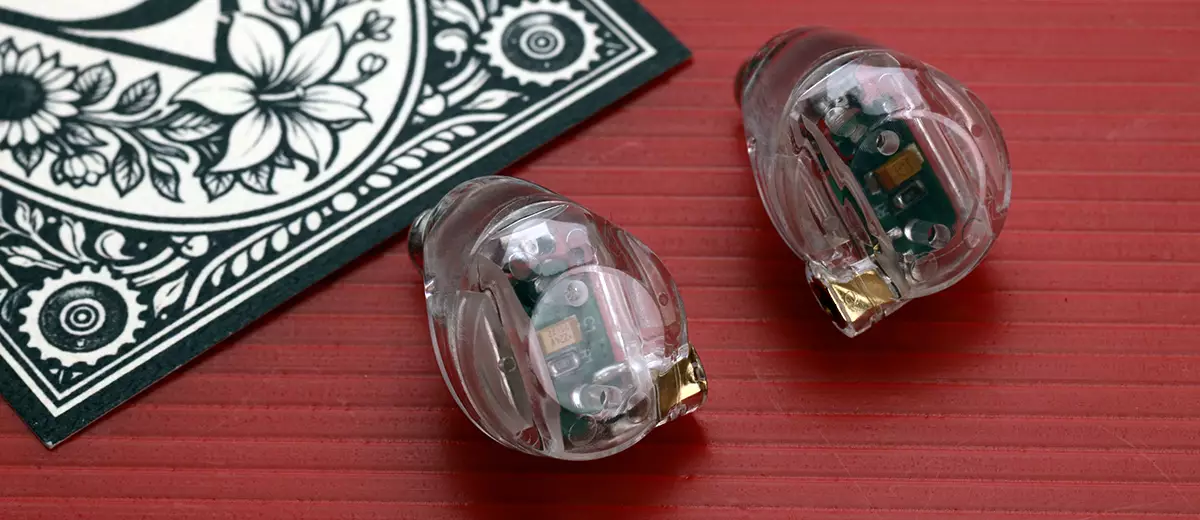
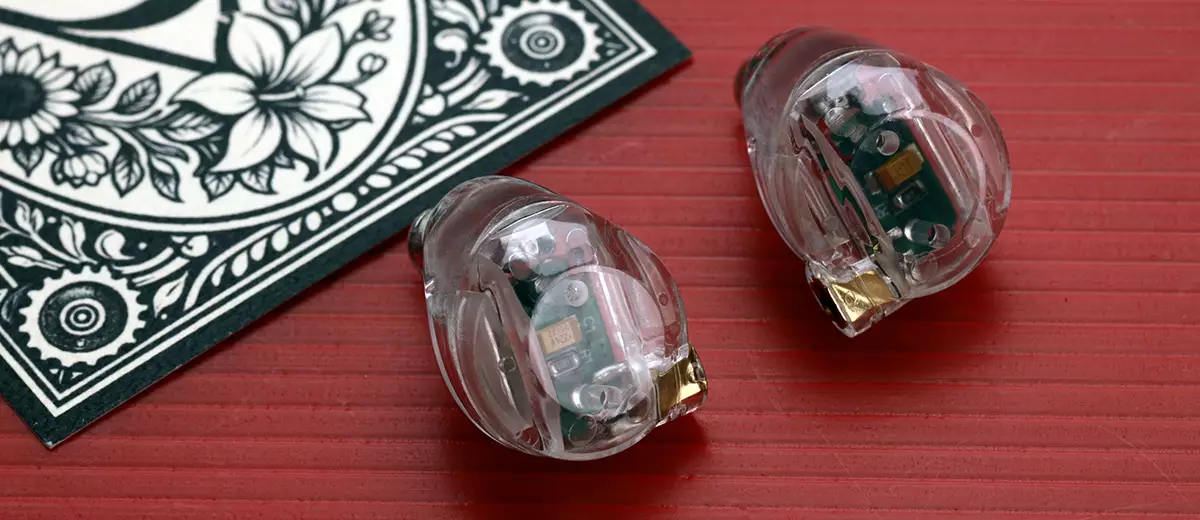
The MAKINAaudio T-100B is defined by its minimalist approach. At its core, the T-100B utilizes a custom-designed, full-range balanced armature driver. Unlike many entry-level or mid-fi monitors that rely solely on physical acoustic chambers or crude damping filters, the T-100B incorporates a dedicated PCB network. This internal circuit, featuring a specific configuration of capacitors and resistors, acts as a crossover and frequency shaping tool, ensuring the driver operates within its optimal parameters.
- Driver Type: Single Full-Range Balanced Armature
- Impedance: 23Ω
- Sensitivity: 110 dB
- Connection: MMCX
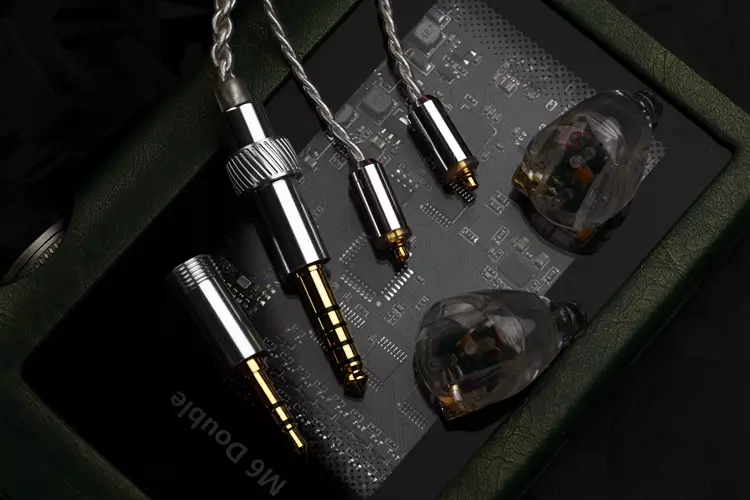
- Cable: 1.2m 6N OCC copper with modular 3.5mm/4.4mm termination
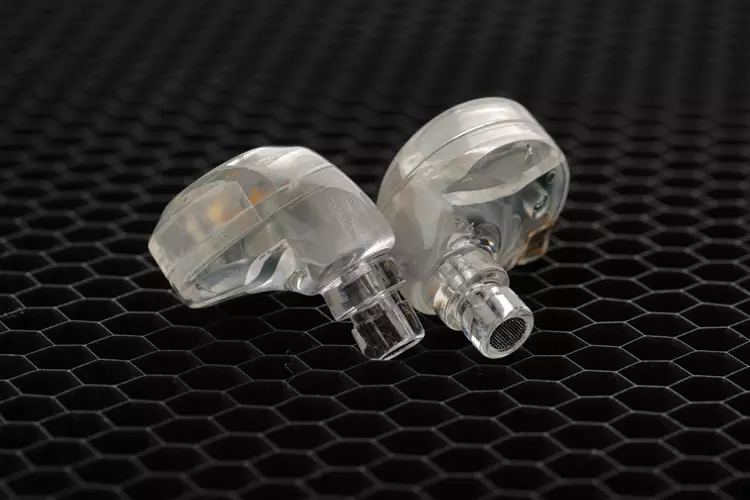
- Build: Lightweight transparent resin shell (3 grams per unit)
The inclusion of an electronic frequency-shaping network—visible through the transparent shell—is a significant design choice. It suggests that MAKINAaudio prioritized signal control and phase alignment over the "brute force" tuning often found in less sophisticated models.
Chronology: The Emergence of MAKINAaudio
The company’s inception in December 2025 marked a fresh chapter in the South Korean audio scene. While the brand name is new to consumers, the team behind the curtain possesses over two decades of cumulative experience in the acoustic engineering sector. This heritage is evident in the maturity of the T-100B’s execution; it does not feel like the "first attempt" of a fledgling company, but rather the result of years of refinement in research and development.

The development cycle of the T-100B was focused on creating a "daily driver"—an earphone designed for long-term comfort and a non-fatiguing sound signature. By targeting a niche that favors mid-range clarity and transient speed over the sub-bass bloat that currently permeates the $100–$200 segment, MAKINAaudio has carved out a unique position.
Supporting Data: Technical Analysis and Performance
Design and Ergonomics
The aesthetic of the T-100B is utilitarian. It eschews the flamboyant faceplates and complex geometric shells that are currently in vogue. The shell is light, weighing in at a mere 3 grams, and the ergonomics are such that it essentially disappears in the ear. During testing, even without the use of pressure-relief vents, there was no sensation of "ear canal vacuum," a common issue with hermetically sealed BA designs.

The use of MMCX connectors is a point of contention. While they provide a robust 360-degree rotation, the industry has increasingly shifted toward 2-pin connectors, which are generally easier for consumers to replace or upgrade. However, the stock cable provided is of high quality, utilizing 6N OCC (Ohno Continuous Cast) copper, which provides excellent conductivity and a tactile, premium feel.
Sound Signature
Measurements confirm the T-100B’s dedication to neutrality. The frequency response is impressively flat, with a moderate 7dB pinna gain centered at 3kHz. This creates a forward, intimate vocal presentation that is neither aggressive nor recessed.

- The Bass: The T-100B is not designed for bass-heads. The sub-bass is slightly rolled off, resulting in a presentation that favors texture and speed over visceral rumble. The attack and decay are rapid, characteristic of a high-quality BA driver.
- The Midrange: This is the T-100B’s crown jewel. Vocals are rendered with surgical precision and natural timbre. Because there is no bass bleed into the lower mids, the clarity is exemplary.
- The Treble: The high frequencies are smooth, focused on detail rather than artificial "sparkle." It lacks the extreme airiness of multi-driver setups, but it avoids the sibilance that often plagues budget-friendly IEMs.
The Distortion Variable
During critical listening tests using high-resolution sources like the iBasso DC-Elite and FiiO M15S, a minor performance ceiling was identified. When pushed to extreme volume levels with tracks containing dense, sub-bass-heavy content, a faint distortion or "hiss" became audible. This is a characteristic limitation of single balanced armatures, which lack the excursion capacity of dynamic drivers. For the vast majority of listening volumes, this is a non-factor, but it serves as a reminder that the T-100B is a monitor designed for balanced, moderate-to-loud listening, not for stadium-level output.
Official Perspectives and Market Positioning
MAKINAaudio has positioned the T-100B as a "monitor-like" experience. In official communications, the team emphasized that their goal was to create an accurate reference tool for enthusiasts who prefer to hear the music as it was mixed, rather than as it was "enhanced."
Comparatively, the T-100B finds itself in a challenging bracket. When placed against the Hidizs MP145 PRO or the ddHiFi Memory, the T-100B stands out for its coherence. Because it uses only one driver, there are no phase issues or crossover artifacts that can occur when combining different driver technologies (like dynamic and BA). It presents a unified, phase-coherent soundstage that, while not as vast as some open-back planar models, is highly accurate in its spatial layering and imaging.
Implications for the Future of IEMs
The T-100B represents a potential pivot point for the hobby. As the market becomes saturated with "V-shaped" sound signatures (boosted bass and treble), there is a growing contingent of audiophiles returning to the "Mid-Centric" or "Neutral" signatures of the past.
By successfully bringing a refined, single-driver BA to the market at a $149 price point, MAKINAaudio is challenging the narrative that more drivers equal better sound. If this model succeeds, it may encourage other manufacturers to revisit the potential of the balanced armature driver, focusing on the quality of the electronic crossover and the precision of the tuning rather than the sheer quantity of drivers housed within the shell.
For the end-user, the T-100B is a recommendation for those who prioritize:

- Vocal-centric music: Where mid-range transparency is paramount.
- Instrumental/Acoustic genres: Where transient speed and decay define the realism of the recording.
- Long-term comfort: Due to its featherweight build and balanced, non-fatiguing tuning.
In conclusion, the MAKINAaudio T-100B is an honest, well-engineered piece of equipment. It does not try to be everything to everyone; instead, it delivers a specific, high-fidelity experience that respects the source material. For a first outing, it is a remarkably polished achievement that establishes MAKINAaudio as a brand to watch in the coming years. Whether this will spark a wider trend toward single-driver purity remains to be seen, but for now, the T-100B remains one of the most coherent, balanced, and articulate options in its price tier.