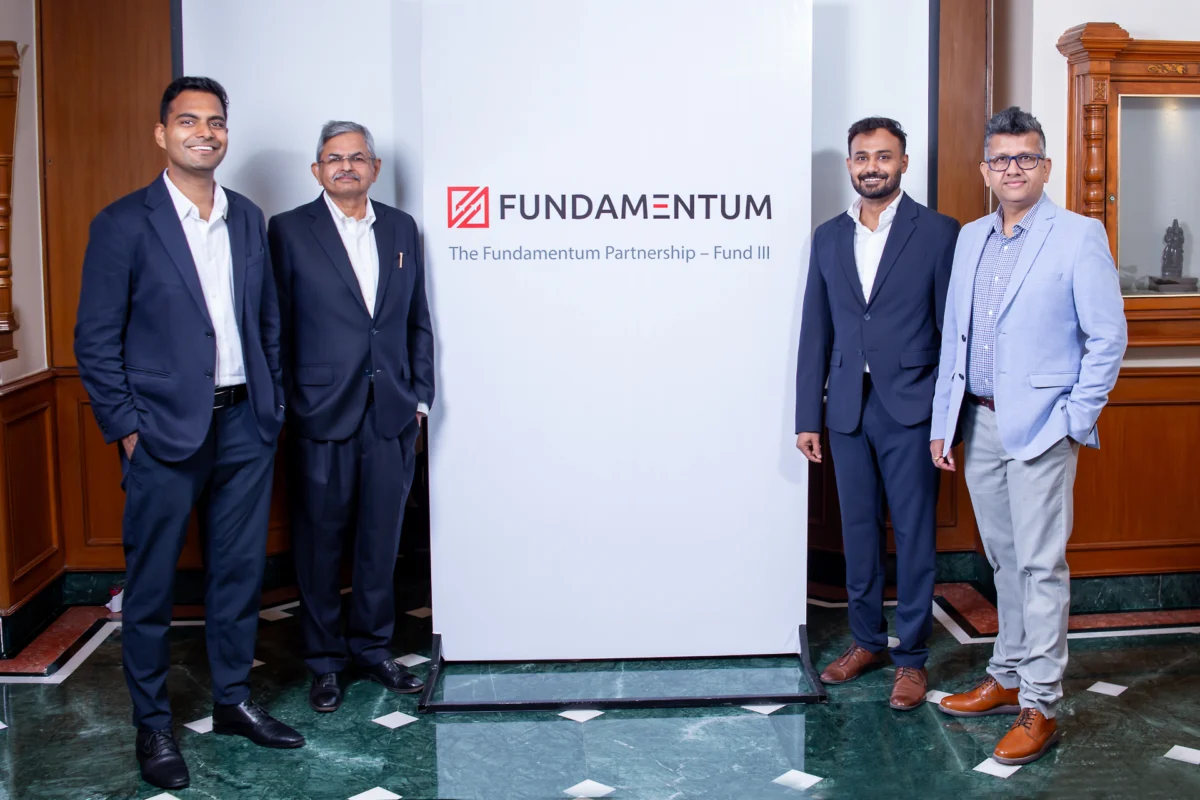
In a significant transition for India’s venture capital ecosystem, Nandan Nilekani, the legendary co-founder of IT giant Infosys and a titan of India’s digital infrastructure revolution, is stepping down from his role as a General Partner at Fundamentum Partnership. This move, which comes nearly a decade after the firm’s inception, marks a shift in the operational structure of the venture capital firm as it readies its third fund, targeting a corpus of $200 million.
While the change represents a departure from the formal partnership structure, Nilekani’s influence on the firm remains undiminished. He will transition into an advisory role, serving as the anchor investor for Fund III and continuing his work as a mentor to the founders within the firm’s portfolio.
The Evolution of Fundamentum: A Structural Shift
The announcement coincides with the launch of Fundamentum’s third fund, a vehicle designed to fuel the next wave of Indian innovation. Sanjeev Aggarwal, who co-founded the firm alongside Nilekani in 2017, characterizes the move as "just a title thing."
"He is an integral part of our firm," Aggarwal noted in an interview. "The one thing that he enjoys the most is mentoring the teams that we back, and he will continue to do so in Fund III. His contribution has always been strategic, and that will remain unchanged."
The leadership transition also serves to formalize a broader management structure. While Aggarwal will continue to lead, the senior investment team for Fund III will be expanded to include Prateek Jain, who has been with the firm since its inception; Mayank Kachhwaha, who joined prior to Fund II; and long-standing Chief Financial Officer Sanjay Chaturvedi. This diversification of leadership is widely viewed as a maturation of the firm, moving beyond its "founder-led" origins to a more institutionalized model.
A Legacy of Digital Transformation
Nandan Nilekani’s influence in India extends far beyond the boardroom of an IT services firm. At 71, he remains one of the most consequential figures in the global technology space. His career is defined by the successful scaling of Infosys, but his subsequent public service career solidified his status as the architect of India’s digital future.
Nilekani spearheaded the development of Aadhaar, the world’s largest biometric identity system, which serves as the bedrock for financial and social inclusion for over a billion people. He was also a foundational advocate for the Unified Payments Interface (UPI), a real-time payment network that has fundamentally transformed how commerce is conducted in India. More recently, he has been a vocal champion of the Open Network for Digital Commerce (ONDC), an ambitious initiative designed to democratize e-commerce by fostering interoperability.
His transition at Fundamentum is seen by industry observers as a strategic recalibration. By shifting from an active General Partner to an anchor investor and mentor, Nilekani can maintain his "hands-on" approach to mentorship—which he reportedly values above all else—without the administrative and regulatory burdens of the GP role.
Chronology: From Helion to Fundamentum
To understand the significance of this move, one must look at the trajectory of the firm’s founders. Sanjeev Aggarwal arrived at Fundamentum after a distinguished tenure at Helion Venture Partners. When the duo launched Fundamentum in 2017, the Indian venture capital landscape was markedly different.

- 2017: Fundamentum Partnership is founded by Nilekani and Aggarwal, focusing on Series B and later-stage growth capital in India.
- 2017-2022: The firm builds a portfolio of high-growth companies, including the used-car marketplace Spinny, the pharmacy giant PharmEasy, audio storytelling platform Kuku FM, and the devotional app developer AppsForBharat.
- 2022: Fundamentum closes its second fund, continuing its mandate of supporting startups that leverage technology for the Indian market.
- 2025-2026: A period of leadership restructuring begins. Ashish Kumar, a General Partner, departs to launch the AI-focused Fundamentum Frontier Advisors (F2A), a separate entity where Nilekani also serves as an anchor investor.
- 2026 (Present): Fundamentum launches Fund III, marking the transition of Nilekani to an advisory role and the expansion of the senior management team.
Supporting Data: Capital Deployment and Market Trends
Fundamentum’s track record demonstrates a disciplined approach to late-stage investing. Across its first two funds, the firm has made 17 strategic investments. Notably, the firm has already returned approximately half of the capital from its maiden fund, signaling strong liquidity and exit outcomes in a challenging global market.
Fund III is expected to follow this disciplined strategy, targeting 8 to 10 early-to-growth-stage startups. The firm plans to issue initial checks in the neighborhood of ₹100 crore (roughly $10.5 million). While the first close has not yet been formally announced, the firm has already begun deploying capital, with fundraising expected to span the next 12 to 18 months.
The fundraising process for Fund III reflects a seismic shift in the source of venture capital within India. Aggarwal notes that when he first began his career in the mid-2000s, it was almost impossible to raise capital from domestic sources; firms were entirely dependent on U.S. institutional investors.
"Over the last five years, we are experiencing very strong interest from Indian investors to back venture capital firms," Aggarwal explained. "Now, you can build a venture firm with domestic capital." This domestic appetite is expected to provide approximately half of Fund III’s total target, with the remainder coming from international sources.
Strategic Implications: The AI Frontier
A key component of the firm’s future strategy involves the burgeoning field of Artificial Intelligence. Contrary to the trends seen in Silicon Valley or China, where massive capital is poured into the creation of "frontier models," Fundamentum is placing its bets on the application layer.
Aggarwal believes that India’s competitive advantage in AI lies in building specialized applications that sit atop existing global models. The firm is specifically looking at financial services, content creation, and vernacular consumer applications—sectors where India’s unique scale and linguistic diversity provide a significant moat.
This perspective highlights a broader debate in the Indian tech ecosystem: should India try to compete in the "arms race" of foundation model development, or focus on the practical, widespread application of AI to solve local problems? Fundamentum has clearly chosen the latter, betting that the most significant value creation will occur in the implementation of AI across India’s vast service sector.
Conclusion: A Seamless Transition?
The departure of a co-founder from an active partnership role can often trigger market anxiety. However, in the case of Fundamentum, the transition appears to be a calculated, long-term plan. With Nilekani maintaining his position as the firm’s largest anchor investor and continuing his mentorship of the next generation of founders, the core value proposition of the firm remains intact.
By expanding the leadership team and focusing on the next wave of AI-driven consumer applications, Fundamentum is positioning itself to navigate the next decade of Indian digital evolution. For Nandan Nilekani, the shift allows him to continue his lifelong mission of mentoring Indian entrepreneurs, while allowing the firm’s younger leadership to take the reins of day-to-day operations. As India continues to solidify its position as a global technology powerhouse, the evolution of its venture capital firms—from founder-centric entities to institutionalized powerhouses—is a critical development to watch.