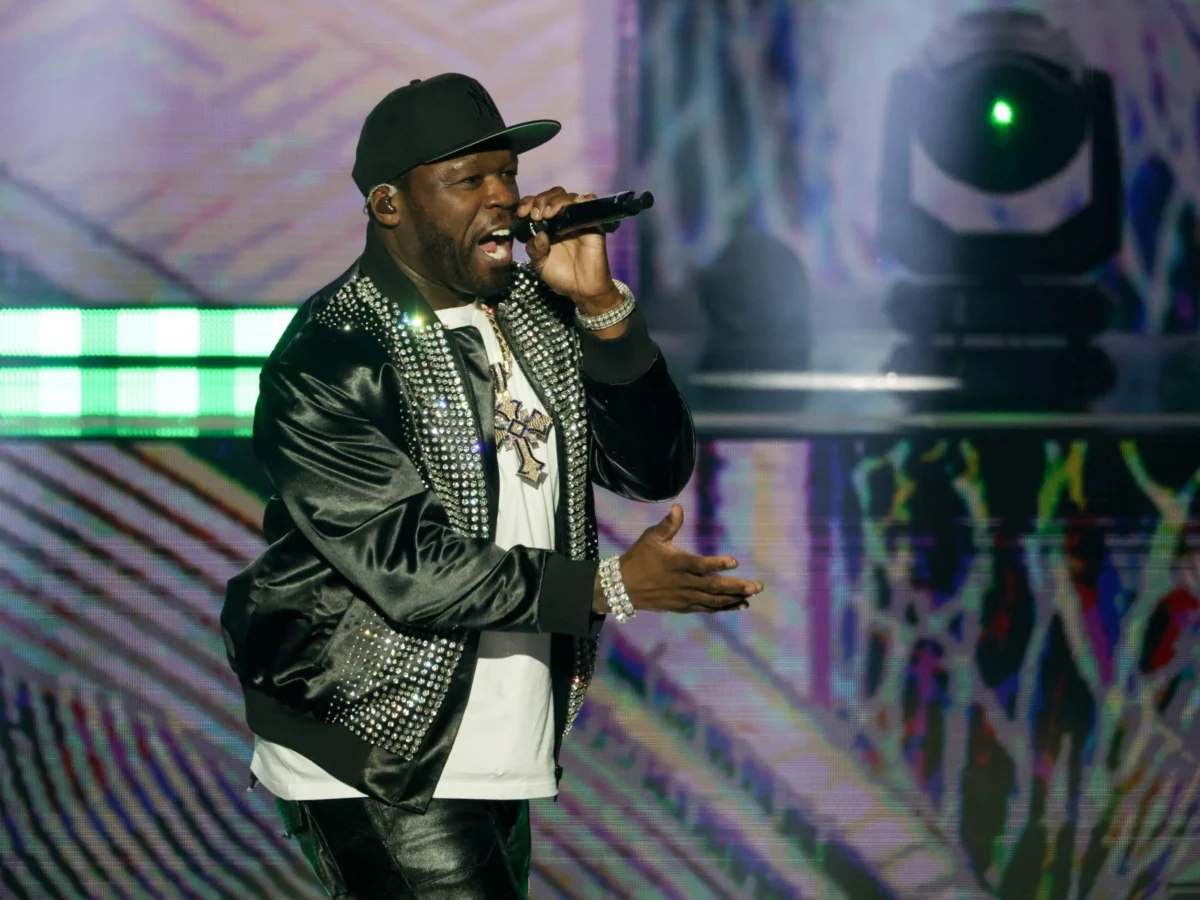
In a significant legal development that underscores the complexities of celebrity litigation and contractual enforcement, a New York appeals court has officially rejected a request by Curtis “50 Cent” Jackson to secure an automatic “default” victory in his lawsuit against his former girlfriend, Shaniqua Tompkins. The ruling, issued on Thursday, July 9, marks a pivotal moment in a protracted legal struggle that pits the music mogul’s claims of intellectual property protection against allegations of coercion and improper legal service.
The lawsuit, initiated by Jackson’s publishing entity, G-Unit Books, centers on a series of viral social media posts made by Tompkins. Jackson alleges these posts constitute a breach of a 2007 agreement, wherein he claims Tompkins permanently surrendered the rights to her life story in exchange for a $80,000 settlement. However, the appellate court’s decision to allow the case to proceed on its merits ensures that the validity of that 17-year-old contract—and the circumstances surrounding its execution—will now face rigorous judicial scrutiny.
The Core of the Conflict: A Clash of Narratives
The legal friction began when Shaniqua Tompkins, with whom Jackson shares a son, Marquise Jackson, utilized Instagram to offer commentary on the highly publicized criminal proceedings involving Sean “Diddy” Combs. Her posts delved into the complex history of the hip-hop industry, touching upon the infamous 2000 shooting involving Jackson and the long-standing, high-profile feud between the two rap titans.
For 50 Cent, these posts were more than just personal commentary; they were viewed as a violation of a binding financial agreement. His legal team contends that the 2007 payment was designed specifically to “preserve” Jackson’s reputation and provide him with exclusive rights to exploit their shared history for future biographical projects. In court filings, his attorneys argued that the move was a necessary defensive measure to prevent Tompkins from monetizing their private history or his public persona.
Conversely, Tompkins has maintained a stance of defiance. In an affidavit submitted to the court in January, she characterized the 2007 agreement as an invalid contract signed under extreme duress. She alleged that the terms were presented as a “take-it-or-leave-it” ultimatum, effectively stripping her of the opportunity to seek independent legal counsel. “Fearing for my life and for my children’s lives, I signed the agreement under extreme duress,” she stated in her defense.
Chronology of the Legal Battle
The timeline of this dispute highlights a significant procedural disagreement that has now landed squarely in the hands of the appellate court:

- 2007: The original “life rights” agreement is signed. G-Unit Books provides a payment of $80,000 to Tompkins.
- 2024: Following a series of Instagram posts by Tompkins regarding the Diddy trial and her own history with Jackson, G-Unit Books initiates a lawsuit for breach of contract.
- Late 2024: Jackson’s legal team attempts to serve Tompkins with the summons and complaint. They later argue that her failure to respond in a timely manner justifies a default judgment.
- January 2026: Tompkins formally responds to the litigation, asserting that she was never properly served and that the underlying contract is unenforceable due to coercion.
- June 2026: A heated appellate hearing takes place, during which the court expresses skepticism toward the rapper’s request for a default judgment.
- July 9, 2026: The appeals court formally denies the appeal, mandating that the case return to the lower court for substantive litigation.
The Question of Service: Why the Default Judgment Failed
A critical factor in the court’s decision was the procedural failure regarding the service of the lawsuit. In the eyes of the law, a default judgment is a drastic remedy, typically reserved for instances where a defendant has been properly notified of a legal action and chooses to ignore it.
The appellate court’s ruling revealed a lack of evidence regarding whether Tompkins had actually received the legal documents. The court noted that Jackson’s legal team failed to provide sufficient proof that Tompkins resided at any of the addresses where service was attempted. "Defendant’s excuse for the delay in responding — that she did not receive the summons and complaint — was reasonable given that plaintiff failed to provide evidence that defendant lived at any of the addresses where service was attempted," the court wrote.
This lack of clarity served as the death knell for the request for a default judgment. The judges effectively signaled that the legal process cannot be bypassed simply because of a delay that may have been caused by the plaintiff’s own inability to locate the defendant.
Judicial Scrutiny: A Hostile Reception
During the hearing held in June, the atmosphere in the courtroom was notably tense. Even before the attorney for 50 Cent could fully present his argument, the panel of judges intervened with pointed inquiries. One judge famously interrupted the presentation to ask, "So counsel, you’re asking for a default judgment for four months’ delay, where it doesn’t even appear that the defendant was served properly. Is that right?"
This skepticism was ultimately reflected in the formal written opinion, which dismissed the plaintiff’s remaining contentions as "unavailing." By rejecting the appeal, the court has effectively cleared the path for Tompkins to present her defense, forcing G-Unit Books to prove both the validity of the 2007 contract and the legitimacy of the breach of contract claims in an open court.
Implications for Future Litigation
The resolution of this appeal carries significant weight for both parties and the broader entertainment industry.

1. The Validity of "Life Rights" Contracts
This case brings to the forefront the ethical and legal questions surrounding “life rights” agreements, particularly those signed years prior to the digital age of social media. The court’s decision to allow Tompkins to argue that she signed under duress could set a precedent for how such contracts are evaluated. If a contract is deemed to be signed under threat, its ability to govern future speech—especially regarding matters of public interest—may be severely curtailed.
2. Procedural Rigor
The court’s focus on the adequacy of service serves as a reminder to high-profile plaintiffs that the procedural rules of civil litigation apply regardless of the stature of the parties involved. Attempting to secure a "quick win" through default judgments can backfire if the foundational steps of litigation, such as proper service of process, are not executed with absolute precision.
3. The Digital Reputation Economy
For a figure like 50 Cent, whose brand is built on a mixture of music, television production, and a carefully curated public persona, the control of his narrative is paramount. The fact that his company pursued litigation over Instagram posts underscores the increasing volatility of the "reputation economy." As celebrities attempt to lock down their stories through ironclad contracts, they will likely continue to face pushback from the individuals who were part of their formative years.
Looking Ahead: The Road to Trial
As the case moves back to the lower court, the proceedings will shift from procedural arguments to the substance of the claims. The legal battle will now likely revolve around two core issues:
- Evidence of Duress: Can Tompkins provide sufficient proof that she was coerced or intimidated into signing the 2007 agreement?
- Scope of the Agreement: Even if the contract is found to be valid, does it extend to the type of commentary she provided on Instagram, or is that speech protected under broader legal principles?
For 50 Cent, the loss of the appeal is a tactical setback. While he remains a powerful force in the industry, the courts have signaled that they will not expedite his legal objectives at the expense of a fair and transparent judicial process. For Tompkins, the ruling is a vital victory, granting her the legal standing to challenge an agreement that she has long claimed was forced upon her under circumstances of extreme personal vulnerability.
As both sides prepare for the next phase of the trial, the entertainment industry will be watching closely. The outcome of this case may well define the limits of what a celebrity can control regarding their past, and how far they can go to silence the voices of those who were once closest to them. As of Thursday, representatives for G-Unit Books had yet to issue a formal comment on the ruling, leaving the future strategy of the rapper’s legal team a matter of ongoing speculation.