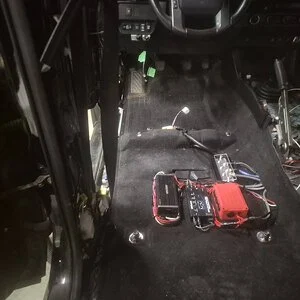

The quest for high-fidelity audio in a subcompact vehicle often feels like a paradox: the desire for "serious bass" and concert-hall clarity frequently clashes with the physical reality of limited cargo space. For owners of the 2015 Ford Fiesta SE hatchback, this challenge is particularly acute. The vehicle’s small footprint and factory-integrated head unit present a unique set of constraints that require strategic planning and precise hardware selection.
Recently, the CarAudio.com community addressed a query from a Fiesta owner seeking to transform their factory sound system into a high-performance audio environment. This article explores the technical considerations, hardware recommendations, and strategic planning required to achieve premium sound in one of the most space-restricted vehicles on the road.
The Core Challenge: Space vs. Output
The 2015 Ford Fiesta SE is lauded for its maneuverability and fuel efficiency, but its cargo area is famously tight. For audiophiles, the primary obstacle is the enclosure volume required to produce low-frequency waves. Traditional ported subwoofer boxes often consume the entirety of the trunk, leaving no room for groceries or equipment.
When designing a system for this chassis, the "serious bass" objective must be balanced against the "serious space" constraint. The goal is to maximize output while maintaining a usable trunk area.
Chronology of the Audio Consultation
On September 22, 2026, user Filippo Dipillo initiated a discussion on CarAudio.com, requesting advice on a system build for his 2015 Ford Fiesta SE. His requirements were clear: he wished to utilize the factory head unit, achieve high-output bass, and install high-performance door speakers and tweeters.
The community response was swift and focused on two distinct paths:
- System Integration: Addressing how to maintain the factory radio while feeding an aftermarket amplifier.
- Subwoofer Selection: Debating the efficacy of single versus dual subwoofer configurations, with specific recommendations for space-saving components.
Technical Analysis: Subwoofer Configurations and Sizing
A significant portion of the debate centers on whether a single high-performance driver is superior to a dual-driver setup in a hatchback environment.
The Case for Dual Subwoofers
The user "supernov4" suggested the implementation of two Alpine RS-W12D4 R-Series subwoofers. This configuration is intended for listeners who prioritize raw sound pressure levels (SPL). By utilizing two 12-inch drivers, the system benefits from increased surface area, which translates into deeper, more visceral bass. However, this approach demands a larger enclosure, which may prove difficult in the Fiesta’s small hatch unless the user is willing to sacrifice almost all rear storage.
The Case for Compact Solutions
Conversely, the editorial team at CarAudio.com emphasized that for the Fiesta’s specific dimensions, compact subwoofers are often the most pragmatic choice. Shallow-mount subwoofers allow for a thinner enclosure, which can be mounted vertically against the back seats or tucked into a corner, preserving the integrity of the hatch floor.
Supporting Data: Component Selection and Integration
To achieve the "serious" audio performance requested by the user, a holistic approach to the signal chain is required.
Signal Processing and Integration
Since the factory radio lacks RCA outputs, a Line Output Converter (LOC) or a dedicated Digital Signal Processor (DSP) is mandatory. A high-quality DSP is recommended, as it allows for:
- Signal Summing: Combining factory-filtered channels into a full-range signal.
- Time Alignment: Adjusting the timing of each speaker to ensure sound reaches the driver’s ears simultaneously.
- Equalization: Correcting the frequency response curves that often plague factory-tuned head units.
Speaker and Tweeter Matching
To match the high output of a subwoofer system, the front soundstage requires high-efficiency component speakers. In the 2015 Fiesta, door locations typically house 6.5-inch drivers. For a "serious" setup, enthusiasts recommend:
- Component Sets: Separating the woofer from the tweeter allows for better imaging.
- Dedicated Amplification: Factory radio power is insufficient to drive high-performance aftermarket speakers to their potential. A multi-channel amplifier should be used to feed the front components at least 75-100 watts RMS per channel.
Official Industry Perspectives on Small-Car Audio
Audio engineers often categorize hatchbacks as "acoustically favorable" due to the proximity of the subwoofer to the listening position. Because the trunk and cabin share the same air volume, the "cabin gain" in a Fiesta is significant. This means that a smaller subwoofer—even an 8-inch or 10-inch driver—can often produce sound pressure levels that would require a much larger driver in a sedan trunk.
Industry experts note that "serious bass" does not always equate to a massive box. By optimizing the enclosure type—specifically sealed vs. ported—users can tailor the bass response to their musical preferences. A sealed box offers tighter, more accurate transients, while a ported box provides the "boom" or output extension often sought by bass enthusiasts.
Implications for the Build
The implications for a build of this nature are twofold: logistical and electrical.
Electrical Requirements
Upgrading to a high-power amplifier in a 2015 Fiesta requires a look at the vehicle’s electrical system. The stock alternator and battery are designed for factory loads. Adding a high-wattage amplifier (typically 500W RMS and above) may necessitate:
- The "Big Three" Upgrade: Upgrading the alternator-to-battery ground, engine block-to-chassis ground, and battery-to-chassis ground wires.
- High-Capacity Battery: Replacing the factory battery with an AGM (Absorbed Glass Mat) battery to provide the necessary current bursts for deep bass hits.
Structural Considerations
The Fiesta’s thin door panels are prone to vibration, which can ruin the clarity of even the most expensive speakers. A critical, often overlooked step is sound deadening. Applying butyl-based sound deadening material (like Dynamat or similar alternatives) to the interior of the door skins will:
- Increase mid-bass impact.
- Reduce road noise, allowing the music to sound clearer at lower volumes.
- Eliminate panel rattle that occurs when playing low frequencies.
Strategic Recommendations
For the 2015 Ford Fiesta SE owner, the ideal path involves a tiered upgrade process:
- Foundation: Invest in a high-quality DSP/LOC to clean the factory signal.
- Sound Deadening: Treat the doors before installing new speakers. This is the most cost-effective way to improve audio quality.
- Front Stage: Install high-sensitivity 6.5-inch component speakers powered by a dedicated amplifier.
- Sub-Bass: If trunk space is the primary concern, opt for a single, high-excursion 10-inch or 12-inch shallow-mount subwoofer in a custom-fit enclosure. If space is secondary, the dual-subwoofer configuration recommended by the community can provide the high-SPL output desired.
Conclusion: Balancing Ambition and Reality
The journey to upgrading a Ford Fiesta SE is a masterclass in compromise. By understanding the limits of the vehicle’s cargo capacity and the capabilities of modern, compact audio technology, owners can bridge the gap between factory mediocrity and high-performance sound.
Whether one chooses the raw power of dual 12-inch subwoofers or the surgical precision of a single, well-placed shallow-mount driver, the result depends entirely on the quality of the installation and the integration with the factory electrical system. As seen in the recent community dialogue, the potential for a world-class audio experience exists even in the smallest of platforms, provided the owner is willing to plan for the unique challenges of the hatchback layout.
For the owner of the 2015 Fiesta, the path forward is clear: prioritize the signal, deaden the panels, and select components that respect the dimensions of the vehicle. Through careful planning, even the smallest car can become a high-performance audio sanctuary.