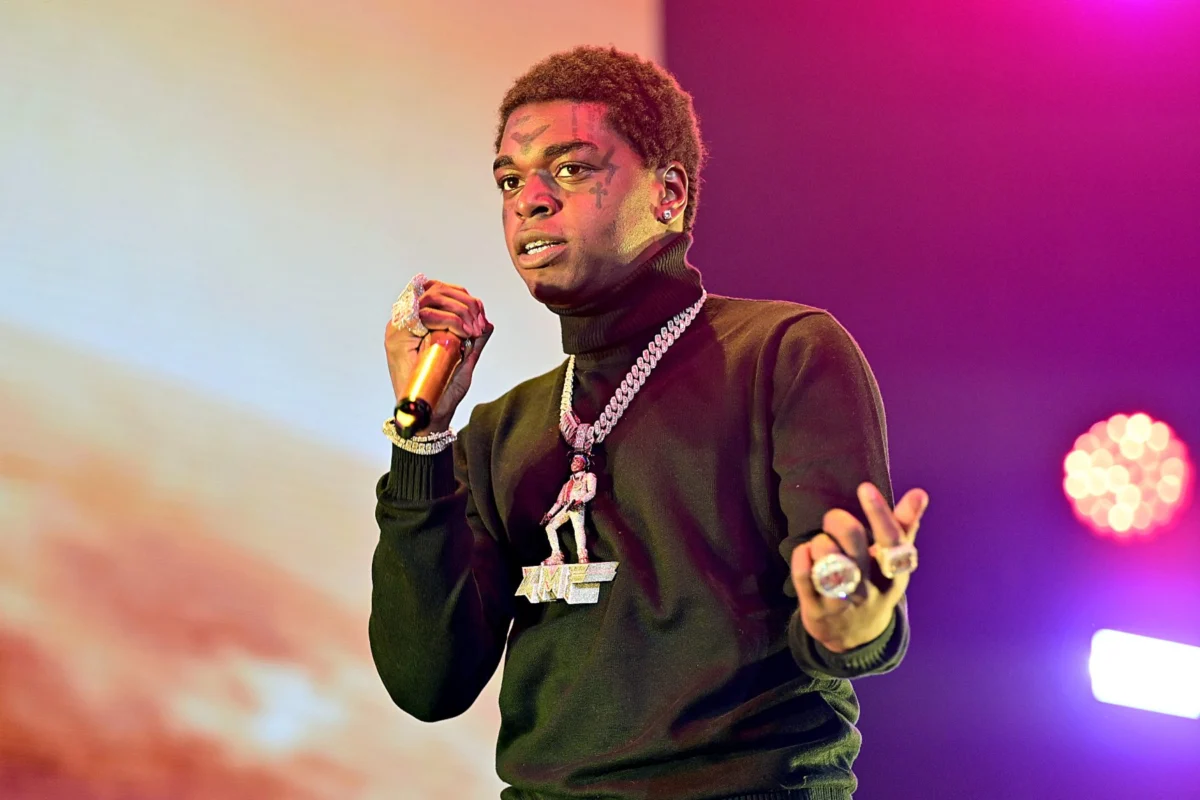
In a significant judicial development for the South Florida music scene, rapper Kodak Black—born Bill Kapri—has secured a decisive legal victory. On Tuesday, September 8, a Broward County judge officially dismissed a felony charge against the artist, which had accused him of fleeing from law enforcement during a traffic stop earlier this year. While this ruling clears one major hurdle in the rapper’s ongoing entanglement with the criminal justice system, it serves as only a temporary reprieve; the 27-year-old artist continues to navigate a separate, high-stakes drug trafficking case in Orange County, Florida.
The Dismissal: A Closer Look at the Legal Ruling
The case, which originated from an incident in Pompano Beach this past February, was brought to a close by Judge George Odom Jr. after a compelling motion to dismiss was filed by the rapper’s long-time defense attorney, Bradford Cohen.
The prosecution’s original charge rested on the allegation that Kapri had intentionally evaded a law enforcement officer who had attempted to initiate a traffic stop. However, the defense successfully argued that the state’s evidence—specifically body camera footage from the responding deputy—failed to meet the necessary criteria for a felony charge of fleeing or eluding police.
In his motion, Cohen meticulously dismantled the narrative of the prosecution. He contended that the interaction between the deputy and the rapper was, by all legal definitions, a "consensual encounter" that had reached its natural conclusion. According to the defense’s filing, the officer never explicitly informed Kapri that he was being detained, nor was he issued a clear directive to remain at the scene. As a result, when the rapper drove away at a normal, non-evasive speed, he was not "fleeing" in a legal sense, but rather exercising his right to leave what he perceived to be a concluded interaction.
Judge Odom Jr. ultimately sided with the defense, noting that the facts presented by the state were insufficient to establish a "prima facie" case. "Accepting these undisputed facts as true and drawing all reasonable inferences in the light most favorable to the state, the court finds that the facts do not establish a prima facie case for each essential element of the charged offense," the judge wrote in his official order.
A Chronology of the Incident and Legal Proceedings
The legal battle that concluded this week began in February 2024, when the incident in Pompano Beach occurred. Following the interaction with the deputy, the rapper was eventually hit with a felony charge of fleeing or eluding law enforcement.
- February 2024: The incident occurs in Pompano Beach, leading to the initial police report and subsequent filing of charges by local authorities.
- May 2024: Formal charges are processed, bringing the matter to the attention of the Broward County courts and sparking significant media coverage regarding the artist’s repeated run-ins with the law.
- August 2024: Attorney Bradford Cohen files a formal motion to dismiss, citing the lack of evidence in bodycam footage and arguing that no detention or stop was ever established.
- September 8, 2024: Judge George Odom Jr. grants the motion, dismissing the charges entirely.
This timeline reflects a broader pattern in the legal career of Kodak Black, who has frequently engaged in protracted battles with the judicial system. His legal team has consistently utilized a strategy of challenging the procedural legitimacy of his arrests, often pointing to perceived overreach by law enforcement.

Supporting Data: The Artist’s Legal History
The dismissal of the Pompano Beach case is a rare win in a career often defined by legal friction. Kodak Black’s rise to prominence—marked by the 2018 chart-topping success of his album Dying to Live—has run parallel to a string of legal complications.
His history with the law includes, but is not limited to:
- Robbery Charges: Early career legal issues that set a precedent for his subsequent struggles with the justice system.
- Sexual Assault Allegations: A high-profile case in South Carolina that resulted in a plea deal and significant public scrutiny.
- Weapons Possession: Multiple charges involving the illegal possession of firearms, which have led to significant jail time and periods of supervised probation.
These incidents have often intersected with his professional life, leading to the disruption of tours, album cycles, and public appearances. Industry analysts note that for a figure of his profile, the weight of these legal proceedings often threatens to overshadow his artistic contributions, creating a cycle where his personal life becomes as much a part of the public narrative as his music.
Official Responses and Strategic Defense
The role of attorney Bradford Cohen cannot be overstated in this latest victory. Known for representing various high-profile figures in the entertainment industry, Cohen has taken a proactive, combative approach to the cases brought against Kapri.
In the months leading up to the dismissal, Cohen remained steadfast in his public statements, asserting that the state’s case was built on a fundamental misunderstanding of the law. By focusing on the "consensual" nature of the police encounter, he shifted the burden of proof back onto the prosecution, forcing them to justify the legality of the detention.
While the prosecution did not formally oppose the motion to dismiss, their decision to allow the case to collapse suggests an acknowledgement that the evidence—or lack thereof—would not hold up under the scrutiny of a jury trial. This represents a strategic success for the defense, which has consistently argued that several of the cases filed against the rapper were meritless and should never have been brought to court in the first place.
Implications: The Road Ahead
Despite the relief offered by the dismissal of the Broward County case, the legal horizon remains clouded for Kodak Black. The most pressing issue currently facing the artist is the separate, ongoing drug trafficking case in Orange County, Florida.

In May 2024, just weeks before the Broward County incident became a focal point of his legal woes, authorities in Orange County charged the rapper with trafficking MDMA (ecstasy/molly). This charge carries significantly more weight than the fleeing and eluding charge, and it represents a potential turning point in his legal status.
The Orange County Challenge
The drug trafficking charge is being met with the same vigor by his legal team. Cohen has already dismissed the allegations as "meritless," telling Billboard in May, "We look forward to yet another fruitful resolution to another case that should have never been filed."
The implications of this ongoing case are significant:
- Probationary Risks: Any conviction or legal setback could jeopardize his current status with the courts, potentially leading to further incarceration.
- Professional Impact: The uncertainty surrounding his availability for live performances and recording sessions remains a primary concern for his management team and collaborators.
- Public Perception: While his fanbase remains loyal, the persistent legal headlines create a complex public image that balances his status as a rap innovator against his reputation as a "troubled" figure.
Conclusion
The dismissal of the felony charge in Broward County is a tactical success for Kodak Black and his legal team. It demonstrates the importance of rigorous defense strategies and the utility of digital evidence—such as body camera footage—in holding law enforcement accountable for the procedures they follow during street-level encounters.
However, the broader context of the rapper’s life remains one of intense legal scrutiny. As he prepares to address the trafficking charges in Orange County, the question remains whether this latest victory marks the beginning of a period of legal stability or if it is merely a momentary pause in a much larger, more challenging saga. For now, the music industry and the public alike wait to see if the "Sniper Gang" leader can successfully navigate the remainder of his legal challenges and return his focus entirely to the craft that made him a household name.