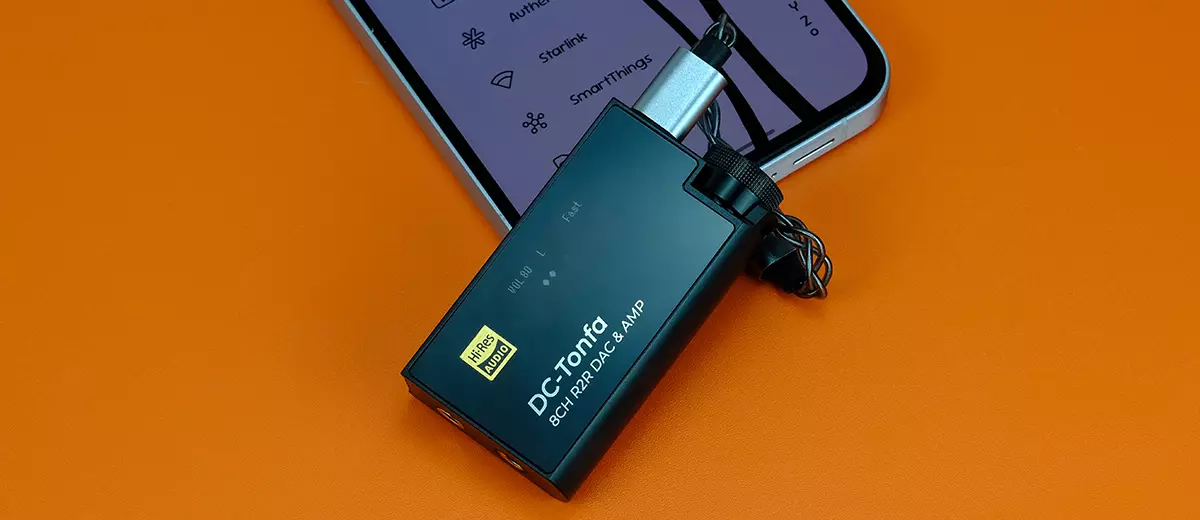
AUDIO INDUSTRY NEWS — iBasso has officially entered a new chapter in portable high-resolution audio with the release of the DC-Tonfa, a discrete R2R dongle DAC priced at $359.00. Co-developed in partnership with the prominent Japanese retail powerhouse e-earphone, the DC-Tonfa represents a strategic shift away from clinical, ultra-neutral portable design toward a warm, highly engaging, analog-centric sound signature.
Engineered to target what modern audiophiles increasingly demand—substantial output power combined with deep emotional engagement—the DC-Tonfa looks to redefine expectations for portable DAC/amps in the sub-$400 tier.

Main Facts & Core Architecture
At its technical core, the iBasso DC-Tonfa is an 8-channel, fully differential R2R discrete dongle DAC. Unlike traditional delta-sigma chips that dominate the portable market, the R2R architecture relies on a precise ladder network of resistors to convert digital signals into analog sound waves.
Key Specifications:
- Price: $359.00 USD
- DAC Architecture: Discrete 8-channel R2R utilizing 312 ultra-low-temperature-drift Viking metal film resistors (including a 60-resistor hardware compensation network).
- Amplification: 2 x dual Texas Instruments (TI) op-amps and 4 x BUF634A buffers.
- Output Power: Up to 800mW into a 32-ohm load via the balanced output.
- Supported Formats: Native playback up to 32-bit/768kHz PCM and DSD512.
- Noise Management: Dedicated Linear LT3042 ultra-low-noise LDO (Low-Dropout regulator) specified at 0.8 µV output noise and 100 dB Power Supply Rejection Ratio (PSRR).
- Clocking & Processing: Dual Accusilicon femtosecond crystal oscillators paired with iBasso’s proprietary FPGA-Master digital signal management system.
Chronology of Development and Release
The creation of the DC-Tonfa spans a collaborative trajectory rooted in consumer feedback and iBasso’s ongoing R&D roadmap.

- Early Hardware Foundations: iBasso established its prowess in discrete R2R design with desktop and larger portable units, such as the architecture seen in the DX270 digital audio player. Concurrently, the success of the DC-Elite and the Nunchaku dongles paved the way for advanced mobile user interfaces, including integrated OLED displays and multi-function rotary controls.
- The e-earphone Partnership: Recognizing shifting consumer tastes—particularly in the massive Japanese personal audio market—iBasso partnered with e-earphone. Retail data and customer requests highlighted a distinct appetite for dongle DACs that could effortlessly drive demanding modern planar magnetic headphones without sacrificing the rich, organic texture traditionally associated with desktop R2R setups.
- Global Rollout and Reviews: Following early exhibition previews at major international trade events like CanJam Shanghai and SIAS in Shenzhen, review samples were distributed to independent audio publications, confirming the unit’s market readiness and setting the stage for broader retail availability.
Supporting Data & Design Engineering
While the DC-Tonfa shares a familiar family resemblance with the DC-Elite and Nunchaku in terms of its robust aluminum housing and tempered glass finish, its internal layout and feature set are distinct.
Build and Connectivity
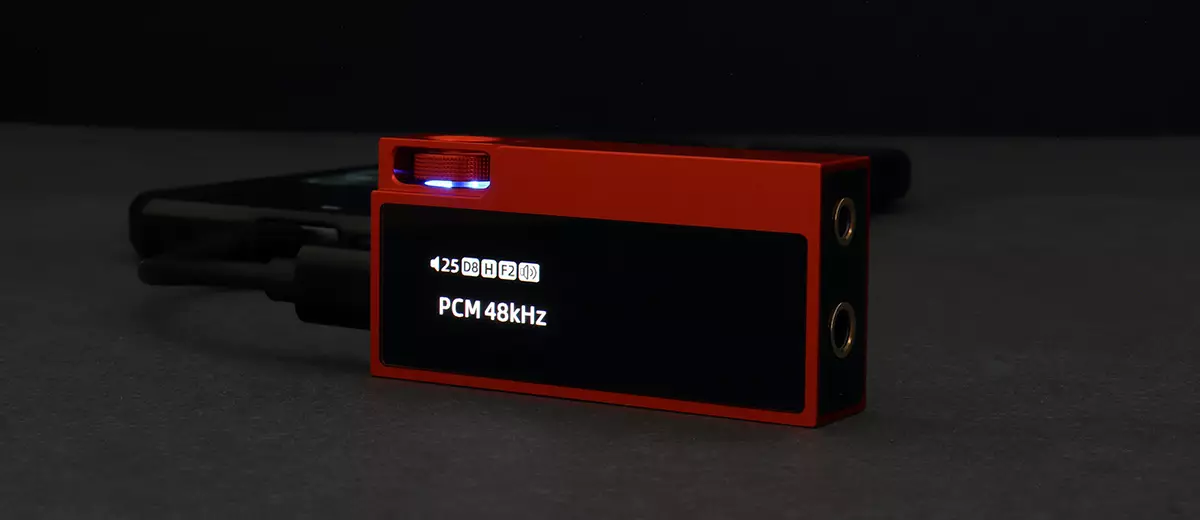
The chassis is slightly on the bulky side for a standard dongle DAC, but this extra volume serves a functional purpose. It houses a vibrant 0.96-inch OLED display that presents real-time operational metrics—such as volume levels, gain status, and active digital filters—at a glance.

- Physical Inputs/Outputs: A top-mounted USB-C port supports UAC 2.0 and UAC 1.0 protocols. The bottom panel features standard 3.5mm single-ended and 4.4mm balanced outputs.
- Coaxial S/PDIF Capability: Notably, the 3.5mm output doubles as an S/PDIF coaxial output, effectively allowing users to deploy the DC-Tonfa as a pure standalone DAC feeding an external amplifier. This mode can be toggled directly via the on-device menu or through companion software.
- Control Systems: Navigation is handled by a responsive multi-function rotary dial. Pushing the dial for one second summons the on-screen menu, allowing users to modify gain, volume, and filter profiles (including a dedicated Non-Over-Sampling or "NOS" mode) on the fly.
Accessories and Ecosystem Integration
The retail package includes a color-matched grainy leather protective case featuring an integrated MagSafe magnetic ring on the rear—allowing iPhone users to magnetically dock the DAC to their mobile devices, though field tests indicate the magnetic hold is moderately light. Additionally, iBasso bundles braided 4-core USB-C to USB-C and Lightning cables alongside a USB-C to USB-A adapter for desktop computer integration.
Official Responses and Industry Positioning
The collaborative nature of the DC-Tonfa’s development has drawn significant commentary from industry observers.

In statements detailing the product’s design philosophy, representatives from e-earphone emphasized that modern consumers are no longer satisfied with purely clinical, analytical portable audio solutions. Listeners increasingly seek emotional resonance, weight, and dynamic impact—qualities traditionally lost when miniaturizing high-end audio topologies.
Independent reviewers have similarly positioned the DC-Tonfa as a philosophical pivot point for iBasso. While previous models like the DC-Elite prioritized micro-detail, absolute clarity, and technical precision, the DC-Tonfa leans heavily into a dense, analog-like presentation. It trades away a fraction of ultra-high-frequency sparkle in exchange for an authoritative, full-bodied midrange and thunderous low-end dynamics, particularly when operating in its uncompromised NOS (Non-Over-Sampling) mode.

Implications for the Portable Audio Market
The release of the iBasso DC-Tonfa at a price point of $359.00 carries several notable implications for the personal audio landscape:
- Democratization of R2R Technology: High-end R2R conversion has historically been restricted to bulky, expensive desktop gear or premium digital audio players costing thousands of dollars. By successfully shrinking discrete resistor ladders into a portable dongle format with 800mW of output power, iBasso is pushing sophisticated audiophile architecture further down-market.
- Bridging IEMs and Full-Sized Headphones: Historically, users faced a compromise: portable dongles could comfortably drive sensitive In-Ear Monitors (IEMs) but choked when faced with power-hungry planar magnetic headphones. With a robust 800mW output balanced against an ultra-low noise floor (courtesy of the LT3042 LDO regulator), the DC-Tonfa demonstrates that users no longer need separate portable rigs for different classes of transducers.
- The Rise of Retail-Manufacturer Collaborations: The co-development model utilized by iBasso and e-earphone highlights a growing trend in consumer electronics where direct retail insights dictate product tuning. By listening closely to frontline consumer demands regarding sound signature preferences, manufacturers can drastically reduce the risk of missed market targets.
As portable audio continues to evolve rapidly, the iBasso DC-Tonfa proves that technical miniaturization does not inherently require a sacrifice in musical soul. For audiophiles seeking desktop-grade R2R warmth and planar-driving authority in a pocket-sized form factor, the market has a compelling new heavyweight contender.