Istanbul, Turkey — In the rapidly evolving and intensely competitive landscape of personal audio, new entrants often struggle to find a distinct voice. Many brands rely on sheer driver count, packing hybrid configurations with numerous balanced armatures and electrostatic tweeters into resin shells. However, emerging Istanbul-based manufacturer Virtus Audio is taking a radically different approach.
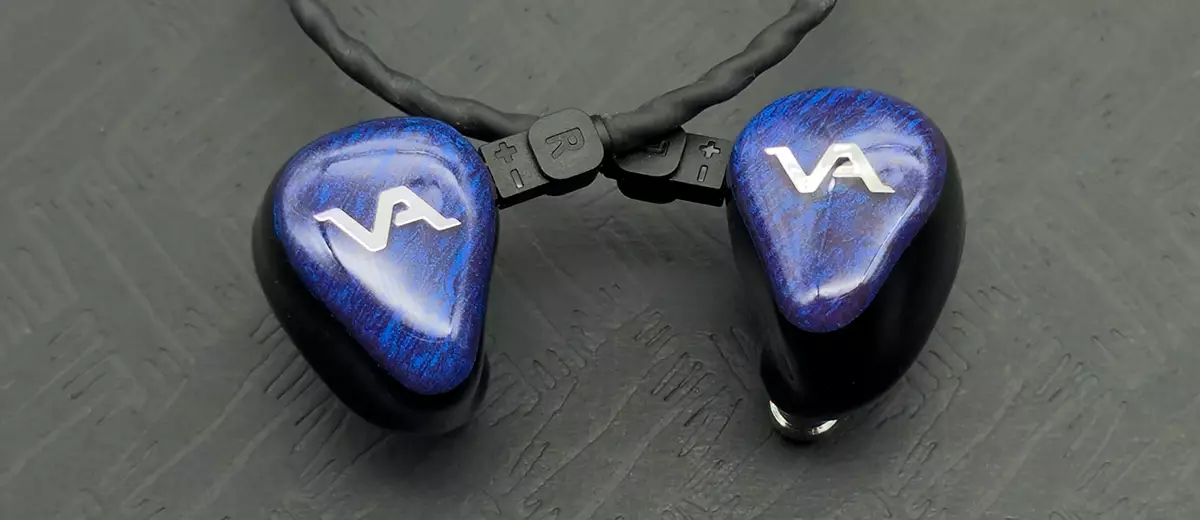
Focusing entirely on internal acoustic architecture and refined driver integration, Virtus Audio has entered the market with a carefully curated portfolio of dynamic-driver-only In-Ear Monitors (IEMs). At the pinnacle of this lineup sits the Virtus Audio Apex, a flagship coaxial dynamic driver IEM priced at $1,299 for the universal format and starting at $1,499 for the custom version.

Reviewers and audio enthusiasts examining high-end portable audio will find the Apex to be a fascinating study in balancing raw musical engagement with technical refinement.
Main Facts & Overview
The Virtus Audio Apex is built around an uncompromising 2-way coaxial dual dynamic driver configuration. Designed to handle frequencies across a broad spectrum with minimal phase distortion, the internal array comprises:

- Low Frequencies: A large 12mm crystal-graphene dynamic driver dedicated to delivering a powerful, deeply extended low-end response.
- High Frequencies: A compact 7mm pure beryllium dome tweeter responsible for the upper registers, ensuring crisp and articulate high-frequency delivery.
Operating alongside this driver pairing is a high-precision 2-way crossover network paired with linear impedance technology. This engineering choice allows the Apex to maintain a consistent frequency response regardless of the output impedance of the source device it is paired with.
The universal version commands a $1,299 price tag, while fully custom-molded variants begin at $1,499. The package includes premium accessories such as stock Divinus Velvet ear tips, a large Pelican-style protective travel case, a compact leather carrying case, and a standard 3.5mm-to-6.5mm adapter.

Chronology of Development & Market Entry
Virtus Audio’s journey from conceptualization to global market availability reflects a deliberate, quality-first philosophy:
- Initial R&D Phase: Rather than rushing out a dozen products, Virtus Audio spent significant engineering hours focusing on internal air movement, reflection control, and acoustic damping. Because dual dynamic drivers move a substantial volume of air within a compact shell, the team abandoned conventional tubing and heavy damping in favor of custom-engineered internal pathways and chambers.
- Product Launch: The brand introduced its initial two-model lineup—the Vortex and the flagship Apex—both utilizing exclusive dynamic-driver architectures. Both models were made available in both universal shell formats and custom-fit configurations.
- Critical Reception & Review Cycle: Independent evaluation of the Apex placed the flagship alongside established industry heavyweights, quickly gaining traction within audiophile communities for its unique L-shaped sound signature, impressive sub-bass execution, and smooth treble handling.
Supporting Data & Technical Analysis
Acoustic Design and Internal Airflow
Managing air pressure is one of the greatest challenges in multi-dynamic-driver IEM design. Virtus Audio addressed this by engineering internal chambers and specific acoustic pathways that keep internal resonances and unwanted reflections to a minimum. Combined with high-grade internal wiring and precise soldering, the drivers operate with exceptional freedom, resulting in a remarkably clean and controlled presentation.

Ergonomics, Comfort, and Isolation
- Shell Dimensions: The resin shells fall into the small-to-medium category, making them significantly more compact than bulky competitors like the THIEAUDIO Monarch MKIV or Origin, while remaining slightly larger than the Campfire Alien Brain.
- Fit and Venting: Standard-sized metallic nozzles ensure that finding compatible aftermarket ear tips is rarely necessary, especially given that top-tier Divinus Velvet tips are included out-of-the-box. Integrated shell venting successfully eliminates pressure buildup during extended listening sessions while still providing robust passive noise isolation.
- The Cable Controversy: The stock UP-OCC thin cable—fitted with a 3.5mm termination and standard 2-pin connectors—stands out as the primary point of criticism. While it functions adequately for the sound signature and perhaps lends itself well to monitoring use (aided by the included 6.5mm adapter), its frail aesthetics and stiff pin connections feel underwhelming for a $1,300 flagship product.
Sound Impressions
Subjecter testing using high-end gear like the Lotoo PAW Gold Touch, QULOOS MUB5, and Campfire Audio Relay Dongle reveals an engaging, highly refined L-shaped sound signature:
- Bass (The Star of the Show): The 12mm crystal-graphene driver delivers an impactful, deep, and authoritative low end. It strikes an ideal balance between sub-bass depth and mid-bass punch without inducing bloom. Attack is swift and decay is tightly controlled, offering a natural lingering weight that avoids muddying the lower registers.
- Midrange: Exhibiting a warm, analog-leaning undertone, the midrange benefits from a seamless bleed from the low end that imparts generous body to male vocals, guitars, and cellos. While slightly tucked back, the midrange resolution ensures clean tonality and precise instrument separation without sounding congested.
- Treble: The 7mm beryllium tweeter delivers an exceptionally smooth high-frequency response free of sharp, fatiguing peaks. It retains sufficient air, sparkle, and detail to prevent the overall sound profile from feeling dark or veiled, making it remarkably forgiving across various music genres.
- Staging and Dynamics: Though not hyper-wide, the soundstage offers admirable depth and height. Spatial accuracy, macro-dynamics, and sheer musical drive make the Apex an intensely engaging, musical-first IEM rather than a purely clinical or analytical monitor.
Official Statements & Maker Philosophy
Virtus Audio’s foundational ethos centers on acoustic physics over marketing gimmicks. In official communications regarding the Apex and Vortex releases, the company emphasizes that multi-driver arrays often introduce phase anomalies and crossover complexity that can compromise natural timbre.

By refining the physical air pathways within the resin shells and pairing specialized materials—specifically crystal-graphene and pure beryllium—Virtus Audio aims to prove that a carefully optimized dual dynamic driver configuration can rival or surpass complex hybrid systems in both musicality and technical resolution.
Implications for the Audiophile Market
The release of the Virtus Audio Apex at the $1,299–$1,499 price point carries several important implications for the portable audio industry:

- The Revival of Dynamic Drivers: The market has long been saturated with balanced armature and electrostatic drivers. The Apex demonstrates that single-diaphragm or dual dynamic driver setups, when executed with modern materials like graphene and beryllium, can deliver elite-tier bass texture and coherent timbre that multi-driver hybrids often struggle to replicate.
- Rising Standards for New Entrants: As a brand-new name, Virtus Audio cannot rely on legacy reputation alone. By positioning the Apex alongside elite benchmarks like the THIEAUDIO Monarch MKIV, the brand proves that meticulous acoustic engineering from unexpected regions (such as Turkey) can rapidly disrupt established market hierarchies.
- The Importance of Accessory Synergy: The widespread critique of the Apex’s stock cable serves as a cautionary tale for luxury audio manufacturers. Even when acoustic performance and shell ergonomics achieve near-perfection, modern audiophile consumers demand parity in accessory build quality to justify flagship pricing.
Ultimately, the Virtus Audio Apex succeeds where it matters most: in delivering a deeply satisfying, emotionally engaging, and technically capable listening experience that firmly establishes Virtus Audio as a brand to watch in the high-end IEM market.