The 2026 FIFA World Cup was more than just a display of athletic prowess; it was a cultural phenomenon that reshaped the global musical landscape. As the dust settles on the pitch at the New York New Jersey Stadium, the sonic legacy of the tournament has officially cemented its place in music history. Shakira and Burna Boy’s collaborative anthem, "Dai Dai (FIFA World Cup Official Song 2026)," has officially ascended to the No. 1 spot on the Billboard Latin Airplay chart for the week dated July 25, 2026.
This milestone represents more than just a chart position; it is a testament to the seamless fusion of Latin pop sensibilities and Afrobeats rhythms. With this achievement, Shakira continues to etch her name into the annals of music history, while Burna Boy secures his place as a force to be reckoned with in the Latin music market.
The Ascent: Main Facts and Chart Dominance
The track’s trajectory has been nothing short of meteoric. Vaulting from the No. 4 position to the summit of the Latin Airplay chart, "Dai Dai" commanded a 25% surge in audience impressions, reaching a staggering 7.3 million listeners across 152 Latin-reporting radio stations in the United States during the tracking week of July 10–16.
For Shakira, this achievement marks her 25th No. 1 hit on the Latin Airplay chart, extending her record for the most chart-toppers by any female artist in the chart’s 32-year history. While J Balvin continues to hold the overall record with 40 No. 1s, Shakira’s sustained relevance—nearly two decades after her initial rise—underscores her status as an enduring icon of Latin music.
For Burna Boy, the success of "Dai Dai" is historic. This marks his first-ever appearance at No. 1 on a Latin-focused Billboard chart. Known primarily for his dominance in the Afrobeats and global pop spheres, the Nigerian superstar’s successful crossover into the Latin market highlights the increasing porosity of genre boundaries in the streaming era.
A Chronology of a Global Hit
The success of "Dai Dai" was not accidental; it was the result of a calculated and high-energy global rollout that began months before the final whistle blew in East Rutherford.
- June 11, 2026: The track made its grand debut during the FIFA World Cup opening ceremony in Mexico City. The performance acted as the primary catalyst, immediately igniting interest across digital platforms and international radio waves.
- Late June 2026: Within two weeks of its premiere, "Dai Dai" began to sweep global charts. By June 27, it had secured the No. 1 spot on both the Billboard Colombia Hot 100 and the Switzerland Songs chart, maintaining a four-week reign in both territories.
- Early July 2026: As the tournament progressed, so did the song’s reach. On July 4, it topped the Billboard Global Excl. U.S. chart, followed by a No. 1 placement in Austria.
- Mid-July 2026: The momentum reached a fever pitch. By July 11, the song conquered the Billboard Argentina Hot 100. By July 18, it claimed the top spot on the Billboard Global 200, alongside chart-topping performances in Germany and Belgium.
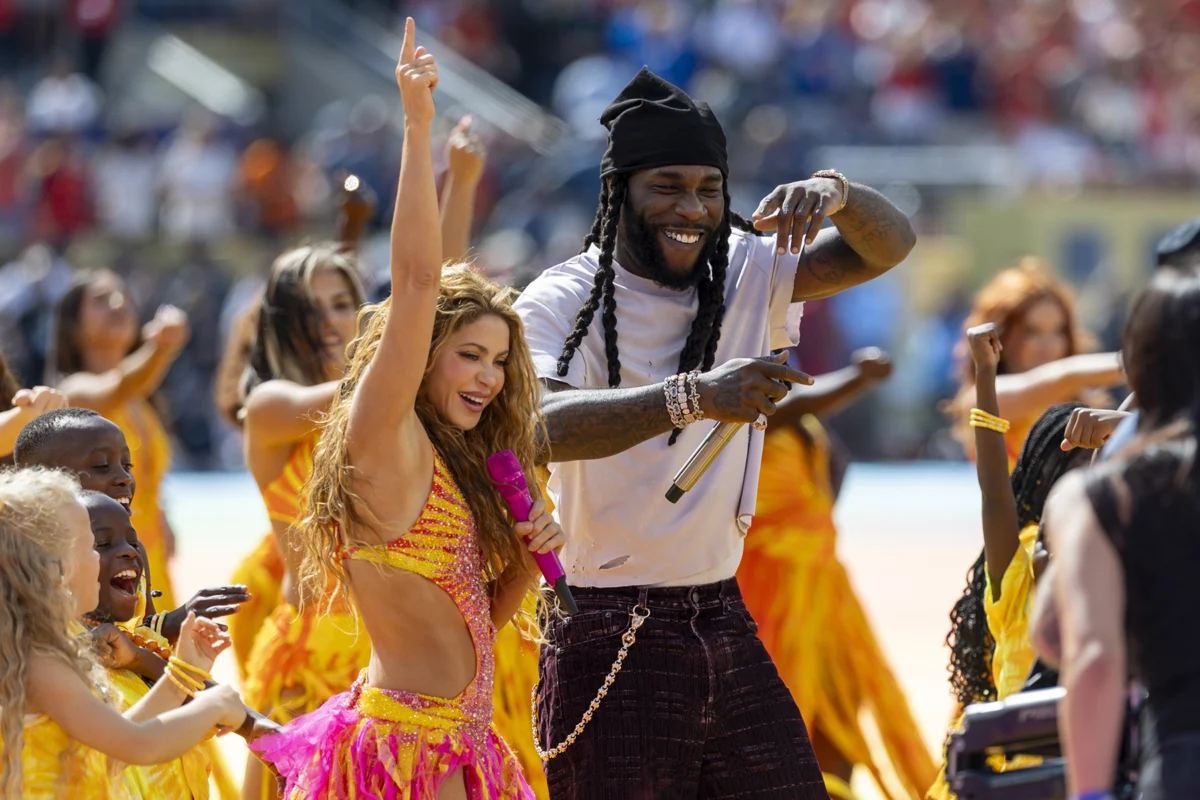
- July 19, 2026: The song received its most significant exposure to date during the World Cup final halftime show at the New York New Jersey Stadium. The spectacle, which featured both artists, served as the definitive "victory lap" for the track.
- July 25, 2026: The song officially reaches the summit of the Billboard Latin Airplay chart, completing its global takeover.
Supporting Data: The Anatomy of a Smash
The data provided by Luminate confirms that the song’s performance is anchored by deep, cross-continental engagement. Unlike many tracks that rely on a single demographic or region, "Dai Dai" has successfully tapped into the European, Latin American, and U.S. markets simultaneously.
The song’s performance on the Billboard Global 200—the definitive ranking of the world’s most popular songs based on global streaming and sales data—is particularly telling. Reaching No. 1 on July 18, it outperformed local regional hits by leveraging the massive, captive audience of the World Cup.
Furthermore, Burna Boy’s inclusion has proven to be a masterstroke in audience expansion. Having previously hit the top 10 of the Reggae Albums chart with L.I.F.E.: Leaving An Impact For Eternity and securing a four-week run at the top of the Rhythmic Airplay chart in January 2026 with his feature on Gunna’s "wgft," the Nigerian artist has demonstrated a unique ability to adapt his sound to various radio formats. The synergy between Shakira’s melodic, high-tempo pop and Burna Boy’s rhythmic, Afro-fusion flow created a "sound of the summer" that satisfied the demands of both radio programmers and streaming algorithms.
Official Perspectives: The Impact of the World Cup Stage
The FIFA World Cup has historically been a launchpad for musical anthems—from Ricky Martin’s "La Copa de la Vida" in 1998 to Shakira’s own "Waka Waka (This Time for Africa)" in 2010. However, the 2026 edition represented a shift toward a more integrated, multimedia approach.
Industry analysts suggest that the halftime show format, which mirrors the Super Bowl’s model, provides an unparalleled platform for audience conversion. By performing during the tournament’s final, Shakira and Burna Boy were able to capture the attention of over a billion viewers, effectively translating television viewership into immediate digital consumption.
"The numbers we are seeing on the Latin Airplay chart are a direct reflection of the ‘World Cup Effect’," says an industry analyst. "When you have a song that is synonymous with the world’s most-watched sporting event, the barrier to entry for the listener is almost non-existent. You are essentially taking the song into the living rooms of every soccer fan on the planet."
Implications: A New Era for Latin and Global Pop
The success of "Dai Dai" carries significant implications for the future of the music industry:
1. The Expansion of the Latin Market
Shakira’s ability to remain at the top of the Latin Airplay charts after more than 15 years as a superstar highlights the resilience and continued growth of the Latin music market. It proves that Latin radio in the United States remains a vital gatekeeper for international success, even in an era dominated by playlisting.
2. The Normalization of Afrobeats-Latin Fusion
The collaboration between a Colombian pop icon and a Nigerian global star was once considered an experimental niche. Now, it is a proven commercial formula. This success will likely encourage record labels to seek out more trans-continental collaborations that bridge the gap between African and Latin American rhythmic traditions.
3. The Lifecycle of an Event-Driven Hit
While "Dai Dai" has conquered the charts, the real challenge lies ahead. With the World Cup concluded on July 19, the song now faces the "post-event decline." However, the data suggests that the song has reached a level of cultural saturation that may allow it to sustain its popularity beyond the tournament. The fact that the tracking week for the July 25 chart includes the days immediately following the final suggests that the "halftime show bounce" is likely to keep the track in high rotation for several weeks to come.
4. Setting the Standard for Future Collaborations
FIFA’s decision to elevate the halftime show at the 2026 final has set a new benchmark for how sporting bodies approach music. By prioritizing a high-production, high-profile musical performance, FIFA has successfully created a symbiotic relationship between sports and entertainment that benefits both the tournament and the artists involved.
Conclusion
As "Dai Dai" sits atop the Billboard Latin Airplay chart, it serves as a monument to the 2026 World Cup. It is a song that captures the spirit of a global gathering—vibrant, inclusive, and undeniably catchy.
Whether it maintains its position in the coming weeks remains to be seen, but its impact is already solidified. Shakira has once again proven why she is the queen of the Latin charts, and Burna Boy has firmly established himself as a global superstar capable of dominating any territory he enters. As the music industry continues to evolve, the story of "Dai Dai" will be remembered as the moment when the world’s most popular sport and the world’s most popular music truly became one.