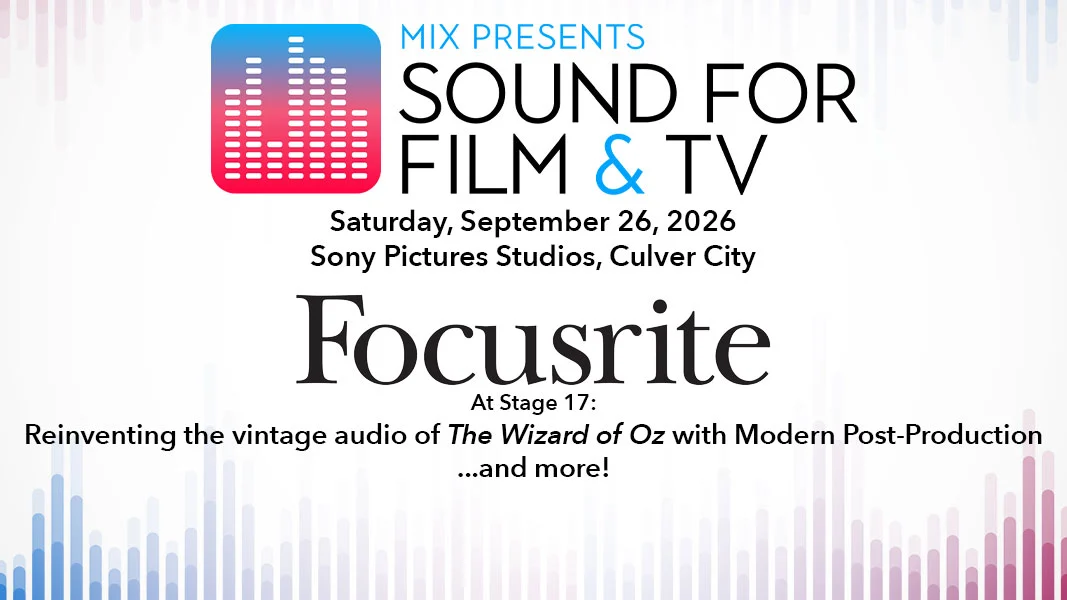
CULVER CITY, CA – On September 26, 2026, the hallowed grounds of Sony Pictures Studios will once again become the epicenter of audio innovation. As the 13th annual Mix Presents Sound for Film & Television event approaches, the industry is turning its collective gaze toward a remarkable technical achievement: the sonic reimagining of the 1939 classic, The Wizard of Oz, specifically tailored for the immersive, high-fidelity environment of Las Vegas’ Sphere.
The restoration and expansion of this cinematic masterpiece serve as the centerpiece of this year’s conference. By leveraging cutting-edge AI-driven source separation and spatial audio processing, sound engineers have managed to bridge an 86-year technological gap, transporting a vintage mono masterpiece into the world of contemporary, hyper-immersive audio.
The Technical Odyssey: Reinventing a Classic
The challenge of updating The Wizard of Oz was not merely one of fidelity, but of geography. How does one take an audio track recorded in the late 1930s—a time of limited frequency response and monophonic constraints—and deploy it within the Sphere, a venue defined by its 160,000-speaker Holoplot beamforming system?
The answer lies in the intersection of legacy media and modern machine learning. At the upcoming Mix event, Suzanne Kirkland and Stephen Oliver of AudioShake will lead a deep-dive session titled "Nothing Is Locked, Nothing Is Lost: Sound Separation in Modern Post." This presentation, presented in Dolby Atmos by Focusrite, will detail how the teams from Warner Bros. and Post-Production Creative navigated the delicate process of deconstructing the original score and dialogue tracks.
The Chronology of Restoration
- Source Identification (Early 2026): The project began with the identification of original archival assets. The goal was to isolate dialogue, music, and sound effects that had been "baked" into a single, cohesive mono track for nearly a century.
- AI-Assisted Separation: Using proprietary tools, the team utilized AI-driven source separation to untangle the dense, vintage audio layers. This process allowed engineers to treat the music and vocal performances as discrete elements, a feat previously considered impossible without introducing significant artifacts.
- Spatial Mapping: Once isolated, these elements were mapped to the Sphere’s complex acoustic architecture. Unlike traditional theater sound, the Sphere requires audio to be spatially aware, allowing the "Yellow Brick Road" to audibly travel around the audience in real-time.
- Integration and Balancing: The final phase involved re-mixing these cleaned, separated, and expanded assets to ensure that while the film felt "modern," it retained the warmth and aesthetic integrity of its 1939 origin.
The Core Philosophy: "Nothing is Locked, Nothing is Lost"
The mantra of the 2026 restoration project, "Nothing is Locked, Nothing is Lost," challenges the long-standing industry belief that archival film audio is immutable. In the past, if a film was released in mono, the mix was considered a permanent artifact.
Kirkland and Oliver’s panel is expected to be a watershed moment for archivists and post-production professionals. By demonstrating that even the most "baked-in" audio can be recovered, cleaned, and redistributed, the team is effectively unlocking the back catalogs of major studios. This methodology has implications far beyond The Wizard of Oz; it provides a roadmap for the restoration of thousands of historical films that were previously deemed "too degraded" for modern immersive formats.
Expanding the Sonic Palate: The Sound Particles Suite
While The Wizard of Oz restoration serves as a case study in historical preservation, the Mix event will also pivot toward the future of creative sound design. A major highlight will be the presentation "The Magic of Sound Particles," sponsored by Focusrite and Adam Audio.
Sound design is no longer just about placing a sound in a scene; it is about creating a living, breathing soundscape. The presentation will offer an exclusive look at:
- Sound Particles 3: A standalone workstation that utilizes particle systems to generate complex, moving audio environments.
- Energy Panner: An exploration into how sound intensity can dictate movement within a 3D soundfield.
- SkyDust 3D: An innovative synthesizer designed specifically for immersive audio creation.
- Beat Panner: New tools for spatializing rhythm and percussion in cinematic scores.
These tools represent a fundamental shift in how composers and sound designers approach their craft. Rather than building a scene "track by track," these technologies allow for the simulation of hundreds of simultaneous sound sources, creating a sense of scale and depth that mimics reality.
Industry Implications: Why This Matters
The convergence of AI, spatial audio, and historical preservation at this year’s Mix event highlights several critical trends in the modern entertainment landscape:
1. The Democratization of High-End Post-Production
The tools being showcased in Culver City are becoming increasingly accessible. As AI-based separation and particle-based design move from boutique plugins to industry standards, independent filmmakers and small post-production houses are gaining the ability to achieve the same sonic depth as major Hollywood studios.
2. The "Legacy Content" Goldmine
With the rise of streaming services and large-scale experiential venues like the Sphere, there is a massive appetite for "eventizing" classic films. By upgrading the audio of legacy content, studios can breathe new life into their intellectual property, allowing films from the 1930s, 40s, and 50s to compete in modern, high-tech environments.
3. The Remote Collaboration Paradigm
The event will also address the logistical realities of 2026: remote collaboration. As production teams become increasingly decentralized, the industry is shifting toward cloud-based post-production workflows. Attendees will gain insights into how top-tier engineers coordinate massive projects across continents, ensuring that quality control remains absolute despite the lack of a centralized studio environment.
Official Perspective: Shaping the Future
"The Mix Presents Sound for Film & Television event has always been a reflection of where we are and where we are going," said a spokesperson for the event organizers. "Hosting this on the same Sony lot where The Wizard of Oz was recorded creates a profound sense of continuity. We are standing on the shoulders of the giants who recorded that original score, using the tools of the future to honor their past."
The industry’s reliance on these high-level conferences is greater than ever. With the rapid pace of technological change—particularly in the integration of artificial intelligence into creative workflows—professionals find it increasingly necessary to gather in person to exchange techniques, debate ethics, and witness live demonstrations of emerging software.
A Call to the Industry
The significance of the 13th annual event cannot be overstated. With hundreds of industry professionals, including top-tier mixers, editors, and producers, expected to attend, the networking opportunities are secondary only to the educational content.
Whether one is interested in the technical nuances of object-based audio or the business side of archive restoration, the event offers a comprehensive overview of the state of the art. As the industry moves toward a future where "immersive" is the default setting for all content—from handheld devices to massive, multi-story spherical venues—the skills being taught at Mix will become the prerequisite for success in the field.
Event Details at a Glance
- Event: Mix Presents Sound for Film & Television
- Date: Saturday, September 26, 2026
- Location: Sony Pictures Post Production Services, Culver City, CA
- Featured Keynotes: AudioShake (Source Separation), Sound Particles (Spatial Design)
- Registration: Open now via mixsoundforfilm.com
As the sun sets over the Sony Pictures lot this September, the conversations held within those walls will likely dictate the technical standards for the next decade of cinematic audio. By marrying the artistry of the Golden Age of Hollywood with the digital precision of the 21st century, the industry is proving that while technology changes, the power of sound to transport an audience remains, as ever, the heartbeat of the cinema experience.
Prospective attendees are encouraged to register early, as the event is expected to reach capacity, reflecting the high demand for insights into the future of sound-for-picture.