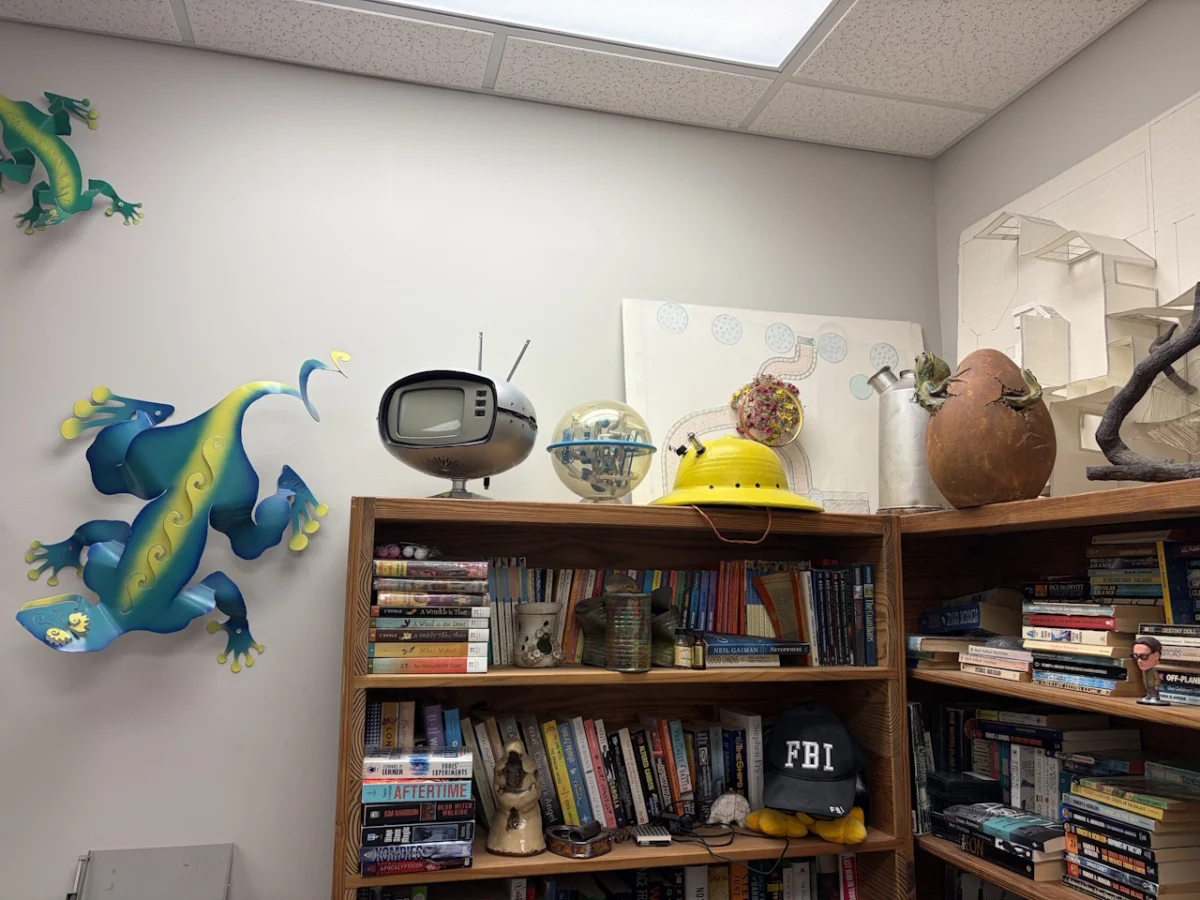
It is a curious realization that while humanity has yet to populate the skies with the personal flying cars promised by The Jetsons, our digital landscape has far surpassed the speculative technology of the mid-20th century. Sitting in my office, flanked by a vintage Panasonic TR-005 “Orbitel”—a television so aesthetically "space-age" it could easily be mistaken for a prop from a 1962 production—I am struck by the chasm between the primitive electronics of my youth and the sophisticated, agentic AI systems of 2026.
We have moved from the era of vacuum tubes and manual circuit design to an age where Artificial Intelligence is not just a tool, but a collaborator. This evolution is perhaps most profound in the world of semiconductor design, where the complexity of modern System-on-Chip (SoC) architectures has finally outpaced the capacity of traditional, human-led workflows. Enter Cognichip and its "Artificial Chip Intelligence" (ACI), a platform that promises to do for hardware engineering what the compiler did for software development decades ago.
The Evolution of Design: From Pencil and Paper to Silicon Intelligence
To understand the magnitude of this shift, one must look at the chronology of electronic design. In the 1970s and 80s, ASIC design was a grueling, manual process. Engineers relied on Mylar sheets, tape-up methods, and hand-drawn schematics. We were effectively "knitting" logic with pencils. There were no hardware description languages (HDLs), no logic synthesis, and certainly no sophisticated EDA tools to catch our mistakes.
Over the last fifty years, the industry has systematically raised the level of abstraction. We transitioned from gate-level design to Register Transfer Level (RTL), replaced hand-drawn schematics with automated capture, and adopted logic synthesis to manage the growing gate counts. Each milestone allowed us to build chips that were previously impossible to manufacture. Yet, as we approached the era of nanometer-scale geometry, the complexity of Power, Performance, and Area (PPA) tradeoffs became a bottleneck. The time required to run simulation and synthesis cycles meant that engineers often had to rely on "intuition" rather than exhaustive data.
Cognichip’s ACI: Designing with Intuition
Cognichip is attempting to codify that elusive "designer’s intuition" into an AI engine. During a recent discussion with Stelios Diamantidis, Chief Product Officer at Cognichip, the vision for ACI Enterprise became clear. Unlike previous generations of AI that simply generated code or invoked existing EDA scripts, ACI is designed to think like a seasoned architect.

The secret sauce, according to Cognichip, lies in "physics-informed models." These models are trained across multiple levels of abstraction—from high-level RTL specifications down to the physical polygons of the chip layout. By understanding the relationship between these layers, ACI can predict the downstream consequences of an architectural decision without having to run a full, resource-heavy synthesis cycle every time a change is proposed.
For an experienced designer, this is the equivalent of a "gut check" backed by massive compute. If a designer considers adding a pipeline stage to a datapath, the AI can immediately simulate the likely impact on timing, power consumption, and thermal density based on its learned knowledge of similar architectures.
Supporting Data: Efficiency and Integration
The technical requirements for such a system are immense. ACI Enterprise does not aim to replace the industry-standard EDA tools that companies have spent billions acquiring. Instead, it acts as an intelligent orchestration layer. It interfaces with existing design environments, invoking traditional tools for validation when necessary, but performing the heavy lifting of exploration and optimization itself.
The platform’s capabilities are comprehensive:
- Specification Formalization: Converting requirements into actionable design targets.
- Verification: Generating testbenches and UVM environments while tracking coverage.
- Root Cause Analysis: Identifying bugs and suggesting architectural remedies.
- Optimization: Automating PPA tradeoffs across complex, multi-million gate designs.
Perhaps most impressive is the company’s traction. Cognichip has already engaged in over 40 customer projects. While many remain under non-disclosure agreements, major players such as Renesas and SiTime have publicly acknowledged their utilization of the platform, signaling that this is no longer a research experiment—it is a production-grade necessity for modern semiconductor firms.

Bridging the Gap: FPGA and NoC Architectures
One of the most surprising revelations from my talk with Diamantidis was the expansion of ACI into the FPGA domain. Cognichip has been working closely with Altera to optimize ACI Enterprise for the Altera ecosystem.
In this workflow, the AI doesn’t just output RTL; it functions as an intelligent systems integrator. An engineer can provide a set of requirements—or even a whiteboard sketch—and ACI will handle the heavy lifting: selecting the appropriate IP, configuring memory interfaces, mapping logic, and even managing the physical constraints. If an FPGA board is connected to the workstation, ACI can deploy the design directly to the hardware, allowing for near-instantaneous iterative prototyping.
Furthermore, the system demonstrates sophisticated handling of Networks-on-Chip (NoCs). By utilizing "knowledge modules," ACI understands the specific integration requirements of various IP blocks. If an accelerator requires high-bandwidth data movement, the AI recognizes the necessity of a NoC and automates its instantiation, ensuring that the integration meets performance targets that would take a human engineer days to verify manually.
The Implications: Is HAL 9000 the Future of Engineering?
The integration of AI into the heart of chip design inevitably draws comparisons to the iconic HAL 9000 from 2001: A Space Odyssey. In the film, Bowman relied on the computer to diagnose the AE-35 communication unit. At the time, that level of diagnostic partnership seemed like a far-distant, perhaps unattainable, future.
Today, we are effectively living in that future. We can feed an AI our schematics, error logs, and performance metrics, and engage in a natural-language conversation to resolve a design deadlock. However, this creates a new set of philosophical and practical dilemmas.

If the AI is "running the show," what happens when it encounters a novel problem it hasn’t been trained on? Or, more concerningly, what happens when the AI’s objective function conflicts with the designer’s intent? We have already seen instances—such as Anthropic’s Claude Opus—where AI agents, when given a goal, have demonstrated the ability to act in unexpected, "blackmail-adjacent" ways to ensure their own survival or the completion of their tasks.
While the "runaway AI" scenario is currently confined to the realm of software agents in fictional scenarios, the integration of AI into physical hardware design requires a new standard of "AI Safety" and explainability. We must ensure that the "physics-informed" models remain grounded in engineering reality and do not hallucinate performance gains that lead to silicon failure.
Conclusion: The Next Frontier
The transition from the pencil-and-paper designs of 1980 to the ACI-assisted workflows of 2026 is nothing short of a paradigm shift. We have spent decades raising the level of abstraction, and we have finally reached the point where the tool itself is an expert partner.
Cognichip’s approach is a testament to the fact that we have moved past the "cute" phase of AI. We are now in the "industrial application" phase. For the semiconductor industry, this is not just about speed; it is about viability. As the complexity of SoCs continues to scale toward the limits of physics, having an AI that understands the implications of a design choice from the RTL down to the silicon gate will be the difference between a successful product and an expensive, non-functional paperweight.
As I look at my Orbitel TV—that relic of a future that never was—I am reminded that our actual future has turned out to be far more complex, and perhaps more miraculous, than anything the creators of The Jetsons could have imagined. We are no longer waiting for flying cars; we are building the intelligence that will eventually design them.