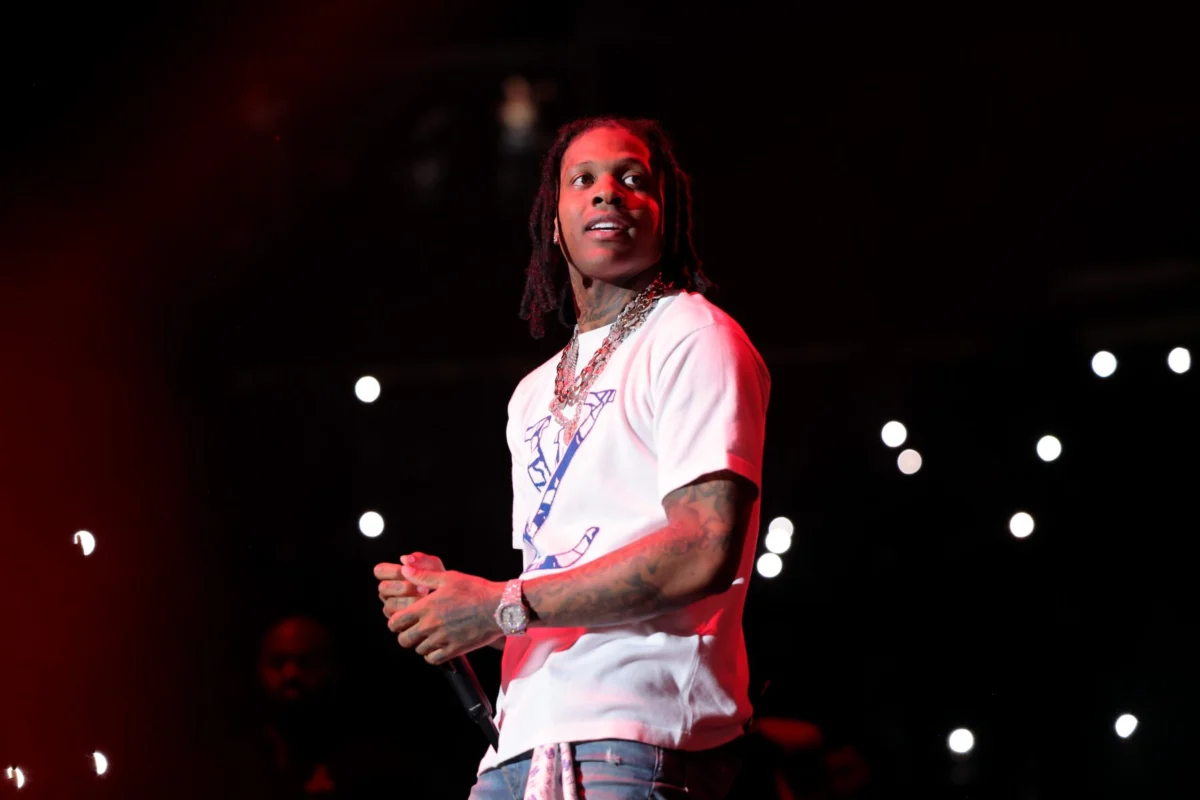
Executive Summary: The Court Stands Firm
In a significant courtroom development, a federal judge has rejected the prosecution’s attempt to delay the murder-for-hire trial of Chicago rapper Lil Durk, born Durk Banks. U.S. District Judge Michael W. Fitzgerald ruled on Tuesday, July 14, that the proceedings will move forward as scheduled on August 20 in Los Angeles.
The prosecution had sought to push back the trial date following their decision to add a series of new, complex charges to the indictment—specifically, allegations of violent gang activity under the federal Violent Crimes in Aid of Racketeering Activity (VICAR) statute. Judge Fitzgerald, however, viewed the government’s maneuver as an "obvious" tactical effort to bolster a case that had already been subject to multiple postponements. The ruling serves as a major victory for the defense, ensuring that the legal battle remains focused on the core charges rather than being expanded into a sprawling racketeering case at the eleventh hour.
Chronology of the Case: From Indictment to Trial
The legal challenges facing Lil Durk have evolved significantly since the initial 2024 indictment. To understand the gravity of the current situation, one must look at the timeline of events that brought the case to this juncture:
- The 2020 Catalyst: The genesis of the case lies in the 2020 murder of King Von, a close friend and collaborator of Durk. The subsequent violence, which the government characterizes as a retaliatory war between rival factions, forms the bedrock of the prosecution’s narrative.
- The 2022 Shooting: In 2022, rival rapper Quando Rondo was targeted at a Los Angeles gas station. While Rondo survived the attack, an individual caught in the crossfire was killed, leading to the murder-for-hire charges currently pending against Banks.
- The 2024 Indictment: Prosecutors filed the original charges, alleging that Banks had placed a bounty on Rondo’s life, directly linking the Chicago-based rapper to the violence in California.
- The June 2026 Expansion: Last month, the government introduced a third superseding indictment. This filing added charges under the VICAR statute, accusing Banks of orchestrating wider criminal activities through his label, Only the Family (OTF).
- The July 2026 Pre-Trial Ruling: Judge Fitzgerald’s decision to deny the delay confirms that the court is unwilling to let the scope of the trial be altered by the late-stage addition of these new allegations.
The Prosecution’s Strategy vs. Judicial Scrutiny
During the hearing held on July 14, lead prosecutor Ian Yanniello argued that the new VICAR counts were "inextricably tied" to the existing murder-for-hire charges. The government’s stance was that the murder of the individual in Los Angeles was not an isolated incident but rather a deliberate act carried out on behalf of the OTF gang. By grouping these together, prosecutors argued they could provide the jury with a more comprehensive "narrative" of the defendant’s alleged criminal enterprise.
Judge Fitzgerald was notably unconvinced, and his remarks from the bench were sharp. He categorized the government’s decision to add the new charges—and then immediately request a delay—as a tactical move designed to prejudice the jury against the defendant by introducing evidence of broader gang activity.

"You think you will have a better chance to win if the Chicago count is tried with the Los Angeles murder," the judge remarked. "That’s obvious. You treat that as a feature. I treat that as a bug."
The judge emphasized that the prosecution had been in possession of the facts underlying these charges for over a year. By failing to bring these charges forward earlier, they had forfeited the right to disrupt the existing trial schedule. He suggested that if the government insisted on pursuing the racketeering charges, they should do so in a separate, subsequent trial, rather than burdening the immediate murder-for-hire case.
Defense Perspective: "Lipstick on a Pig"
Lil Durk and his legal team have consistently maintained his innocence. Following the judge’s ruling, the defense expressed satisfaction with the court’s commitment to judicial efficiency and fairness.
Defense attorney Drew Findling, who has been a vocal critic of the government’s "superseding" tactics, described the prosecution’s attempt to expand the indictment as "lipstick on a pig"—a metaphor suggesting that the government was trying to dress up a weak case with flashy, inflammatory new charges.
"It’s one of those days that makes it so rewarding to be a trial attorney," Findling told the press outside the courthouse. "We so appreciate the thoroughness that took place in that courtroom today."

The defense’s victory here is twofold: they have prevented the jury from hearing a potentially overwhelming volume of evidence regarding the broader OTF label’s activities, and they have successfully held the prosecution to the original timeline, preventing a further "drag" on the proceedings that could have favored the government’s ability to refine their case.
Implications of the Ruling
The decision to keep the August 20 trial date has profound implications for both the legal process and the music industry.
For the Legal Process
This ruling sets a clear precedent for how the court intends to manage this case. By refusing to consolidate the VICAR charges with the murder-for-hire case, Judge Fitzgerald is effectively compartmentalizing the prosecution’s evidence. This limits the "spillover" effect, where jurors might be unfairly influenced by evidence of general gang affiliation that is not directly related to the specific murder charge.
For the Music Industry
Lil Durk is one of the most prominent figures in modern rap, and the trial is being closely watched by fans and industry insiders alike. The intersection of rap culture, gang-related allegations, and federal prosecution has become a focal point of recent legal discourse. The case highlights the increasing scrutiny on artists who maintain close ties to their neighborhood origins while achieving global fame.
The "Divide and Conquer" Dilemma
By forcing the government to choose between proceeding with the current case or risking a massive delay, the court has stripped the prosecution of its ability to easily "bulk up" its case. The government must now decide if the VICAR charges are significant enough to warrant a second, separate trial, or if they will proceed solely with the evidence they have already prepared for the Los Angeles incident.

Conclusion: A High-Stakes Trial Awaits
As August 20 approaches, the focus returns to the primary charge: the murder-for-hire plot in Los Angeles. The court’s refusal to grant a delay is a rare win for a defendant facing such serious federal charges, underscoring the importance of constitutional rights and the right to a speedy trial.
While the legal proceedings regarding the OTF label and potential racketeering charges may still loom in the future, for now, the courtroom will remain focused on the facts surrounding the 2022 incident. The legal community will be watching closely to see how the prosecution adjusts its strategy, and whether the defense can maintain this momentum as the jury selection process nears.
Ultimately, this case serves as a reminder that even in the most high-profile and complex federal prosecutions, the court remains the final arbiter of fairness, ensuring that the wheels of justice turn with both accuracy and due speed. Whether the prosecution attempts to appeal or pivot, the August 20 trial date remains the definitive deadline, setting the stage for what is expected to be a landmark legal battle.