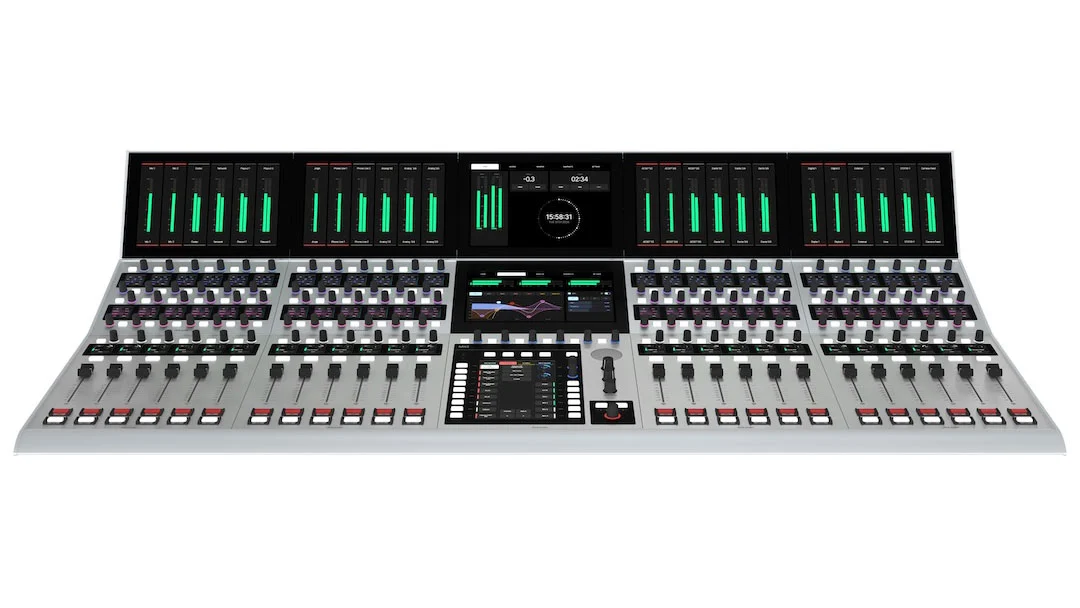
AMSTERDAM, The Netherlands — The landscape of professional broadcast and production audio is undergoing a significant transformation, driven by the need for greater agility, IP-native connectivity, and long-term hardware sustainability. Addressing these shifts head-on, DHD.audio, a leading innovator in digital audio mixing technology, officially unveiled its new MX3 console range during the IBC2026 conference in Amsterdam this September.
As the third generation of the company’s celebrated Series 52 control surfaces, the MX3 represents more than a mere iterative update. It is a strategic reimagining of how control hardware integrates into the fluid, rapidly evolving ecosystems of modern media facilities. By prioritizing modularity, network-based connectivity, and "future-proof" architecture, DHD.audio aims to provide broadcasters with a robust solution capable of weathering the uncertainties of production growth and technological obsolescence.
The Core Innovation: A New Chapter for Series 52
For years, the DHD Series 52 has served as the backbone for countless radio and television studios globally, recognized for its reliability and tactile precision. The MX3 builds upon this legacy while addressing the specific pain points identified by modern production engineers: the need for rapid reconfiguration and the necessity of seamless IP integration.
At its heart, the MX3 console range is designed to eliminate the rigidity often associated with high-end audio mixing hardware. Media facilities are in a constant state of flux; studio personnel requirements fluctuate, and program formats evolve with little warning. The MX3 system design specifically targets this volatility by allowing facilities to scale their infrastructure incrementally. Rather than mandating a costly and time-consuming "rip-and-replace" cycle when a studio’s needs change, the MX3 allows for the gradual addition of specific modules, ensuring that capital investment is protected over a much longer operational lifecycle.
Crucially, DHD has ensured that this new generation remains tethered to the proven stability of the company’s existing digital processing cores. This backward compatibility is a significant boon for current Series 52 users, providing a clear and cost-effective migration path toward the latest hardware without requiring a total overhaul of the back-end processing environment.
Chronology of a Broadcast Evolution
To understand the significance of the MX3, one must look at the trajectory of DHD’s development philosophy over the last two decades.
The Foundation: The Series 52 Era
The original Series 52 was launched as a response to the industry’s transition from analog to digital consoles. It was defined by its deep customization, allowing engineers to design layouts that fit specific workflows. By the second generation, the focus shifted toward the burgeoning Audio-over-IP (AoIP) movement, integrating basic networking capabilities that allowed for easier signal routing.
The IP Transition
Between 2020 and 2025, the industry saw an explosion in demand for remote production, triggered in part by the global need for decentralized workflows. During this time, DHD began refining its IP capabilities, moving away from proprietary cabling and toward standard, high-bandwidth Ethernet infrastructures. The MX3 is the culmination of these years of R&D, serving as the first "fully native" IP control surface in the DHD catalog.
The IBC2026 Reveal
The official announcement at IBC2026 marks the beginning of the deployment phase. By choosing the world’s largest broadcast trade show for the unveiling, DHD.audio signaled that the MX3 is intended for the global tier of the market—high-stakes, 24/7 broadcast environments where failure is not an option.
Technical Deep-Dive: Architecture and Connectivity
The MX3 console range is built on a philosophy of "distributed intelligence." In previous generations, consoles often relied on central power and control logic that created a single point of failure. The MX3 diverges from this by treating every module as an independent, self-contained network device.
Networking and AoIP
The MX3’s audio capabilities are built for the modern, standards-heavy facility. It offers native compatibility with the industry’s most critical AoIP protocols:
- AES67: Ensuring interoperability across diverse hardware manufacturers.
- Dante: The gold standard for low-latency audio networking.
- Ravenna: Favored for high-performance, real-time media transport.
- SMPTE 2110: The definitive standard for IP-based television and media production.
Perhaps the most significant architectural change is the move away from the proprietary DHD APC (Audio/Power/Control) protocol used in previous Series 52 systems. In its place, the MX3 utilizes standard, secure IP networking for communication between the desktop control panels and the local or remote signal processing cores. By adopting standard Ethernet, DHD has dramatically simplified the cabling requirements for studio installation. Each console column now requires only a single cable for both data and power, utilizing Power-over-Ethernet Plus (PoE+).
Modular Design and Hot-Swapping
The physical build of the MX3 is highly configurable. A typical setup includes a central master module complemented by six-fader expansion modules. These are housed in frames that can be fitted with or without over-bridge modules, and users have the option to mount additional high-resolution displays above the bridge to visualize metering, metadata, and routing.
Most impressively, the system supports "live" maintenance. Because each module is a distinct network node, components can be added, exchanged, or repaired while the console is in operation. Furthermore, the assignment between the physical control surface and the back-end processing core is no longer a fixed, hard-coded relationship. This dynamic assignment allows a production team to move a show from one studio to another instantly, simply by re-routing the network connection—a level of flexibility previously reserved for software-only mixing environments.
The Industry Perspective: Implications for Modern Media
The introduction of the MX3 is not just about a new control surface; it is a reflection of the "software-defined" reality of modern broadcast.
Flexibility as a Survival Strategy
For many regional broadcasters and mid-to-large scale production houses, the MX3 offers a path to survive the "format war." As producers look to add video elements, interactive social media integration, or automated workflows to their audio production, the MX3’s modular nature allows the physical console to keep pace. An engineer can start with a basic fader count and, six months later, add an extra module for a new production assistant or a secondary output bus without having to re-engineer the entire studio rack.
Operational Efficiency
By reducing the complexity of the cabling, the MX3 significantly lowers the "Total Cost of Ownership" (TCO) for a studio. Standardized networking means that the IT staff of a broadcast facility can now manage the audio infrastructure alongside the rest of the facility’s data network, reducing the need for specialized audio-only support personnel.
Remote Production Readiness
The move toward IP-native control opens the door to truly remote mixing. Because the control surface communicates over standard network protocols, the physical hardware can be located in one building while the DSP core is housed in a data center miles away—or even in the cloud. This separation of "control" from "processing" is the hallmark of the modern, decentralized broadcast facility.
Official Commentary and Looking Ahead
While DHD.audio has not yet released the full retail pricing structure, company spokespeople at IBC2026 emphasized that the MX3 is positioned to compete directly with other high-end, modular broadcast consoles. The sentiment from the DHD booth was clear: the MX3 is designed to bridge the gap between the tactile, "hands-on" comfort that veteran radio DJs demand and the high-tech, IP-centric capabilities that modern television engineers require.
"The MX3 is not just about moving faders," noted a representative during the launch event. "It’s about moving data with the same reliability that we have provided for audio for the last twenty years. We wanted to build a console that respects the history of radio while embracing the inevitable future of IP-based media production."
As the industry looks toward the next five years, the success of the MX3 will likely be measured by how quickly it is adopted by large-scale network broadcasters. With its combination of robust, familiar Series 52-style ergonomics and the cutting-edge flexibility of a network-defined architecture, DHD.audio has provided a compelling argument for why hardware consoles still have a vital role to play in an increasingly digital world.
For facilities currently operating on aging Series 52 hardware, the MX3 offers a low-friction upgrade path. For those building from scratch, it offers a future-proof foundation. As we exit the excitement of IBC2026, one thing is certain: the MX3 is set to become a permanent fixture in the control rooms of the future, marking a new chapter in the ongoing evolution of professional audio.