By Steve La Cerra
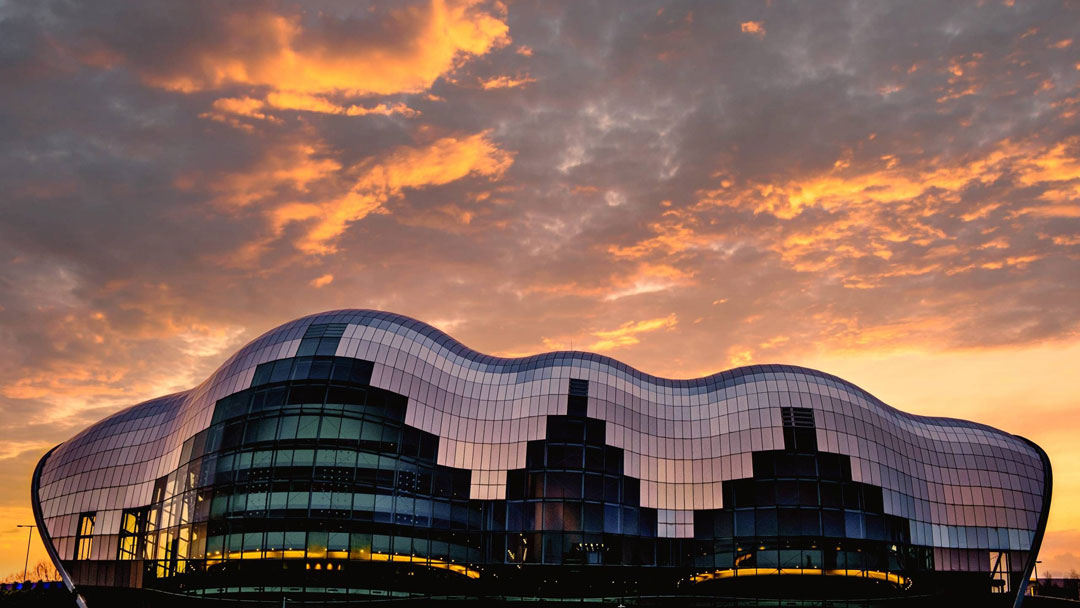
In the world of live sound, the venue is rarely a neutral partner; it is an active participant in the performance. Last week, while touring with Jon Anderson & The Band Geeks, I had the privilege of mixing at The Glasshouse International Centre for Music in Gateshead, UK. Formerly known as the Sage Gateshead, this iconic structure—which opened in 2004—stands as a masterclass in architectural acoustics and multi-purpose venue engineering.
For an FOH engineer, the opportunity to work in a space designed with such precision is both a challenge and a luxury. The Glasshouse represents a rare convergence of high-end acoustic design and robust, rider-friendly technical infrastructure.
Architectural Mastery: The Physics of Isolation
The Glasshouse is a marvel of structural engineering, designed by the visionary firm Foster + Partners in collaboration with Arup. The complex houses three distinct performance spaces: Sage One (a 1,700-capacity concert hall), Sage Two (a 450-capacity theater), and the Northern Rock Foundation Hall, which is primarily dedicated to rehearsal and intimate performance.
What truly sets this facility apart is the "box-within-a-box" construction. While all three venues, along with a collection of bars, cafes, and a brasserie, share a single iconic roofline, they are structurally decoupled. During my time there, I experienced this firsthand. While navigating the backstage corridors, I inadvertently stepped through a door and heard a chamber music ensemble in full rehearsal. The moment I closed that door, the sound vanished completely.
This level of acoustic isolation is not merely a convenience; it is a prerequisite for a venue that simultaneously hosts rock concerts, classical symphonies, and rehearsal sessions without interference. The building essentially acts as a series of independent soundproof chambers, a testament to the rigorous standards set by Arup’s acoustic engineers.
Chronology of the Experience
My journey into the technical heart of The Glasshouse began with the load-in. Unlike many heritage venues in the UK that struggle with accessibility or modern rigging requirements, The Glasshouse feels built for the 21st-century touring rig.
- Load-In and System Inspection: Upon arrival, the house technical team—highly efficient and well-versed in the house’s quirks—facilitated a seamless transition into the FOH position. The system, a comprehensive RCF-based rig, was already tuned and time-aligned via RCF’s RDNet, allowing us to hit the ground running.
- Soundcheck and Acoustic Tuning: Sage One features a highly versatile acoustic environment. We experimented with the ceiling panels, which can be raised or lowered to modulate the room’s volume and, consequently, its decay time. By drawing the curtains along the wood-paneled walls, we were able to dial in the desired amount of dry response for our specific mix.
- Showtime Realities: As the audience filed in, the room’s character shifted. The "fairly dead" acoustic signature became even more pronounced, requiring us to push the P.A. to compensate for the absorption provided by a full house.
- The Performance: Throughout the set, the system provided an incredibly transparent canvas, allowing for precise placement of vocal harmonies and complex keyboard textures.
The Technical Infrastructure: A Detailed Breakdown
The house audio system at The Glasshouse is a high-performance RCF configuration, capable of handling the most demanding dynamic ranges.
The P.A. Configuration
The main system consists of:
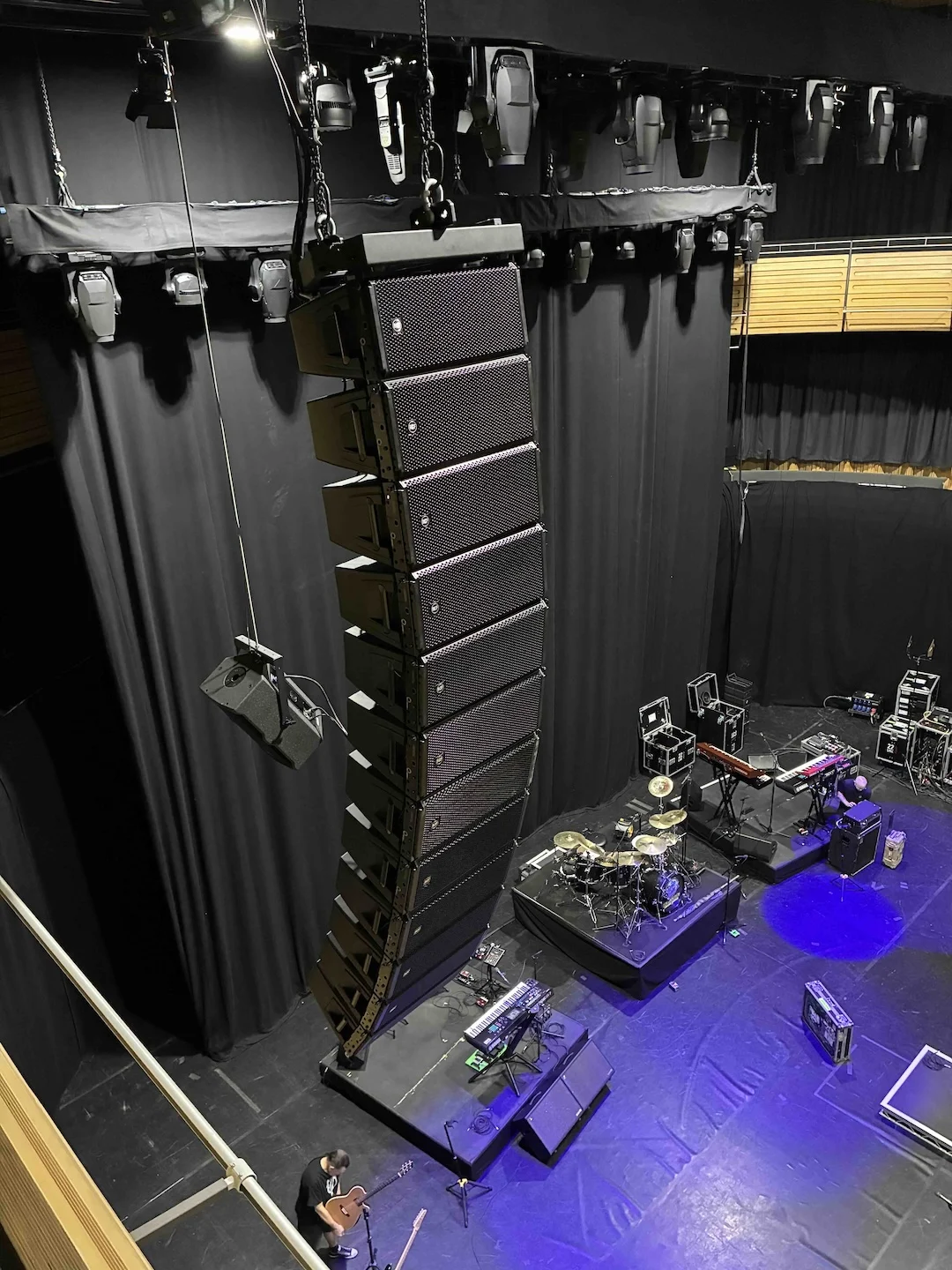
- Main Arrays: 12 RCF HDL30-A modules per side, providing consistent coverage across the stalls and the upper levels.
- Front-Fill Support: Three RCF HDL30-A modules per side, complemented by a single RCF 9004-AS sub per side, ensuring the front rows remain immersed in the mix.
- Fill Augmentation: Four RCF HDL26-A units for front-fill, with RCF TT10-A modules serving as out-fills and balcony fills to ensure even distribution of high-frequency content.
- Low-End Reinforcement: Six RCF 9006-AS subwoofers (three per side) provide the necessary headroom to handle everything from orchestral percussion to rock-and-roll bass transients.
Console and Monitor Specs
The house supports touring productions with DiGiCo infrastructure. On this occasion, we utilized an SD5c at FOH and an SD12 at monitors, both running at 192 kHz. The signal path via SD racks ensured that the digital conversion was as transparent as possible. For monitoring, the venue provided d&b audiotechnik M4 wedges and QSubs, powered by D20 amplifiers—a reliable, industry-standard choice that provided the Band Geeks with exceptional clarity.
Professional Perspectives and Systems Logic
One of the most enlightening aspects of the trip was a discussion with my systems tech, Nick Jackson, representing the UK-based firm 22live.
During the soundcheck, I was initially wary of the front-fill levels. The RCF HDL30-A units near the stage were highly prominent, and my instinct, honed by years of mixing in less forgiving environments, was to pull them back. Nick advised against it, noting that the acoustics of Sage One are designed to "swallow" excess energy once the room is occupied by a capacity crowd.
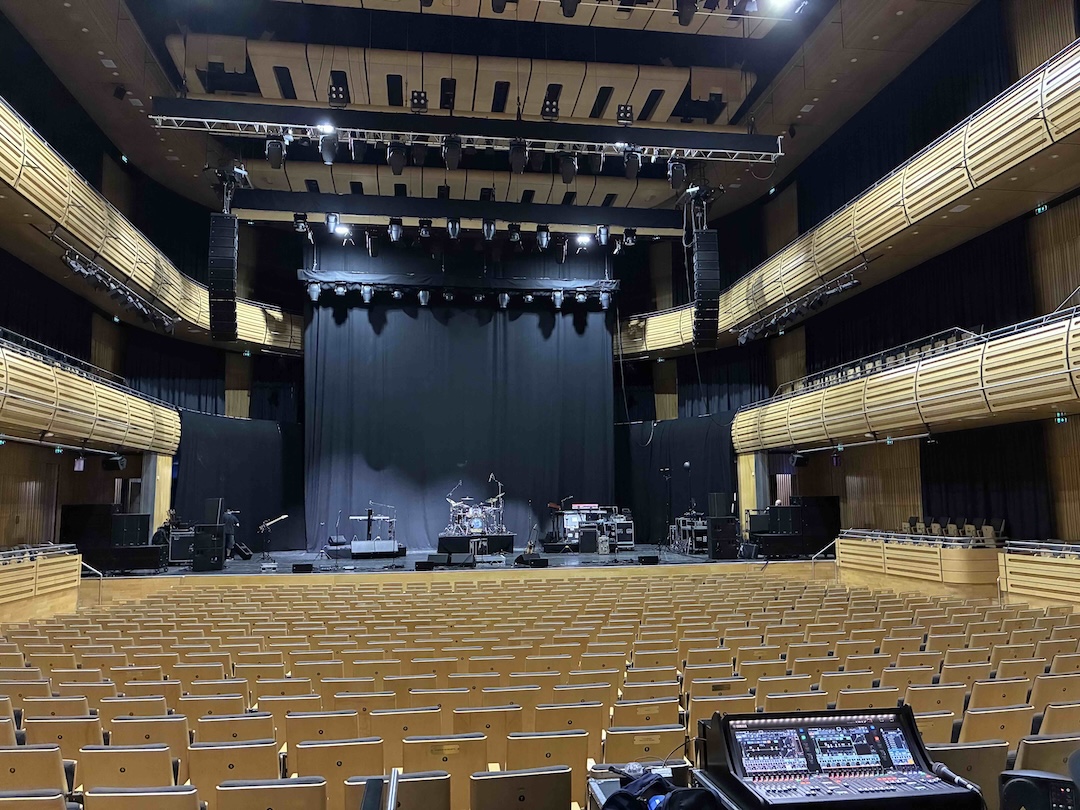
His assessment was spot on. As the audience filled the hall, those front-fills ceased to be "loud" and instead became "present," anchoring the vocal intelligibility for the front rows without creating fatigue. It was a perfect demonstration of the importance of trusting the systems tech and the venue’s inherent acoustic logic. As Nick put it, "You have a canvas to work on." That canvas—a room that is dry but not sterile—is perhaps the greatest gift an engineer can receive.
Implications for Future Touring
The Glasshouse serves as a model for modern venue design. By prioritizing architectural isolation and investing in high-fidelity, networked P.A. systems, they have created a space that rewards both the performer and the technician.
For bands like Jon Anderson & The Band Geeks, whose sound relies on intricate vocal harmonies and layered instrumentation, the ability to hear the "depth" of the mix is paramount. Because the room does not suffer from excessive smearing or uncontrolled reflections, we were able to place instruments in a virtual soundstage—positioning our keyboardists, Christopher Clark and Phil Castellano, precisely where they stood on the physical stage.
Furthermore, the venue’s versatility suggests that it will remain a cornerstone of the UK touring circuit for decades. Whether hosting the Royal Northern Sinfonia or a contemporary rock act, the ability to tailor the room’s acoustics—through adjustable ceiling panels and curtain systems—makes it a rare "chameleon" venue.
Conclusion: The Professional Standard
My time at The Glasshouse was a reminder of why we do what we do. It is rare to find a venue where the architecture, the house system, and the technical support team work in such perfect harmony.
The Glasshouse International Centre for Music is more than just a place to plug in and play; it is a sophisticated acoustic environment that demands respect and rewards precision. For any engineer heading to Gateshead, take the time to understand the room’s adjustable features, trust your systems tech, and don’t be afraid to utilize the clarity of the space. You aren’t just mixing into a room; you are painting on a canvas, and at The Glasshouse, that canvas is truly world-class.