Navigating the consumer electronics market often feels like deciphering an intentionally cryptic puzzle, but Samsung has truly outdone itself this year. For AV enthusiasts, home theater hobbyists, and everyday consumers alike, the brand’s 2025 flagship OLED television lineup is a masterclass in regional naming conventions, specification splits, and baffling marketing choices.
At the center of this confusion are two models: the Samsung S99H and the UK-exclusive iteration of the Samsung S95H. While a quick glance at a spec sheet or a marketing brochure might lead buyers to believe they are looking at simple regional naming variations of the exact same hardware, rigorous side-by-side testing in professional AV labs reveals a starkly different reality.
Understanding how these sets differ—and why Samsung chose this convoluted path—requires a deep dive into panel technologies, regional naming quirks, and the real-world performance discrepancies that separate a good television from an industry-leading masterpiece.
Main Facts: Untangling Samsung’s Flagship OLED Confusion
To understand the current state of Samsung’s high-end display market, one must first map out the bewildering nomenclature governing these televisions.
- The UK Flagship: In the United Kingdom, Samsung’s undisputed top-tier OLED television is the S99H. Hailed by reviewers as a technological tour de force that pushes OLED brightness and color volume to unprecedented heights, it comes encased in a striking, albeit divisive, frame design.
- The Global Counterpart: Step outside the UK, however, and the naming convention flips. The very same TV that UK consumers buy as the S99H is marketed globally as the S95H.
- The UK S95H Anomaly: Adding a layer of pure administrative chaos, the UK also receives a model explicitly named the S95H. Crucially, this UK-specific S95H is an entirely different television from the global S95H (which, remember, is actually the UK’s S99H).
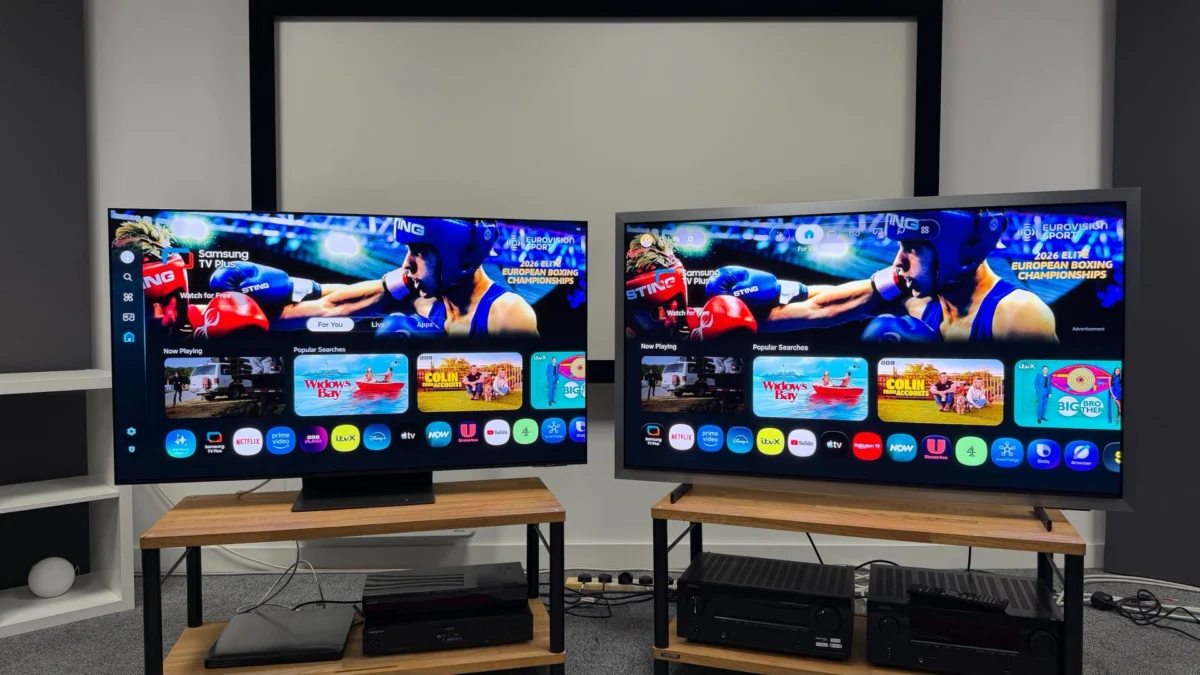
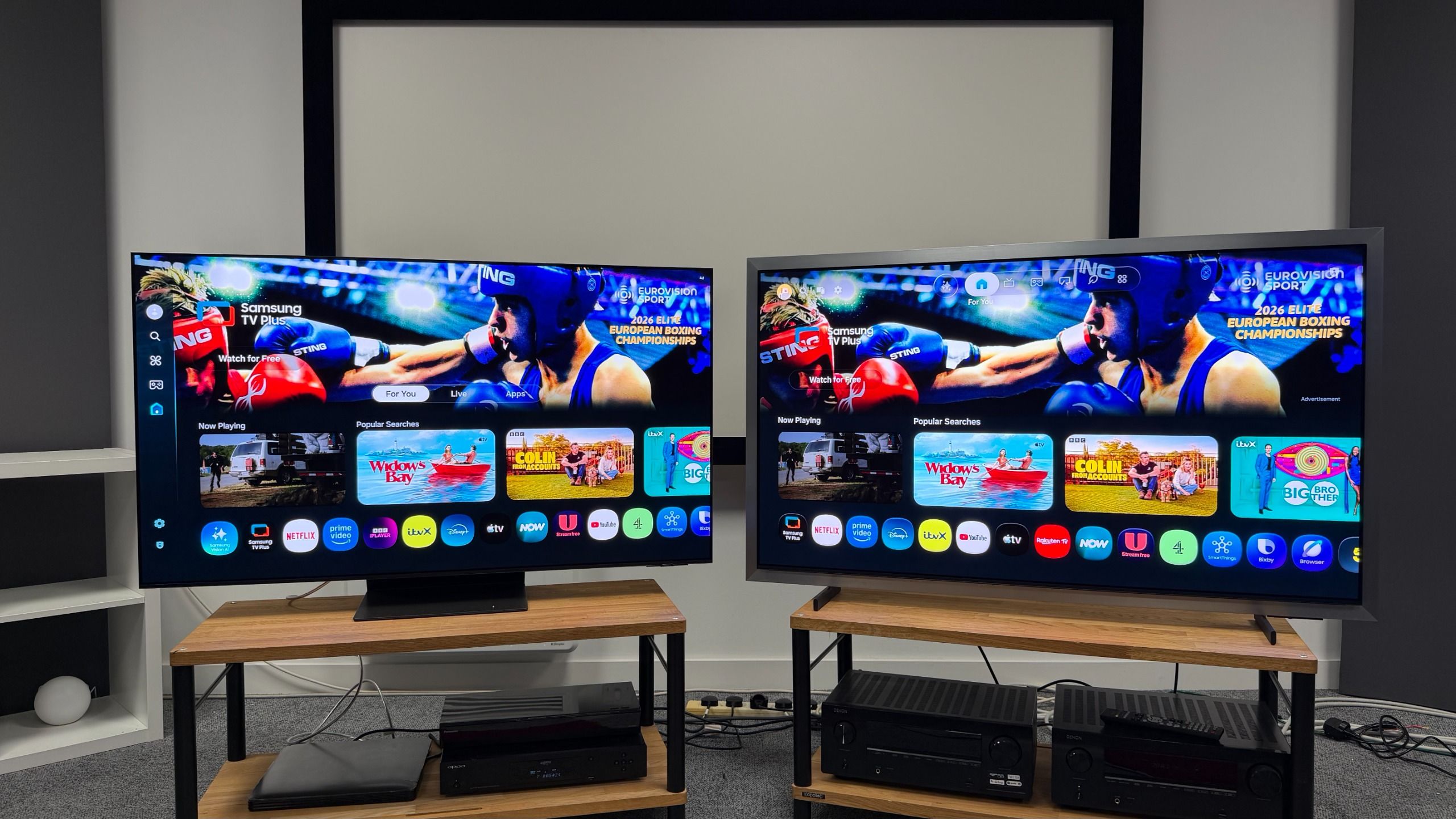
- The Performance Gap: When placed side-by-side in controlled test environments, the performance disparity between the UK S99H and the UK S95H is instantly noticeable. The S99H delivers superior peak brightness and a far more vibrant color palette, outclassing its lower-tier sibling in almost every visual metric.
Chronology: How the Regional Split Unfolded
The strategy behind regional television variations is rarely communicated transparently by manufacturers, but tracing the release cycle of Samsung’s recent display technology reveals how we arrived at this current state of confusion.
Late 2024: The Shift Toward Distinct Tiering
As Samsung prepared its next-generation display roadmap throughout late 2024, industry analysts anticipated a streamlined rollout following the success of previous QD-OLED and WOLED hybrids. Instead, manufacturing realities, supply chain allocations for specific panel types, and regional pricing strategies forced a divergence in product planning between North America, Europe, and the UK.
Early 2025: CES and Initial Regional Announcements
During early-year tech showcases, Samsung unveiled its sweeping 2025 lineup. Initial press materials muddied the waters by applying different model numbers across territories. Reviewers in the UK quickly noted that their flagship review sample bore the "S99H" moniker—a designation rarely used for top-tier flagships in previous generations, which traditionally favored the "95" or "90" series prefixes.
Spring and Summer 2025: Arrival in Test Labs
As review samples finally hit specialized test benches in the UK during the middle of the year, journalists expected the UK S95H to simply be a de-framerized, cost-reduced version of the S99H. Prevailing industry wisdom suggested that removing the S99H’s heavy metal frame and integrating a wired One Connect box would yield the UK S95H—essentially offering identical picture quality at a more accessible price point and with a more traditional stand setup.
Instead, physical teardowns, optical measurements, and rigorous side-by-side calibrations shattered those assumptions. The UK S95H was not just a cosmetic reskin; it utilized fundamentally different visual tuning and performance characteristics.
Supporting Data: Side-by-Side Performance Analysis
When tech journalists set up the S99H and the UK S95H side-by-side in dedicated dark-room test environments, the empirical differences quickly put corporate marketing spin to the test.
Brightness and Color Vibrancy
The S99H immediately asserts dominance in peak luminance and HDR punch. Highlights pop with a searing intensity that redefines what self-emissive organic pixels can achieve in bright ambient environments. Meanwhile, the UK S95H, while thoroughly respectable, visibly lacks that extra gear of luminance. Colors appear slightly more restrained, missing the hyper-vibrant saturation and dynamic snap that makes the S99H look genuinely three-dimensional.
Panel Technology Dissected
Samsung has historically maintained an infuriatingly cagey posture regarding the exact panel technology housed inside specific regional model numbers, often refusing to explicitly state whether a given screen is utilizing first-, second-, or third-generation QD-OLED or sourcing WOLED panels from external suppliers.
Based on optical analysis of the screen coatings and pixel structures:
- The S99H utilizes Samsung’s top-tier, uncompromised QD-OLED architecture, featuring exceptional off-angle color retention and massive color volumes.
- The UK S95H features a very similar matte screen coating to the S99H, which initially led some to suspect it might be a WOLED panel variant. However, visual artifacts and color signatures lean closer to a "step-down" QD-OLED configuration. In fact, its visual output bears a striking resemblance to Samsung’s previous-generation S95F flagship, suggesting a repurposed or heavily cost-optimized panel pipeline rather than a traditional white-OLED integration.
Official Responses and Industry Context
Manufacturers rarely comment on consumer confusion arising from regional nomenclature, treating it as an internal logistical necessity rather than a public relations problem. Samsung’s official documentation frames each model around its intended lifestyle and aesthetic benefits—highlighting the S99H’s architectural frame design for high-end wall mounting, while positioning models like the S95H around traditional media console placements and streamlined connection boxes.
Independent reviewers, however, have not been shy about critiquing the lack of clarity. Consumer advocacy groups have repeatedly pointed out that identical or near-identical naming conventions across international borders violate the fundamental principle of transparent consumer electronics purchasing. When a buyer in New York and a buyer in London look at a spec sheet bearing the same model number, they reasonably expect identical hardware inside the chassis.
Implications for Consumers and the AV Market
The existence of the S99H and the split personality of the S95H carry significant weight for anyone shopping in the high-end television market.
1. The Death of Universal Model Numbers
Globalized e-commerce means enthusiasts frequently research televisions based on reviews published in other countries. A consumer living in the UK who reads an glowing international review of the "S95H" praising its top-tier, uncompromised brightness might purchase the UK variant, completely unaware that they are buying a technically downgraded panel compared to its American counterpart.
2. Value Propositions and Buying Advice
Despite not matching the sheer brilliance of the S99H, the UK S95H is far from a bad television. Having undergone rigorous multi-product testing alongside dozens of competing displays, industry experts generally rank the UK S95H as easily the second-best Samsung television available on the market for that specific regional release cycle. It delivers phenomenal black levels, excellent gaming features, and robust processing.
However, it occupies an awkward psychological space for buyers. Knowing that a superior panel exists under a confusingly swapped name—or that the same name applies to a better TV elsewhere—leaves a lingering sense of compromise.
3. The Road Ahead for Awards Season
As professional review bodies wrap up their annual testing cycles to determine industry accolades, anomalies like the S99H complicate top-tier rankings. While the S99H stands virtually unmatched in raw visual performance for its cycle, the broader market chaos serves as a cautionary tale for manufacturers.
Ultimately, prospective buyers are urged to ignore flashy marketing terms and rely strictly on localized, hands-on professional testing. As the industry heads toward major trade announcements and upcoming awards reveals—such as the highly anticipated What Hi-Fi? Awards announcements slated for October 13th—clarity in television tech specifications cannot come soon enough.