As modern architecture continues to favor open, dynamic layouts and sleek, minimalist aesthetics, a silent challenge has emerged in contemporary learning spaces. Across universities, K-12 institutions, collaborative commons, and digital media labs, the intersection of interior design and human cognition is drawing intense scrutiny. The central question facing modern architects, educators, and acousticians is profound: Can the physical design of a room—specifically its acoustic properties—actually make you smarter?
While environmental factors like lighting, temperature, and ergonomic seating have long been standard considerations in educational design, acoustics are frequently treated as an afterthought. However, a growing body of research indicates that sound management is fundamental to cognitive performance, speech intelligibility, and overall student well-being. By examining the mechanics of sound transmission in schools, education leaders are discovering that managing reverberation and ambient noise is not merely about achieving quiet; it is about optimizing the human brain’s capacity to process, retain, and communicate information.

Main Facts: The Invisible Barrier to Effective Learning
The modern educational landscape has shifted dramatically away from traditional, siloed rows of desks facing a chalkboard. Today’s campuses feature flexible, multi-purpose environments designed to encourage collaboration, student interaction, and shared experiences. Unfortunately, these progressive spaces often incorporate vast amounts of hard, reflective surfaces—such as glass curtain walls, exposed concrete, granite accents, and polished tile flooring.
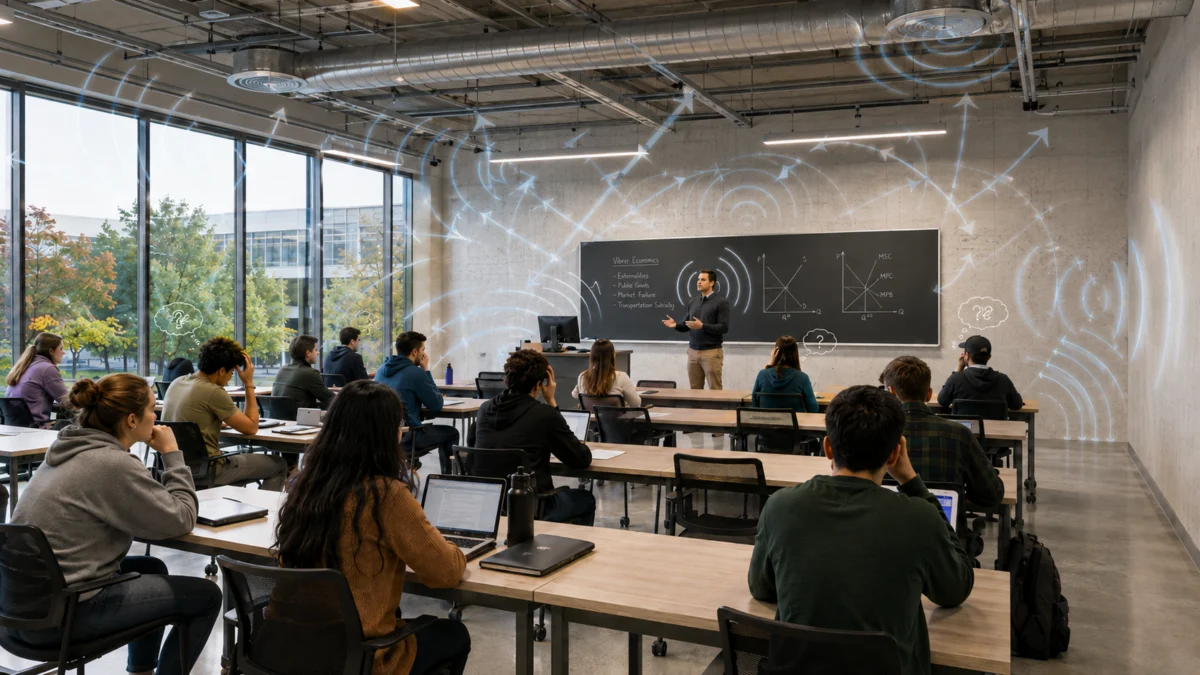
While visually striking, these materials create chaotic acoustic environments characterized by high reverberation, sound reflections, and persistent echoes. When a teacher speaks or students collaborate in an untreated room, sound waves bounce endlessly off hard surfaces rather than being absorbed. This generates a chaotic wash of overlapping noise that directly impacts speech intelligibility—the measure of how distinctly speech can be heard and understood.

- The Core Problem: Hard surfaces trap and multiply sound, causing reverberation times (RT60) in untreated spaces to reach up to 1.9 seconds—nearly triple the recommended educational standard of 0.7 seconds.
- Cognitive Load: According to Cognitive Load Theory, students in noisy environments must expend significant mental energy simply filtering out ambient sound to decipher speech. This depletes their working memory capacity, leaving fewer cognitive resources available for actual learning and retention.
- The Lombard Effect: In open-plan and collaborative areas, occupants naturally raise their voices to overcome background noise, inadvertently driving the ambient sound level even higher in a compounding cycle known as the Lombard Effect.
Chronology: The Evolution of Educational Architecture and Sound
To understand how contemporary learning spaces reached this acoustic crossroads, it is helpful to examine the historical trajectory of school and university design over the past century.
Era 1: The Traditional Enclosed Classroom (Mid-to-Late 20th Century)
For decades, educational facilities were built with rigid parameters: heavy plaster walls, drop-ceilings made of porous, utilitarian tiles, and closed doors. While these spaces were structurally isolated from hallway noise, they frequently relied on low-cost, sagging industrial ceiling tiles that degraded rapidly over time. Acoustic control was rudimentary, often resulting in "dead" sounding rooms that offered little support for dynamic, interactive teaching methods.

Era 2: The Open-Plan Experiment (1970s–1990s)
In an effort to promote progressive, student-led education, many school districts experimented with open-plan layouts entirely devoid of interior walls. The architectural theory prioritized visual transparency and fluid movement between groups. Acoustically, however, the concept proved disastrous. Without physical barriers to block sound, noise bled freely between learning zones, forcing educators to teach over a constant wave of cross-classroom chatter and severely degrading speech comprehension.
Era 3: The Modern Multi-Purpose Collaborative Campus (2000s–Present)
Today’s institutions have attempted to synthesize the best of both worlds, creating flexible, multi-purpose hubs that can pivot from quiet study to group collaboration. Simultaneously, contemporary design trends embraced industrial aesthetics—exposed steel framing, polished concrete floors, and floor-to-ceiling glass windows. While these materials create inspiring visual spaces, they inadvertently resurrect the acoustic challenges of the open-plan era, magnified by the introduction of digital technology, HVAC systems, and high-density student populations.

Supporting Data: The Metrics of Miscommunication
The consequences of poor room acoustics extend far beyond simple annoyance; they translate directly into measurable learning deficits.
- The 1-in-4 Rule: Extensive psychoacoustic research reveals that in untreated, reverberant classrooms, students miss up to one in every four spoken words. Consonants with high-frequency components—such as f, p, s, and t—are easily masked by low-frequency ambient rumble, causing word endings and critical nuances of speech to vanish.
- Proximity Disadvantage: Because sound energy naturally dissipates over distance, students seated in the middle or rear rows of large lecture halls or assembly spaces experience significantly lower speech intelligibility than those in the front. Without localized acoustic management, this distance penalty places a substantial portion of any student body at a structural disadvantage.
- The Myth of Amplification: A common misconception among facility managers is that installing sound-reinforcement systems—such as microphones and loudspeakers—can resolve clarity issues in large rooms. In reality, amplifying speech in an untreated, highly reflective space merely injects more energy into the room, compounding echoes and worsening overall clarity. True acoustic treatment must precede or accompany amplification to absorb excess sound energy.
Official Responses and Strategic Solutions
Educational institutions and acoustic engineers are increasingly moving away from crude, one-size-fits-all fixes in favor of integrated, high-performance sound design. Modern solutions aim not to silence a room completely—which can result in an unnatural, uncomfortable environment—but rather to balance acoustics in the same deliberate manner as lighting and temperature.

Industry leaders, such as acoustic design innovators like Primacoustic, advocate for targeted, source-localized treatment strategies. Rather than relying on aging, utilitarian ceiling tiles, modern retrofits utilize advanced architectural components tailored to specific spatial demands:
- Ceiling-Mounted Clouds and Baffles: Suspended horizontally or vertically above high-traffic work zones or lecture areas, these elements intercept vertical sound reflections and prevent noise from traveling across open-plan environments.
- Broadband Glass Wool Panels: Offering high-performance absorption across the entire frequency spectrum, these panels—reminiscent of those used in professional recording studios—effectively tame erratic reverberation in complex, high-ceilinged spaces.
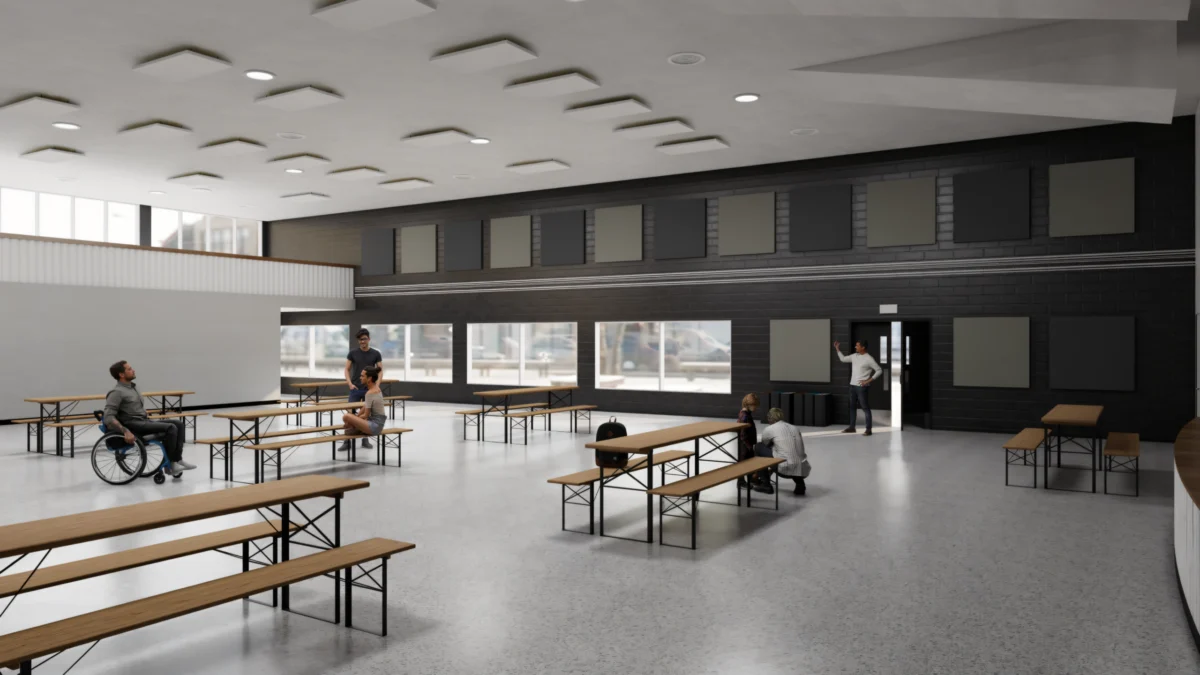
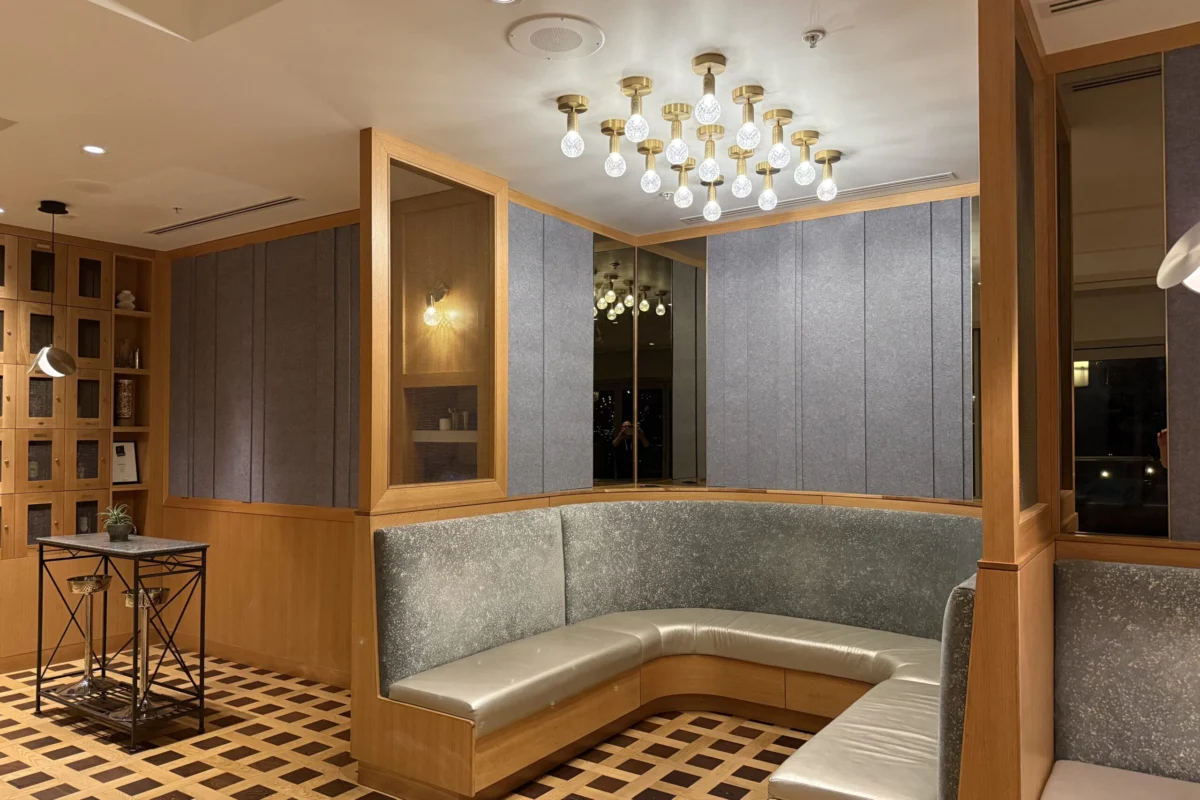
- Customizable Fabric-Wrapped Systems and EcoScapes: Modern product lines (such as Primacoustic’s Broadway, TelaScapes, Archadia, and EcoScapes systems, which feature dimensional baffles and contour carved panels) allow institutions to integrate sound absorption seamlessly into the interior design palette. These products enhance rather than detract from architectural aesthetics.
- Mobile Isolation Solutions: For modern hybrid learning environments where lectures are streamed, recorded, or student content is produced, reconfigurable mobile acoustic tools provide flexible boundary control.
Implications: The Long-Term Value of Acoustic Health
Investing in deliberate acoustic design carries profound implications for the future of education, spanning academic performance, educator retention, and physical health.

Cognitive and Academic Gains
When ambient noise and reverberation are controlled, the cognitive load on students drops precipitously. Freed from the exhausting daily chore of decoding muffled speech, students exhibit extended attention spans, higher levels of engagement, and improved retention of complex terminology. This is particularly vital in early childhood education, where vocabulary acquisition depends heavily on clear phonetic reception, as well as in higher education, where students grapple with dense, unfamiliar concepts.
Educator Wellness
Teachers are among the primary beneficiaries of sound-managed classrooms. The constant strain of projecting one’s voice over poor acoustics is a leading contributor to vocal fatigue, chronic hoarseness, and teacher burnout. By lowering the baseline noise floor and enhancing speech intelligibility, acoustic treatments allow educators to speak at a normal conversational volume, preserving their vocal health throughout the school year.

A Holistic Approach to Modern Spaces
Ultimately, the evolution of educational architecture teaches us that a room’s physical characteristics directly dictate the quality of human interaction within it. By treating sound as a vital architectural component rather than an invisible byproduct, schools and universities can transform chaotic, fatiguing spaces into welcoming sanctuaries of focus. In doing so, they provide a definitive answer to our opening question: While a room cannot magically generate intelligence, proper acoustic design removes the barriers that prevent the human mind from working at its absolute best.