HEBDEN BRIDGE, U.K. — In an era defined by rapid digital transformation and shifting viewer habits, Calrec Audio has officially pulled back the curtain on its strategic product roadmap for IBC 2026. The Hebden Bridge-based manufacturer, a perennial titan in the broadcast audio sector, is positioning itself at the vanguard of the industry’s transition toward fully decentralized, IP-native workflows.
The announcement, made ahead of the prestigious International Broadcasting Convention (IBC) in Amsterdam, underscores a pivotal shift in how live content is produced. As broadcasters grapple with the dual pressures of soaring sports rights costs and an increasingly fragmented audience across Free Ad-supported Streaming TV (FAST), social media, and traditional linear platforms, Calrec’s 2026 lineup offers a modular, software-defined answer to these modern complexities.
Main Facts: The Core of the 2026 Ecosystem
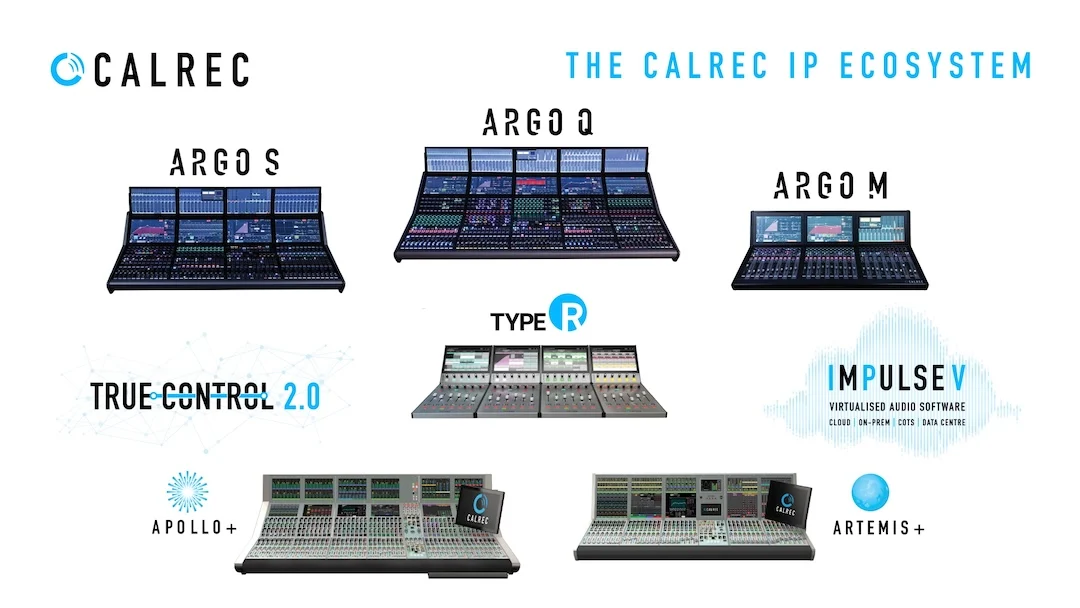
At the heart of Calrec’s showcase is an integrated IP-native ecosystem designed to dissolve the geographical and technical barriers of traditional audio mixing. The centerpiece of this ecosystem is the Argo console range, a hardware-software hybrid that serves as the tactile interface for Calrec’s sophisticated processing engines.
The 2026 lineup is built upon four pillars of innovation:
- Universal Connectivity: The Argo range is engineered to operate seamlessly across on-premises hardware, remote locations, and virtualized environments.
- Orchestration Integration: Native compatibility with third-party orchestration platforms, including Grass Valley’s AMPP and NEP’s Platform, ensures that audio production can be managed as part of a holistic, cloud-based broadcast chain.
- True Control 2.0: A sophisticated control layer that enables multiple consoles and processing cores—regardless of their physical location—to function as a single, unified system.
- Virtualized Processing (ImPulseV): The expansion of virtualized DSP options, allowing broadcasters to scale their processing power without the need for additional rack space.
By prioritizing flexibility, Calrec is moving away from the "one-size-fits-all" hardware model, instead offering a "project-by-project" configuration capability. This allows a broadcaster to use the same equipment for a massive global sporting event one day and a lean, social-media-focused talk show the next.
Chronology: From Hebden Bridge to the Global Cloud
To understand the significance of the IBC 2026 lineup, one must look at Calrec’s trajectory over the last decade. Historically known for its robust analog and digital consoles like the Alpha and later the Apollo and Artemis series, Calrec has spent the last several years migrating its intellectual property into the IP domain.
- 2018–2020: Calrec introduced the ImPulse core, a powerful SMPTE ST 2110-compliant processing engine that laid the groundwork for the industry’s move to IP.
- 2022–2024: The debut of the Argo platform marked a departure from fixed-surface designs. Argo introduced a modular approach where fader panels and touchscreens could be arranged according to user preference.
- 2025: Calrec intensified its focus on virtualization, recognizing that the "hardware-only" era was reaching its twilight. The development of ImPulseV (the virtualized version of their DSP core) began to gain traction among Tier-1 broadcasters.
- 2026 (The Current Milestone): The IBC 2026 announcement represents the maturation of this journey. The introduction of True Control 2.0 and the diversification of ImPulseV DSP packages (96, 140, and 256 paths) signifies that IP-native audio is no longer an experimental "early adopter" technology but a refined, scalable standard for all levels of broadcasting.
Supporting Data: Technical Specifications and Licensing Models
Calrec’s 2026 strategy is backed by granular technical improvements designed to lower the barrier to entry for smaller broadcasters while providing "infinite" headroom for major networks.
The IBC 2026 Demonstration Rig
At the Amsterdam show, Calrec will demonstrate the power of True Control 2.0 through a complex, real-world simulation. The setup will include:
- An Argo M (24-fader): Connected to an ImPulseV (virtualized) core.
- An Argo S: Connected to a physical ImPulse IP processing core.
- An Argo M (36-fader): Running on internal DSP for standalone reliability.
- The Remote Link: All three consoles on the show floor will be linked to a fourth console located over 400 miles away at Calrec’s headquarters in Hebden Bridge.
This demonstration is intended to prove that latency and control-lag are no longer hurdles for remote production (REMI).
Expanded DSP Options
Recognizing that not every production requires the massive 256-path processing power of the flagship ImPulse core, Calrec has introduced two new tiers for ImPulseV:
- 96-Path Configuration: Optimized for local news, niche sports, and high-end corporate events.
- 140-Path Configuration: Designed for mid-market regional broadcasters and sophisticated mobile units.
- 256-Path Configuration: The existing powerhouse for major league sports and complex live entertainment.
The Economic Shift: Flexible Licensing
Perhaps the most significant "data point" in the announcement is the overhaul of Calrec’s business model. Moving toward a "Software as a Service" (SaaS) philosophy, Calrec has introduced shorter licensing terms:
- One Year: For permanent studio installations.
- 12 Weeks: Ideal for seasonal sports coverage (e.g., a football season).
- Four Weeks: Targeted at short-term "pop-up" events or major tournaments like the World Cup or the Olympics.
This shift allows broadcasters to move costs from Capital Expenditure (CapEx) to Operational Expenditure (OpEx), providing financial breathing room in a volatile market.
Official Responses: Aligning with Broadcaster Needs
While specific executive quotes often focus on the "robustness" of the hardware, the messaging from Calrec regarding the IBC 2026 lineup focuses heavily on the philosophy of production.
The manufacturer asserts that the modern broadcaster is no longer a single-channel entity. Instead, they are content factories that must feed a dozen different platforms simultaneously. The official stance from Hebden Bridge emphasizes that as rights costs climb—particularly in the realm of live sports—the only way to maintain profitability is through "production efficiency."
"Broadcasters who can flex the right production model for any given project are at a distinct advantage," the company stated in its pre-show briefing. "By decoupling the control surface from the processing core and allowing that core to be virtualized in the cloud or on a local server, we are giving our clients the ability to scale their costs and their capabilities in real-time."
Industry analysts have noted that Calrec’s integration with platforms like Grass Valley AMPP and NEP’s Platform is a strategic masterstroke. It acknowledges that Calrec does not exist in a vacuum; rather, it is a critical component of a wider broadcast ecosystem that is increasingly moving toward interoperability and vendor-agnostic workflows.
Implications: The Future of Live Audio Production
The implications of Calrec’s 2026 product lineup extend far beyond the technical specs of a mixing console. They signal a fundamental change in the "geography" of a broadcast.
1. The Death of Distance
With True Control 2.0, the physical location of the sound engineer is becoming irrelevant. An A1 (lead audio engineer) can sit in a comfortable studio in London or New York while mixing a live event happening in Tokyo, with the processing happening on a server in a data center in Virginia. This reduces the carbon footprint of live production by minimizing the need to fly large crews and heavy equipment around the world.
2. Democratization of High-End Audio
The introduction of the 96 and 140-path ImPulseV packages, combined with short-term licensing, means that smaller "FAST" channels and independent production houses can now access the same "Calrec Sound" used by the world’s biggest networks. This elevates the production value of niche content, helping it compete in a crowded digital marketplace.
3. Resilience and Redundancy
By showing a 36-fader Argo M running on internal DSP alongside virtualized cores, Calrec is addressing the industry’s anxiety regarding cloud reliability. The "hybrid" approach—where a console can switch between local and virtualized processing—provides a safety net that is crucial for high-stakes live television.
4. Responding to Audience Fragmentation
As audiences move away from traditional TV to watch highlights on social media or specialized streaming apps, the "standard" broadcast mix is no longer enough. Calrec’s scalable ecosystem allows for multiple "sub-mixes" to be generated efficiently. A single Argo setup could potentially manage the main 5.1.4 immersive broadcast mix, a stereo mix for radio, and multiple object-based audio streams for mobile devices, all within the same unified workflow.
Conclusion
As IBC 2026 approaches, Calrec is positioning itself not just as a hardware manufacturer, but as a software-centric solutions provider. The 2026 lineup—comprising the Argo range, ImPulseV virtualization, and the True Control 2.0 layer—represents a sophisticated response to a broadcast landscape that is increasingly digital, decentralized, and cost-conscious.
For the engineers and decision-makers heading to Amsterdam, Calrec’s message is clear: the future of audio is not found in a single box, but in a flexible, IP-native ecosystem that can adapt to any challenge, on any platform, at any time. In the high-stakes world of live broadcasting, the ability to scale is no longer a luxury—it is a prerequisite for survival.