SAN DIEGO, CA — For decades, the professional audio industry has chased the "holy grail" of immersion. While spatial audio has become a staple in high-end cinema, sprawling theatrical productions, and premium streaming content, the democratization of this technology at the mobile level has remained elusive. Today, smartphone videography is almost exclusively confined to the flat, two-dimensional constraints of stereo sound.
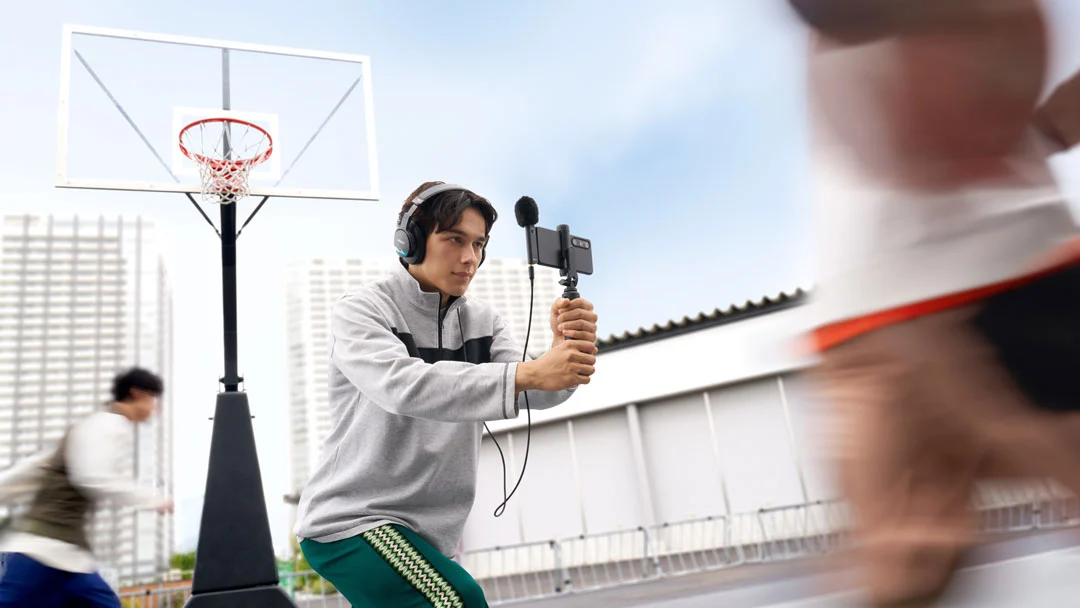
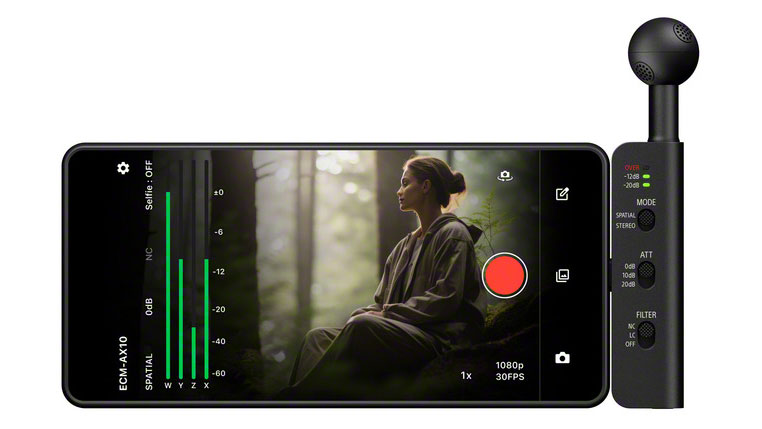
Sony is looking to shatter that barrier. On October 8, 2026, the company officially announced the ECM-AX10, a compact, USB-C powered microphone designed to bring true spatial, binaural, and stereo recording capabilities directly to the pockets of vloggers and mobile filmmakers. As the first-ever Eclipsa Audio-certified microphone for mobile devices, the ECM-AX10 marks a significant shift in how personal content is captured and consumed.
The Technical Foundation: How the ECM-AX10 Works
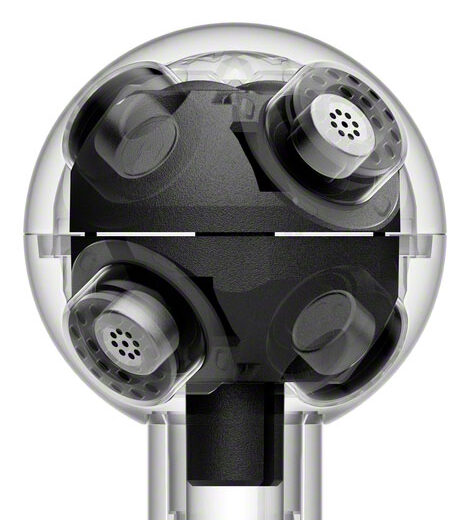
At the heart of the ECM-AX10 lies a sophisticated array of four omnidirectional capsules. Unlike traditional shotgun or stereo microphones that prioritize a single focal point, the ECM-AX10’s architecture is engineered to capture an acoustic "envelope." By recording from multiple directions simultaneously, the device provides the raw data necessary to map sound within a 3D environment.
The Eclipsa Audio Standard
The integration of Eclipsa Audio—an open-source standard championed by industry titans Google and Samsung—is arguably the microphone’s most significant feature. By ensuring the ECM-AX10 is Eclipsa-certified, Sony has guaranteed that audio captured by the device is natively compatible with the next generation of spatial playback systems. This eliminates the "transcoding bottleneck," where spatial data is often lost or compressed into standard stereo during the upload process to social media platforms.
The Spatial Audio Video Tool App
Hardware is only as effective as the software driving it. To accompany the microphone, Sony has launched the Spatial Audio Video Tool app. This end-to-end software suite allows creators to:
- Monitor: Check spatial levels in real-time.
- Capture: Record video with synchronized spatial metadata.
- Edit: Perform basic spatial sound adjustments within the app.
- Export: Render final files in a format ready for immediate distribution across compatible social channels.
Chronology of Development: From Studio to Pocket
The journey to the ECM-AX10 reflects a multi-year pivot by Sony toward the "Creator Economy."
- Early 2024: Sony internal research identifies a "spatial gap" in mobile content creation, noting that while 4K video is common on phones, audio quality has remained stagnant.
- Late 2024: Development begins on a miniaturized capsule array that can fit into a chassis weighing less than 30 grams.
- Mid-2025: Sony joins the Eclipsa Audio consortium, signaling its intent to support open-source industry standards rather than creating a proprietary, "walled-garden" ecosystem.
- Q1 2026: Beta testing commences with a select group of global travel and tech vloggers to refine the wind-noise reduction algorithms and spatial depth.
- October 2026: Official launch of the ECM-AX10, with a roadmap provided for 4K-integrated spatial recording updates slated for December.
Supporting Data and Technical Specifications
For professionals, the specifications of the ECM-AX10 suggest a device that bridges the gap between consumer convenience and broadcast-quality requirements.
| Feature | Specification |
|---|---|
| Weight | ~24 grams |
| Connectivity | USB-C (Plug-and-Play) |
| Capsule Count | 4 Omnidirectional |
| Recording Modes | Ambisonics, Binaural, Stereo |
| Compatibility | Eclipsa Audio Certified |
| MSRP | $249.99 USD |
The inclusion of binaural recording is particularly notable. By utilizing the same proprietary technology that powers Sony’s acclaimed 360 Reality Audio, the ECM-AX10 allows creators to record soundscapes that replicate how human ears perceive depth and distance. When played back through headphones, the effect is uncanny, creating a "you are there" experience that traditional microphones simply cannot replicate.
Official Responses and Industry Outlook
The announcement has sent ripples through the mobile content creation community. In a press briefing, a Sony representative emphasized the philosophical shift the company is undertaking:
"Our goal was never just to build a better microphone; it was to change the definition of mobile content. For too long, the ‘pro’ sound was tethered to heavy field recorders and post-production studios. With the ECM-AX10, we are putting a spatial studio into a device that fits on a keychain."
Industry analysts have praised the $249.99 price point, noting that it undercuts professional-grade field recorders by nearly 70% while offering a more streamlined workflow for the TikTok and YouTube generation. By targeting the "vlogger" demographic, Sony is positioning itself to capture the market of creators who demand high production value but lack the technical expertise for complex audio post-production.
Implications for the Future of Content Creation
The introduction of the ECM-AX10 is not merely a hardware release; it is a catalyst for a broader shift in digital media.
The Death of "Flat" Audio
If the ECM-AX10 sees widespread adoption, the standard for "high quality" on social media will shift. Audiences, increasingly accustomed to spatial sound in films and gaming, may soon find stereo audio on social media to feel "hollow" or "outdated." This creates a competitive pressure for creators to upgrade their gear to stay relevant.
Implications for Social Platforms
Platforms like Instagram, TikTok, and YouTube Shorts will be forced to accelerate their support for Eclipsa Audio. If users begin uploading spatial content at scale, these platforms will need to update their compression and playback engines to handle 360-degree soundscapes. The ECM-AX10 effectively forces the hand of the major platforms to prioritize audio fidelity alongside visual resolution.
The Workflow Revolution
Perhaps the most profound implication is the collapsing of the "post-production" phase. Historically, spatial audio required a sound engineer, a DAW (Digital Audio Workstation), and hours of mixing. By moving this entire process to a smartphone app, Sony is inviting the average user to participate in high-level sound design. This lowers the barrier to entry, potentially leading to a renaissance in experimental audio-visual storytelling.
Conclusion: A New Standard?
As we look toward the December 2026 update, which will bring 4K-integrated spatial recording, it is clear that the ECM-AX10 is just the beginning. Sony has successfully identified that the next frontier in mobile technology isn’t just about how many megapixels a camera has, but how effectively it can capture the world as we actually hear it.
For the aspiring filmmaker, the professional vlogger, or the casual creator, the ECM-AX10 represents a bridge to a more immersive future. While the device hits the market in late October 2026, its true impact will likely be measured in the coming years as spatial audio becomes the baseline expectation for digital content worldwide. Sony has taken a bold step toward making the world of mobile audio three-dimensional, and in doing so, they have set a high bar for the competition to follow.