For over a decade, Truecaller has been synonymous with caller identification. With a massive global footprint of over 500 million monthly active users, the Swedish tech giant has spent years refining its ability to distinguish between legitimate communications and the intrusive noise of spam calls. However, as the digital landscape evolves, so too have the tactics of bad actors. Fraud has migrated from the traditional telephone line to the encrypted messaging app, the SMS inbox, and the malicious web link.
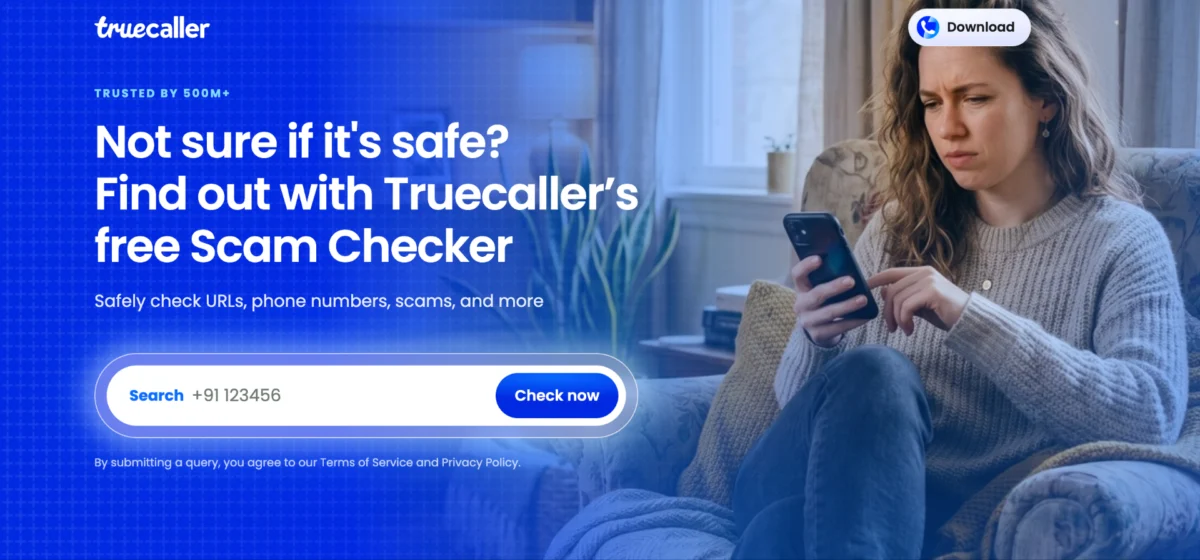
In a strategic pivot aimed at meeting this modern threat, Truecaller has officially launched "Scam Checker," a versatile web-based and Android-integrated tool that allows users to verify suspicious links, phone numbers, and text messages without the need for an account or an app installation. This move marks a significant evolution for the company, signaling its intent to become a comprehensive shield against digital deception rather than a simple caller ID utility.
The Mechanics of Scam Checker: A Frictionless Security Layer
The core philosophy behind Scam Checker is accessibility. By removing the barrier of entry—specifically, the requirement for a sign-in—Truecaller is acknowledging that in the heat of a potential scam, users need immediate answers.
The service functions as a high-speed diagnostic tool. When a user pastes a suspicious URL into the Scam Checker, the service proactively expands shortened links and follows redirects to identify the final destination. This final URL is then cross-referenced against Truecaller’s proprietary risk database, which is fueled by years of intelligence gathering.
Beyond URLs, the service allows users to input suspicious text messages. Using natural language processing and pattern recognition, the tool extracts phone numbers or embedded links to surface related reports from "ScamFeed," Truecaller’s crowdsourced intelligence platform. While the service provides a "risk score" and community context, more sensitive data—such as the specific identity associated with a phone number—remains gated behind the standard Truecaller sign-in, ensuring a balance between public utility and data privacy.
A Growing Multi-Channel Threat
The necessity for such a tool is underscored by the changing nature of digital fraud. According to a 2025 GSMA survey of Indian adults, the "phone call" is no longer the primary weapon of choice for scammers. The study revealed that 46% of scam victims were targeted through messaging apps, 37% via SMS, and only 32% through traditional voice calls.
Truecaller’s own data supports this shift. CEO Rishit Jhunjhunwala noted that the company estimates approximately 14 million web searches are performed monthly by people trying to verify if a received link or number is fraudulent.
"When you need it, you’re usually somewhere else," Jhunjhunwala explained in an interview. "The link shows up on WhatsApp. Your mum gets a message about a traffic fine. A friend forwards you a screenshot and asks, ‘Is this real?’ What people do in that moment is search."
By positioning itself as the destination for those searches, Truecaller is effectively inserting itself into the user’s workflow exactly when they are most vulnerable.

Chronology of the Shift: From Utility to Guardian
Truecaller’s journey began as a tool for transparency in an opaque telecommunications world. However, the roadmap to the current Scam Checker reflects a decade of defensive scaling:
- 2014–2018: The company focuses on scaling its core Caller ID and blocking engine, building a massive community-driven database of spam numbers.
- 2019–2022: As SMS-based phishing (smishing) rises, the company integrates advanced AI to filter text messages and identify malicious links.
- 2023–2024: Truecaller expands into enterprise solutions, offering "Truecaller for Business" to help organizations maintain legitimate communication channels, further hardening its risk-assessment algorithms.
- 2025: GSMA reports highlight the dominance of messaging apps in the fraud ecosystem, pushing the company to rethink its strategy for the "open web."
- September 2026: The official launch of "Scam Checker," moving away from a siloed app-only experience toward an accessible, web-first verification tool.
The Power of the Crowd: ScamFeed
At the heart of Truecaller’s success is its community. The company reports that in India alone, there are approximately 20,000 live scam reports on ScamFeed, with an average of 1,300 new reports added weekly. This crowdsourced data is augmented by heavy machine learning; between September 14 and 20, 2026, the company reported that it evaluated a staggering 12.9 billion messages globally, flagging 20.3 million of them as fraudulent.
This massive volume of data provides a "bird’s-eye view" of emerging scam trends. When a new phishing campaign begins, the community reports provide the early warning signs that allow Truecaller to update its risk database in near real-time.
Regulatory Pressures and Market Maturation
The launch of Scam Checker comes at a critical juncture for Truecaller, particularly in India, its largest market with over 350 million users. The company is currently facing mounting pressure from multiple directions:
- Government Intervention: Telecom operators are rolling out government-backed "Calling Name Presentation" (CNAP) services, which threaten to commoditize the core feature that built Truecaller’s empire.
- OS-Level Competition: Both Apple and Google have been steadily integrating native caller ID and spam-protection features into their operating systems, reducing the reliance on third-party applications.
- Regulatory Hurdles: Last week, India’s telecom regulator issued a mandate requiring caller-ID apps to share user-submitted spam reports with telecom operators. Truecaller has been vocal in its critique of this mandate, labeling it a "one-way exchange" that places a heavy burden on the company while potentially undermining its competitive advantage.
Implications for the Future
The evolution of Truecaller into a multi-channel security firm is not merely a product update; it is an existential survival strategy. As Jhunjhunwala aptly stated, "Caller ID was the first problem we solved, and it’s still how most people find us. But scams moved to a more multi-channel approach with links and messages, and increasingly to voice and video. Our protection has to follow the scammer."
For the end user, this means a more robust, integrated security experience. For Truecaller, the goal is clear: to remain the indispensable authority on digital identity and security, regardless of the platform or the communication medium.
Looking ahead, the company plans to broaden the scope of Scam Checker to include more sophisticated threat vectors and the ability to analyze screenshot uploads—a feature highly requested by users who often receive scams via image-based messaging.
As the battle against digital fraud intensifies, Truecaller is betting that its history of community-driven intelligence will be its greatest asset. By moving the fight from its own app to the open web, the company is attempting to claim the territory of "digital trust" at a global scale. Whether this pivot will satisfy regulators and outpace the platform-level competition remains to be seen, but one thing is certain: in the world of online communication, the days of being protected by a simple block list are long gone. The future, according to Truecaller, is proactive, web-accessible, and powered by the collective vigilance of its users.