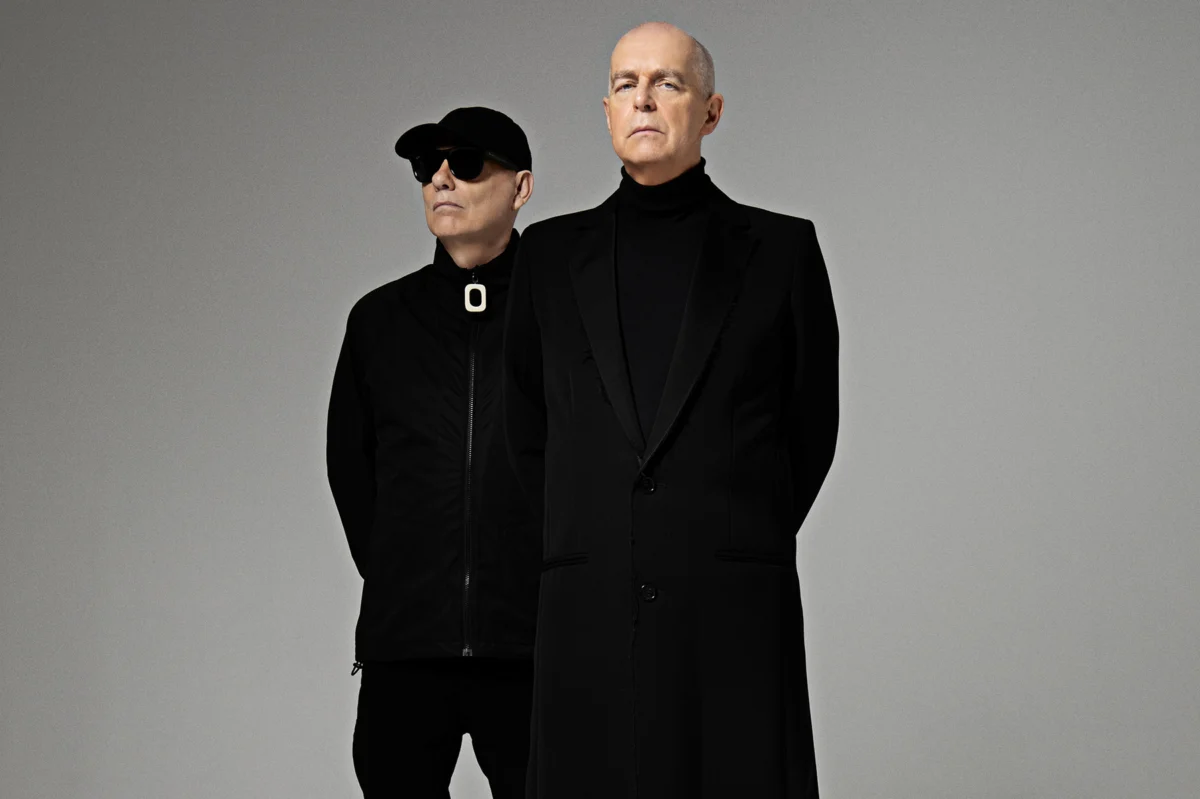
On a crisp autumn day, the electronic music landscape shifted slightly as the legendary British duo Pet Shop Boys released their latest conceptual undertaking. Arriving at the stroke of midnight, A man from the future (via Parlophone Records) is far more than a mere studio album; it is a meticulously crafted, multi-layered homage to Alan Turing, the English mathematician, logician, and codebreaker whose intellect fundamentally shaped the 20th century and birthed the digital age.
More than a decade after its initial conception, the project has been updated, reworked, and rearranged, infused with new electronic textures, updated text, and fresh, sweeping orchestrations. It serves as both a historical narrative and a contemporary sonic exploration of a man who was, by every definition, a visionary born before his time.
A Legacy Reimagined: The Genesis of the Project
The roots of A man from the future trace back to 2012–2013. Neil Tennant and Chris Lowe, the iconic architects of the Pet Shop Boys’ sound, began collaborating with historian Andrew Hodges—author of the seminal biography Alan Turing: The Enigma—to craft a narrative musical work. This was a period of intense cultural fascination with Turing, preceding the global success of the theatrical film The Imitation Game.
The duo’s initial foray into this material was met with critical acclaim when they performed excerpts at a BBC Prom at London’s Royal Albert Hall in July 2014. Yet, for Tennant and Lowe, the story of Turing was too profound to be left as a mere footnote in their discography. Over the last year, the project underwent a significant evolution. Working alongside the German composer and arranger Sven Helbig, the Pet Shop Boys have expanded the sonic palette of the piece. The result is a fusion of the duo’s signature synth-pop sensibilities and the lush, atmospheric string arrangements performed by the Manchester Camerata Octet, punctuated by the evocative, measured narration of actress Juliet Stevenson.
Chronological Journey: The Life of a Pioneer
The album structure is strictly chronological, treating the listener as a passenger on a journey through the pivotal, often tragic, life of Turing. Each track serves as a chapter, moving from the personal to the political and the scientific.
The Formative Years and Scientific Awakening
The narrative begins with Turing’s childhood and his nascent fascination with the natural world and the laws of mathematics. It captures the curiosity of a boy who saw patterns where others saw chaos, leading into his transformative years at Cambridge. It was here that Turing would lay the theoretical foundations for the "universal machine"—a concept that would eventually evolve into the modern digital computer.
The Enigma and the War Effort
The album moves into the dark, urgent atmosphere of World War II. It details Turing’s critical role at Bletchley Park, where he led the team responsible for cracking the German Enigma code. The music here is rhythmic, tense, and mechanical, mirroring the clicking of rotors and the pressure of a global conflict that rested, in part, on the shoulders of a man working in near-total isolation.
The Vision of Artificial Intelligence
Interwoven with the historical events is Turing’s philosophical foresight. Long before the era of smartphones and neural networks, Turing dared to posit the existence of "intelligent machines." The album captures this intellectual leap, reflecting on how a man who helped win a war through calculation also spent his quiet moments imagining the future of human-machine interaction.
The Trial, Conviction, and Final Silence
The final acts of the album grapple with the harsh reality of mid-century British law. The music shifts from grand, heroic swells to intimate, melancholic minor keys as it covers Turing’s 1952 conviction for "gross indecency" due to his homosexual relationship. The tragedy of his forced chemical castration and his subsequent suicide in 1954 is handled with profound sensitivity, underscoring the irony of a nation that persecuted the very man who had secured its freedom.
The Motive: A Musical Memorial
In an official statement accompanying the release, the Pet Shop Boys articulated the moral imperative behind the project. "Our motive in creating this work was to make a musical memorial to Alan Turing, who gave so much to his country and the world and was rewarded for it by being prosecuted for his sexuality," the duo stated.

They emphasized the duality of Turing’s existence: "Alan made a massive contribution to the defeat of Germany in World War II and was a pioneer of computing, imagining a world with intelligent computers. He also looked forward to a time when being gay would be accepted as normal. In both his professional and private lives, he was ahead of his time."
By revisiting this project a decade later, the Pet Shop Boys have essentially engaged in a dialogue with history, ensuring that the lessons of Turing’s life—specifically the danger of institutional prejudice and the fragility of human rights—remain at the forefront of the public consciousness.
Supporting Data and Context: Pet Shop Boys’ Enduring Influence
A man from the future arrives as a follow-up to the 2024 album Nonetheless, which solidified the duo’s ongoing commercial and critical relevance by peaking at No. 2 on the Official U.K. Albums Chart. The longevity of the Pet Shop Boys is a rarity in the music industry; in their homeland alone, they have amassed 22 top-10 hit singles, including four chart-topping anthems.
Their career trajectory includes ten top-10 albums in the U.K., with the 1993 classic Very reaching the coveted No. 1 spot. Across the Atlantic, their impact has been equally significant, with 12 entries on the Billboard Hot 100, including five top-10 hits and the quintessential 1986 No. 1, "West End Girls."
This vast catalog of pop perfection provides the necessary context for A man from the future. While their fans are accustomed to infectious dance-floor fillers, this album demonstrates the duo’s capacity for high-concept, intellectual art. It confirms that Neil Tennant and Chris Lowe remain as interested in the fringes of history and philosophy as they are in the mechanics of a perfect chorus.
Implications: The Intersection of Pop and History
The release of A man from the future raises an interesting question about the role of popular musicians in historical discourse. Can a synth-pop duo effectively humanize the life of a mathematical genius?
The early reception suggests that they can. By utilizing the medium of a concept album, the Pet Shop Boys provide an entry point for audiences who might never pick up a biography of Alan Turing. The music acts as an emotional bridge, allowing listeners to feel the weight of Turing’s discoveries and the pain of his persecution in a way that dry historical texts cannot capture.
Furthermore, the album serves as a poignant reminder of the fragility of progress. As society currently grapples with the ethical implications of the Artificial Intelligence revolution—a field Turing effectively birthed—the album serves as a timely reminder of the human cost of innovation.
Ultimately, A man from the future is a triumph of artistic synthesis. It is a work that honors the past while acknowledging the complexities of the present. Whether one approaches it as a fan of electronic music or as a student of history, the album offers a profound meditation on genius, identity, and the heavy price of being "ahead of one’s time."
As the world continues to integrate technology into every facet of daily existence, the ghost of Alan Turing remains a constant presence. With this album, the Pet Shop Boys have ensured that the man who looked to the future is finally given the memorial he has long deserved, firmly grounding his legacy in the rhythm and melody of the modern era.