By Lewis Empson
Senior Staff Writer
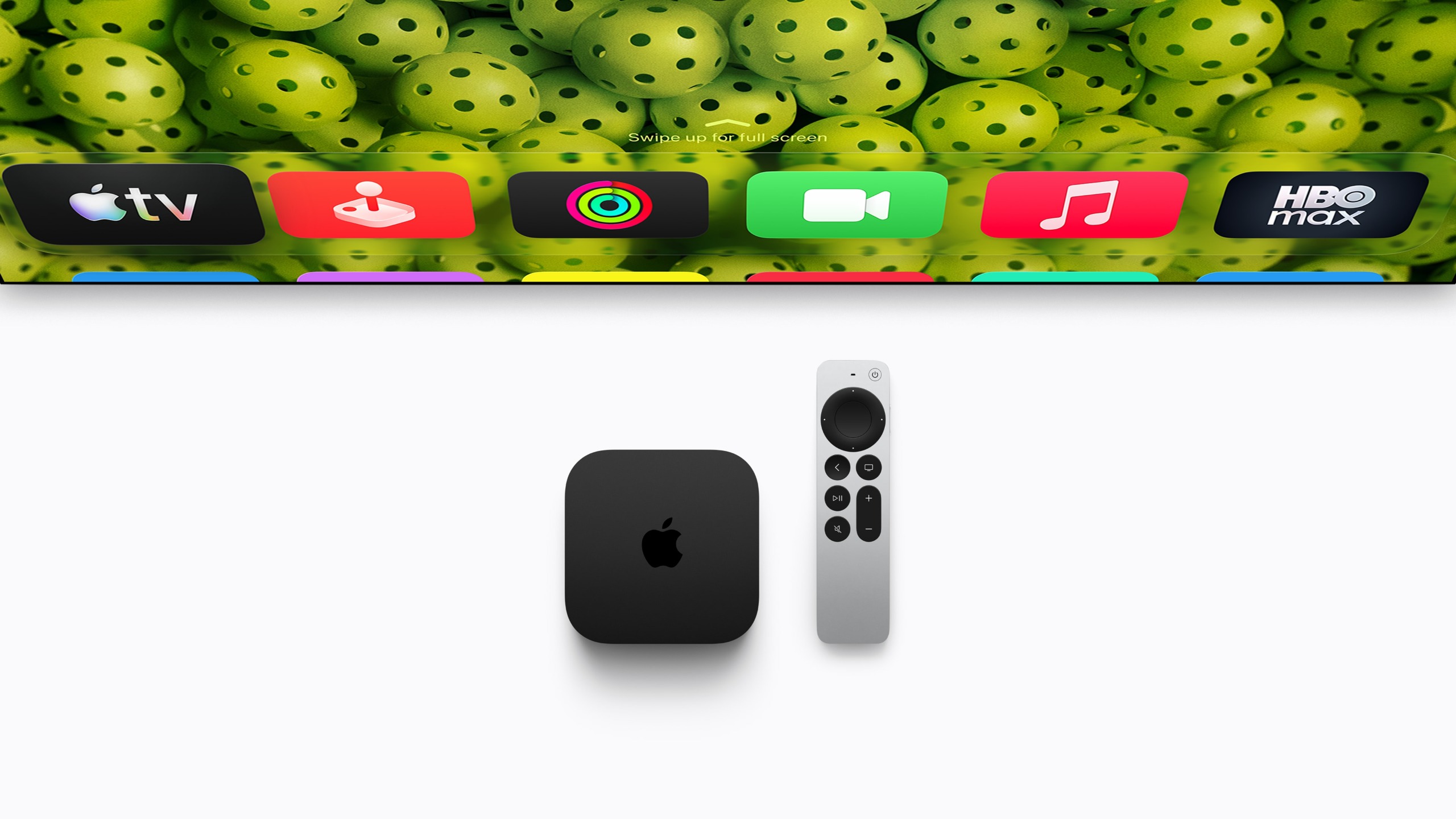
Apple has officially lifted the curtain on its next-generation streaming box, bringing an end to the four-year reign of the third-generation Apple TV 4K. Billed by the Cupertino giant as delivering “the most immersive home theatre experience yet,” the new fourth-generation device introduces a sweeping array of upgrades. These include next-level Siri AI integration, hands-free voice control via built-in far-field microphones, a much-needed hardware overhaul, and an expanded wireless surround-sound capability that allows users to pair up to four HomePod speakers.
However, these groundbreaking features come with a catch: a substantial price increase that pushes Apple’s premier streaming device well into premium territory. As consumers weigh whether the cutting-edge performance and smart capabilities justify the cost, the tech world is taking a close look at what the latest Apple TV 4K has to offer.
Main Facts at a Glance
The fourth-generation Apple TV 4K is packed with hardware and software advancements designed to cement Apple’s dominance in the smart home and streaming ecosystem.
- The Processor: Powered by the cutting-edge A19 chip—the exact same silicon found in Apple’s iPhone 17—the new streaming box boasts a 50 percent faster CPU and up to twice the GPU performance of its predecessor.
- Siri AI Integration: Leveraging the A19, tvOS now supports a far more conversational, context-aware virtual assistant capable of answering questions mid-stream via subtle text overlays.
- Hands-Free Control: A subtle front-facing LED indicator denotes when the newly integrated, far-field microphones are actively listening for voice commands, eliminating the need to hold down a remote button.
- AV1 Hardware Decoding: The inclusion of a dedicated AV1 decoder ensures higher-efficiency streaming, reduced bandwidth consumption, and crisper visuals.
- Expanded Audio Support: Users can now connect up to four HomePod (2nd Gen) or HomePod mini (2nd Gen) speakers to construct a sophisticated wireless surround-sound system with automated room calibration.
- Precision Finding Remote: The iconic metal Siri remote now features integrated UWB (Ultra Wideband) chip technology, supporting Find My Precision Finding to track it down when it slips between the cushions.
- Pricing and Availability: Streamlining its lineup into a single, high-spec 128GB configuration with an Ethernet port, the new Apple TV 4K launches on November 13th with an aggressive price tag of £299 / $299 / AU$449.
Chronology: The Evolution to the 4th Generation
To understand the magnitude of the fourth-generation release, it helps to look back at the trajectory of Apple’s living room hardware strategy.
For years, the Apple TV occupied a unique niche. While competitors like Amazon, Roku, and Google flooded the market with low-cost dongles, Apple targeted cinephiles, audiophiles, and Apple Ecosystem loyalists willing to pay a premium for a slick, ad-free interface and robust hardware.
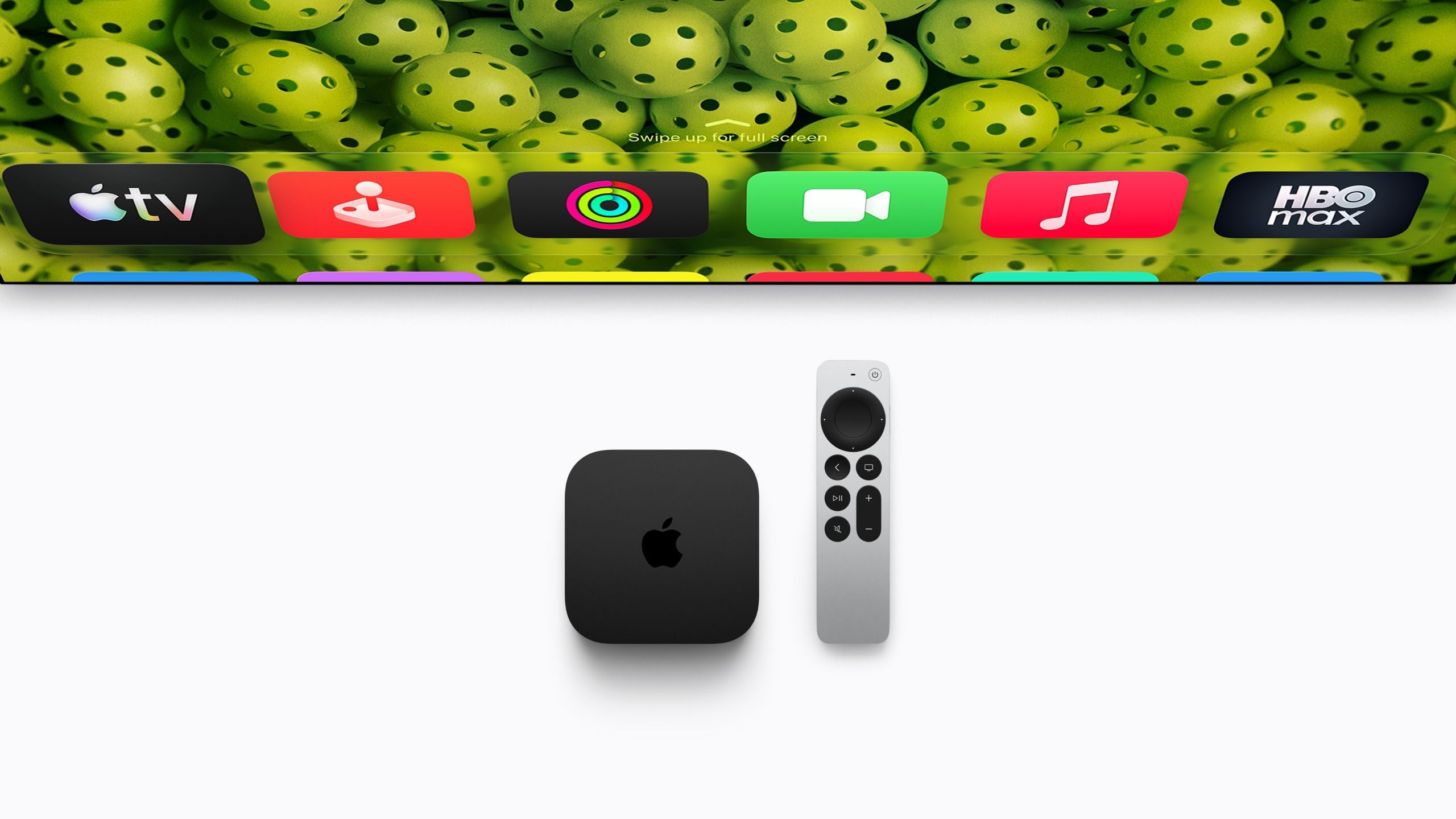
The third-generation Apple TV 4K, released four years ago, set a high standard. It offered robust HDR formatting, impressive processing speeds, and a choice between a budget-friendly 64GB model (omitting the Ethernet port) and a 128GB iteration. However, inflationary pressures and component shortages caught up with Apple earlier this year, resulting in an unwelcome mid-cycle price bump that raised the third-gen model to £249 / $249 / AU$399.
Rather than offering minor incremental tweaks, Apple’s engineering teams used the four-year gap to rethink what a streaming box should do. By injecting smartphone-tier silicon into the chassis and bringing generative AI features natively to tvOS, Apple has effectively turned the television set into an intelligent hub. The fourth-generation device cuts out the lower-spec, storage-compromised tier entirely, standardizing on a robust 128GB build equipped with an Ethernet port, and setting the stage for its November 13th rollout.
Supporting Data & Deep Dive Into the Hardware
While the physical dimensions and minimalist aesthetic of the Apple TV 4K remain largely unchanged, opening up the chassis reveals a technological powerhouse.
The A19 Chip and AV1 Decoding
The integration of the A19 processor represents a massive leap forward for a streaming box. While general CPU and GPU speed improvements are always welcome—particularly for those who utilize Apple Arcade or complex tvOS applications—the real headline is the introduction of a dedicated AV1 hardware decoder.
AV1 is rapidly becoming the gold standard video codec for major streaming providers like YouTube, Netflix, and Prime Video because it allows for exceptionally high-definition streams at significantly lower bitrates. Until now, older Apple TV units relied on software decoding or lacked native support, which could bottleneck performance on constrained internet connections. With the A19 handling AV1 natively, users can expect sharper visuals, reduced buffering, and more consistent high-dynamic-range (HDR) delivery across formats like HDR10, HLG, Dolby Vision, and HDR10+.
Multi-Speaker HomePod Surround Sound
Audio enthusiasts have long praised Apple’s spatial audio implementations, but the fourth-generation Apple TV 4K takes wireless home cinema to an entirely new level. Historically, users were capped at a stereo pair of HomePod speakers.
The new firmware update allows users to link up to four HomePod speakers—mixing and matching between HomePod (2nd Gen) and HomePod mini (2nd Gen) models, provided front and rear pairs match—to create a true wireless surround-sound array. According to Apple, the speakers use advanced spatial computing to "intelligently recognize their position in the room," automatically calibrating audio levels, delays, and equalization to match your specific living room layout. Combined with Dolby Atmos support and Apple Lossless streaming for Apple Music, this feature aims to rival traditional, wire-heavy AV receiver setups.
Official Responses and AI Implementation
Apple is heavily marketing the fourth-generation streaming box as a showcase for conversational AI within the home environment. By bringing the advanced Siri AI system—first rolled out across its latest mobile and desktop software updates—to tvOS, Apple aims to eliminate the friction typically associated with searching for content.
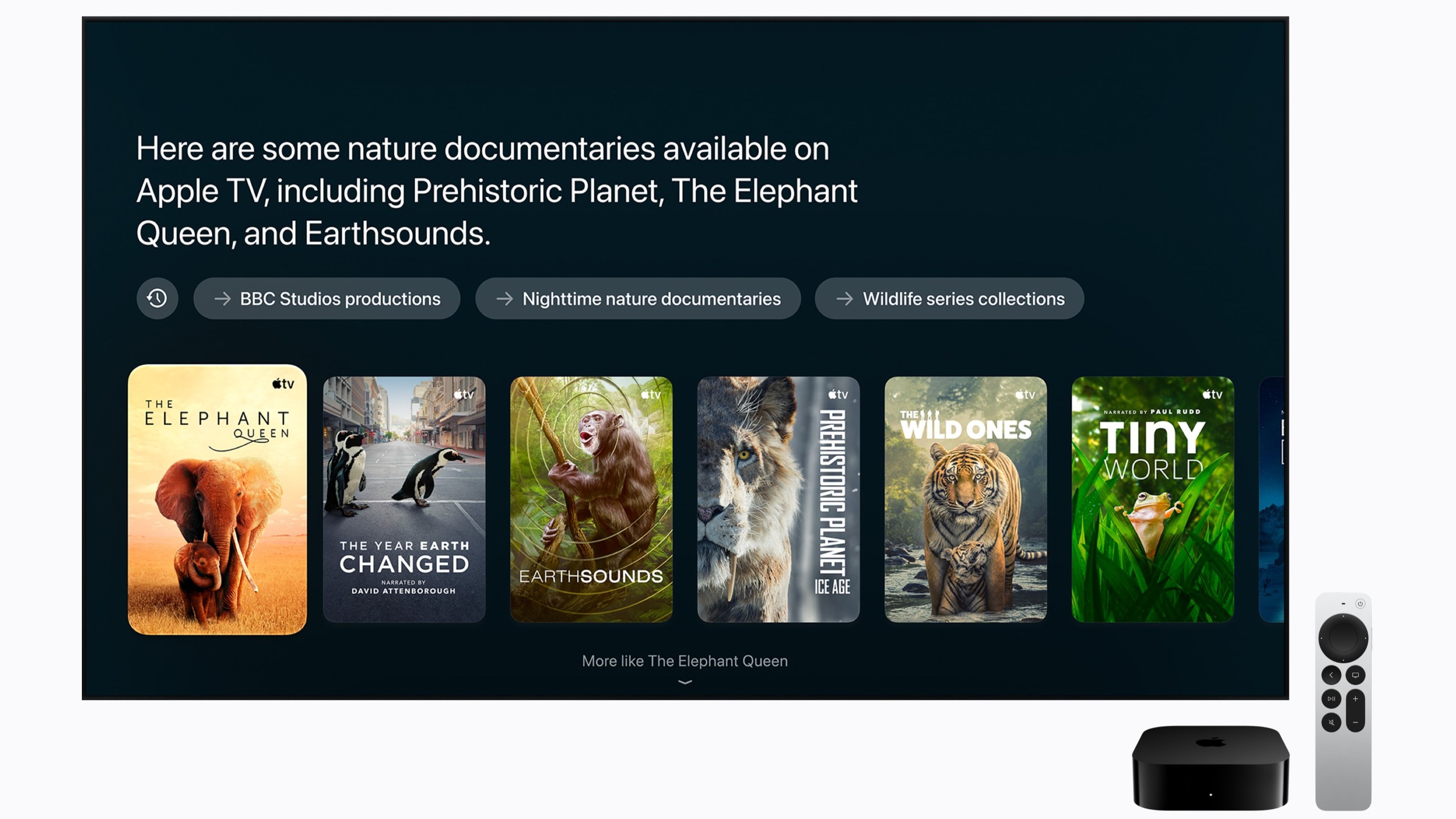
During the product announcement, company executives highlighted the contextual depth of the new assistant. Traditional voice searches are often rigid, requiring exact titles or genre definitions. The new Siri AI allows for natural, conversational queries. For instance, asking, “What Apple TV shows won at the Emmy Awards this year?” immediately yields a dedicated content rail alongside expanding search recommendations.
Even more impressive is the introduction of live, non-intrusive metadata querying. If you are watching a movie or television series and wonder about its production background or suitability for younger audiences, you can ask questions like:
- “Where was this scene filmed?”
- “Is this content appropriate for a 15-year-old?”
Instead of pausing the video or pulling up a disruptive full-screen menu, the answers appear via a subtle, translucent text overlay that respects the viewing experience, fading away seamlessly once read.
Implications for the Streaming Market and Consumers
The arrival of the fourth-generation Apple TV 4K carries significant implications for both the consumer electronics landscape and Apple’s hardware strategy.
1. The Premiumization of the Living Room
At £299 / $299 / AU$449, the new Apple TV 4K is undeniably expensive. For context, it costs nearly three times as much as high-end streaming sticks from competitors. Apple is doubling down on its philosophy that consumers willing to invest in premium displays and high-end audio setups expect an uncompromised, ad-free, high-performance ecosystem. Whether mainstream consumers will balk at a $300 streaming box remains to be seen, especially when basic smart TV apps cover the needs of casual viewers.
2. Deepening the Apple Ecosystem Lock-In
The ability to string together four HomePod speakers into a calibrated surround-sound array creates a powerful incentive for current Apple users to buy deeper into the brand’s audio hardware. A quad-HomePod setup requires a significant financial commitment, but for those who value a clean, cable-free living room without traditional AV receivers and speaker wire, it presents a compelling, proprietary alternative to traditional home theater audio.
3. Redefining Remote Management
Though small, the inclusion of Find My Precision Finding inside the remote addresses one of the most common household frustrations in modern media consumption. By allowing users to track a misplaced remote down to the exact cushion via an iPhone interface, Apple demonstrates an attention to consumer pain points that competitors often overlook.
Conclusion
The fourth-generation Apple TV 4K represents a bold statement of intent from Apple. By fusing smartphone-grade processing power, dedicated AV1 decoding, revolutionary conversational AI, and an innovative multi-speaker HomePod surround sound architecture, Apple has created the most technologically advanced streaming box on the market.
Yet, its success will ultimately hinge on whether buyers are willing to swallow its steep £299 / $299 / AU$449 price tag. We will find out if the performance, audio upgrades, and AI-driven convenience justify the cost when the device officially lands on shelves on November 13th.