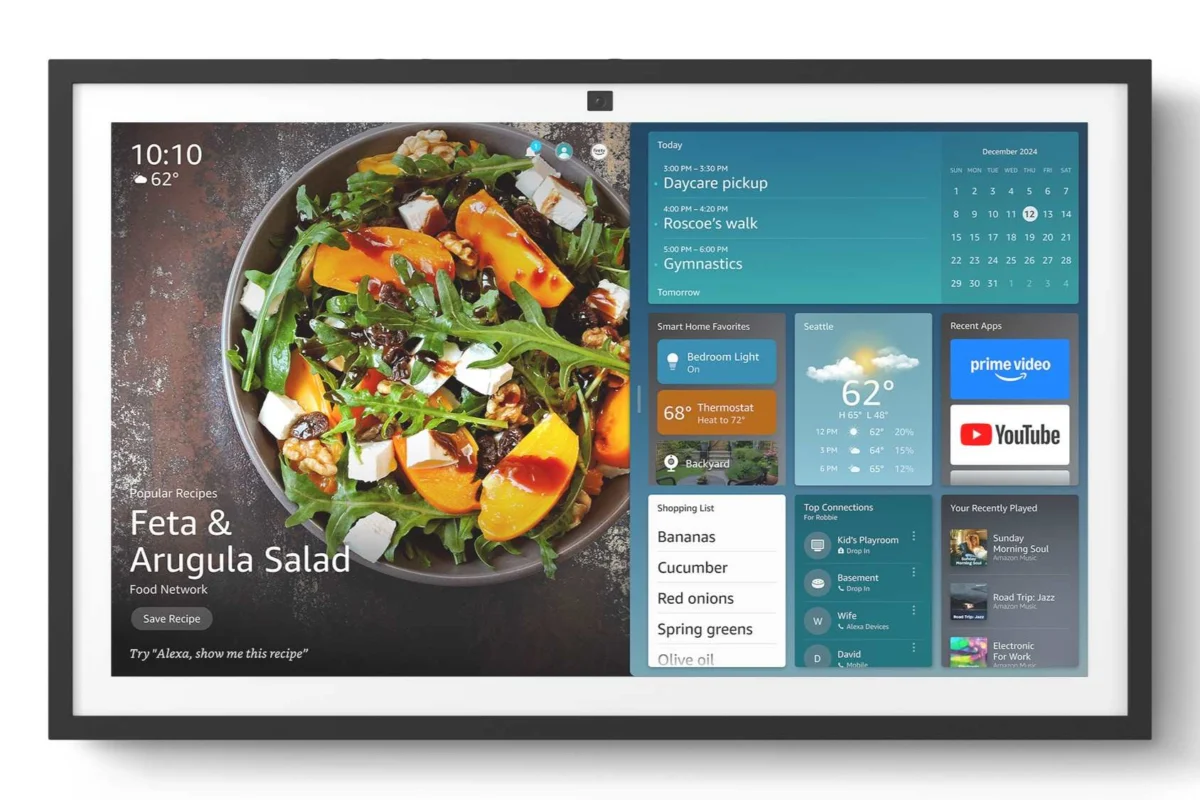
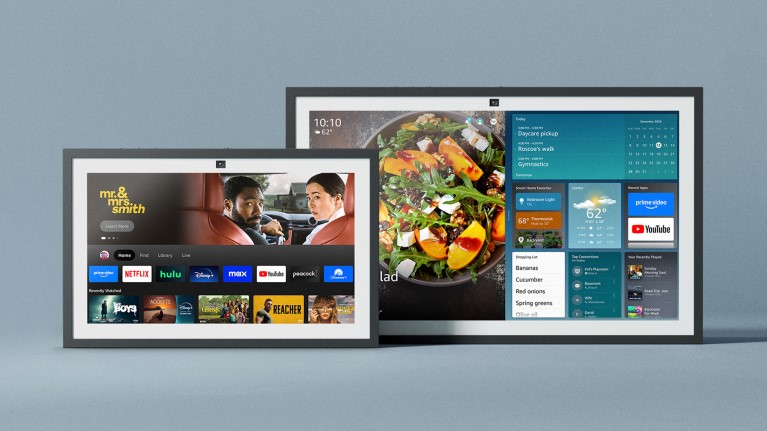
In the rapidly evolving ecosystem of the connected home, Amazon has long positioned its Echo Show series as the central nervous system for domestic life. Today, the tech giant is significantly raising the stakes—and the screen size—with the launch of the refreshed Echo Show 15 and the introduction of its largest smart display to date, the Echo Show 21.
By expanding the physical footprint of its flagship wall-mountable devices, Amazon is signaling a pivot toward viewing these units not just as information kiosks, but as primary entertainment and home-management hubs that rival dedicated smart televisions.
Main Facts: The Evolution of the Echo Display
The new lineup, consisting of the updated Echo Show 15 ($299.99) and the all-new Echo Show 21 ($399.99), represents a concerted effort by Amazon to address long-standing user feedback. While the original Echo Show 15, launched in 2021, was celebrated for its wall-mountable, portrait-or-landscape versatility, it was criticized for underwhelming audio fidelity and a lack of advanced smart home connectivity.
The new models aim to rectify these shortcomings through a series of hardware enhancements:
- Audio Overhaul: Both devices now feature dual 2-inch woofers, which Amazon claims provide double the bass of previous iterations. This is complemented by "room adaptation" technology, which utilizes internal microphones to analyze the acoustics of a space and adjust the sound signature in real-time.
- Smart Home Connectivity: A major upgrade for enthusiasts is the inclusion of integrated Zigbee and Thread radios. By transforming these units into fully-fledged Matter-enabled smart home hubs, Amazon is eliminating the need for the external bridges that were previously required for non-Wi-Fi smart devices.
- Enhanced Optics: The onboard cameras have received a significant boost. They now feature an auto-framing capability with double the field of view and 65 percent more zoom than previous generations. Enhanced noise-reduction algorithms have also been implemented to ensure that video conferencing remains clear, even in busy kitchen environments.
- Connectivity Standards: To handle the increased data demands of high-definition streaming and multi-device management, both displays are the first in the Echo family to support Wi-Fi 6E, ensuring more stable, low-latency performance.
A Chronology of the Echo Show
To understand the significance of this launch, one must look back at the trajectory of the Echo Show series.
2017: The Genesis. Amazon introduced the first Echo Show, a device that added a screen to the ubiquitous Alexa smart speaker. It was a utilitarian, modest device designed primarily to show weather, timers, and basic news briefs.
2021: The Wall-Mountable Pivot. The release of the Echo Show 15 marked a departure in form factor. Designed to hang like a picture frame, it was explicitly marketed as a home organization tool—a digital bulletin board for families. However, reviewers noted that its audio performance felt like an afterthought compared to the Echo Studio or Show 10.

2022–2023: The "Smart Hub" Gap. During this period, competitors and internal Amazon divisions pushed for tighter integration. The lack of native Zigbee/Thread support in the Show 15 became a point of friction for power users who wanted a single panel to control their locks, lights, and sensors.
2024: The Supersized Expansion. With the debut of the Echo Show 21, Amazon is essentially "maxing out" the concept. By offering a screen that provides nearly twice the real estate of the 15-inch model, the company is attempting to bridge the gap between a tablet and a living room TV, targeting users who want a "dashboard" that is visible from across the room.
Supporting Data and Technical Specifications
When comparing the new units to the competition, the technical specs reveal Amazon’s strategic positioning. While the Skylight Calendar Max is larger at 27 inches, it is a single-purpose device—a digital planner devoid of cameras or robust media playback. Amazon, by contrast, is betting on the multi-functionality of its displays.
| Feature | Echo Show 15 (2024) | Echo Show 21 |
|---|---|---|
| Display Size | 15.6-inch | 21-inch |
| Resolution | 1920 x 1080 | 1920 x 1080 |
| Connectivity | Wi-Fi 6E, Zigbee, Thread | Wi-Fi 6E, Zigbee, Thread |
| Audio | Dual 2-inch woofers | Dual 2-inch woofers |
| Camera | Auto-framing (Wide) | Auto-framing (Wide) |
The decision to maintain a 1080p resolution across both sizes suggests that Amazon is prioritizing cost-efficiency and performance speed over 4K pixel density. Since these devices are primarily viewed from a distance (as wall-mounted units), the 1080p resolution is sufficient for typical use cases like recipe viewing, calendar management, and news streaming.
Official Responses and Design Philosophy
Amazon’s design language for these new displays focuses on "integration without intrusion." The company has introduced optional accessories to help the displays blend into home décor, including light brown or white frames for $34.99 and a premium counter stand for $99.99.
"Our goal was to make the Echo Show a more seamless part of the home," says an Amazon spokesperson. "By integrating room-adapting audio and adding support for Matter, we are moving away from the idea of the smart display as a tech gadget and toward the idea of it as a permanent piece of home infrastructure."
The company emphasizes that the software experience—incorporating Fire TV apps like YouTube, Paramount+, and NBC News—is designed to make the kitchen or family room a secondary entertainment hub without requiring the user to occupy their main living room television.
Implications for the Smart Home Market
The release of the Echo Show 21 has several ripple effects for the broader consumer electronics industry:
1. The Death of the Dedicated Hub
For years, smart home enthusiasts have relied on third-party hubs (such as those from Hubitat or Aeotec) to manage complex mesh networks of sensors and switches. With Amazon building Zigbee and Thread directly into its flagship displays, the company is making a clear play to own the entire smart home stack. This will likely pressure competitors like Google to upgrade their own Nest Hub lineup to include similar thread-border-router capabilities.
2. Kitchen-Centric Computing
By focusing on the wall-mountable nature of these devices, Amazon is doubling down on the kitchen as the most important room in the house for smart tech. The move suggests that future home automation will revolve around "glanceable" data—information you can absorb in seconds while cooking or grabbing a coffee—rather than deep-dive computing.
3. Entertainment Versatility
With the Echo Show 21, the line between a "smart display" and a "smart TV" is blurring. If a user can watch high-quality streaming video on a 21-inch wall-mounted display, the need for a secondary TV in an office or a kitchen becomes obsolete. Amazon is essentially competing with its own Fire TV business, betting that users will prefer an all-in-one information and entertainment portal over multiple, fragmented devices.
Future Outlook
As we await full-scale reviews, the question remains: is bigger truly better? The Echo Show 21 is a bold experiment in how much screen real estate a user is willing to dedicate to a smart assistant. While the technical upgrades—specifically the audio and the inclusion of Matter-capable radios—are objectively positive, the success of the device will hinge on the user interface’s ability to utilize that extra space effectively.
Amazon has moved beyond the "experimentation phase" of smart displays. With these new units, the company is attempting to define the permanent standard for the connected home. Whether the Echo Show 21 becomes a staple of modern interior design or remains a niche device for enthusiasts will depend on how well it integrates into the daily routines of the average family. For now, Amazon has provided the hardware; the ecosystem is ready, and the race for the center of the home is officially back on.