Acon Digital Unveils Acoustica 8: A New Era in Audio Restoration, Spectral Editing, and DAW Integration
016 mins
September 11, 2026 — In an announcement that is already sending ripples through the professional audio community, Acon Digital has officially released Acoustica 8, the latest iteration of its flagship audio editing, restoration, and mastering software. Built from the ground up to address the evolving demands of modern music producers, film post-production engineers, podcasters, and restoration specialists, Acoustica 8 promises a massive leap forward. The platform centers its core enhancements around accelerated restoration workflows, hyper-precise spectral editing, a fully overhauled graphical user interface (GUI), and deeply integrated Digital Audio Workstation (DAW) connectivity.
Positioned as Acon Digital’s most ambitious software launch to date, Acoustica 8 arrives at a critical juncture in the audio technology sector, where creators increasingly demand the speed of machine learning coupled with the absolute precision of manual controls.
Main Facts: What’s New in Acoustica 8?
Acoustica 8 is not merely a minor point update; it represents a comprehensive rethinking of how audio professionals interact with damaged, flawed, or complex recordings. The release spans several key pillars of advancement:
Next-Generation Machine Learning Restoration: The acclaimed Restoration Suite 3 has been supercharged with advanced machine-learning models, notably eliminating the tedious process of capturing a noise profile in tools like DeNoise 3 and DeHum 3.
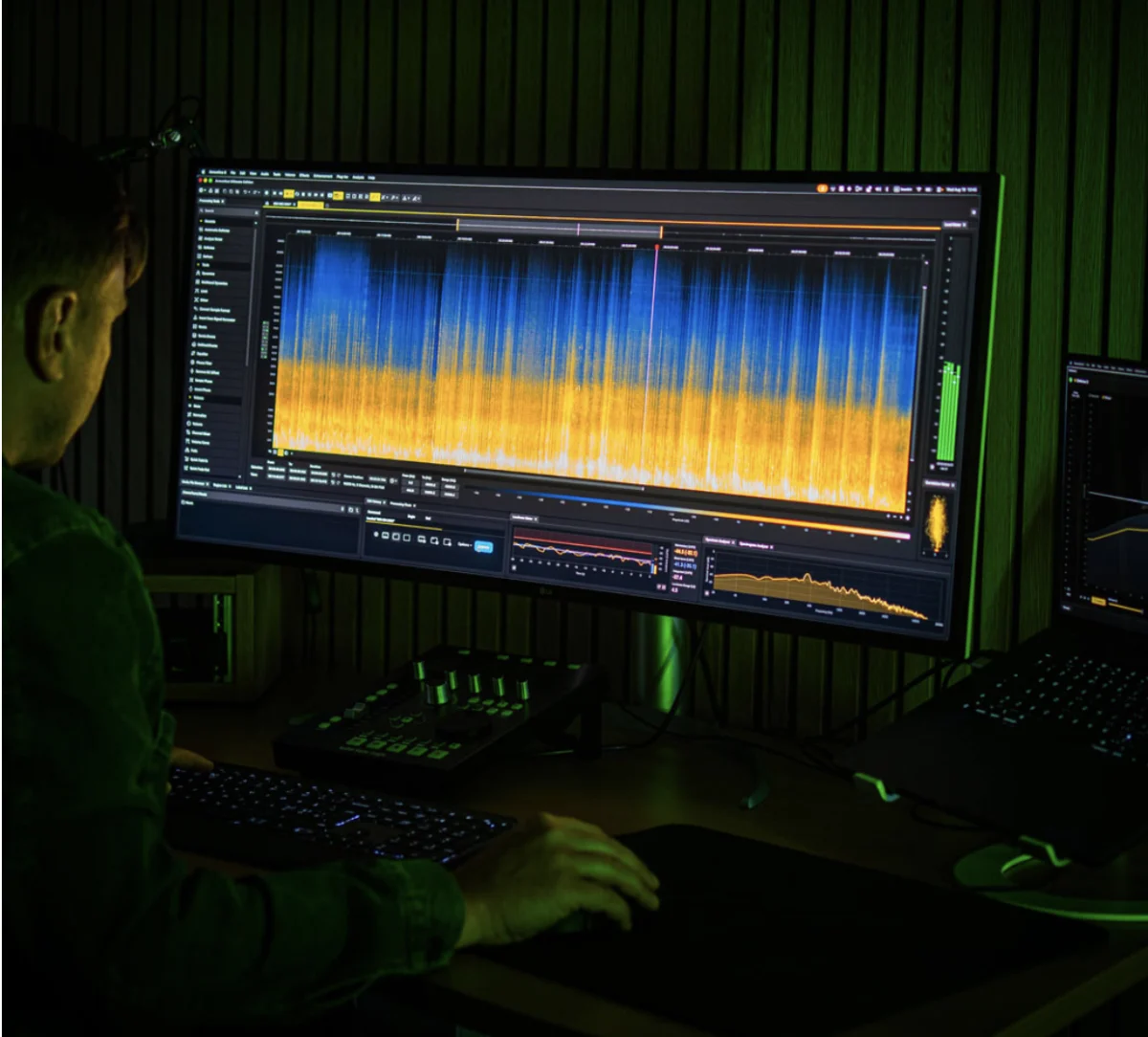
Precision Spectral Editing Tools: New spectral capabilities include Stereo View visualization, a "select similar" matching function, refined time and frequency feathering, and a completely rebuilt AudioFill interpolation engine.
Advanced Dialogue Isolation:Extract:Dialogue 2 introduces granular, independent controls for managing voice, background noise, and acoustic reverb.
Modernized, Dockable Interface: A completely redesigned UI features a dynamic launch page, flexible dockable processing windows, and fully customizable toolbars.
Seamless DAW Integration: Enhanced interoperability via an upgraded ARA2 plug-in and a dedicated Pro Tools AAX Link plug-in eliminates friction between host software and the external editor.
Chronology of Development: Listening to the Community
The journey to Acoustica 8 has been years in the making, born from continuous dialogue between Acon Digital’s engineering teams and its global user base.
The Foundation (Pre-2024)
Acon Digital established a strong reputation for offering high-performance, cost-effective alternatives to legacy audio restoration suites. Versions 6 and 7 laid the groundwork by introducing robust spectral editing features and dependable restoration tools, gradually building a dedicated following among independent studios and budget-conscious post-production facilities.
The Feedback Loop (2024–2025)
As artificial intelligence and machine learning began to permeate the audio tech landscape, users voiced a common dilemma: while automated AI tools were fast, they often lacked transparency, frequently introducing artifacts or stripping away vital nuances of a performance. Acon Digital utilized this period to research advanced neural network architectures that could automate routine labor without stripping creative control away from the engineer. Simultaneously, user testing highlighted bottlenecks in multi-platform workflows, prompting the development team to prioritize native DAW integration.
The Launch (September 2026)
Following extensive beta testing cycles within professional broadcast and music production environments, Acon Digital officially unveiled Acoustica 8 to the public on September 11, 2026, targeting an industry hungry for streamlined workflows that do not sacrifice audio fidelity.
Supporting Data & Deep-Dive Technical Analysis
To understand the weight of Acoustica 8, one must examine the specific technological improvements embedded within its various modules. Acon Digital has meticulously targeted the most frequent pain points reported by audio editors.
Restoration Suite 3: Smarter and Faster
Historically, audio restoration required an engineer to isolate a silent section of a recording to "learn" the noise floor before applying reduction algorithms. While effective, this process was time-consuming and often failed when noise floors fluctuated dynamically.
With DeNoise 3 and DeHum 3, Acon Digital has integrated deep-learning algorithms trained on vast datasets of acoustic environments. These models can instantaneously differentiate between desirable audio signals (such as dialogue or musical instruments) and persistent background hums or broadband noise without requiring a noise profile capture. This dramatically speeds up workflow timelines for dialogue editors dealing with uncontrolled field recordings. Furthermore, DeClip 3 and DeClick 3 have received interface overhauls that provide clearer visual feedback on transient restoration.
Precision Spectral Editing Redefined
When automated tools fall short, spectral editing becomes the last line of defense. Acoustica 8 introduces several breakthrough features in this domain:
Stereo View on the Spectrogram: Traditionally, spectral editors forced engineers to work in a mono-summed view or flip back and forth to identify spatial panning issues. Stereo View displays stereo placement directly on the spectrogram itself, allowing engineers to pinpoint a stray click, artifact, or localized noise source in the soundstage immediately.
"Select Similar": Pattern recognition is a hallmark of efficiency. The new "select similar" function scans the active spectral region and automatically flags other areas sharing identical frequency and time characteristics. This is a massive time-saver for removing recurring clicks, hum harmonics, or localized chirps throughout a lengthy file.
Feathering Controls: Adjustable time and frequency feathering give users the ability to soften the boundaries of spectral selections, ensuring that edits blend seamlessly into the surrounding audio without causing phase smearing or audible clicks at the selection edges.
AudioFill Rebuild: When large swaths of audio must be excised (such as a cough or a dropped microphone), AudioFill steps in. Rebuilt from the ground up, the new engine uses advanced signal synthesis to interpolate and fill larger gaps, matching the harmonic profile of the surrounding material far more naturally than previous iterations.
Extract:Dialogue 2
For post-production professionals working on film, television, and podcasts, dialogue isolation is paramount. Extract:Dialogue 2 takes the guesswork out of cleaning up compromised vocal tracks by providing discrete, independent sliders for Voice, Noise, and Reverb. This tripartite control structure allows an engineer to suppress heavy room reflections while simultaneously lifting low-level dialogue and eradicating background machinery, avoiding the watery, phase-distorted artifacts typical of older expansion algorithms.
Workflow, GUI, and DAW Integration
Acon Digital recognized that even the best DSP (Digital Signal Processing) tools are hindered by a clunky interface. Acoustica 8 introduces a sleek, modern UI designed to reduce visual fatigue during long sessions.
The Launch Page: Users are greeted by a centralized hub offering immediate access to recent sessions, templates, and project files.
Dockable Windows & Custom Toolbars: Processing tools can now be docked, stacked, or floated across multi-monitor setups. Toolbars can be completely customized, enabling users to build bespoke workspaces tailored specifically to mastering, restoration, or sound design.
Expanded DAW Connectivity: Recognizing that few engineers work exclusively inside a standalone editor, Acon Digital has aggressively expanded integration. The software now includes a robust ARA2 (Audio Random Access) plug-in, allowing users to open the clip editor directly within compatible hosts (such as Reaper, Studio One, and Cubase) without exporting or rendering files. Additionally, Pro Tools users benefit from a dedicated Link plug-in that manages AAX transfers smoothly between the DAW and Acoustica.
Official Responses and Industry Commentary
The launch of Acoustica 8 has prompted enthusiastic commentary from company leadership and early industry adopters alike.
In the official press release, Acon Digital CEO Joel Heatley emphasized the collaborative ethos driving the new software:
"Acoustica 8 is a result of listening closely to our customers and the wider audio community to fully understand the technical challenges they face every day. It is our most ambitious release to date, combining best-in-class tools with pricing unmatched in our industry."
Heatley’s emphasis on pricing touches on a long-standing differentiator for Acon Digital. While competing enterprise-grade restoration suites often command subscription fees or steep perpetual license costs that can price out independent creators and small studios, Acon Digital has historically maintained an aggressive pricing strategy. Industry analysts note that by pairing high-end machine learning algorithms with accessible price points, Acoustica 8 is poised to capture significant market share from legacy giants like iZotope and CEDAR.
Early beta testers—ranging from audiobook producers to indie film mixers—have echoed Heatley’s sentiments, praising the speed of the profile-free DeNoise algorithms and the workflow fluidity afforded by the ARA2 integration. One prominent Los Angeles-based post-production supervisor noted:
"The ability to open Acoustica straight from my timeline via ARA2, wipe out unwanted room reflections with Extract:Dialogue 2, and jump back into the mix without bouncing files has cut my dialogue cleanup time in half."
Implications for the Audio Industry
The release of Acoustica 8 carries several profound implications for the broader landscape of audio engineering and music production:
1. Democratization of High-End Restoration
Advanced spectral editing and machine-learning noise mitigation were once exclusive to multimillion-dollar post-production houses equipped with high-end proprietary hardware and software. By packaging these capabilities into an intuitive, reasonably priced platform, Acon Digital continues to level the playing field. Independent podcasters, student filmmakers, and bedroom producers now possess forensic audio tools that rival those found in major Hollywood studios.
2. The Shift Toward "Assisted" Rather Than "Automated" AI
There has been growing pushback in the creative community against "black box" AI tools that make unilateral decisions about audio material, often removing artistic intent. Acon Digital’s philosophy with Acoustica 8—using machine learning to automate tedious groundwork (like noise profiling) while leaving surgical precision tools (like feathering, Stereo View, and manual spectral painting) firmly in the hands of the engineer—strikes a vital balance. It positions technology as an assistant rather than a replacement for human ears.
3. Workflow Convergence
As DAWs and dedicated audio editors continue to blur lines through technologies like ARA2 and specialized bridge plug-ins, the friction of working across multiple applications is rapidly dissolving. Acoustica 8’s deep integration with Pro Tools and ARA2-compatible hosts signals that standalone audio editors must be frictionless components of a larger ecosystem to survive.
Conclusion
Acon Digital has set a high bar for the industry with the release of Acoustica 8. By combining cutting-edge machine learning, refined spectral editing utilities, a thoughtfully redesigned modular interface, and bulletproof DAW integration, the company has transformed a reliable editing suite into a powerhouse production environment. As studios around the world begin integrating Acoustica 8 into their daily routines, the software stands as a testament to what is possible when rigorous engineering meets responsive, community-driven development.