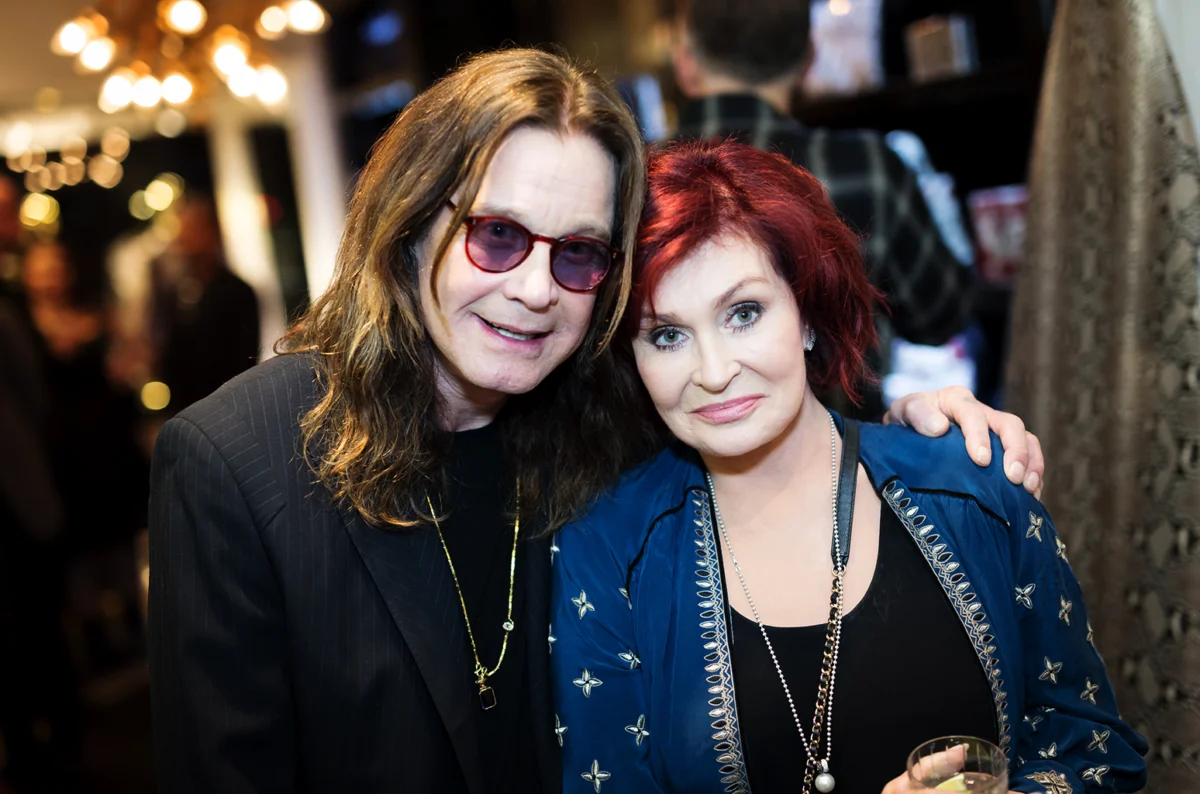
In a poignant display of enduring devotion, Sharon Osbourne took to Instagram this past Friday, July 4, to commemorate what would have been her 46th wedding anniversary with the late Prince of Darkness, Ozzy Osbourne. The rock legend, whose career spanned over five decades, passed away on July 22, 2025, leaving behind a legacy that transformed the landscape of heavy metal and reality television.
For Sharon, the date serves as both a painful reminder of her loss and a celebration of a bond that weathered the most extreme pressures of the entertainment industry. "Today would have been our 46th wedding anniversary," Sharon wrote in her tribute. "Instead, it is a celebration of a love that even death could not diminish. I miss your hand in mine, but I carry your love with me every step of the way. Forever my husband. Forever my heart."
The Chronology of a Rock Icon’s Final Journey
The narrative of Ozzy Osbourne’s final months is one of both artistic closure and physical struggle. Following a long and public battle with Parkinson’s disease, which had hampered his ability to tour in recent years, the rock icon’s health became a central focus for his family and global fanbase.
The end of his life came with a sense of deliberate finality. On July 5, 2025, just seventeen days before his death, Ozzy took the stage at Villa Park in his hometown of Birmingham, England. The concert, titled "Back to the Beginning," served as a massive farewell event. Joined by his original Black Sabbath bandmates, the performance was a historic moment, marking a definitive conclusion to a career that began in the industrial heart of the UK.
Ozzy’s death on July 22, 2025, at the age of 76, prompted an outpouring of grief from across the globe. The couple, who first married in Hawaii on July 4, 1982, had spent 43 years building an empire together. Their relationship was characterized by intense public scrutiny, navigating well-documented highs and lows, including a highly publicized separation in 2016. However, they persevered, eventually renewing their wedding vows in 2017 to reaffirm their commitment to one another. Together, they raised three children—Aimee, Kelly, and Jack—who have remained pillars of support for their mother following their father’s passing.
Supporting Data: The Posthumous Chart Surge
Ozzy Osbourne’s impact on music is perhaps best quantified by the unprecedented surge in his consumption metrics following his death. In the weeks immediately following his passing, his discography experienced a cultural revival that mirrored the massive scale of his influence.
According to data for the tracking week ending July 24, 2025, "Crazy Train," the seminal 1980 solo track from Blizzard of Ozz, reached the Billboard Hot 100 for the first time in its 45-year history. The song debuted at No. 46, driven by a massive 9.2 million streams. This statistic underscores not only the enduring appeal of his music but also the way audiences rally to honor legends upon their departure.
Simultaneously, "Mama, I’m Coming Home" re-entered the Hot 100 at No. 49, marking its first appearance on the chart in 33 years. His career-spanning compilation, The Essential Ozzy Osbourne, saw a meteoric rise to No. 7 on the Billboard 200—surpassing its previous peak of No. 81. It also claimed the No. 1 spot on the Top Rock & Alternative Albums, Top Rock Albums, and Top Hard Rock Albums charts simultaneously. Remarkably, the top seven positions on the Hot Hard Rock Songs chart were entirely occupied by Osbourne and Black Sabbath tracks, demonstrating that his music remains the benchmark for the genre.
A Legacy of Five Decades
To understand the weight of Sharon’s loss, one must examine the scope of the life they built. Across more than 50 years in the public eye, Ozzy Osbourne sold over 100 million albums worldwide. His tenure as the frontman of Black Sabbath effectively invented heavy metal, while his solo career proved he could adapt and evolve, remaining relevant through changing musical climates.
His commercial performance is staggering: he secured nine solo top 10 entries on the Billboard 200, achieving at least one top 10 album in every decade from the 1980s through the 2020s. His chart success also extended into collaborations that bridged generations, such as his work with Post Malone and Travis Scott on the 2019 hit "Take What You Want," which reached No. 8 on the Hot 100. Similarly, his 1989 duet with Lita Ford, "Close My Eyes Forever," remains one of the most recognizable rock ballads in history.

In 2013, the reunion album 13 by Black Sabbath earned the band their first-ever No. 1 on the Billboard 200, proving that even as a legacy act, the Osbourne-led outfit could still command the modern charts.
Official Responses and Public Sentiment
The reaction to Sharon’s tribute has been overwhelming, with fans, peers, and industry leaders echoing the sentiment of a life well-lived. While the Osbourne family has kept much of their grieving process private, the public nature of the tributes reflects the transparency that defined the Osbournes’ brand of celebrity. Since the success of their MTV reality show The Osbournes in the early 2000s, the family has been viewed as a unit that invited the world into their living room.
Music historians suggest that the surge in streaming is a direct result of this long-standing connection. "Ozzy wasn’t just a singer; he was a personality who fans felt they knew intimately," says music industry analyst Marcus Thorne. "When you combine that level of intimacy with a catalog that redefined rock music, you get the kind of chart dominance we are seeing today."
Implications for the Future of the Osbourne Estate
The passing of Ozzy Osbourne marks the end of an era, but it also signals a new chapter for his estate and his family’s preservation of his history. The current surge in charts suggests that there is a significant appetite for archival material, unreleased demos, and retrospective documentaries.
For Sharon, the focus remains on the emotional weight of the anniversary. The decision to share a personal, close-up photo of their hands entwined was a deliberate choice to humanize a figure often portrayed as a larger-than-life caricature. It reminds the public that behind the makeup, the bat-biting, and the legendary rock-and-roll lifestyle, there was a man who relied on his wife as his anchor.
As the music industry continues to process the loss of such a monumental figure, the legacy of Ozzy Osbourne remains secure. His music serves as a blueprint for hard rock, while his life serves as a testament to the complexities of human relationships in the spotlight.
Sharon’s tribute is more than just a social media post; it is a declaration of continuity. Despite the absence of the man who defined a genre, the love they built continues to resonate. As the industry looks back at his career, it is clear that while the charts reflect his commercial success, the personal tribute from his widow reflects the true measure of the man.
In the coming years, we can expect further celebrations of his work, potentially through expanded box sets, tribute concerts, and perhaps even a definitive biographical project that captures the full breadth of his life. For now, the world remembers him not just as the Prince of Darkness, but as the husband, father, and icon whose music will continue to influence generations to come.
The 46th anniversary serves as a bridge between his historical impact and his future legacy—a legacy that, much like the music he left behind, refuses to fade away.