
While the catalog of recorded Beethoven piano sonatas is vast—a sprawling mountain range of interpretations that spans over a century of audio history—the arrival of a new, compelling voice remains an event of significant note. For the discerning audiophile and the dedicated scholar of Ludwig van Beethoven’s keyboard output, the challenge has never been finding a recording, but finding one that breathes new life into the familiar.
In a recent release from IBS, pianist and pedagogue Miriam Gomez-Moran offers a masterclass in nuance, tackling three of the most ubiquitous works in the Western canon: the Pathétique, the Moonlight, and the Waldstein sonatas. Her performance, now available on NativeDSD, serves as a poignant reminder that even the most well-trodden paths in music hold hidden vistas for those with the technical command and emotional courage to find them.
Main Facts: A Triad of Masterpieces
The new album features a program that functions as a concentrated study of Beethoven’s developmental arc. By juxtaposing these three sonatas, Gomez-Moran invites listeners to trace the composer’s evolution from the stormy, proto-Romantic angst of the Pathétique (Op. 13) to the ethereal, dream-like atmosphere of the Moonlight (Op. 27, No. 2), and finally, the structural brilliance and virtuosic demands of the Waldstein (Op. 53).
Gomez-Moran, a distinguished academic and professor at one of Spain’s premier music conservatories, brings a Ph.D.-level understanding of musical architecture to these performances. However, her approach is far from pedantic. The hallmarks of this recording are a crystalline transparency and a startling ability to navigate the high-contrast emotional terrain of Beethoven’s writing. Where other pianists might fall into the trap of sentimentality—particularly in the Moonlight—Gomez-Moran remains focused on a purity of expression that avoids cliché, offering a reading that is as intellectually stimulating as it is emotionally affecting.
Chronology and Context: From Tradition to Innovation
Beethoven’s sonatas are often viewed as a diary of his life, and their performance history is deeply tied to the evolution of the piano itself.
- 1798–1799: The composition of the Piano Sonata No. 8 in C Minor, Op. 13 (Pathétique). This work marked a pivotal moment where Beethoven moved away from the more refined, aristocratic sensibilities of the Classical era, embracing a heightened sense of drama and contrast.
- 1801: The completion of the Piano Sonata No. 14 in C-sharp Minor, Op. 27, No. 2 (Moonlight). Often misunderstood as a purely melancholy work, it represents a radical departure in form, with the famous Adagio sostenuto leading into a tempestuous finale.
- 1803–1804: The Piano Sonata No. 21 in C Major, Op. 53 (Waldstein). This work stands as a testament to the expansion of the piano’s range and the composer’s increasing deafness, which pushed him to explore more percussive, orchestral sonorities.
For decades, the listener’s reference point for these works has been influenced by a lineage of titans: Schnabel, Kempff, Brendel, and more recently, the complete cycle by Peter Takács, which NativeDSD honored as the Solo Instrumental Album of the Year in 2022. Gomez-Moran’s entry into this field is significant because she does not attempt to replicate these established giants. Instead, she utilizes modern recording techniques to emphasize the internal logic of the scores, providing a fresh "transparency" that makes these familiar melodies feel as though they are being heard for the very first time.
Supporting Data: The Audiophile Experience
The success of this release is not solely due to the interpretation; it is fundamentally bolstered by the technical execution of the recording itself. Produced by IBS, the album captures the acoustic environment of the performance space with surgical precision.
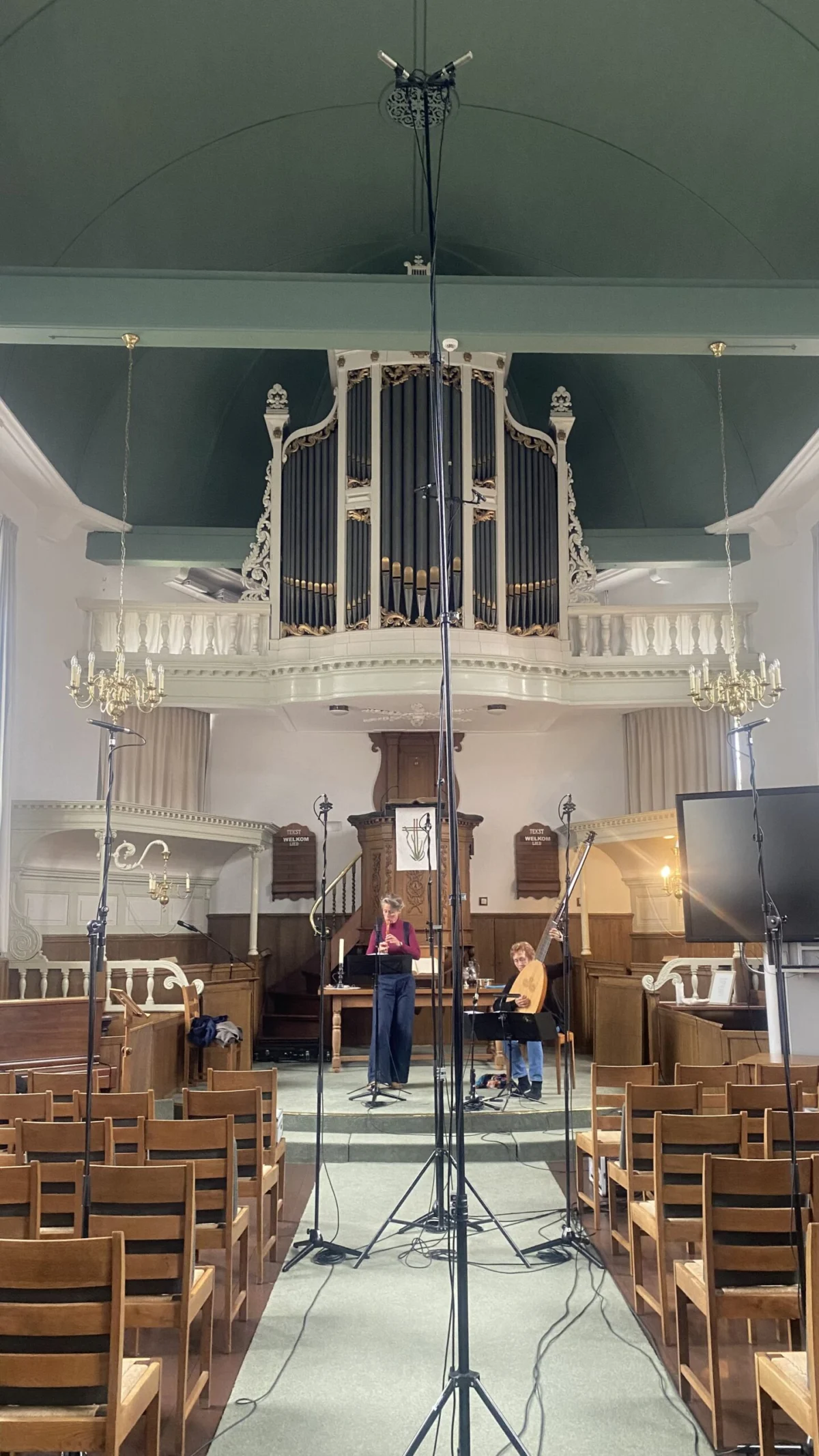
In high-fidelity audio, the "distance" of the piano is a subject of constant debate. If the microphones are too close, the mechanical noise of the instrument—the clicking of the hammers and the movement of the dampers—can distract from the music. If they are too far, the warmth and percussive brilliance of the notes are lost to the room’s ambient reverberation.
The IBS engineering team has struck an ideal balance here. The piano is positioned at a "perfect distance," creating an intimate yet spacious soundstage. This allows for the articulation of Gomez-Moran’s rapid-fire passages in the Waldstein to emerge with distinct clarity, while the sustain of the Moonlight’s opening movement remains rich and resonant. For listeners utilizing high-resolution equipment, this album serves as an excellent test of dynamic range and transient response.
Official Perspectives: The Value of Variety
As Bill Dodd, Senior Music Reviewer at NativeDSD, notes, the current state of classical music consumption is a "lucky" era for the listener. The ability to access a wide array of historical and contemporary interpretations allows for a more personalized relationship with the music.
Dodd, whose own background spans professional broadcasting in San Francisco to a lifelong immersion in the works of Bach, jazz legends, and rock icons, emphasizes that Gomez-Moran’s interpretation of the Waldstein is particularly noteworthy. He writes, "I think I enjoyed her Waldstein more than any I’ve heard before." This endorsement carries weight, given the sheer volume of recordings that pass through the desks of industry experts. The implication is that Gomez-Moran has managed to solve the "Beethoven riddle"—how to honor the tradition while injecting the vitality of a living, breathing artist.
Implications for the Future of Classical Recordings
The release of this album raises an interesting question about the future of the classical recording industry. With the entire history of recorded music available at the click of a button, what is the role of the modern interpreter?

Gomez-Moran’s success suggests that the path forward lies in interpretive clarity and sonic integrity. By eschewing the "romanticized" excesses of the 20th century in favor of a clean, articulate, and intelligent reading, she aligns herself with the current trend toward Historically Informed Performance (HIP) practices—even if she is playing a modern instrument. She treats the score as a primary text, stripping away the baggage of performance tradition to let Beethoven’s own structural genius shine through.
Furthermore, the availability of these works in DSD (Direct Stream Digital) format underscores a growing commitment to the "pure" sound. As streaming services often compress audio, the dedicated DSD market, represented by platforms like NativeDSD, caters to an audience that demands the highest possible fidelity. This intersection of elite performance and elite technology is what will continue to drive the relevance of classical music in the 21st century.
Conclusion
Miriam Gomez-Moran’s recording of these three Beethoven cornerstones is a triumph of artistic restraint and intellectual rigor. It is a recording that demands multiple listens; one hears something new in the layering of the Pathétique or the structural tension of the Waldstein every time the needle (or the file) drops.
For those who already own the complete cycles of Takács or other masters, this album is not a replacement but a necessary supplement. It serves as a focused, high-contrast look at three of the most important works ever written for the piano.
Whether you are a seasoned audiophile looking to stress-test your system’s transparency or a student of music seeking a fresh perspective on the bedrock of the piano repertoire, Gomez-Moran’s IBS recording comes with the highest recommendation. In a world where the noise of the new often drowns out the beauty of the old, this recording provides a quiet, brilliant, and essential sanctuary.
For those interested in exploring the complete Beethoven canon, the 11-volume bundle of the complete Piano Sonatas by Peter Takács remains available, providing a comprehensive, top-tier look at the entirety of the composer’s output. However, for a focused, exhilarating, and modern take on the most famous sonatas, the new Gomez-Moran release is the definitive choice for this season.