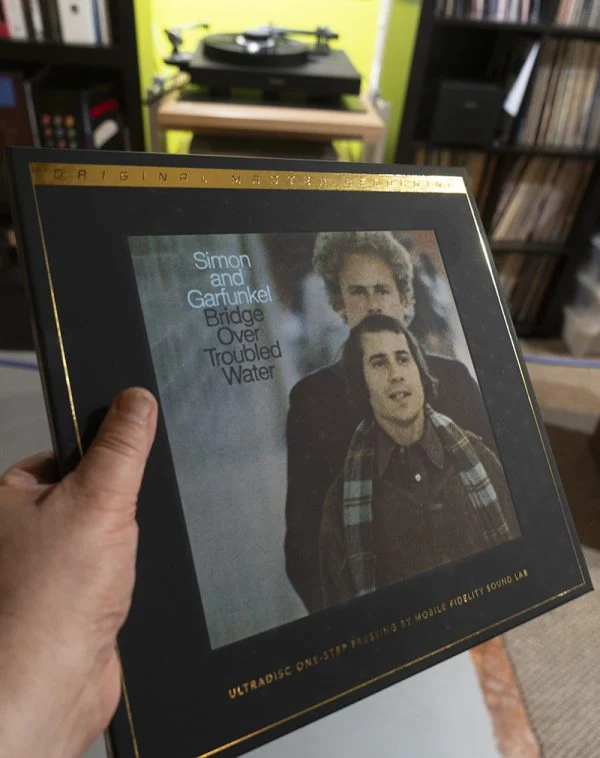
PORTLAND, OR – March 15, 2026 – In a development that has stirred the local audiophile community and sparked a wave of imaginative speculation, a peculiar anecdote has surfaced, centering on a purported late-night visit from acclaimed singer-songwriter Aimee Mann. The story, shared on March 15, 2026, details a vivid dream experienced by an unnamed individual, a passionate music enthusiast with a discerning ear for high-fidelity sound reproduction. The dream, described as "bizarre," involved Mann seeking out their residence, specifically requesting to hear Simon & Garfunkel’s seminal 1970 album, "Bridge Over Troubled Water," on a purportedly "pretty good stereo."
The narrative, shared via an online platform dedicated to "Records of the Day," has resonated with many, not just for its celebrity-centric nature, but for the underlying theme of appreciating musical artistry through the lens of exceptional sound quality. While the encounter is explicitly framed as a dream, its vividness and the specific details concerning a particular pressing of the iconic album have ignited a conversation about the enduring power of music and the sophisticated playback systems designed to capture its nuance.
The Genesis of a Dream: An Unlikely Nocturnal Guest
The account begins with the narrator waking from a dream that immediately felt significant enough to warrant sharing. In this nocturnal tableau, Aimee Mann, known for her introspective lyrics and distinctive vocal delivery, is depicted arriving at the narrator’s doorstep. The stated reason for her unannounced visit? A desire to experience a record on what she had allegedly heard was a "pretty good stereo."
"Aimee Mann knocked on our door and asked if she could hear a record, because she ‘heard I had a pretty good stereo, and she was in the neighborhood,’" the original post reads, quoting the dream encounter. The narrator playfully muses about a potential "Portlandia comeback," a nod to the satirical sketch comedy series set and filmed in Portland, known for its quirky characters and scenarios. This connection is further bolstered by the fact that Mann was indeed scheduled to perform in Portland for shows on Thursday and Friday of that week, adding a layer of temporal and geographical plausibility to the dream’s setting.
Upon being invited inside, Mann’s request was specific: Simon & Garfunkel’s "Bridge Over Troubled Water." This choice of album is noteworthy, representing a cornerstone of 20th-century popular music, celebrated for its vocal harmonies, ambitious arrangements, and profound lyrical themes.
The Audiophile’s Dilemma and a MoFi Revelation
The narrative then takes a turn that speaks directly to the heart of high-fidelity enthusiasts. Mann, in her "signature deadpan, calm voice," inquired, "Do you have the MoFi version? They did a pretty nice job with two of my records." This detail is crucial. MoFi, or Mobile Fidelity Sound Lab, is a highly respected audiophile record label renowned for its meticulous reissues of classic albums, often utilizing original analog master tapes and employing specialized mastering techniques to achieve superior sound quality.
The narrator’s response, "Sure do, come on in," confirms the presence of the coveted Mobile Fidelity Sound Lab pressing of "Bridge Over Troubled Water." The dream then progresses to a shared listening experience. Mann is described as sitting on the couch and listening to both sides of the "2-record, 45 r.p.m. set." This format, a 45 RPM edition, is favored by audiophiles for its potential to deliver enhanced sonic detail and dynamic range compared to standard 33 1/3 RPM LPs, as the wider grooves allow for greater information to be etched into the vinyl.
The dream concludes with Mann’s understated yet positive feedback: "That sounded really nice. Thank you very much." Following this, as she prepares to leave, the narrator awakens, leaving them with the lingering impression of the "crazy" encounter.
Chronological Context and the Enduring Legacy of "Bridge Over Troubled Water"
To fully appreciate the narrative’s resonance, it’s essential to place "Bridge Over Troubled Water" within its historical and cultural context. Released in January 1970, the album was a monumental success for the folk-rock duo Simon & Garfunkel. It topped the charts in numerous countries, including the United States and the United Kingdom, and remained at number one on the Billboard 200 for 10 weeks. The album garnered critical acclaim, earning multiple Grammy Awards, including Album of the Year, Record of the Year, and Song of the Year for its title track.
The album’s enduring appeal lies in its masterful blend of poignant songwriting, exquisite vocal harmonies, and sophisticated production. The title track, "Bridge Over Troubled Water," has become an anthem of solace and support, its powerful delivery and timeless message continuing to resonate with listeners across generations. Other notable tracks like "Cecilia," "The Boxer," and "So Long, Frank Lloyd Wright" showcase the duo’s diverse musical palette and lyrical depth.
The choice of a Mobile Fidelity Sound Lab pressing further underscores the modern appreciation for the album’s sonic qualities. MoFi’s commitment to preserving and enhancing the original recordings has made their reissues highly sought after by collectors and audiophiles who seek the purest and most detailed sonic representation of classic albums. The fact that Mann, an artist with her own reputation for meticulous craftsmanship in her music, would specifically request this version adds a layer of metatextual commentary on the pursuit of sonic excellence.
Supporting Data: The Art of High-Fidelity Reissue
The mention of Mobile Fidelity Sound Lab is not incidental. The company, founded in 1977, has built a formidable reputation for its "Original Master Recording" series. These reissues are meticulously produced, often using state-of-the-art mastering equipment and the original analog master tapes. The process typically involves:
- Original Master Tape Access: MoFi prioritizes obtaining direct access to the original analog master tapes, which contain the purest form of the recorded sound.
- Specialized Mastering: Their engineers employ proprietary techniques and custom-built equipment to transfer the analog signal to vinyl with minimal degradation.
- SuperVinyl Formulation: Many MoFi pressings utilize a proprietary vinyl compound called SuperVinyl, designed for superior playback characteristics, including reduced surface noise and enhanced detail retrieval.
- 45 RPM Mastering: The decision to master "Bridge Over Troubled Water" at 45 RPM for the MoFi edition is a testament to the pursuit of optimal sound. This format allows for wider groove spacing, which can accommodate a greater dynamic range and higher frequencies, resulting in a more impactful and detailed listening experience. The 2-record set signifies that the album’s content is spread across four sides, further contributing to the 45 RPM format’s advantages.
The fact that Mann purportedly recognized and requested this specific pressing highlights a growing awareness, even among artists, of the significant sonic improvements that well-executed audiophile reissues can offer. It speaks to a shared appreciation for the nuances of sound reproduction and the desire to experience music in its most uncompromised form.
Official Responses and Industry Implications
While the narrative is presented as a dream, its impact extends beyond the personal anecdote. It has sparked discussions within audiophile forums and music enthusiast groups about the value of high-fidelity reissues and the artists’ potential interest in them.
There has been no official comment from Aimee Mann regarding this specific dream. However, her own artistic career is characterized by a commitment to sonic integrity. Her albums are often praised for their production quality and the clarity of her vocal performances. Her own work has been reissued by audiophile labels, indicating a familiarity with and appreciation for the pursuit of high-fidelity sound.
The implications of such a dream, even if purely imaginary, are multifaceted:
- Elevating the Audiophile Experience: The story indirectly elevates the importance of high-quality audio systems and meticulously produced records. It suggests that even acclaimed musicians are interested in experiencing music through the best possible playback, going beyond casual listening.
- Promoting Classic Albums: The focus on "Bridge Over Troubled Water" serves as a reminder of the enduring power and artistic merit of classic albums. It encourages listeners to revisit these seminal works with fresh ears, potentially through superior reissues.
- Bridging the Gap Between Artist and Fan: The dream scenario, however fantastical, creates a relatable and intriguing connection between a celebrated artist and a dedicated fan. It taps into the universal desire to connect with admired figures on a shared passion.
- The Power of Narrative: The story, despite its dreamlike origins, highlights the power of narrative in engaging audiences. It’s not just about the music itself, but the story surrounding its appreciation.
In conclusion, the tale of Aimee Mann’s hypothetical visit and her request to hear the MoFi pressing of "Bridge Over Troubled Water" serves as a charming and thought-provoking anecdote. It underscores the profound impact of music, the dedication of audiophiles to sonic perfection, and the enduring legacy of iconic recordings. While the encounter may have existed only within the realm of dreams, its ability to spark conversation and reflection on the art of listening is undeniably real. The dream, in its own peculiar way, has indeed built a bridge over troubled water, connecting the listener, the artist, and the timeless power of a truly exceptional album.