
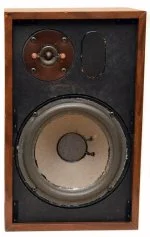
In the world of high-fidelity audio, the crossover network is often regarded as the "brain" of the loudspeaker. Traditionally, engineers employ complex arrangements of inductors, resistors, and capacitors to carve the frequency spectrum into distinct bands, ensuring that each driver—be it a tweeter, midrange, or woofer—operates within its optimal range. However, a persistent and fascinating subset of vintage and commercial loudspeaker design has long defied this complexity, opting for a radical, minimalist approach: the single-capacitor crossover.
Recent discussions within the audiophile community, specifically on platforms like DIYAudio, have reignited interest in this "less-is-more" philosophy. By utilizing nothing more than a single capacitor to filter the high-frequency signal sent to a tweeter, these designs achieve a simplicity that proponents argue allows for superior phase coherence and transient response.
The Core Concept: Engineering Simplicity
At its most fundamental level, a loudspeaker crossover is a frequency-selective circuit. A single-capacitor crossover acts as a first-order high-pass filter for the tweeter. Because a capacitor’s impedance increases as frequency decreases, it effectively blocks low-frequency energy from reaching the tweeter, while allowing high frequencies to pass.

The primary advantage of this topology is efficiency and transparency. By eliminating the inductive and resistive components found in multi-order networks, the signal path is significantly shortened. This reduction in components minimizes potential phase distortion and power loss, leading to a directness of sound that many purists find intoxicating.
However, this simplicity comes with significant technical challenges. Without the steep "roll-off" provided by higher-order crossovers, the tweeter and woofer must be engineered to overlap significantly in their frequency response. If the drivers are not perfectly matched, this results in comb filtering, uneven power response, and potential damage to the high-frequency driver from low-frequency excursion.
A Chronology of Minimalist Design
The history of the single-capacitor crossover is inextricably linked to the golden age of American loudspeaker manufacturing. During the mid-20th century, companies sought to provide high-quality audio reproduction while keeping costs manageable for the consumer market.

The Acoustic Research Era
Acoustic Research (AR) remains the most prominent champion of this design philosophy. Their legendary models, including the AR-4x, the AR-7, and the versatile AR-18 (along with its S and B variants), utilized single-capacitor crossovers with remarkable success. By utilizing woofers that were designed to roll off naturally at the top end of their range and tweeters capable of handling lower crossover points, AR achieved a cohesive, "musical" sound that became the benchmark for bookshelf speakers in the 1960s and 70s.
The Epicure and EPI Legacy
Following the success of early minimalist designs, companies like Epicure Products Inc. (EPI) further refined the concept. The EPI series—encompassing models such as the 50, 60, 70, 90, 100, 101, 105, 120, 150, and 200—relied on a similar minimalist architecture. Documentation from Human Speakers, an archive dedicated to these designs, highlights that these models utilized a basic capacitor setup that allowed for a seamless handoff between the driver elements. These speakers remain highly sought after by collectors today for their "time-aligned" feel and natural midrange reproduction.
The Bose 201 Experiment
Even mass-market giants experimented with this topology. Early iterations of the Bose 201 utilized a single-capacitor crossover to protect the tweeter, often augmented only by basic protective devices rather than complex filtering networks. While these were commercial products intended for the living room rather than the studio, they demonstrated the viability of the single-cap approach in achieving high-volume production with consistent performance metrics.

Engineering Challenges and Technical Implications
While the allure of the single-capacitor crossover is strong, critics point to the "crude reality" of speaker physics. GDO, a contributor to recent discussions on speaker design, notes that the success of a single-cap crossover relies entirely on the driver’s ability to behave predictably beyond its designated range.
The Problem of "Dead" Drivers
For a single-cap crossover to work, the woofer must be "dead enough"—meaning it must lack significant breakup modes in the frequency range where it hands off to the tweeter. If a woofer continues to emit sound at high frequencies due to cone resonance, it will clash with the tweeter, creating "axial mess" and severe phase cancellation.
The Phase and Power Response Dilemma
Even with an ideal driver, the first-order crossover introduces a broad overlap region. In a standard multi-order crossover, the aim is to minimize this overlap to prevent interference. In a single-cap design, the overlap is an inherent feature. While this can provide a sense of spatial "air" and natural imaging, it often results in a jagged power response that can be difficult to measure in a laboratory setting.

Moreover, physical offset between the tweeter and woofer—the distance between the voice coils—introduces time-alignment issues. Without a complex delay network, these physical distance differences create phase shifts that can color the sound, making the speaker sound "warm" or "diffuse" rather than clinically accurate.
Modern Perspectives and DIY Applications
In the contemporary DIY community, the single-capacitor crossover is often viewed as a rite of passage. It is the entry point for many hobbyists looking to understand the interplay between drivers. However, there is a distinct divide in how this topology is applied today:
- The Purist Approach: High-end boutique manufacturers sometimes utilize single-cap crossovers in full-range or wide-bandwidth driver systems, where the main driver covers 90% of the spectrum and a super-tweeter is added with a single capacitor. This avoids the "messy" overlap of two similar-sized drivers.
- The "Underground" Approach: In the worlds of car audio and low-cost PA systems, the single capacitor is frequently used simply as a "tweeter saver." By placing a 3.3µF capacitor in series with a tweeter, installers prevent low-frequency power from blowing the delicate voice coil. In this context, it is not a design choice for sound quality, but a utilitarian necessity.
Implications for Future Loudspeaker Development
The persistence of the single-capacitor crossover serves as a reminder that objective measurement and subjective enjoyment do not always align. Modern loudspeaker design software allows for the creation of incredibly complex, fourth-order or higher crossovers that can achieve "perfect" measured phase and flat frequency response. Yet, many listeners still find that these "perfect" speakers lack the organic, coherent, and emotionally engaging presentation of their simpler predecessors.

The implications for the industry are clear:
- Component Quality Matters More: When you remove the complexity of a 10-part crossover, every component—the capacitor itself—becomes a critical sonic bottleneck. Audiophiles using these designs often invest in high-end film-and-foil capacitors to ensure that the minimal signal path is as clean as possible.
- Driver Integration is Paramount: The design of the driver itself must be more sophisticated to compensate for the simplicity of the electrical filter. A woofer meant for a single-cap crossover must be engineered with specific cone materials and voice coil geometries that naturally roll off at the intended frequency.
Conclusion
The single-capacitor crossover is a testament to a time when speaker design was as much an art as it was a science. While it presents significant challenges regarding driver overlap and power response, its ability to deliver a coherent and direct musical experience remains unparalleled for many.
From the iconic AR-4x to the extensive catalog of EPI models, these speakers prove that if the foundation—the drivers themselves—is sound, the architecture of the signal path can be elegantly simple. As the audio community continues to explore both the cutting edge of DSP-driven systems and the vintage roots of minimalist design, the single-capacitor crossover stands as a vital, if occasionally misunderstood, pillar of high-fidelity audio history. Whether viewed as a flawed relic or an audiophile’s secret weapon, it remains an essential study for anyone seeking to understand the true nature of sound reproduction.


