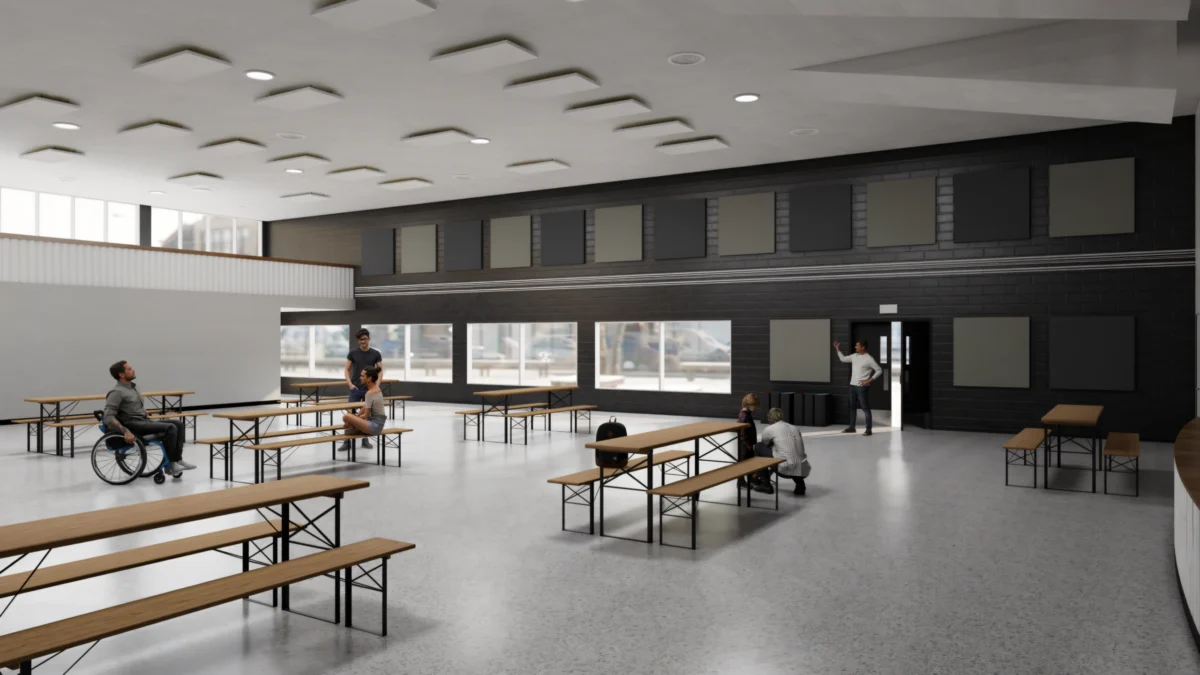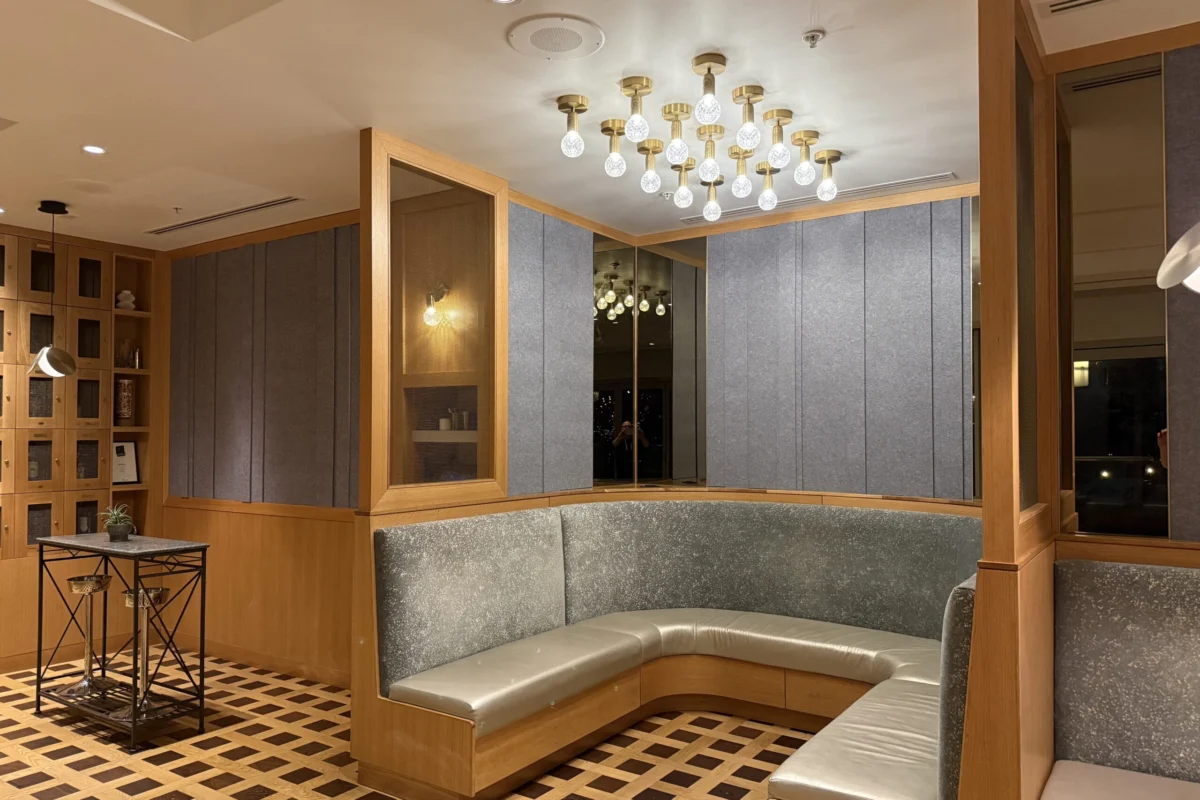
In the modern open-office landscape, the buzzing café, or the bustling multi-purpose community center, we are often hyper-aware of what we see, but chronically neglect what we hear. While interior designers obsess over lighting, ergonomics, and color palettes, a silent, invisible factor continues to erode comfort and productivity: poor speech intelligibility. As shared spaces become more multifunctional, the hidden cost of poor acoustics is moving from a minor inconvenience to a significant operational liability.
The Main Facts: The Physics of Sound Interference
At the heart of the acoustic crisis is a fundamental misunderstanding of how sound behaves. Many facility managers and business owners assume that if a room is too noisy, the solution is to "control the volume." However, speech intelligibility is not a volume problem—it is an acoustic clarity problem.
When sound waves originate from a speaker or a loudspeaker, they travel directly to the listener. However, in rooms with hard, reflective surfaces, those same sound waves bounce off walls, floors, and—most significantly—ceilings. These reflected waves arrive at the listener’s ear milliseconds after the direct sound. To the human brain, this creates a "smearing" effect. The brain must work overtime to cognitively process and separate the intended words from the overlapping reflections and ambient background noise.

The result? An environment where occupants hear plenty, but understand little. This cognitive fatigue leads to decreased productivity, increased stress, and a diminished sense of well-being.
Chronology of the Acoustic Shift
The current acoustic challenge is a byproduct of modern architectural trends. For decades, the movement toward "industrial-chic" design—characterized by exposed concrete, high ceilings, large glass windows, and minimalist, hard-surface furniture—has created a perfect storm for sound reflection.
- The Rise of Hard Surfaces (1990s–2010s): As minimalism became the design standard, porous sound-absorbing materials like carpeting and acoustic drop ceilings were stripped away, leaving only reflective concrete and steel.
- The Open-Plan Revolution (2010–2020): With the shift toward collaborative open-plan offices, the number of primary sound sources—people talking, machines whirring, and HVAC systems humming—increased exponentially.
- The "Acoustic Awareness" Era (2020–Present): Following the global shift toward hybrid work and flexible public spaces, there has been a resurgence in demand for "human-centric" design. Architects are now realizing that for a space to be truly usable, it must be acoustically managed. The industry is currently moving away from the "look-at-all-costs" philosophy toward a hybrid approach where acoustic performance is integrated directly into the aesthetic architecture.
Supporting Data: Why the Ceiling is the Key
Why focus on the ceiling? In almost any built environment, the ceiling is the largest, most uninterrupted sound-reflecting surface. While wall space is often crowded by windows, branding, artwork, and doorways, the ceiling provides a massive, blank canvas for acoustic remediation.

High vs. Low Ceilings: The Mechanics of Reverberation
The physics of sound interaction changes based on room height, but the necessity for treatment remains constant:
- High Ceilings: In large, expansive spaces, sound waves take longer to travel to the ceiling and back. This extended delay increases the "tail" of the sound, resulting in long-lasting reverberation and echoes that make clear communication nearly impossible.
- Low Ceilings: While the delay is shorter, low ceilings create "standing waves" and early reflections. These are particularly harsh because the sound bounces back to the listener almost instantaneously, causing intense, immediate fatigue and low-frequency buildup that muddies the sound.
By treating the ceiling, you address the primary source of reflections before they can migrate to the walls or floor. It is statistically and physically more efficient to install acoustic baffles or blades on a ceiling than to attempt to treat walls that are already occupied by other design elements.
Official Perspectives: The Primacoustic Approach
Industry leaders, such as the acoustic engineers at Primacoustic, emphasize that acoustic treatment should not be a "bolt-on" afterthought. Their EcoScapes line, featuring Blades and Dimensional Baffles, represents the shift toward "architectural acoustics."

"We are seeing a move toward solutions that provide sonic balance and aesthetic rhythm," says an industry spokesperson. By utilizing materials like post-consumer PET, companies are not only solving for reverberation but are also meeting stringent LEED and WELL building certification standards. These materials are free of formaldehyde, VOCs, and glues, making them a safe choice for health-conscious modern facilities.
Implications for Future Spaces
The implications of failing to address acoustics are far-reaching. In corporate settings, poor acoustics lead to "The Cocktail Party Effect," where employees are forced to speak louder to be heard, creating a feedback loop of rising ambient noise. This ultimately reduces the ability to focus and hinders high-level cognitive tasks.
Conversely, an acoustically tuned space creates a sense of comfort that occupants may not be able to identify, but will certainly feel. When a room "sounds right," people feel more relaxed, stay longer, and are more productive.
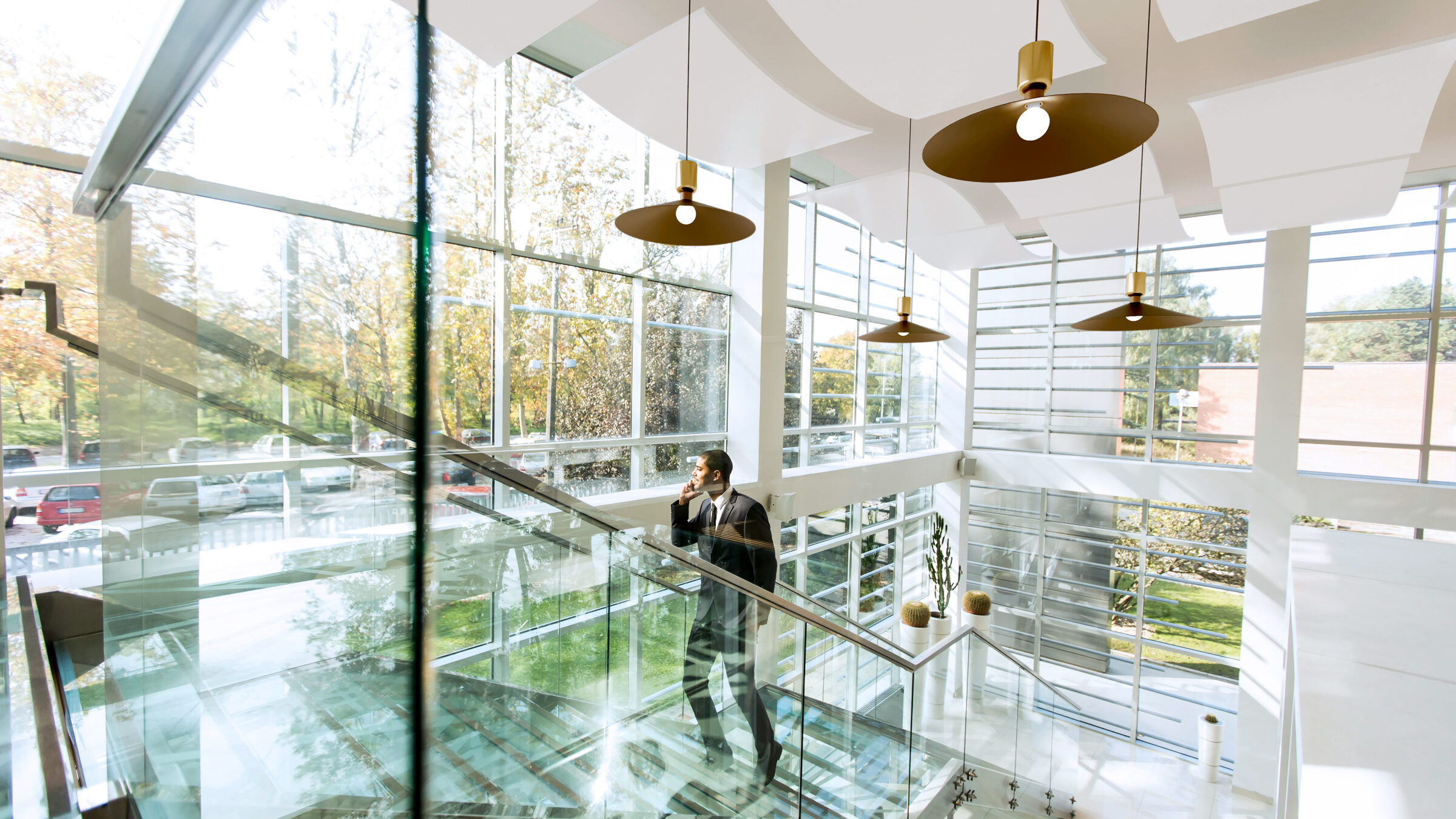
Design Without Compromise: Blades vs. Baffles
The modern toolkit for acoustic control allows designers to enhance, rather than hide, the architecture:
- EcoScapes Blades: These are ideal for lower ceilings or spaces where a clean, linear, or rhythmic aesthetic is desired. They can be installed to create "waves" or geometric patterns that add texture to a ceiling without creating a sense of clutter.
- Dimensional Baffles: For high-ceilinged areas like atriums, cafeterias, or industrial-style offices, these 3D suspended elements act as both sound traps and striking visual focal points. They can be integrated around existing beams, rafters, and HVAC ducts, turning necessary infrastructure into a designed feature.
A "Ceiling-First" Future
As we look toward the future of office and public space design, the "ceiling-first" approach is becoming the gold standard for facility management. By addressing the largest reflective surface in the room, designers can achieve superior sound clarity without sacrificing the open, airy feel that modern users demand.
The hidden cost of poor acoustics—the loss of productivity, the vocal strain on speakers, and the general discomfort of the occupants—is finally being accounted for. In a world where every square foot of office space is scrutinized for efficiency, acoustic performance is no longer a luxury; it is a foundational requirement for the modern built environment.

Whether you are designing a high-tech corporate headquarters, a community center, or a busy neighborhood café, the path to a better user experience begins by looking up. For those ready to transition to a more comfortable, productive environment, a consultation with acoustic specialists can provide the data-driven roadmap needed to turn a noisy, cluttered room into a space of clarity and calm.
For more information on transforming your space, visit Primacoustic.com to explore the potential of your ceiling today.