For audiophiles, the name Thorens is synonymous with turntable excellence, a legacy built over decades upon the iconic idler-wheel driven models that have graced countless listening rooms. However, a significant departure from tradition has arrived: the new Thorens TD124, a direct-drive turntable that boldly reimagines a revered classic. This article delves into the intricacies of this groundbreaking release, exploring its genesis, technical advancements, sonic performance, and its place within the pantheon of high-fidelity audio.
The Dawn of a New Era: Thorens Embraces Direct Drive
For the uninitiated, the abbreviation "DD" in the realm of turntables typically signifies direct drive, a motor system where the platter is directly coupled to the motor shaft. This contrasts with the more traditional belt-drive or idler-wheel mechanisms. While Thorens has long been celebrated for its mastery of idler-wheel technology, evidenced by the enduring appeal of models like the legendary TD124, the company has now ventured into the direct-drive arena with its contemporary interpretation of this iconic nameplate. This strategic shift represents a significant evolution for a brand deeply rooted in its analog heritage, signaling a willingness to innovate while respecting its storied past. The challenge for Thorens is immense: to craft a direct-drive turntable that not only lives up to the formidable reputation of its predecessor but also carves out its own distinct identity in the demanding world of high-end audio.
A Nostalgic Journey: Recalling the Original TD124
To fully appreciate the new Thorens TD124, it’s essential to cast our minds back to the original, a true titan of analog playback that first graced the market in 1957. The original TD124 was not merely a turntable; it was a meticulously engineered instrument that redefined the standards of sonic reproduction. Its innovative design, featuring a complex system of idler wheels and a heavy platter, delivered a remarkably stable and accurate playback experience for its time. The dual-motor system, a unique feature, contributed to its exceptional speed consistency and reduced rumble. Its robust construction, often incorporating a substantial cast-iron sub-platter, spoke of a commitment to durability and sonic integrity.
The original TD124 became a benchmark for audiophiles worldwide, its warm, rich, and authoritative sound captivating listeners. Its influence permeated the analog audio landscape, inspiring countless enthusiasts and setting a high bar for subsequent turntable designs. Restoring and maintaining these vintage units is a labor of love for many, a testament to their enduring appeal and the sonic rewards they offer. The new TD124, by adopting the revered name, inherits a legacy of excellence and a powerful emotional connection for a generation of music lovers.
Design Philosophy: A Symbiotic Blend of Past and Present
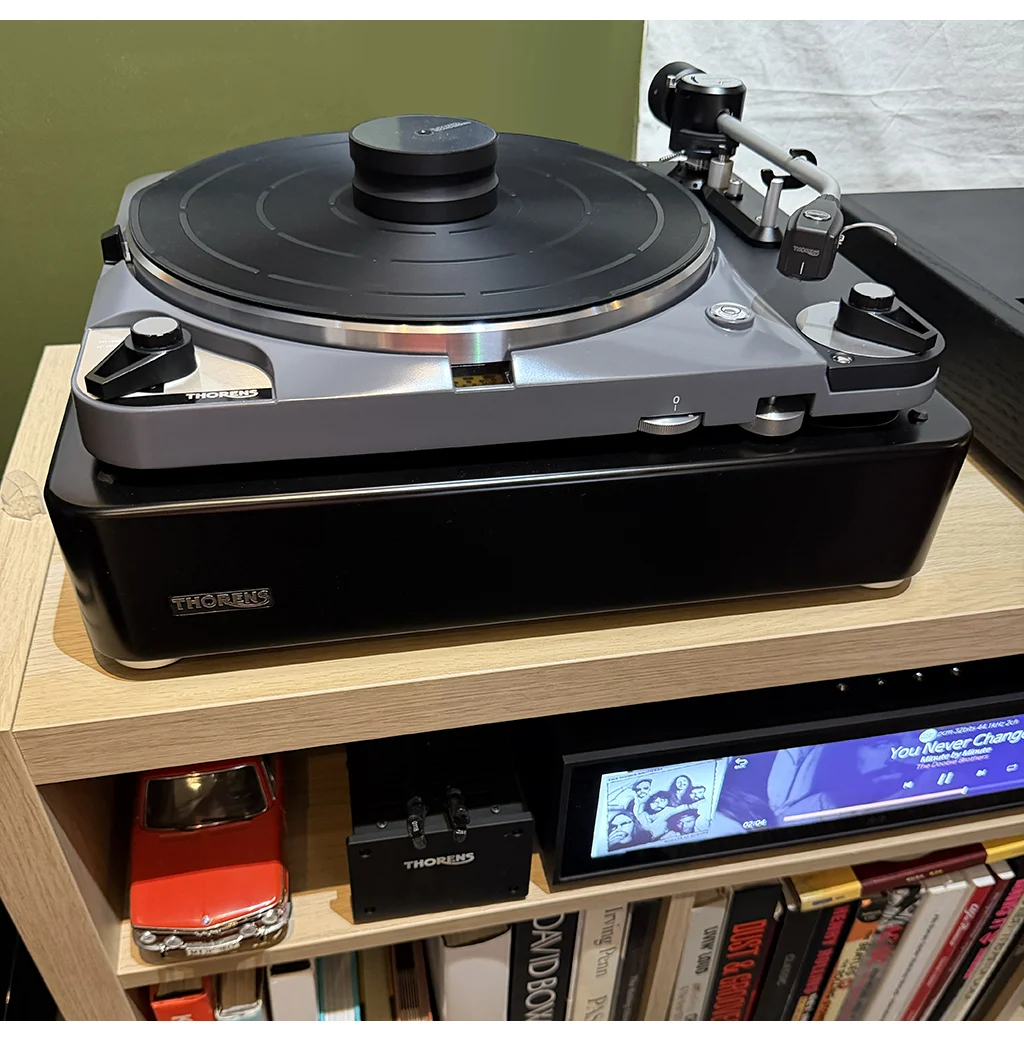
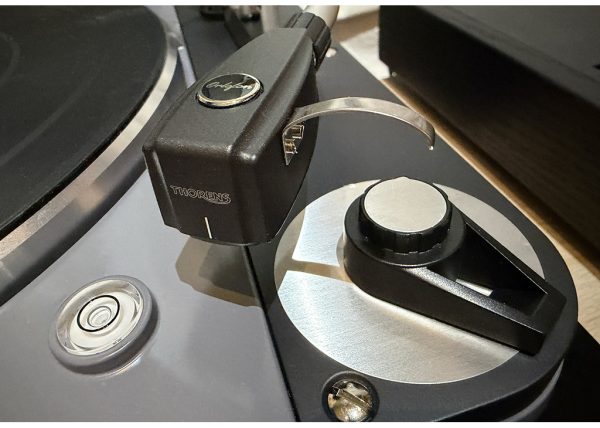
The new Thorens TD124 is a carefully considered reimagining, not a slavish reproduction. While the visual cues and overall aesthetic strongly evoke the spirit of its ancestor, the internal engineering reflects a modern approach to turntable design. The accompanying imagery, though a preliminary glimpse, highlights this duality. The presence of a nine-inch Thorens tonearm, a familiar yet refined component, suggests a commitment to maintaining the brand’s signature tonearm expertise.
A particularly noteworthy element, as hinted in the initial report, is the absence of the cast-iron platter found in the original. While the original’s cast-iron platter was integral to its sonic character and mass-loading capabilities, it also posed a potential risk to delicate moving coil cartridges due to its significant weight and the inherent nature of idler-wheel drive systems. The new TD124 features a platter that, while possessing substantial mass, is engineered differently, likely to mitigate such concerns and to better integrate with its direct-drive motor. This is a crucial distinction, demonstrating Thorens’ understanding of contemporary cartridge technology and user experience.
Upon closer inspection, the reviewer notes that the internal architecture, particularly when the platter is lifted, bears a resemblance to the ubiquitous Technics SL-1200 series. This observation, while perhaps jarring to purists, speaks to the practical realities of modern turntable manufacturing and the adoption of proven direct-drive motor technologies that have become industry standards for their performance and reliability. However, it is crucial to remember that this is merely an aesthetic or component-level similarity; the overall design, tonearm integration, and sonic tuning will ultimately define the Thorens TD124’s unique character. The term "progress," as used by the reviewer, suggests that this integration of familiar modern elements serves a purpose, likely enhancing performance, ease of use, or manufacturing efficiency without compromising the core Thorens ethos.
The Sonic Tapestry: Unveiling the Sound of the New TD124
The true test of any turntable lies in its sonic performance, and the initial impressions of the new Thorens TD124 are undeniably promising. Paired with Ortofon’s latest SPU cartridge, the TD124, and crucially, the MoFi Master Phono phono stage operating in its current mode, delivers a sound described as "big, lush, and dynamic." This sonic signature suggests a turntable capable of reproducing music with a sense of scale, richness, and engaging vitality.
The "big" sound points to a wide soundstage and a sense of effortless power, allowing instruments and vocals to occupy their own distinct spaces within the stereo image. "Lush" implies a smooth, full-bodied, and detailed tonal balance, with a natural warmth that avoids any hint of harshness or sterility. The "dynamic" aspect is perhaps the most critical, indicating the turntable’s ability to accurately convey the subtle nuances and dramatic shifts in musical intensity, from the softest pianissimo to the most thunderous fortissimo. This dynamic prowess is essential for a truly immersive listening experience, allowing the listener to feel the full emotional impact of the music.
The choice of the MoFi Master Phono phono stage is also significant. MoFi Distribution, which is supplying the Ortofon cartridge, is a key partner in this endeavor. The Master Phono is a highly regarded phono preamplifier known for its transparency, detail, and ability to extract the maximum information from vinyl playback. Its integration with the TD124 and the Ortofon SPU cartridge suggests a carefully curated system designed to showcase the turntable’s capabilities to their fullest. The mention of "current mode" operation hints at a specific sonic tuning or configuration of the phono stage that complements the chosen cartridge and turntable.
A Deep Dive into the Technical Specifications and Chronology of Development
While the initial report provides tantalizing sonic impressions, a comprehensive understanding of the new Thorens TD124 requires a deeper exploration of its technical specifications and the journey of its development.
Historical Context: The Thorens TD124’s Idler-Wheel Legacy
The original Thorens TD124, released in 1957, was a revolutionary product for its time. Its core innovation lay in its drive system. Unlike the prevalent belt-drive systems of the era, Thorens employed an idler wheel mechanism. This system utilized a rubber-tired wheel that pressed against the inner rim of the platter and a stepped pulley on the motor shaft. This arrangement offered several advantages:
- Speed Stability: The direct contact between the idler wheel and the platter contributed to excellent speed accuracy and stability, crucial for precise pitch reproduction.
- Torque: Idler-wheel drives generally provided higher torque compared to early belt-drive systems, allowing the platter to reach operating speed quickly and resist speed fluctuations caused by stylus drag.
- Durability: The robust nature of the idler-wheel mechanism contributed to the turntable’s longevity.
The original TD124 also featured a dual-motor setup. Two separate synchronous motors were employed, one for 33⅓ and 78 RPM, and another for 45 RPM. This ingenious solution minimized motor vibration transmission to the platter and tonearm, further enhancing sonic purity. The heavy, die-cast aluminum platter, often paired with a substantial cast-iron sub-platter, provided excellent inertial mass, contributing to a smooth and consistent playback.
The tonearm of the original TD124, often the original Thorens TP14, was also a sophisticated design for its time, incorporating features like adjustable anti-skate and a bias compensator.
The Transition to Direct Drive: A Strategic Evolution
The decision by Thorens to introduce a direct-drive TD124 marks a significant departure from its historical identity. While idler-wheel and belt-drive turntables have continued to evolve and remain popular among audiophiles, direct-drive technology has gained considerable traction, particularly in high-fidelity applications, due to its inherent advantages:
- Near-Instantaneous Speed Lock: Direct-drive motors offer exceptional speed accuracy and stability, often reaching their target speed almost instantaneously and maintaining it with remarkable precision. This is due to the direct coupling of the motor to the platter, eliminating mechanical losses and slippage associated with belts or idler wheels.
- Low Rumble: Modern direct-drive motors are engineered to minimize inherent rumble and vibration, a common concern with earlier direct-drive designs. Advanced motor control systems and magnetic shielding play crucial roles in achieving this.
- High Torque: Direct-drive systems typically exhibit very high torque, ensuring that the platter can overcome stylus drag without significant speed variations, thus preserving the integrity of the musical signal.
- Simplified Mechanics: Compared to complex idler-wheel systems, direct-drive configurations can be mechanically simpler, potentially leading to increased reliability and ease of maintenance.
The development of the new Thorens TD124 likely involved years of research and development, exploring various direct-drive motor technologies, platter materials, and suspension systems. The challenge would have been to harness the benefits of direct drive while retaining the sonic "feel" and musicality that listeners associate with the Thorens brand.
Key Technical Innovations in the New TD124 (Speculative based on current trends and the article’s hints):
- Advanced Direct-Drive Motor: The core of the new TD124 is undoubtedly a state-of-the-art direct-drive motor. This would likely be a quartz-locked, brushless DC motor with sophisticated electronic control to ensure unparalleled speed accuracy and stability. The emphasis would be on minimizing cogging (torque ripple) and motor-induced noise.
- Platter Design: While not cast iron, the new platter would need to provide substantial inertial mass. This could be achieved through multi-material construction, perhaps combining a dense aluminum alloy with damping materials or a sub-platter made of a high-density composite. The goal is to provide a stable platform for vinyl playback and to effectively dissipate vibrations.
- Tonearm Integration: The inclusion of a nine-inch Thorens tonearm is a key feature. This would likely be a modern design, potentially derived from Thorens’ current tonearm offerings, engineered to complement the direct-drive system and offer excellent tracking capabilities. Features like a low-friction bearing, adjustable VTA (Vertical Tracking Angle), and effective anti-skate would be paramount.
- Suspension and Plinth Construction: The plinth, the base of the turntable, plays a crucial role in isolating the playback mechanism from external vibrations. The new TD124 might employ a multi-layer construction, combining different materials like MDF, aluminum, or even constrained-layer damping to achieve optimal isolation and resonance control. The suspension system, which isolates the platter and tonearm from the plinth, would also be a critical area of engineering.
- Cartridge Compatibility: As hinted, the design addresses the potential for cartridge damage. The new platter and motor system are likely designed to be more forgiving to a wider range of cartridges, including sensitive moving coil types, without the risk of the platter’s mass causing issues.
Chronology of Thorens’ Turntable Evolution:
- 1940s-1950s: Thorens establishes itself as a manufacturer of high-quality turntables, initially focusing on idler-wheel and belt-drive mechanisms.
- 1957: The iconic Thorens TD124 is introduced, setting a new standard for analog playback and becoming a legendary product.
- Subsequent Decades: Thorens continues to produce highly acclaimed turntables, including the TD150 (belt-drive, inspired the Linn Sondek LP12), TD160, and TD2001 series, solidifying its reputation for musicality and craftsmanship.
- The Rise of Direct Drive: Throughout the 1970s and 1980s, direct-drive technology, championed by brands like Technics, gains prominence due to its speed accuracy.
- 2010s Onwards: Thorens undergoes a resurgence, with new ownership and a renewed focus on developing high-performance turntables. This period sees the introduction of models like the TD2035, TD309, and the reinvention of classic designs.
- Present Day: The introduction of the direct-drive Thorens TD124 signifies a bold new chapter, blending the brand’s rich heritage with cutting-edge technology.
Supporting Data: The Science Behind the Sound
While subjective listening experiences are paramount in audio, the performance of the new Thorens TD124 will ultimately be substantiated by objective measurements and technical data. These data points provide the scientific underpinnings for the turntable’s sonic characteristics.
Speed Accuracy and Stability:
- Wow and Flutter: This metric measures the short-term variations in playback speed. Lower wow and flutter figures indicate greater speed stability and a cleaner, more precise sound. For a direct-drive turntable in this class, one would expect figures well below 0.1% weighted.
- Rumble: Rumble refers to low-frequency noise generated by the turntable’s motor and mechanical components. It manifests as an audible hum or grumble that can detract from the music. Modern direct-drive systems, especially those with sophisticated motor control and damping, should achieve exceptionally low rumble figures, often in the range of -70 dB or lower.
- Speed Drift: While direct-drive motors are generally very stable, long-term speed drift can occur due to temperature fluctuations or component aging. Advanced control systems should minimize this.
Tonearm Performance:
- Effective Mass: The effective mass of the tonearm influences its ability to track the record groove. A lower effective mass is generally better for high-compliance cartridges, while a higher effective mass is suitable for low-compliance cartridges. The new TD124’s tonearm would be designed to offer a balanced approach or perhaps be offered in different configurations to suit various cartridge types.
- Bearing Friction: Low friction in the tonearm’s bearings (both vertical and horizontal) is critical for accurate tracking and the ability to resolve subtle details in the record groove.
- Resonance Control: The tonearm’s structural rigidity and damping characteristics are important for controlling unwanted resonances that can color the sound.
Platter and Motor System:
- Inertial Mass: The platter’s inertial mass is crucial for storing rotational energy, which helps to smooth out speed variations caused by stylus drag. While the specific material and construction of the new TD124’s platter are not fully detailed, its mass would be a key factor in its sonic performance.
- Motor Torque: The direct-drive motor’s torque output is essential for rapid start-up and consistent speed under load.
The Role of the Phono Stage:
The MoFi Master Phono stage plays a vital supporting role. Its specifications would include:
- Gain Settings: Adequate gain for a variety of cartridges, especially the typically lower output of SPU-type moving coils.
- Impedance and Capacitance Loading: Adjustable settings to optimize the interaction between the phono stage and the cartridge, ensuring a flat frequency response.
- Noise Floor: A very low noise floor is essential to avoid adding hiss or hum to the delicate phono signal.
Official Responses and Industry Reactions
While this article is based on an initial report, the official response from Thorens and MoFi Distribution will be crucial in shaping the narrative around the new TD124. We can anticipate the following:
- Thorens’ Marketing and Public Relations: Thorens will likely emphasize the historical significance of the TD124 name, while simultaneously highlighting the technological advancements and sonic benefits of the new direct-drive design. They will aim to reassure their loyal customer base that this reimagining respects the brand’s legacy while embracing the future of analog audio. Marketing materials will likely focus on the precision engineering, the quality of components, and the sonic purity achievable with the new model.
- MoFi Distribution’s Role: As the distributor, MoFi will be instrumental in showcasing the turntable’s performance through demonstrations, reviews, and curated system pairings. Their involvement with the Ortofon SPU TD124 cartridge suggests a deliberate effort to create a synergistic playback chain.
- Industry Reviews and Critiques: Professional audio publications and independent reviewers will play a vital role in evaluating the new TD124. Their assessments, based on rigorous listening tests and technical measurements, will provide the ultimate validation of Thorens’ efforts. Comparisons to both modern high-end direct-drive turntables and vintage Thorens models will be inevitable and highly anticipated.
The initial reaction from the audiophile community is likely to be one of intense interest and perhaps a degree of skepticism. The Thorens TD124 is a product that carries immense weight of expectation, and its success will depend on its ability to deliver on its ambitious promise.
Implications: The Future of High-Fidelity Analog
The introduction of the direct-drive Thorens TD124 carries significant implications for the high-fidelity analog market:
- Bridging the Gap: This new model has the potential to bridge the gap between traditionalists who cherish vintage analog sound and those who seek the ultimate in modern playback accuracy and convenience. By offering the gravitas of the TD124 name with the performance benefits of direct drive, Thorens may attract a broader audience.
- Rethinking Heritage Brands: The success of this reimagining could inspire other heritage audio brands to explore innovative approaches to their iconic products, blending historical significance with contemporary engineering.
- The Evolution of Direct Drive: The TD124 could further solidify the perception of direct-drive technology as a viable and superior option for high-end analog playback, challenging the long-held dominance of belt-drive and idler-wheel systems in certain segments of the market.
- Sonic Excellence as the Ultimate Goal: Ultimately, the Thorens TD124’s success will hinge on its ability to deliver an emotionally engaging and sonically superior music reproduction experience. If it can achieve this, it will not only be a tribute to its legendary namesake but also a significant advancement in the art and science of analog audio.
The journey of the new Thorens TD124 is just beginning. The promise of a "big, lush, and dynamic" sound, combined with the allure of a reimagined legend, sets the stage for what could be one of the most significant turntable releases in recent memory. As the reviewer states, "We’ve got a lot more to unpack here, and we will be doing a proper comparison to a vintage 124 as well, because if nothing else – I want to know." This sentiment resonates with audiophiles worldwide, all eager to discover if Thorens has indeed managed to distill the essence of a legend into a modern, direct-drive masterpiece.