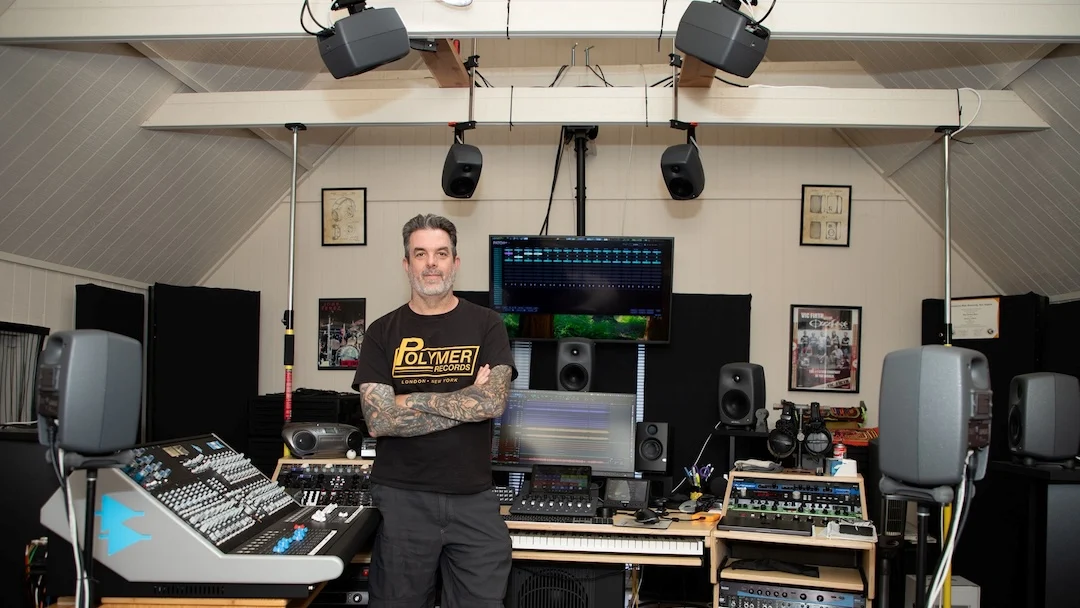
PASADENA, CA – In an era where the boundaries between music production, cinematic soundscapes, and broadcast media continue to blur, veteran audio engineer and producer Jose Perez has officially unveiled his new flagship production studio. Located in the cultural and technological hub of Pasadena, California, the facility represents a significant leap forward in immersive audio capabilities. Designed and integrated by Custom House at Guitar Center, the studio is anchored by a sophisticated 7.1.4 Dolby Atmos monitoring system and a hybrid analog-digital workflow, signaling a new chapter for one of the industry’s most versatile engineers.
The commissioning of this studio comes at a pivotal moment for the audio industry. As streaming platforms like Apple Music, Amazon Music, and Tidal mandate immersive mixes, and as film and broadcast standards evolve toward spatial audio, Perez’s new facility is positioned to serve as a high-end boutique solution for independent artists and major content creators alike.
Main Facts: A Modern Hub for Spatial Excellence
The new studio is the culmination of years of planning and a decade-long professional partnership between Jose Perez and Danny Fasold, Executive Account Manager at Custom House. The facility is designed to handle a diverse range of projects, including independent music production, film post-production, streaming content, and high-stakes broadcast projects.
At the heart of the room is a meticulously calibrated 7.1.4 Genelec Smart Active Monitoring (SAM™) ecosystem. This configuration—comprising seven ear-level speakers, one subwoofer, and four overhead height channels—is the industry standard for Dolby Atmos Music and post-production. The integration of this system allows Perez to provide clients with "translation-ready" mixes, ensuring that a project sounds as intended whether it is heard in a multi-million dollar cinema, through a high-end home theater, or via binaural rendering on consumer headphones.
Beyond the monitoring, the studio utilizes a hybrid philosophy. It bridges the gap between the tactile, harmonic richness of analog hardware and the precision and speed of digital workstations. This is achieved through the integration of an API The Box 2 console, Universal Audio Apollo interfaces, and a comprehensive suite of outboard gear, all running on a Pro Tools Ultimate backbone.
Chronology: From Stereo Roots to Immersive Horizons
The journey to this new Pasadena facility began decades ago. Jose Perez, a lifelong musician, built his reputation as a veteran recording engineer by working across a wide spectrum of genres. His formative years spent at the legendary Dennis Moody Studios provided him with a deep appreciation for high-end analog signal paths, specifically the "American Sound" associated with API (Automated Processes, Inc.) hardware.
As the industry shifted toward digital workflows in the 2010s, Perez remained a proponent of the hybrid approach. However, by the early 2020s, the demand for immersive audio began to move from a niche luxury to a commercial necessity.
December 2025: The Analog Foundation
The current iteration of the studio began taking shape in late 2025. Perez integrated the API The Box 2 console into his workflow. This move was strategic; while many engineers were moving entirely "in the box" (digital), Perez recognized that the summing and preamplification stages of an analog console provided a depth and headroom that digital plugins struggled to replicate. The Box 2 was selected specifically for its compact footprint, which suited the Pasadena space without sacrificing the classic API sound.
Early 2026: The Atmos Transition
Following the successful integration of the API console, the focus shifted to the monitoring environment. Recognizing that an Atmos room is only as good as its calibration and phase coherence, Perez turned to Danny Fasold and the Custom House team. The design phase involved analyzing the room’s acoustics to ensure that the 12-speaker array would function as a cohesive unit.
June 2026: Completion and Launch
By June 12, 2026, the final calibrations were completed. The studio moved from a traditional stereo/surround setup to a fully certified Dolby Atmos production environment, ready to handle the rigors of modern post-production and music mixing.
Supporting Data: The Technical Architecture
The technical specifications of the Perez studio reveal a deep commitment to precision. The choice of Genelec as the monitoring partner was driven by the need for automated calibration and consistency.
The Monitoring Ecosystem
The 7.1.4 array consists of:
- LCR (Left-Center-Right): Three Genelec 8330A Smart Active Monitors. These serve as the primary anchors for the mix, providing a wide frequency response and exceptional imaging.
- Surrounds and Heights: Eight Genelec 8320A monitors. These compact yet powerful units handle the side, rear, and overhead channels. Their small profile allows for flexible mounting in the height positions without creating acoustic obstructions.
- LFE (Low-Frequency Effects): A Genelec 7350A Smart Active Subwoofer. This provides the necessary low-end extension and manages the bass for the entire system through Genelec’s GLM (Genelec Loudspeaker Manager) software.
The GLM software is a critical component of the data-driven design. It allows for the precise time-alignment and frequency equalization of every speaker in the room, compensating for the specific acoustic anomalies of the Pasadena space. This ensures that the "sweet spot" is optimized for the engineer’s position while maintaining accuracy across the room.
The Hybrid Signal Path
While the monitoring is cutting-edge digital, the input and summing stages remain classic analog.
- API The Box 2: This console provides eight input channels with API’s 500 Series slots, alongside a 16-channel summing mixer. This allows Perez to track through world-class preamps and then sum his digital tracks back through analog transformers for added "weight" and "glue."
- Conversion: Universal Audio Apollo interfaces handle the A/D and D/A conversion, providing the low-latency monitoring and high-fidelity signal path required for professional Atmos work.
- Software: Pro Tools remains the primary DAW (Digital Audio Workstation), utilized for its industry-standard Atmos Renderer integration, allowing for seamless delivery of ADM (Audio Definition Model) files to labels and distributors.
Official Responses: A Partnership Built on Trust
The success of the studio’s design is attributed to the long-standing relationship between the engineer and his integrator.
Danny Fasold, Executive Account Manager at Custom House, emphasized the versatility required for Perez’s career:
"Jose’s workflow is unique because he moves seamlessly between music production, film post-production, streaming and broadcast projects. Our goal was to create a monitoring environment that could support all of those disciplines while remaining simple to manage, easy to recalibrate and adaptable as his business continues to evolve."
Fasold noted that the challenge wasn’t just installing speakers, but creating a system that could "translate." In the world of Atmos, a mix that sounds great in the studio but fails to work on a soundbar or in a theater is a failure. The Genelec/API combination was the solution to that challenge.
Jose Perez, reflecting on the project, highlighted the importance of expert guidance in a rapidly changing technical landscape:
"Danny at Custom House has been my trusted advisor for more than a decade. Every major piece of equipment I’ve purchased has been through him. Whether it’s introducing me to new technologies, helping me evaluate workflow improvements or designing an Atmos system that translates accurately across formats, he’s consistently helped me make the right decisions."
Perez specifically pointed to his history at Dennis Moody Studios as the reason for his loyalty to the API brand, stating that the "analog character" of The Box 2 was non-negotiable for his creative process.
Implications: The Future of Boutique Production
The opening of Jose Perez’s new studio carries several implications for the wider audio industry.
1. The Democratization of Immersive Audio
Historically, Dolby Atmos was the exclusive domain of major film studios in Hollywood or London. The Perez facility demonstrates that high-end, professional-grade immersive production is now accessible to independent engineers and boutique studios. By utilizing "Smart" monitoring technology like Genelec’s SAM, engineers can achieve world-class results in smaller, more cost-effective footprints.
2. The Multi-Disciplinary Requirement
Perez’s ability to jump between music, film, and broadcast is a blueprint for the modern engineer. As the "gig economy" of the audio world continues to expand, professionals must be equipped to handle diverse formats. A studio that can pivot from a jazz quintet’s Atmos music mix in the morning to a documentary’s surround-sound dialogue edit in the afternoon is a studio that remains commercially viable.
3. The Enduring Value of Analog in a Digital World
Despite the move toward immersive digital formats, the inclusion of the API console proves that the "human" element of analog sound remains highly valued. The industry is moving toward a "best of both worlds" scenario where the soul of the mix is analog, but the delivery and spatialization are digital.
4. Strategic Location
By situating the studio in Pasadena, Perez taps into a community of creatives who want the proximity to Los Angeles and Hollywood without the logistical hurdles of working in the city’s most congested districts. Pasadena has increasingly become a secondary hub for post-production and independent media creation.
Conclusion
Jose Perez’s new Dolby Atmos production studio is more than just a room full of high-end equipment; it is a testament to the evolution of the recording arts. Through a combination of veteran expertise, long-term professional partnerships, and a commitment to both heritage analog and future-forward digital technologies, Perez has established a facility that is uniquely equipped for the demands of 2026 and beyond. As the industry continues to embrace the three-dimensional soundscape, facilities like this will be at the forefront of defining how we hear the world.