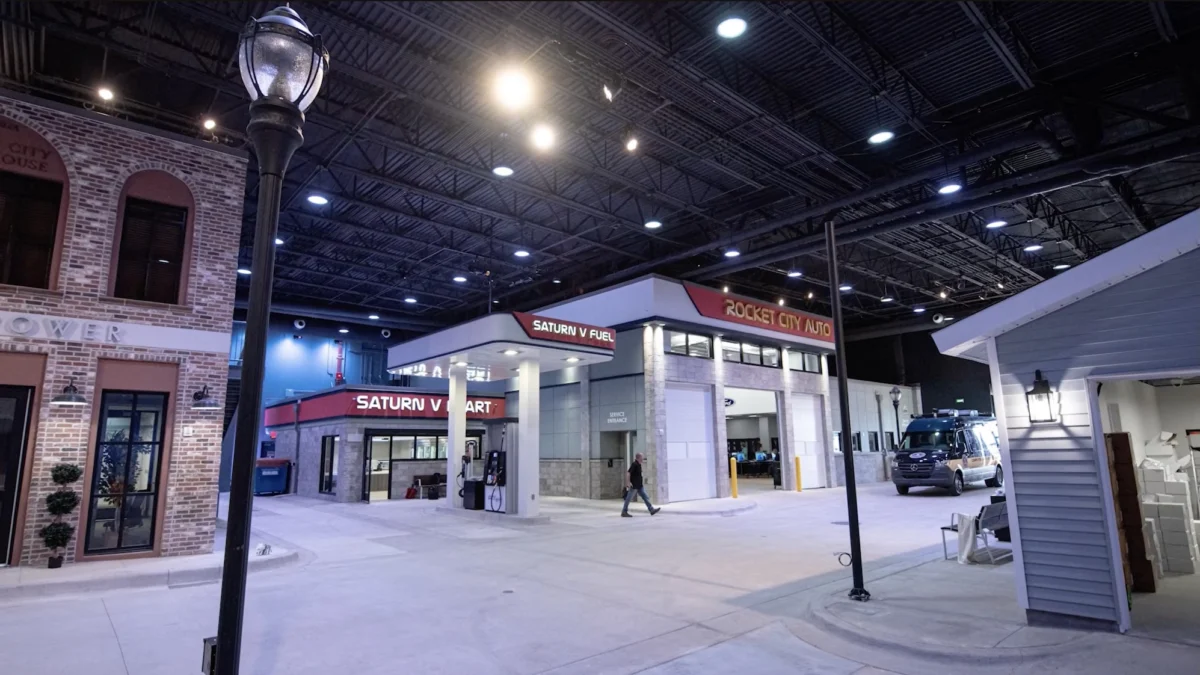
In the quiet sprawl of Huntsville, Alabama, the Federal Bureau of Investigation has constructed a town that looks entirely ordinary. It features a bustling grocery mart, a quiet courthouse, a sterile hospital, a functional gas station, and a series of fully furnished suburban homes. Yet, despite its realistic facade, this 22,000-square-foot community is anything but typical. This is the "Kinetic Cyber Range," a high-tech laboratory designed to bridge the gap between classroom theory and the brutal reality of modern cyber warfare.
As digital threats evolve from nuisance malware to existential risks for critical infrastructure, the FBI has shifted its training paradigm. By building a physically immersive environment, the Bureau is forcing investigators to confront the messy, high-pressure, and often "miserable" reality of responding to cyberattacks that have real-world consequences.
The State of the Threat: Why the Range Matters
The motivation behind this massive investment is grounded in a sobering reality. According to the FBI’s 2025 Internet Crime Report, cybercrime has reached an inflection point. With over one million complaints filed in a single year, the economic damage of cybercrime in the United States hit a staggering $20.9 billion—a 26% increase over the previous year.
Ransomware remains the primary predator stalking the American landscape. It is no longer just a digital nuisance; it is a systemic threat to critical infrastructure. When a hospital’s patient record system goes offline or a power grid’s control software is locked by encryption, the consequences are measured not just in dollars, but in human safety.
"The goal is to move beyond the classroom," says a Bureau spokesperson. "We need our personnel to understand that a cyberattack doesn’t just happen on a server; it happens in a room, in a building, and in a community."
Chronology of the Kinetic Cyber Range
The development of the Huntsville facility represents a multi-year effort to modernize federal law enforcement training.
- Early 2020s: As ransomware attacks against hospitals and municipal services surged, the FBI identified a critical gap in its training capabilities. Traditional classroom environments could not replicate the "kinetic" nature of cyber-physical attacks—where software breaches directly impact physical machinery.
- Late 2023 – 2024: Construction and network integration for the Kinetic Cyber Range proceeded at the Huntsville campus. The facility was designed to be "air-gapped," ensuring that the high-intensity simulations occurring inside the town walls could not accidentally bleed into the wider internet or public infrastructure.
- February 2025: The facility officially opened its doors. Since its inception, it has hosted over 1,400 students, including FBI agents, federal partners, and select local law enforcement agencies, creating a collaborative pipeline for incident response.
Infrastructure: A Town Built for Chaos
The Kinetic Cyber Range is a marvel of simulation engineering. It is not merely a collection of buildings; it is an interconnected ecosystem of vulnerable systems. Each structure is wired with consumer and enterprise technologies—the same routers, smart-home devices, point-of-sale systems, and industrial controllers that populate the average American city.
The Data Center Component
At the heart of the range lies a sophisticated data center. Housing over 200 physical servers running a mix of Windows and Linux operating systems, this hub mimics the corporate environments that investigators encounter during a typical breach.
Dave Beachboard, the program manager for the range, describes the environment with blunt realism. "They’re cold, they’re cramped, they’re noisy, they’re dark, they’re miserable," he notes. This is by design. By forcing investigators to work in high-stress, uncomfortable conditions, the FBI ensures that when agents enter a real-world data center to execute a search warrant or conduct a forensic sweep, they are prepared for the environmental stressors that often hinder evidence collection.
Simulation Capabilities
The town allows instructors to stage "live" incidents. For example, a student might be tasked with responding to a ransomware attack that has simultaneously locked the hospital’s patient database and disrupted the traffic light grid. The trainee must make split-second decisions: Should they prioritize restoring medical records to prevent patient harm, or should they focus on containing the threat within the municipal network?
Digital Forensics and the "Encryption" Debate
One of the most controversial aspects of the training conducted at the range involves digital forensics. As the world moves toward end-to-end encryption, law enforcement agencies are increasingly finding themselves locked out of the devices most relevant to their investigations.
The range provides a sandbox for training agents on how to "crack" these defenses. This includes exploring vulnerabilities in modern smartphones and encrypted storage devices. While the FBI maintains that these techniques are essential for solving crimes involving terrorism, child exploitation, and large-scale fraud, the practice remains a point of intense debate.
Many of the tools used in this training rely on "zero-day" exploits—vulnerabilities that are unknown to the manufacturer. By utilizing these flaws to bypass security, the FBI often keeps the existence of these vulnerabilities secret, rather than notifying companies like Apple or Google to fix them. Privacy advocates argue that this "hoarding" of vulnerabilities leaves the average consumer less secure, while law enforcement argues it is the only way to stay ahead of sophisticated criminal organizations that operate in the dark corners of the internet.
Implications for Future Law Enforcement
The existence of the Kinetic Cyber Range signals a fundamental shift in the FBI’s strategy: it is acknowledging that the "cyber" and "physical" worlds are no longer separate.
1. Inter-Agency Collaboration
The fact that the range hosts partners from various federal and local agencies is a critical development. Cyberattacks rarely stay contained within a single jurisdiction. By training together in a controlled environment, these agencies develop shared protocols for communication and evidence handling, which are often the first things to break down during a real-world crisis.
2. Preparing for the "Next Generation" of Attacks
As the Internet of Things (IoT) becomes more prevalent, the attack surface for criminals is expanding. A hack in 2025 might involve a laptop; a hack in 2030 could involve the sensors in a smart city or the autonomous systems in a self-driving vehicle. The Kinetic Cyber Range is designed to be modular, meaning as technology changes, the "town" can be retrofitted with newer, more complex devices, ensuring that training remains relevant for decades to come.
3. The Ethical Tightrope
The range also serves as a testing ground for the ethics of modern policing. By simulating scenarios where an investigator must decide between speed and procedural integrity, the FBI is essentially refining the "rules of engagement" for digital evidence. The pressure to solve a crime involving critical infrastructure is immense, but the training emphasizes that the methods used must still stand up to the scrutiny of the U.S. court system.
Conclusion: A New Frontier in Public Safety
The Kinetic Cyber Range is more than just a training facility; it is a reflection of the modern threat landscape. In an era where a few lines of code can cause a city to grind to a halt, the FBI has realized that the classroom is no longer enough.
By building this replica town, the Bureau is fostering a new generation of investigators who are as comfortable with a forensic toolkit as they are with a digital investigation. As ransomware losses continue to climb and the complexity of cyberattacks grows, this Alabama-based facility may very well become the most important training ground for the safety of the American public in the 21st century.
Whether this technology-heavy approach will be enough to turn the tide against the rising wave of cybercrime remains to be seen. However, one thing is certain: the battle for the digital future is increasingly being fought in environments that look, feel, and sound remarkably like the places we call home.