Main Facts
LG Electronics has announced a significant, no-cost feature expansion for its flagship home cinema audio lineup, headlined by the LG Sound Suite system and the standalone H7 soundbar. Initially launched to a mixed reception—earning a middling three-star review due to an occasionally aggressive sonic presentation and less-than-expressive dialogue delivery—the system is receiving a much-needed injection of versatility and modern connectivity.
The centerpiece of this update is the long-awaited inclusion of DTS:X support, joining the previously exclusive Dolby Atmos compatibility to offer comprehensive immersive audio decoding. Alongside this codec expansion, LG is introducing hardware-level flexibility by allowing users to integrate a second W7 subwoofer into their setups, a move designed to smooth out low-frequency response across complex living spaces. Finally, modern networking enhancements—including Wi-Fi 6 GHz network support, 5 GHz DFS channel compatibility, and Google Cast integration—bring the system up to speed with contemporary streaming demands.
While these upgrades do not directly recalibrate the core sonic signatures or address the tonal harshness noted in earlier critiques, they drastically improve format compatibility, wireless stability, and user convenience, breathing new life into LG’s high-end home theater ecosystem.
Chronology of Events and Product Evolution
1. The Initial Hardware Rollout
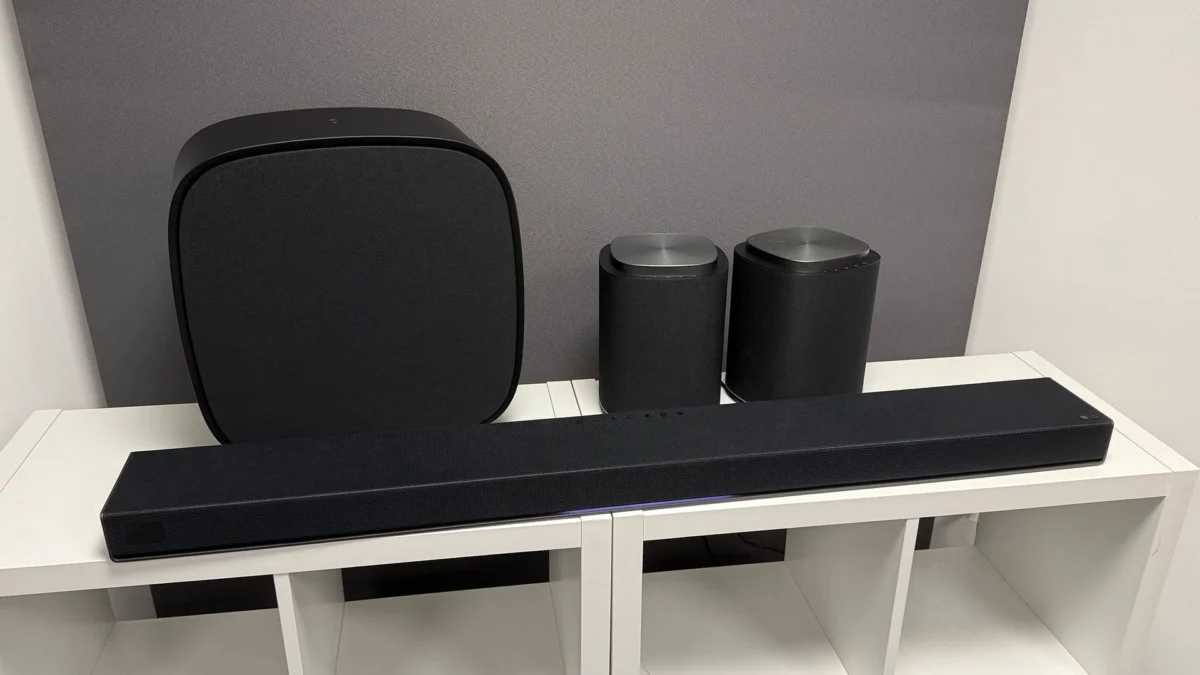
The journey of the LG Sound Suite began with high ambitions to capture the premium home cinema market. Engineered as a modular, high-performance ecosystem, the flagship configuration was built around four core components:
- The H7 Soundbar: The primary front-channel driver responsible for delivering the bulk of the soundstage.
- The W7 Subwoofer: A dedicated low-frequency driver engineered to add deep, theatrical bass.
- Two M7 Wireless Speakers: Satellite units utilized to handle rear or surround channels for a true multi-dimensional sound envelope.
When reviewers first evaluated the complete Sound Suite package, the hardware showed undeniable potential. It successfully filled medium-to-large rooms with robust audio, handled Dolby Atmos metadata with spatial precision, and pumped out deep, thunderous bass. However, audio critics pointed out critical shortcomings: the overall presentation could veer into overly aggressive territory during high-octane action sequences, and dialogue clarity often lacked the natural warmth and expressive nuance required for cinematic immersion. Consequently, the system walked away with a respectable yet unspectacular three-star rating.
2. The Announcement of the Free Firmware and Hardware Upgrade
Recognizing the rapid evolution of home theater standards and consumer expectations regarding multi-room audio and format compatibility, LG greenlit a comprehensive enhancement package. Rather than gating these updates behind a new generation of hardware, the company structured the rollout as a complimentary upgrade path.
The strategy aims to target two distinct demographics: current owners of the Sound Suite and H7 soundbar looking for expanded flexibility, and prospective buyers hesitant to invest in a system constrained by a single immersive audio format. By opening up DTS:X decoding and modernizing the wireless architecture, LG is repositioning the Sound Suite as a more future-proof investment.
Supporting Data and Technical Breakdown
To fully understand the impact of LG’s latest announcements, it is necessary to break down the technical specifications of the new features and how they interact with existing home theater infrastructure.
DTS:X Integration
Previously, the Sound Suite and H7 soundbar were strictly limited to Dolby Atmos for object-based spatial audio. While Dolby Atmos dominates streaming platforms (such as Netflix, Disney+, and Apple TV) and modern 4K Ultra HD Blu-rays, DTS:X retains a dedicated library of physical media—particularly among boutique film distributors, action blockbusters, and select concert releases.
- Format Parity: By adding DTS:X, LG ensures that consumers will no longer experience audio dropouts, downmixing issues, or playback failures when encountering discs or digital files encoded exclusively in the DTS immersive format.
- Dual-Engine Capability: Having both major object-based audio codecs natively supported means the system can dynamically switch based on source metadata, providing a frictionless viewing experience.
Dual W7 Subwoofer Configuration
Bass performance in a dedicated home theater or living room is notoriously difficult to tame due to room modes—acoustic phenomena where low-frequency sound waves reinforce or cancel each other out, creating peaks and nulls (dead spots) in different parts of the room.
- Single Subwoofer Limitations: The original package relied on a single W7 subwoofer. While powerful, placing one sub in a room often results in boomy bass in one corner and virtually no bass on the opposite couch.
- Dual Subwoofer Advantage: LG’s new configuration option allows users to pair a second W7 subwoofer to the system. According to acoustical data and manufacturer guidelines, dual subwoofers distribute low-frequency energy more evenly across the room. This minimizes acoustic nulls, lowers distortion by reducing the workload on a single driver, and delivers a balanced, harmonious bass response regardless of where listeners are seated.
Networking and Streaming Enhancements
Modern home audio relies heavily on robust wireless connectivity. Congestion on standard 2.4 GHz and standard 5 GHz Wi-Fi bands can lead to audio stuttering, synchronization drift between rear M7 speakers, and dropouts during high-bitrate streaming.
- Wi-Fi 6 GHz & 5 GHz DFS Support: The inclusion of Wi-Fi 6 GHz connectivity allows the Sound Suite system to operate on cleaner, wider, and less congested frequency channels. Furthermore, support for 5 GHz DFS (Dynamic Frequency Selection) channels enables the hardware to utilize radar-reserved frequencies, avoiding interference from household routers, microwaves, and neighboring Wi-Fi networks.
- Google Cast Integration: Expanding beyond proprietary apps and basic Bluetooth connectivity, Google Cast (formerly Chromecast built-in) support transforms the Sound Suite and H7 soundbar into high-resolution music streaming hubs. Users can cast lossless audio directly from iOS, Android, macOS, or Windows devices using supported apps like Spotify, Tidal, Qobuz, and YouTube Music.
Official Responses and Manufacturer Intent
In statements accompanying the rollout, representatives for LG Electronics emphasized that the primary goal of the upgrade is to broaden "immersive audio possibilities for home theatre enthusiasts."
Industry analysts note that high-end audio ecosystems face intense competition not only from traditional Hi-Fi brands (such as Sonos, Bose, and JBL) but also from TV manufacturers bundling proprietary acoustic tech directly into displays. By actively listening to consumer feedback regarding format limitations and wireless stability, LG is attempting to cultivate brand loyalty and demonstrate long-term product support.
"Home entertainment is not static," an LG product development spokesperson indicated during a briefing on the updates. "Our users invest in our hardware expecting it to adapt to new media formats and evolving smart home environments. Providing DTS:X support and advanced networking tools at no additional cost is our commitment to delivering lasting value."
Implications for Consumers and the Market
What This Means for Current Owners
For individuals who already purchased the LG Sound Suite or the standalone H7 soundbar, this announcement is an unalloyed win. The upgrade requires no hardware purchases for the software-based features (DTS:X and Google Cast), instantly elevating the utility of their existing equipment. Owners struggling with Wi-Fi interference in crowded apartment complexes will similarly benefit from the shift to 6 GHz networks.
However, those seeking a fundamental rewrite of the system’s acoustic signature—such as tamed high-frequency aggression or enhanced vocal warmth—will find that these physical limitations remain untouched by firmware. For users who felt the dialogue was too inexpressive out of the box, the addition of a second subwoofer or DTS:X decoding will not magically alter mid-range vocal reproduction.
What This Means for Prospective Buyers
For shoppers currently navigating the crowded soundbar market, the calculus has changed. The three-star review of the Sound Suite system noted that while its spatial audio handling and bass depth were admirable, format gaps and connectivity quirks kept it from joining the absolute elite tier of home cinema setups.
By closing the gap on DTS:X compatibility and introducing Google Cast alongside enterprise-grade Wi-Fi protocols, LG has eliminated two of the primary deterrents holding fence-sitters back. Coupled with the option to build out a dual-subwoofer layout for larger home theater rooms, the Sound Suite system presents a far more compelling, flexible, and future-proof value proposition than it did at launch.
Ultimately, while the update may not change the fundamental acoustic DNA of LG’s drivers, it transforms the Sound Suite from a rigid, single-format performer into a versatile, highly connected, and robustly supported cinematic powerhouse.