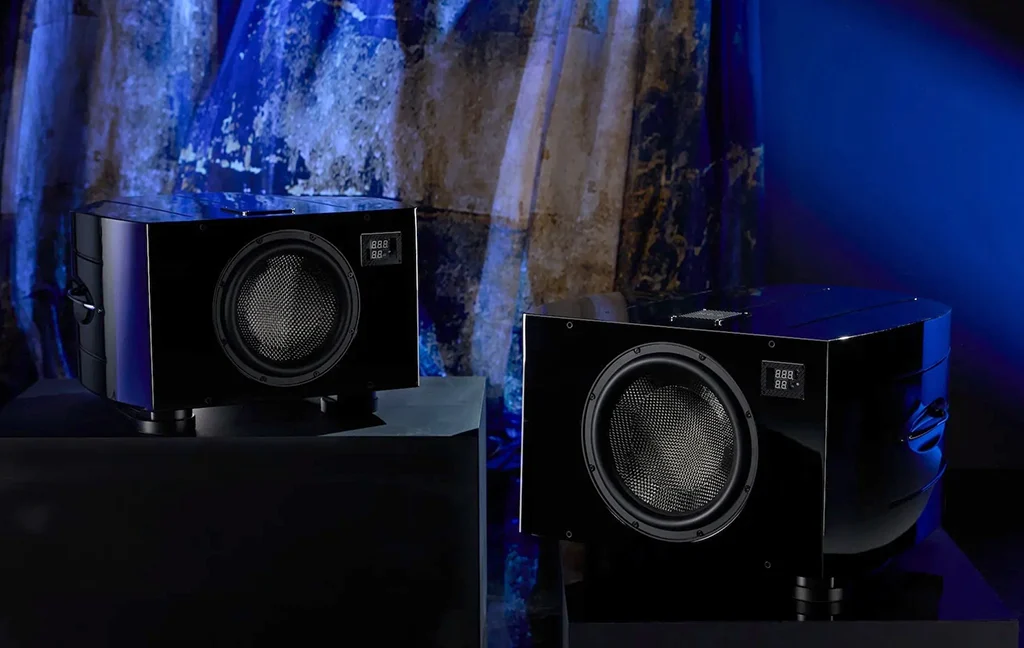
BERKELEY, CALIFORNIA — In the rarefied air of ultra-high-end audio, few names command the absolute reverence reserved for REL Acoustics. For decades, the Welsh-founded, American-domiciled manufacturer has operated on a singular premise: that true low-frequency reproduction is not merely about shaking foundations, but about anchoring the musical soundstage, preserving harmonic decay, and rendering the acoustic space of a recording with absolute fidelity.
Four years after the industry-shaking introduction of the No.31 and No.32 Reference subwoofers—components that many critics and audiophiles considered the absolute zenith of modern bass engineering—REL is once again raising the bar. The company has officially announced the global release of its next-generation flagship low-frequency systems: the REL Reference No.35 and the REL Reference No.36.
Priced at $10,000 USD and $12,000 USD respectively, these new flagships represent an exhaustive, uncompromising redesign of REL’s proprietary driver, amplification, and cabinet technologies. Available immediately through authorized REL Reference dealers worldwide, the No.35 and No.36 arrive with lofty expectations. To demonstrate just how far the envelope has been pushed, industry insiders and select journalists have already been summoned to REL’s headquarters for direct, side-by-side comparative demonstrations against the outgoing generation.
1. Main Facts
The launch of the No.35 and No.36 subwoofers marks a major engineering milestone for REL Acoustics, consolidating four years of research and development following the debut of the No.31 and No.32 series.
- The Lineup and Pricing: The compact-yet-formidable REL Reference No.35 carries an MSRP of $10,000 USD, while the larger, authoritative REL Reference No.36 commands $12,000 USD. Both models are positioned at the absolute apex of the consumer audio market, designed to integrate seamlessly with statement-level two-channel stereo systems and ultra-high-end multichannel home theaters.
- Core Technological Evolution: At the heart of both new models is an entirely reimagined iteration of REL’s Pure Carbon Fibre driver technology. Engineered from the ground up to handle the immense thermal and electrical loads imposed by newly optimized, high-output Class AB/D hybrid amplification stages, these drivers are built to deliver unprecedented speed, excursion, and linearity.
- Driver Architecture Improvements:
- The No.36 retains its legendary 15-inch driver footprint but upgrades to an ultra-fine 12k carbon fiber weave. It features a heavily reinforced cone structure and a completely revised mechanical suspension system designed to allow greater linear travel while maintaining iron-fisted control.
- The No.35 benefits from equivalent metallurgical and structural advancements, featuring an astonishing additional 12mm of linear travel in each direction (peak-to-peak excursion envelope), translating to extraordinary scale, dynamic impact, and transient swiftness.
- Availability: Both subwoofers are currently shipping and are available for demonstration and purchase exclusively through REL’s specialized network of Reference-tier dealers.
2. Chronology of Development
The journey from the critical acclaim of the No.31 and No.32 to the realization of the No.35 and No.36 was neither quick nor accidental. It reflects an iterative corporate philosophy that treats acoustic design as an ongoing, almost obsessive pursuit of perfection.
The Foundation: The No.31 and No.32 Era (2020–2025)
When REL introduced the No.31 and No.32 reference subwoofers, they established a new benchmark for what could be achieved below 40 Hz. Utilizing massive carbon-fiber cones, ultra-heavy-duty cabinets, and sophisticated wireless connectivity options (via REL’s proprietary Longbow technology), those subwoofers were widely praised for their ability to "disappear" within a room while leaving behind an enormous, tactile acoustic space. However, in the labs of REL Acoustics, perfection is viewed as a moving target.
The R&D Phase (2023–2025)
Shortly after the stabilization of the previous generation, REL’s engineering team—led by principal designer John Hunter—began exploring the theoretical limits of carbon-fiber material science. While measurements for the No.32 were practically peerless, the team noted that modern ultra-wideband recordings, combined with the escalating demands of state-of-the-art multi-way loudspeakers, required an even higher degree of dynamic agility.
Over a span of nearly three years, engineers experimented with alternative weave densities, resin matrices, and voice-coil geometries. The primary bottleneck was traditional suspension limits: as amplifiers grew more powerful, traditional spiders and surrounds would begin to compress or distort under extreme thermal and mechanical duress. Solving this required rethinking the physics of cone excursion, leading to the breakthrough suspension geometries implemented in the new No.35 and No.36.
The Announcement and Demonstration Phase (September 2026)
In September 2026, REL officially lifted the veil on the No.35 and No.36. Eschewing a quiet digital-only rollout, the company scheduled exclusive media preview events at its corporate headquarters. These sessions were designed to let journalists experience head-to-head comparisons against the outgoing reference models, proving that the upgrades were not merely incremental spec-sheet changes, but profound sonic transformations.
3. Supporting Data & Technical Specifications
To fully understand the engineering triumph represented by the No.35 and No.36, one must examine the specific data points that govern their performance metrics.
| Feature / Metric | REL Reference No.35 | REL Reference No.36 |
|---|---|---|
| Retail Price (USD) | $10,000 | $12,000 |
| Driver Diameter | Proprietary Long-Throw Reference | 15 inches (Legendary Footprint) |
| Cone Material | Advanced Pure Carbon Fibre (Optimized Weave) | Ultra-Fine 12k Carbon Fibre Weave |
| Excursion Metrics | +12mm additional linear travel per direction | Enhanced linear suspension & increased throw |
| Amplification Topology | High-Current Class AB/D Hybrid | High-Current Class AB/D Hybrid |
| Target Application | High-end stereo & multi-room reference setups | Statement-level two-channel & large-scale cinema |
| Connectivity | High-Level Neutrik Speakon, Low-Level RCA/XLR, LFE | High-Level Neutrik Speakon, Low-Level RCA/XLR, LFE |
The Science of the 12k Carbon Fibre Weave
Carbon fiber is prized in aerospace and high-performance automotive engineering for its exceptional strength-to-weight ratio. In loudspeaker design, however, improper carbon fiber implementation can result in internal standing waves or ringing modes that color the midrange and upper bass.
REL’s shift to a finer 12k carbon fibre weave on the No.36 allows the cone to maintain absolute pistonic behavior even under extreme acceleration forces. By reducing mass while simultaneously increasing structural rigidity, the driver starts and stops with zero perceptible lag. This instantaneous transient response is what allows a massive 15-inch driver to blend seamlessly with lightning-fast electrostatic panels, planar magnetics, or beryllium-domed horn systems.
Thermal and Mechanical Headroom
The integration of high-powered Class AB/D amplifiers requires sophisticated thermal management. The No.35 and No.36 utilize massive external heat-sink arrays machined directly from thick architectural aluminum, allowing the output stages to deliver instantaneous bursts of current without suffering from thermal compression.
Furthermore, the increased linear travel—specifically the 12mm of additional directional excursion engineered into the No.35—ensures that even during complex, high-decibel macro-dynamic orchestral peaks or explosive cinematic transients, the driver remains safely within its linear operating zone, eliminating bottoming-out artifacts and harmonic distortion.
4. Official Responses and Industry Perspectives
The audiophile community has responded to the announcement with immense enthusiasm, viewing the launch as confirmation of REL’s unwavering commitment to analog-domain refinement in a digital world.
In an official statement accompanying the release, REL Principal John Hunter encapsulated the philosophy driving the new flagships:
“We don’t stop when the measurements are perfect; we stop when the music is.”
Hunter expanded upon this ethos in subsequent technical briefings, noting that modern measurement microphones and distortion analyzers only tell part of the story.
"You can engineer a driver that measures flat inside an anechoic chamber, but the moment you put it in a real room playing complex acoustic music—a double bass interacting with a cello and a vocal harmonic—the illusion can fall apart. With the No.35 and No.36, our goal was not to change how REL sounds, but to remove the final layers of mechanical noise and inertia that stand between the listener and the original performance. When you hear the 12k weave working in tandem with our new suspension systems, the bass doesn’t just sound deeper; it sounds more real, more organic, and infinitely more alive."
Industry distributors and early reviewers who attended the initial preview events noted a distinct improvement in spatial decay retrieval. Whereas previous subwoofers provided immense weight, the No.35 and No.36 reportedly delineate the boundaries of recording venues with startling clarity, allowing listeners to hear the literal air movement around instruments located near the back of the soundstage.
5. Implications for the High-End Audio Market
The introduction of the REL Reference No.35 and No.36 carries significant ramifications for the ultra-high-end audio landscape.
Elevating the Standards of Sub-Bass Integration
For decades, traditional audiophile culture held a persistent bias against subwoofers, arguing that they introduced phase anomalies, smeared transients, and compromised the purity of main loudspeaker crossovers. REL has spent over thirty years dismantling this prejudice through its signature High-Level Connection methodology—tapping the amplifier outputs directly so the subwoofer receives the exact same musical signal as the main speakers.
The launch of the No.35 and No.36 cements this philosophy at the absolute frontier of performance. By demonstrating that a properly engineered ultra-reference subwoofer can enhance not just bass quantity, but midrange transparency, soundstage depth, and treble air, REL is redefining what constitutes a "full-range" audio system.
Market Positioning and Pricing Dynamics
At $10,000 and $12,000 respectively, the No.35 and No.36 occupy a tier of the market where buyers demand absolute perfection. In this echelon, components are expected to serve as lifetime investments. By ensuring backward compatibility with existing REL accessories—while offering dramatic, quantifiable improvements in driver technology and mechanical headroom—REL has effectively future-proofed its flagship ecosystem.
Competitors in the ultra-tier low-frequency sector will undoubtedly feel the pressure to respond to the technological advancements showcased in the 12k carbon fiber weave and extended excursion envelopes. However, REL’s decades-long institutional knowledge in low-frequency filtering and cabinet acoustic coupling gives the brand a formidable competitive moat.
Conclusion: A New Benchmark in Musicality
As the REL Reference No.35 and No.36 arrive at dealer showrooms across the globe, they do so not merely as product updates, but as testaments to an unyielding corporate mission. For the dedicated audiophile seeking to extract the absolute maximum emotional and spatial truth from their reference recordings, these new flagships offer a tantalizing glimpse into the outer limits of acoustic possibility.
As John Hunter and the engineering team at REL have repeatedly proven, the pursuit of musical perfection is a never-ending journey—and with the No.35 and No.36, that journey has just taken a breathtaking leap forward.