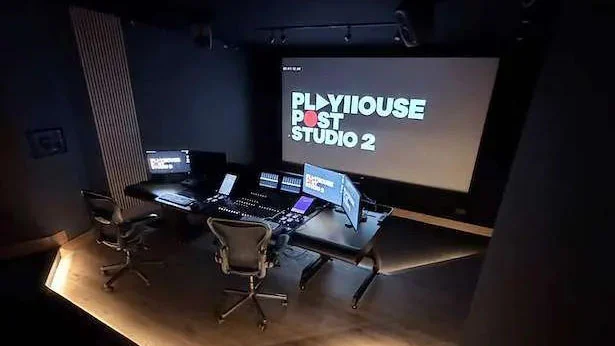
LONDON, UK — In a move that signals both a rebirth and a strategic expansion within the European creative sector, Irish powerhouse Playhouse Studios has officially unveiled its new London hub: Playhouse Post. Located in the heart of Soho’s historic creative district, the facility occupies the fully refurbished, 12,000-square-foot premises previously operated by the storied Halo Post.
This launch represents more than just a change in branding; it is a calculated response to the evolving demands of high-end television (HETV) and feature film production. By integrating cutting-edge technical infrastructure with a flexible, high-spec workspace, Playhouse Post aims to bridge the gap between creative ambition and the rigorous technical requirements of modern digital cinema.
The Strategic Acquisition: From Administration to Innovation
The narrative of Playhouse Post began in the wake of significant industry turbulence. In December 2025, the post-production landscape was shaken when Mojo Bridge—the parent company of the long-standing Halo Post—entered administration. This development left a vacuum in London’s Soho, a district that serves as the global epicenter for high-end post-production.
Seeing an opportunity to expand its footprint beyond its Irish roots, Playhouse Studios moved swiftly. In July 2026, the company acquired the assets of the Noel Street facility. Rather than attempting a "business as usual" approach, Playhouse embarked on an extensive, multi-million-pound refurbishment of the site. The goal was clear: to modernize the workflow while respecting the architectural and historical significance of the Soho location.
"The acquisition was never just about buying space," says a spokesperson for Playhouse. "It was about securing a legacy and re-engineering it for the next decade of media production."
Technical Specifications: A New Standard for Soho
The newly minted Playhouse Post is a marvel of modern engineering. Recognizing that the modern production pipeline is data-heavy and workflow-sensitive, the facility has been built with an emphasis on high-speed connectivity and future-proofed hardware.
Infrastructure and Data Management
At the core of the facility lies a robust backbone of CAT6a and fiber optic infrastructure. This network connects every suite to a massive 2PB (petabyte) storage system. To ensure that latency is a thing of the past, 300TB of this storage is dedicated exclusively to NVMe (Non-Volatile Memory Express), allowing for lightning-fast read/write speeds that are essential for 4K and 8K workflows.
Grading and Finishing Suites
The facility is designed to cater to the most discerning cinematographers and colorists. Key highlights include:
- Theatrical Grading: A 4K DCI-compliant projected theatrical grading theatre, providing the exact environment necessary for final cinema-grade review.
- HDR Mastery: Two dedicated Dolby Vision 4K HDR grading suites, ensuring that content destined for streaming platforms meets the highest industry standards for dynamic range.
- Flame and Finishing: Two 4K HDR Flame suites, paired with three switchable 4K HDR picture finishing rooms, allowing for seamless transitions between VFX and final color grading.
Sound and Audio Post-Production
Sound remains the "invisible" half of the cinematic experience, and Playhouse Post has invested heavily in its audio department. The facility houses three fully refurbished Pro Tools studios. These rooms support full 5.1 theatrical mixing as well as Dolby Atmos Home Entertainment delivery. Whether the project is a gritty independent drama or a high-octane action documentary, the voiceover facilities and mix stages are calibrated for acoustic perfection.
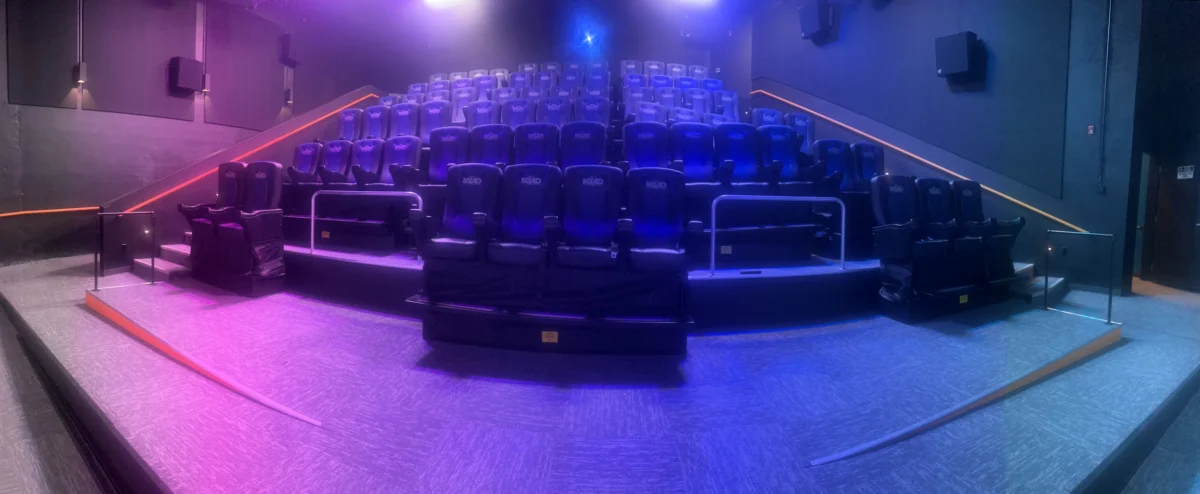
Furthermore, the inclusion of the prestigious Dolby Europe 2D/3D screening room provides an elite venue for technical sign-offs and private screenings. The addition of an HDR 5.1 QC (Quality Control) suite acts as the final gatekeeper, ensuring that every project leaving the facility is technically flawless.
A Vision for the Future: CEO Mark Foligno’s Strategy
Mark Foligno, CEO of Playhouse Post, views the launch as a pivotal moment for the company’s international growth. In a recent statement, he emphasized the importance of a "one-roof" philosophy.
"Playhouse Post’s revamped Noel Street facility gives productions the flexibility to move through multiple stages of post under one roof," Foligno stated. "We aren’t just providing hardware; we are curating a creative environment. Increasingly complex workflows require a synergy between the artist and the machine. We’re excited to be opening our high-spec London facility to continue supporting ambitious projects of every scale, from development through to final delivery."
Foligno’s approach is rooted in the belief that the "siloed" post-production model is dying. By offering everything from offline cutting rooms to final HDR finishing, Playhouse Post reduces the friction—both logistical and financial—of moving assets between different vendors.
Proof of Concept: The Success of Lemonade
The facility has already been "battle-tested" in a real-world environment. Before the official grand opening, the team worked on the post-production for Kim Bartley’s Lemonade.
Financed by Playhouse Studios and having premiered at the 2026 Toronto International Film Festival, Lemonade served as the ideal pilot project. The film’s successful completion proved that the revamped Noel Street infrastructure could handle the demands of a festival-ready feature. It served as a powerful statement to the industry: Playhouse Post is not a facility in development—it is a facility that is already delivering.
Industry Implications: What This Means for Soho
The arrival of Playhouse Post comes at a time when the London post-production market is undergoing a structural realignment. With the rise of global streaming platforms (Netflix, Disney+, Apple TV+), the demand for high-end finishing has never been greater.
1. Retention of Talent and Expertise
By revitalizing a historic site like the Noel Street facility, Playhouse has prevented the "brain drain" that often follows the collapse of a major post house. Many of the technicians and creative leads who operated within the walls of the old Halo Post have been integrated into the new Playhouse ecosystem, maintaining a continuity of expertise that is invaluable in the high-pressure world of film post-production.
2. The "One-Stop Shop" Trend
Playhouse Post is leading a broader industry shift toward integrated post-production. Historically, a production might use one house for sound, another for color, and a third for VFX. Playhouse’s model challenges this by providing a unified, high-speed ecosystem. For producers, this means reduced overheads and simplified project management.
3. Sustainability in Post-Production
While the article focuses on technology, the refurbishment of an existing 12,000-square-foot office space rather than new construction is a nod to sustainability. By retrofitting rather than building from the ground up, Playhouse has significantly reduced the carbon footprint associated with their expansion.
Conclusion: A New Benchmark
As the credits roll on the first wave of projects at the new Noel Street location, it is clear that Playhouse Post has successfully navigated the transition from a post-administration asset to a thriving hub of creative activity.
By marrying the historical prestige of Soho with the cutting-edge requirements of the Dolby Vision and 4K HDR era, the facility has positioned itself as an essential partner for filmmakers. As the industry continues to push the boundaries of visual and sonic storytelling, Playhouse Post stands ready—not just to keep up, but to set the pace.
For producers and directors looking for a facility that balances the human element of creative collaboration with the brutal efficiency of modern digital pipelines, the Noel Street facility is, once again, the place to be.