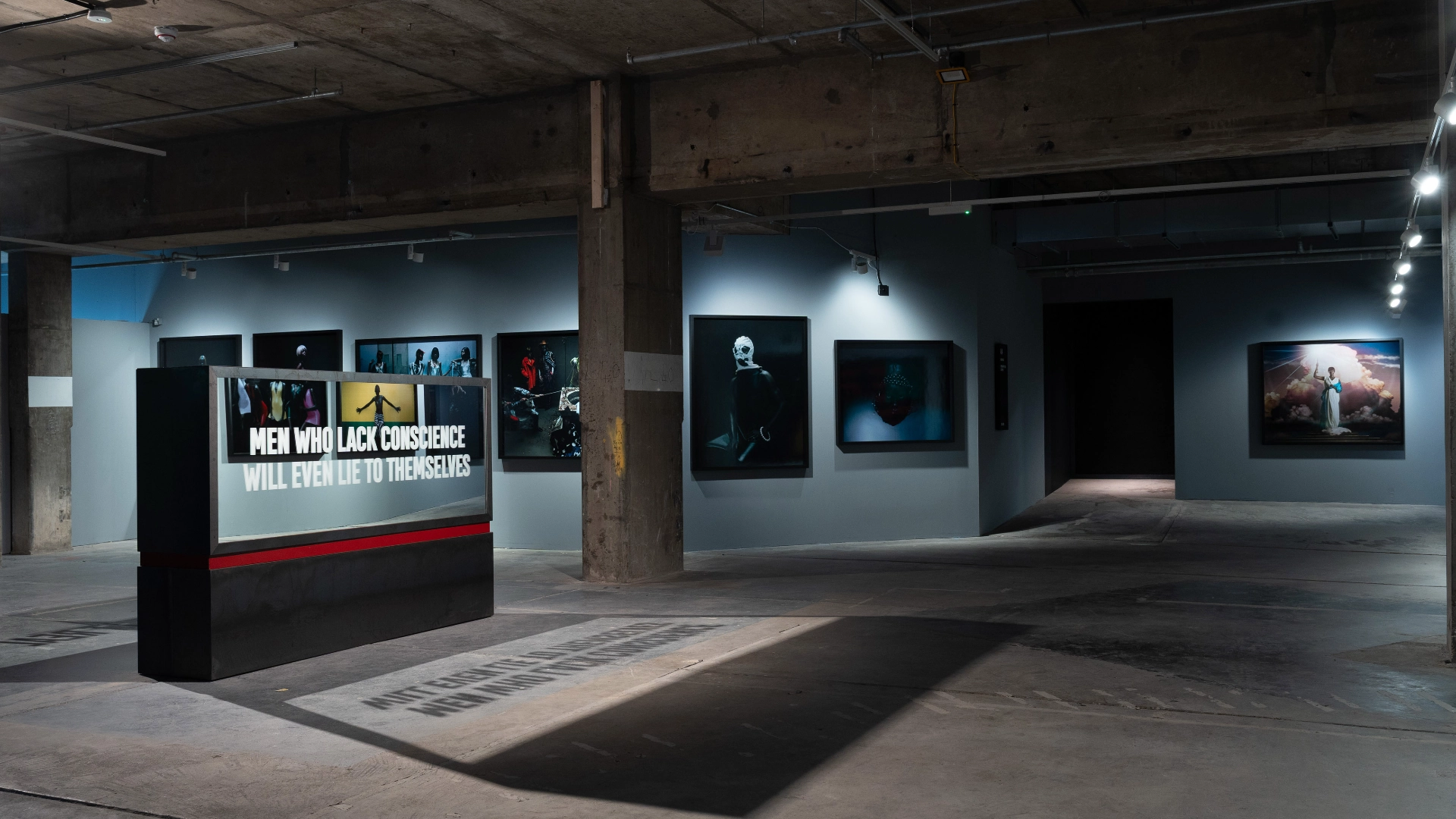
In the ever-evolving landscape of contemporary visual culture, few figures have bridged the gap between commercial polish and raw, soul-searching artistry as effectively as Gabriel Moses. The London-born photographer and filmmaker, whose lens has defined the aesthetic of modern fashion, music, and sport, has returned to the hallowed halls of 180 Studios. His latest undertaking, Selah, is not merely an exhibition; it is a sprawling, sensory-driven manifesto that marks his most ambitious creative departure to date.
Spanning two floors of the iconic central London venue, Selah serves as a retrospective of a meteoric career while simultaneously functioning as a laboratory for new, experimental forms. With over 70 photographs, 10 films, and an array of immersive sculptures and installations, Moses is inviting the public to witness the maturation of an artist who is no longer content to simply document the world—he is determined to reshape how we perceive it.
Main Facts: The Scope of Selah
Selah—a term derived from Hebrew, often used in musical or liturgical contexts to denote a pause, a moment of reflection, or a crescendo—is an apt title for an exhibition that demands stillness from its audience. The show acts as a bridge between Moses’ past commercial successes and his burgeoning identity as a fine artist.
The exhibition is structured as a multi-sensory journey. Visitors are guided through corridors of light and sound, encountering large-format prints that capture the quiet intimacy of his subjects, even when those subjects are global icons in the worlds of sports and music. The centerpiece of the exhibition is the premiere of The Last Hour, a short film that encapsulates Moses’ evolving cinematic language. Unlike the high-octane pacing often found in fashion film, The Last Hour leans into the visceral, favoring atmosphere and subtext over traditional narrative structure.
The exhibition is currently open to the public and is scheduled to run through August 31, 2025, cementing its place as one of the most significant long-term artistic residencies at 180 Studios this decade.
Chronology: From Regina to the Present
To understand the weight of Selah, one must look back to the catalyst of Moses’ current trajectory: his 2023 debut solo exhibition, Regina.
- 2023: The Breakthrough. Regina introduced the public to Moses’ distinct photographic eye—a style defined by deep shadows, rich textures, and a profound respect for the humanity of his sitters. It was a critical and commercial success, establishing 180 Studios as his spiritual home for large-scale installations.
- 2023–2025: The Intervening Years. In the two years following Regina, Moses did not remain static. He traveled extensively, deepening his collaborative work with heritage fashion houses and musicians, while quietly sharpening his skills in sculpture and sound design.
- March 2025: The Announcement. Following months of speculation, the official announcement of Selah confirmed that Moses was moving beyond the walls of photography.
- Current Day: Selah stands as the culmination of this two-year period of intensive artistic growth, representing a transition from being a "photographer" to a "multidisciplinary artist."
"I’ve grown a lot in those two years," Moses reflects. "I’ve developed more as an artist. For me, it was important to create a show that felt so much more immersive and interactive. I wanted the audience to walk into my mind, not just look at my work."
Supporting Data: The Anatomy of the Exhibition
The sheer scale of Selah provides a fascinating case study in how modern artists are utilizing "experience economy" spaces like 180 Studios to redefine the museum-going experience.
Technical Breakdown
- Photography: 70+ works spanning high-fashion editorials and intimate street-style portraiture. The prints vary in size from small, handheld-style frames to floor-to-ceiling installations, creating a rhythm of discovery for the visitor.
- Cinema: 10 films are integrated into the exhibition, ranging from archival commercial work to the centerpiece, The Last Hour. The integration of soundscapes is deliberate, with ambient audio designed to react to the flow of foot traffic.
- Installations: The exhibition features several sculptural elements that play with light and perspective. By incorporating physical objects, Moses forces the viewer to move around the work, breaking the "flat" experience of viewing photographs on a wall.
Demographic Impact
180 Studios has noted that exhibitions of this nature have seen a 30% increase in attendance among the 18–30 demographic over the last three years. This suggests that Moses is successfully engaging a younger generation of art lovers who value the synthesis of pop culture and high art.
Official Responses: The Artist’s Perspective
In an exclusive conversation, Gabriel Moses emphasizes that Selah is an attempt to escape the "perfection" often demanded by the fashion industry.
"When you work in commercial spaces, there is a specific language you have to speak," Moses explains. "With Selah, I wanted to unlearn that language. I wanted to see what happens when the lighting isn’t ‘perfect,’ or when the film isn’t meant to sell a garment. I’m interested in the truth of the moment, the bit between the shutter clicks."
The curatorial team at 180 Studios has praised Moses for his willingness to take risks. "Most artists at this stage of their career would play it safe," a spokesperson for the venue noted. "Gabriel did the opposite. He wanted to fill the space with new mediums, new sounds, and new challenges. He is pushing the physical limitations of our gallery, and the result is something truly transformative."
Implications: The Evolution of the "Fashion Photographer"
The success and ambition of Selah carry significant implications for the future of creative practice. We are currently witnessing a shift where the lines between "commercial photographer," "filmmaker," and "fine artist" are becoming increasingly porous.
1. The Death of the Niche
Moses is part of a vanguard of creators who refuse to be categorized. By moving seamlessly from a high-budget luxury campaign to an abstract sculpture in a London gallery, he proves that creative vision is portable. The implication for the industry is clear: the modern artist must be a polymath.
2. The Rise of the Immersive Retrospective
The exhibition format is changing. Static gallery walls are being replaced by sensory-rich environments. Selah demonstrates that audiences are no longer satisfied with passive consumption. They want to be enveloped by the work. As such, venues like 180 Studios are becoming the new standard-bearers for how culture is consumed.
3. Cultural Legacy
By documenting the figures of our time—athletes, musicians, and everyday people—through a lens of profound empathy and artistic rigor, Moses is creating an archive of the 2020s. Selah ensures that this archive is not just a digital file or a magazine tear-sheet, but a tangible, physical experience that will resonate long after the final ticket is sold.
Conclusion: A Moment of Pause
As the title Selah suggests, the exhibition is a call to pause. In a world characterized by the relentless scroll of social media and the rapid-fire consumption of imagery, Gabriel Moses is asking us to stop. He is asking us to sit with his images, to listen to his films, and to consider the space between the frames.
Whether you are a devotee of his photography or a newcomer to his work, Selah offers a rare opportunity to witness an artist at the height of his powers, wrestling with the medium of his craft and coming out on the other side with something profoundly human. The exhibition is more than just a highlight of the London arts calendar; it is a testament to the fact that when an artist is given the freedom to expand, they don’t just fill a room—they change the way we see the world.
Selah runs until August 31, 2025. Tickets and information on exclusive guided viewings can be found at the 180 Studios website.