Introduction: A Global Stage in the Heart of the South
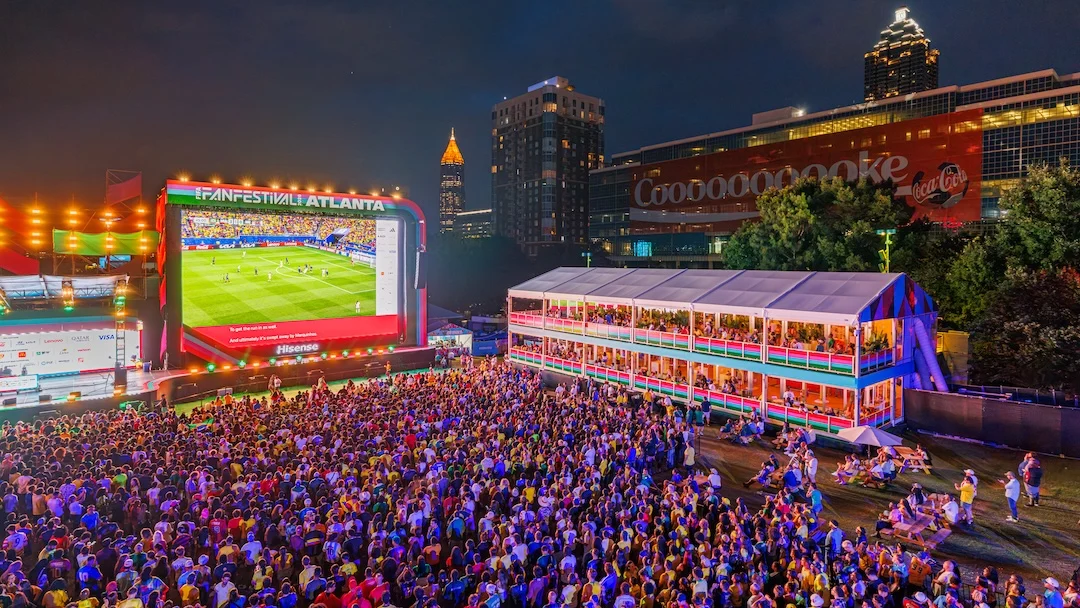
When the 2026 FIFA World Cup descended upon the United States, it transformed host cities into epicenters of global culture. Among these, Atlanta, Georgia, stood out as a beacon of fan engagement. At the center of this transformation was Centennial Olympic Park, which underwent a radical metamorphosis to host the FIFA Fan Festival Atlanta. Over the course of 38 days, the park became a temporary outdoor broadcast and entertainment venue that welcomed 536,000 guests.
However, the sheer scale of the event—ranging from high-stakes match broadcasts and corporate sponsor activations to high-energy concerts and community programming—required more than just space. It required a technical infrastructure capable of surviving the unpredictable Georgia summer while delivering a world-class sonic experience. Entrusted with this monumental task was the Atlanta-based live event production firm, Technical Elements.
The Main Facts: An Engineering Marathon
The FIFA Fan Festival was not merely a series of watch parties; it was a sprawling, high-fidelity production hub. Operating across 19 public event days within a 38-day total production window, the festival functioned as an immersive environment where the boundary between the stadium and the park was blurred.
To manage this, Technical Elements had to design an audio architecture that was as versatile as it was durable. The primary challenge was the environment: an open-air urban park that demanded perfect speech intelligibility for commentators and hosts, while simultaneously requiring the raw, visceral power needed for live music performances and the thunderous excitement of match-day goal celebrations.
The Technical Arsenal
To achieve this, Technical Elements deployed a sophisticated Harman Professional audio ecosystem. The core system design was built around:
- Main PA: JBL Professional VTX A12 line arrays provided the heavy lifting, ensuring long-throw coverage with precise dispersion.
- Front-Fill/Supplemental: VTX A8 loudspeakers were strategically placed to maintain consistent sound pressure levels (SPL) and frequency response throughout the primary audience zones.
- Low-Frequency Support: JBL VTX B28 dual 18-inch subwoofers anchored the system, providing the necessary depth for DJ sets and high-impact match audio.
- Delay Systems: To ensure that sound remained coherent across the sprawling park, VTX V20 loudspeakers paired with VTX G28 subwoofers acted as delay towers.
- Site Infrastructure: JBL VRX932LAP loudspeakers were deployed to manage audio at site entrances, ensuring a seamless transition for fans entering the venue.
- Stage Monitoring: Performers benefited from VTX M20 monitor wedges, while VTX A8 side-fills paired with VTX B18 subwoofers provided on-stage depth.
- Amplification: The entire system was powered by a fleet of Crown I-Tech 4x3500HD and I-Tech 12000HD amplifiers, chosen for their efficiency and power density.
Chronology: From Blueprint to Final Whistle
The success of the FIFA Fan Festival was not an accident; it was the result of a rigorous production schedule that prioritized long-term reliability.
The Build Phase (Pre-Event)
Technical Elements began the installation process well before the first fan arrived. The logistical challenge was immense: integrating high-performance audio systems into an existing public park while adhering to strict municipal codes and noise ordinances. The team spent weeks calibrating the line arrays, using acoustic modeling software to predict how sound would interact with the park’s architecture and the humid Atlanta atmosphere.
The Operation Phase (The 38-Day Run)
The festival was defined by its daily consistency. From the moment gates opened until the final match of the day concluded, the audio system remained under constant load. The "19 public operating days" were periods of intense stress for the equipment, requiring real-time monitoring and adjustments. The team had to account for changing weather conditions, varying crowd sizes, and the distinct acoustic requirements of different programming types—switching, for instance, from the subtle nuances of an interview to the full-frequency demands of a concert performance.
The Tear-Down and Post-Mortem
Following the final match, the disassembly process was a mirror image of the installation, requiring precision and speed to restore Centennial Olympic Park to its original state. The post-event analysis conducted by Technical Elements focused on the stability of the Harman ecosystem, confirming that the gear functioned without critical failure despite the grueling environment.
Supporting Data: By the Numbers
The impact of the FIFA Fan Festival Atlanta is best understood through the metrics of its success:
- Total Attendance: 536,000 unique visitors over the course of the tournament.
- Duration: A 38-day production window, encompassing installation, event days, and teardown.
- Operating Days: 19 dedicated days of public programming, including live broadcasts and concerts.
- System Scale: Hundreds of individual JBL loudspeaker units and dozens of Crown amplifiers were networked together to ensure seamless coverage.
- Geographic Coverage: The system was designed to provide consistent SPL and frequency response across the entirety of the park’s footprint, preventing "dead zones" where fans might lose the broadcast audio.
Official Responses: Insights from the Engineers
The philosophy driving this project was defined by a commitment to the fan experience. According to Brandon Montgomery, Sales Director for Technical Elements, the primary objective was not just to put on a show, but to curate an atmosphere.
"For us, success wasn’t measured by one great show," Montgomery noted. "The primary objective was to create an immersive environment that matched the excitement of one of the world’s biggest sporting events by delivering the same world-class experience daily, from the opening ceremony through the final whistle."
For the technical team, reliability was the single most important metric. Zach Sturino, Senior Director of Events for Technical Elements, highlighted the specific challenges of a month-long outdoor residency. "When you’re operating outdoors in Atlanta for more than five weeks, reliability isn’t just an equipment specification; it’s part of the production strategy," Sturino said. "We chose systems we knew could deliver at this scale day after day."
Implications: The Future of Urban Fan Festivals
The success of the FIFA Fan Festival in Atlanta serves as a blueprint for the future of large-scale sports tourism and urban event management.
Setting a New Standard for Live Broadcast
The integration of live stadium-style sound with open-air public spaces suggests that fans no longer accept the "second-tier" experience of traditional watch parties. By utilizing professional-grade touring audio equipment—typically reserved for major concert tours—Technical Elements proved that it is possible to replicate the "stadium feel" in an urban park.
The Resilience Factor
The industry often struggles with the dichotomy between high-fidelity sound and outdoor durability. The use of JBL’s VTX line arrays in a humid, high-traffic, multi-week environment offers a compelling case study for future production companies. The performance of these systems suggests that touring-grade equipment can withstand sustained environmental exposure when maintained with the discipline of a professional production house.
Community and Commerce
Beyond the technology, the festival demonstrated the power of public-private partnerships. The collaboration between FIFA, local government, and a specialized production partner created a safe, engaging, and economically productive space. As cities continue to compete for the right to host international sporting events, the "Atlanta Model" will likely be cited as the standard for how to integrate technical excellence with public space management.
Conclusion
The FIFA Fan Festival Atlanta was a triumph of engineering and execution. By treating a temporary installation with the same level of care and sophistication as a permanent stadium build, Technical Elements succeeded in turning 536,000 visitors into participants in a global spectacle. As the dust settles and the park returns to its quiet, daily routine, the legacy of the 2026 World Cup in Atlanta will be remembered not just for the goals scored on the pitch, but for the seamless, world-class experience delivered to the thousands of fans who gathered to watch history unfold.