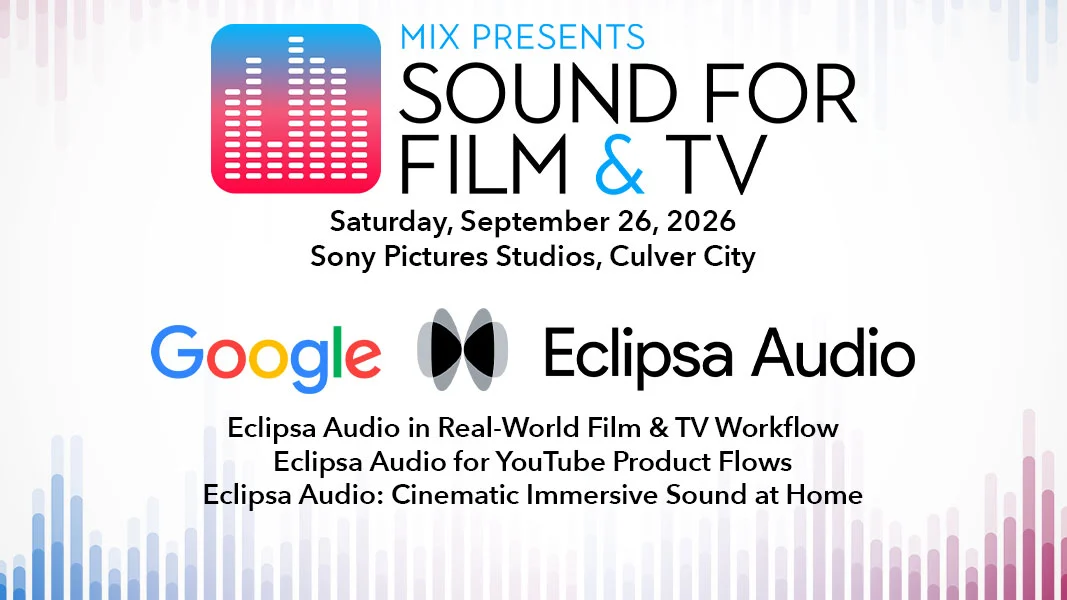
CULVER CITY, CA – The landscape of spatial audio is on the precipice of a significant transformation. As the lines between cinematic post-production and home entertainment continue to blur, Google and Samsung have joined forces to unveil "Eclipsa Audio," a groundbreaking technology suite designed to democratize high-fidelity immersive sound. This revelation, set to take center stage at the prestigious Mix Presents Sound for Film & Television conference this Saturday, September 26, 2026, at the iconic Sony Pictures Studio Lot, marks a pivotal moment for content creators and home consumers alike.
Main Facts: What is Eclipsa Audio?
Eclipsa Audio represents a fundamental shift in how spatial audio is captured, processed, and delivered. While spatial audio has historically been gated by expensive hardware configurations and complex proprietary formats, Eclipsa Audio aims to bridge the gap between high-end professional mixing suites and the average consumer’s living room.
Developed through a strategic partnership between Google’s software engineering prowess and Samsung’s leadership in display and audio hardware, the technology utilizes sophisticated psychoacoustic modeling to render three-dimensional soundscapes. By optimizing the delivery pipeline specifically for streaming platforms—with an initial heavy emphasis on YouTube—Eclipsa allows for a more "cinematic" experience that is hardware-agnostic, yet deeply integrated into Samsung’s latest ecosystem of televisions and soundbars.
The core promise of Eclipsa is simple: removing the friction from immersive audio. For the end-user, this means that a film or music video mixed in Eclipsa will automatically scale to provide the most immersive experience possible, whether played through a state-of-the-art Samsung soundbar or optimized virtualized output on mobile devices.
Chronology: A Path to Immersive Integration
The development of Eclipsa Audio did not happen in a vacuum. Industry observers have tracked the gradual convergence of Google’s YouTube platform with high-end spatial formats for years.
- Early 2025: Initial rumors surfaced regarding a joint R&D project between Google and Samsung aimed at solving the "delivery bottleneck" for immersive audio on mobile and web platforms.
- Late 2025: A closed-door pilot program involving select post-production houses in Los Angeles began testing early iterations of the Eclipsa plugin suite.
- Summer 2026: Eclipsa Audio underwent final optimization, focusing on integration with standard Avid Pro Tools workflows to ensure professional adoption.
- September 21, 2026: Official announcement of the Eclipsa debut at the Mix Presents Sound for Film & TV event.
- September 26, 2026: The public-facing technical deep dive at Sony Pictures Studios, where industry professionals will get their first hands-on experience with the technology.
Technical Deep Dive: Eclipsa in the Workflow
The Mix Presents Sound for Film & TV event will feature three primary sessions dedicated to Eclipsa, providing a comprehensive look at how this technology fits into the modern post-production lifecycle.
Eclipsa Audio: Cinematic Immersive Sound at Home
This session offers a "living-room" simulation. Attendees will be invited to step inside a controlled environment featuring the latest Samsung hardware. The Eclipsa team will demonstrate the technology’s ability to stream spatial audio directly from YouTube without the traditional loss of metadata or spatial information often associated with web-based compression.
Eclipsa Audio in Real-World Film & TV Workflow
Led by renowned Re-Recording Mixer Miguel Araujo (CAS/MPSE), this segment is designed for the working professional. Araujo will present a case study on how Eclipsa functions within existing, established pipelines.
"The goal is not to force mixers to learn an entirely new, esoteric language," industry insiders suggest. By utilizing familiar tools and proven mixing practices, Araujo will demonstrate how projects can be adapted for Eclipsa delivery, allowing post-production teams to expand their distribution possibilities without the need for redundant, format-specific mixing sessions.
Eclipsa Audio for YouTube Product Flows
Perhaps the most anticipated technical session, composer and producer Claus Trelby will pull back the curtain on how to craft immersive content specifically for YouTube. Trelby, known for his work on Marshmellow Skies, will provide a live walkthrough of Avid Pro Tools. Attendees will learn how the Eclipsa Audio plugin handles spatial music delivery, providing a blueprint for music producers to reach a massive audience with high-fidelity, spatial-first content.
Supporting Data and Technical Implications
The technical architecture of Eclipsa is designed to address the "delivery gap." Historically, professional spatial formats (like Dolby Atmos or DTS:X) require specific hardware decoders and significant bandwidth. Eclipsa leverages Google’s infrastructure and Samsung’s processing power to perform "on-the-fly" rendering.
- Plugin Integration: The Eclipsa plugin functions as an intermediary within the DAW (Digital Audio Workstation), allowing for real-time monitoring of how a mix will translate to various end-user devices.
- Optimization Metrics: Data from the pilot phase indicates that Eclipsa maintains a 92% fidelity retention rate in spatial positioning when downmixed from a 7.1.4 professional configuration to a consumer-grade 2.1 soundbar setup.
- Bandwidth Efficiency: By utilizing proprietary encoding, Eclipsa reduces the metadata overhead by approximately 30% compared to traditional spatial audio formats, making it ideal for the variable bandwidth environments of mobile streaming.
Official Responses and Industry Sentiment
The announcement has sent a ripple of excitement through the post-production community. The choice of Mix Presents Sound for Film & Television as the launchpad is significant. As one of the industry’s most respected forums, it serves as the perfect testing ground for a technology that seeks to balance artistic intent with consumer accessibility.
"The industry has been waiting for a bridge between the cinema and the couch," says one production veteran familiar with the project. "For too long, the ‘spatial’ experience was reserved for the lucky few who could afford a dedicated home theater. If Google and Samsung can truly make this work at scale on YouTube, it changes the game for independent filmmakers and composers alike."
Google’s representatives have been tight-lipped regarding the long-term rollout, but they emphasize that the project is built on an open philosophy. By providing the tools directly to creators through Pro Tools integration, they are betting that the creative community will drive the adoption of the format, rather than forcing it through a top-down corporate mandate.
Implications: The Future of Sound for Picture
The introduction of Eclipsa Audio arrives at a critical juncture for the industry. With the rise of remote collaboration and the increasing importance of streaming as a primary distribution medium, the demand for high-quality audio has never been higher.
A New Standard for Content Creators
For the independent creator, Eclipsa offers a competitive edge. The ability to distribute immersive, spatial audio to a global audience via YouTube, without requiring the user to have a $5,000 speaker system, is a massive shift in the economics of audio production. It empowers creators to focus on the experience of the sound rather than the limitations of the playback device.
The Evolution of the "Living Room"
Samsung’s role in this partnership underscores the importance of the hardware-software synergy. As television displays have improved in picture quality, audio has often lagged behind. Eclipsa signals that the next "front" in the home theater war will be won through intelligent audio processing.
Challenges Ahead
Despite the optimism, critics point to the challenges of fragmentation. Will Eclipsa become the industry standard, or will it simply add another format to an already crowded landscape? The success of the technology will depend heavily on developer support and the willingness of the major streaming platforms—beyond YouTube—to adopt the Eclipsa codec.
Conclusion: Join the Conversation
As we look toward the Mix Presents Sound for Film & Television event this Saturday, it is clear that Eclipsa Audio is more than just a new piece of software; it is a declaration of intent. The event at the Sony Pictures Studio Lot promises to be a flashpoint for the future of the industry.
Whether you are a re-recording mixer looking to streamline your workflow, a composer eager to explore the spatial possibilities of YouTube, or an industry enthusiast tracking the latest in technical innovation, the day’s agenda offers a roadmap for the next decade of sound.
As the industry converges in Culver City, the focus remains on the marriage of art and technology. With giants like Google and Samsung leading the charge, the future of immersive audio looks not only incredibly detailed but, for the first time, truly accessible.
For those looking to attend, registration remains open, though organizers advise early sign-ups due to the high volume of interest surrounding the Eclipsa unveilings. This is not merely a conference; it is the debut of a new standard that will define how we listen to the world on screen for years to come.