September 20, 2026 | By Editorial Staff
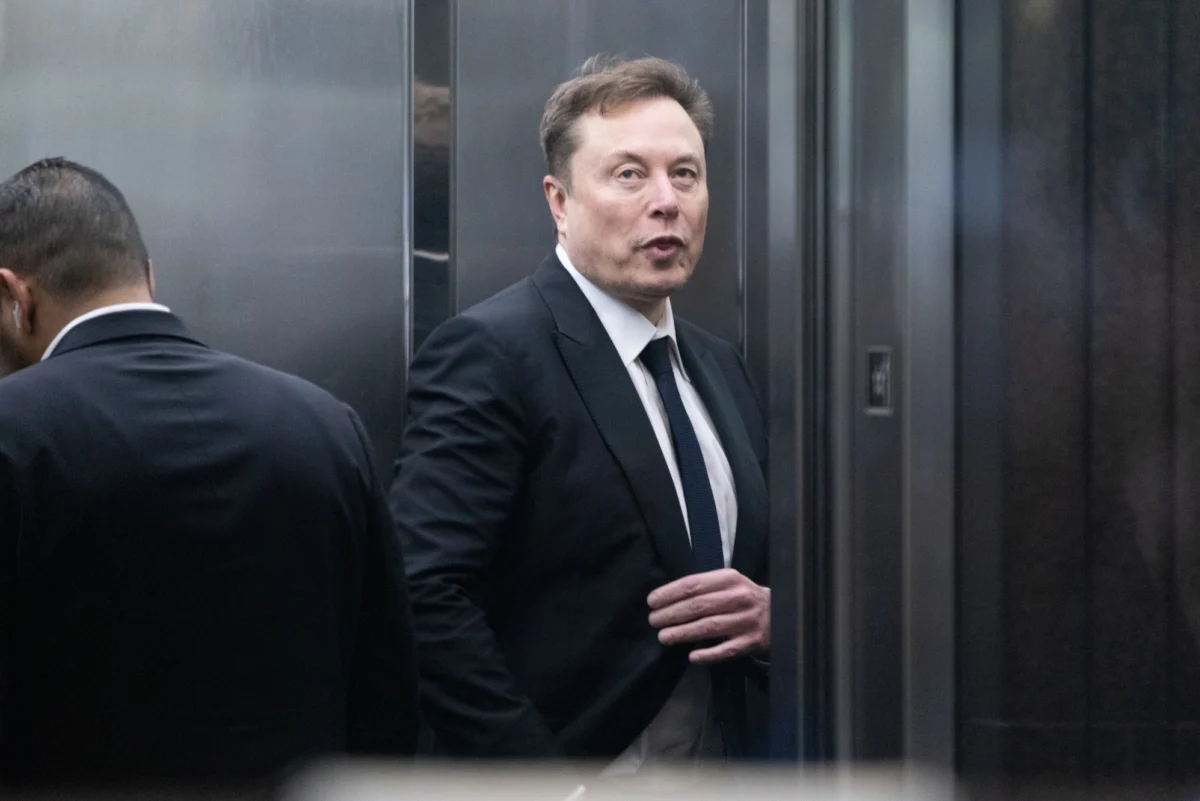
Elon Musk, the mercurial CEO of The Boring Company, Tesla, and SpaceX, has once again captured the public’s attention with an ambitious infrastructure proposal. In a series of posts on his social media platform, X, Musk announced that his tunneling venture is currently developing plans for a "simple precursor Hyperloop" intended to connect the Texas hubs of Austin and San Antonio. According to Musk, this high-speed subterranean link would reduce the transit time between the two cities to less than 30 minutes, effectively turning the burgeoning I-35 corridor into a singular, integrated economic zone.
The announcement, while characteristically bold, arrives at a pivotal moment for The Boring Company, which recently secured a massive $3 billion funding round led by investors from the United Arab Emirates. However, the proposal faces a wall of skepticism from infrastructure experts, historians, and urban planners who point to the company’s checkered history of abandoned projects and unrealized promises.
The Genesis of the Proposal
The vision for the Austin-San Antonio link did not emerge from a formal government feasibility study or a press release from the Texas Department of Transportation. Instead, it was born out of an online interaction surrounding an AI-generated video. The video, which depicted a sweeping, futuristic vision of human colonization across the solar system, caught Musk’s eye on September 20.
After re-posting the video with the declaration, "This is the future we shall bring into being," Musk pivoted to the practicalities of terrestrial transit. When prompted by followers about how he intended to bridge the gap between his science-fiction aspirations and current reality, Musk dropped the bombshell: a "simple precursor Hyperloop" for the Texas market.
The Boring Company’s official account quickly amplified the statement, asserting that the organization would be "excited and honored to build this massive infrastructure project." The swiftness of the company’s confirmation suggests that, at the very least, preliminary internal discussions regarding a Texas tunnel network have been taking place, even if a formal construction timeline remains elusive.
A Chronology of Ambition and Skepticism
To understand the gravity—and the skepticism—surrounding the Austin-San Antonio proposal, one must examine the history of The Boring Company’s attempts to disrupt urban transit.
- 2016: Musk founds The Boring Company in a fit of frustration with Los Angeles traffic, aiming to create a network of tunnels for high-speed, point-to-point transit.
- 2017–2019: The company announces grand plans for tunnels in Chicago (the "Express Loop" to O’Hare) and a subterranean link between Washington, D.C., and Baltimore. Both projects eventually stalled or were canceled due to regulatory hurdles and a lack of clear economic viability.
- 2021: The "Vegas Loop" begins operations. Unlike the high-speed vacuum-sealed Hyperloop originally envisioned, the current system functions as a series of tunnels where Tesla vehicles are driven by human operators at moderate speeds.
- 2026 (September 10): The Boring Company secures a $3 billion investment round led by the UAE, signaling a massive influx of capital intended for global expansion.
- 2026 (September 20): Musk proposes the Austin-San Antonio Hyperloop, framing it as a "precursor" to the high-speed technology originally promised a decade ago.
Supporting Data: The Logistics of the I-35 Corridor
The Texas triangle, comprising Austin, San Antonio, and the Dallas-Fort Worth metroplex, is one of the fastest-growing regions in the United States. The 80-mile stretch between downtown Austin and San Antonio is notorious for its gridlock, with commute times often exceeding 90 minutes during peak hours.
The Economic Case
Proponents of the project argue that a 30-minute connection would catalyze a regional economic boom. By effectively merging the labor markets of Austin—a tech and innovation hub—and San Antonio—a center for healthcare, military, and manufacturing—the project could theoretically create a "megacity" with a combined population of over 5 million people.

The Engineering Challenges
Critics, however, highlight the geological and regulatory realities. Texas terrain, particularly the limestone-heavy soil between the two cities, presents significant drilling challenges. Furthermore, the land rights acquisition process in Texas is notoriously difficult, as the state protects private property rights with constitutional rigor. For The Boring Company to succeed, it would need to navigate complex eminent domain issues or secure miles of subterranean easements, a task that has historically proven to be the "valley of death" for infrastructure projects.
Official Responses and Industry Outlook
The response from municipal officials has been cautious. While the prospect of reduced traffic is universally appealing, the history of "vaporware" in the tech industry has made local governments wary of signing on to Musk’s projects without ironclad guarantees.
The $3 billion in new funding from the UAE has provided the company with the necessary capital to move from the drawing board to the survey phase. However, the nature of this "precursor Hyperloop" remains ill-defined. Does it involve pressurized pods in a vacuum tube, as the original Hyperloop concept suggested? Or is it simply a high-capacity version of the Vegas Loop? Industry analysts suggest that the latter is more likely, as it is technologically mature and significantly cheaper to implement.
Implications: Science Fiction or Strategic Reality?
The debate surrounding Musk’s vision extends beyond engineering. It touches on the philosophical direction of the modern tech industry.
Historian Jill Lepore, in a recent interview, characterized the current cohort of tech leaders as "bad readers" of history and science fiction. She argues that Musk’s reliance on the aesthetic of science fiction—rather than the grounded, incremental progress of civil engineering—undermines the democratic process. According to Lepore, the tendency to announce massive, society-altering projects on social media creates a false sense of inevitability that masks the lack of substantive planning.
The "Pulp Sci-Fi" Critique
Musk’s critics point out that his obsession with space colonies and high-speed vacuum tunnels often mirrors the plots of mid-20th-century pulp novels. While these visions serve as powerful marketing tools and effectively boost the company’s valuation—as evidenced by the recent $3 billion funding round—they often fail to account for the political, social, and environmental realities of the regions they intend to serve.
The Road Ahead
If the Austin-San Antonio project is to become more than a tweet, The Boring Company will need to move past the "visionary" phase and into the "regulatory" phase. This involves:
- Environmental Impact Studies: The potential impact on the Edwards Aquifer, a critical water source for the region, will be a primary point of contention.
- Public-Private Partnerships: The company will likely need to align with state-level authorities to secure the massive land rights required for an 80-mile tunnel.
- Proof of Concept: The public will require a clear demonstration that the "precursor" technology can actually hit the proposed speed and efficiency targets without the astronomical cost overruns associated with traditional subway or high-speed rail projects.
For now, the Austin-San Antonio Hyperloop remains in the realm of the speculative. It is a testament to Musk’s influence that a single post can initiate a regional conversation about the future of transportation. Whether this project represents the next step in the evolution of American infrastructure or another footnote in the history of unrealized tech dreams will depend on the hard, unglamorous work of engineering and policy that follows the social media hype.
As the tech industry watches closely, the "precursor" in the title of Musk’s project acts as both a promise and a hedge. It allows the company to pursue a project that is technologically grounded while keeping the dream of the revolutionary Hyperloop alive. For the residents of Texas, the hope is that this time, the reality will eventually catch up to the rhetoric.