CAMBRIDGE, MA — Mark September 18, 2026, as a pivotal date in the evolution of digital audio workstations (DAWs). MOTU, the venerable engineering powerhouse based in Cambridge, Massachusetts, has officially launched Digital Performer 12 (DP12). This release marks a significant departure from iterative updates, signaling a bold move into the future of immersive audio, artificial intelligence, and streamlined professional workflows.
For nearly four decades, Digital Performer has remained a cornerstone of the professional recording industry, particularly in film scoring and high-end music production. With DP12, MOTU is not merely maintaining its legacy; it is actively shaping the future of how sound is created, mixed, and delivered in a post-stereo world.
The Core Innovations: Breaking the Spatial Barrier
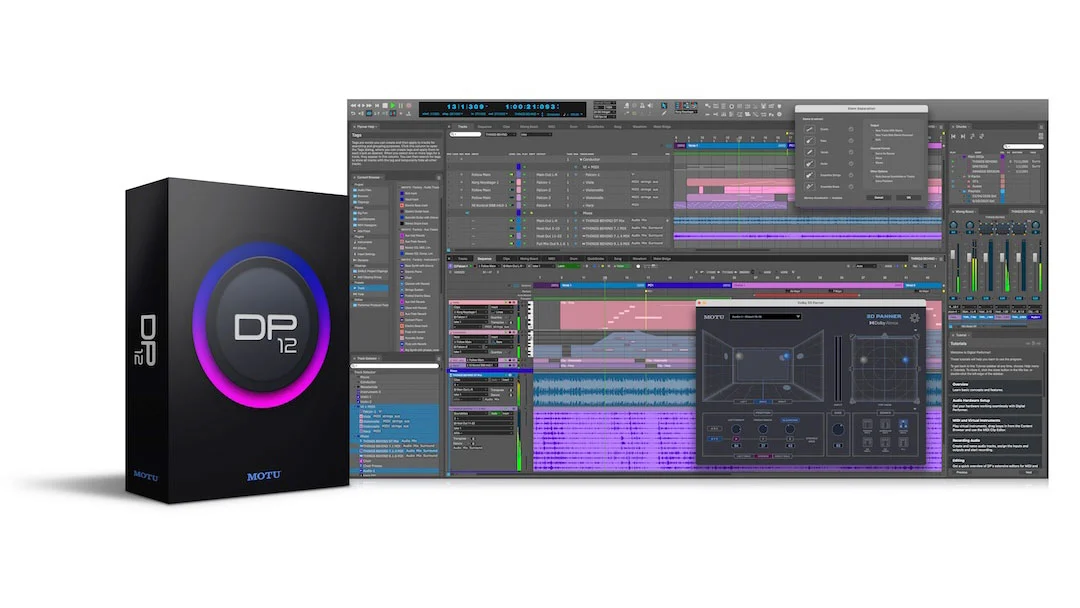
The headline feature of DP12 is undoubtedly its native support for Dolby Atmos immersive mixing. As the music and film industries pivot toward spatial audio as the new standard for streaming and theatrical distribution, MOTU has integrated a comprehensive suite of tools designed to handle the complexity of 3D environments without compromising the intuitive feel of a traditional DAW.
Immersive Mixing Unleashed
In DP12, the soundstage is no longer confined to the left-right axis. Users are now empowered to place, move, and automate audio sources—whether they are dry vocal tracks, lush orchestral instruments, or complex foley effects—within a fully three-dimensional field.
The software supports monitoring configurations up to 9.1.6, catering to high-end studio environments. However, MOTU has also addressed the needs of the modern, home-based producer by including sophisticated binaural rendering. This allows creators to monitor and fine-tune complex 3D mixes using standard stereo headphones, effectively democratizing the immersive production process.
The Power of AI-Driven Stem Separation
Perhaps the most disruptive inclusion in this update is the new AI-based Stem Separation feature. Historically, the ability to extract individual components—drums, bass, vocals, or specific orchestral sections—from a finalized, mixed track was the domain of forensic audio specialists using expensive, non-real-time software.
DP12 integrates this technology directly into the timeline. With a simple command, producers can isolate specific instruments from a mono or stereo mix. For remixers, sample-based producers, and post-production engineers needing to salvage legacy assets, this feature represents a massive time-saving advancement. It effectively breathes new life into archived material, allowing for surgical edits that were previously impossible without the original multitrack session.
Chronology of Innovation: From Performer to DP12
To understand the magnitude of DP12, one must look at the trajectory of MOTU’s software engineering. Since the debut of "Performer" on the Macintosh in 1985, the company has consistently anticipated the needs of composers and audio engineers.
- 1985: Performer launches, introducing the world to MIDI sequencing on the Mac.
- 1990s: The introduction of Digital Performer brings multitrack hard-disk recording, merging MIDI and audio into a single, cohesive environment.
- 2000s: DP becomes the gold standard for film composers, with features like "Chunks" allowing for multiple film cues to exist in a single project file.
- 2010s: DP transitions to 64-bit architecture and introduces sophisticated virtual instrument management.
- 2023–2025: A period of refinement, focusing on UI/UX, VST3 support, and performance stability on Apple Silicon and high-end Windows machines.
- September 2026: The launch of DP12, marking the company’s first full-scale integration of spatial audio and neural network-based audio processing.
Workflow Enhancements: The Arrangement Strip
While immersive audio and AI dominate the headlines, the "Arrangement Strip" is likely to become the feature that users engage with most daily. MOTU has recognized that the modern DAW must be as much a compositional tool as it is a mixing console.
The Arrangement Strip offers a visual, tactile approach to song structure. By utilizing color-coded bars, users can manipulate the architecture of a composition by dragging and dropping entire sections across all tracks simultaneously. Whether a user is scoring a film sequence that requires a sudden change in tempo or a songwriter experimenting with song structure, the Arrangement Strip allows for non-destructive, instantaneous reordering. The ability to snap sections to each other or create rhythmic gaps between them provides a level of structural flexibility that was previously cumbersome to achieve with standard copy-paste editing.
Technical Specifications and Ecosystem Compatibility
MOTU has remained committed to cross-platform compatibility, ensuring that DP12 functions at peak performance across the latest operating systems.
- macOS Support: Optimized for macOS 12.7 and later, with full support for Apple Silicon architectures.
- Windows Support: Optimized for Windows 11 (24H2 or later), ensuring robust performance for large-scale orchestral templates.
- File Management: Enhanced drag-and-drop functionality and a new, more intuitive "Tags and Search" system, allowing users to navigate large sound libraries and complex project files with greater speed.
- Enhanced Track Freeze: A refined freeze function that balances CPU load while maintaining high fidelity, essential for producers running dozens of resource-heavy virtual instruments.
- MusicXML Import: Streamlining the transition between notation software and the DAW, making the collaboration between composers and orchestrators more seamless than ever.
Official Perspective: The Vision Behind the Code
While MOTU has not released a singular "manifesto," the direction of the software speaks to a philosophy of "Creative Utility." In discussions surrounding the release, engineers at MOTU have emphasized that technology should remain "invisible."
"The goal with DP12 was to ensure that the tools for cutting-edge formats like Dolby Atmos feel as natural as moving a fader in a traditional console," said a company spokesperson during the launch event. "We don’t want the user thinking about the math behind the stem separation or the complex routing of a 9.1.6 bus. We want them focused on the emotion of the sound. If the technology feels like a natural extension of the composer’s hands, we have succeeded."
The decision to keep pricing stable—starting at $499 for the full version—also suggests a commitment to their existing user base. By avoiding a subscription-only model, MOTU reinforces its status as an "artist-first" company, prioritizing the long-term investment of the professional producer.
Implications for the Industry
The release of Digital Performer 12 is expected to have a ripple effect across the audio industry.
1. The Normalization of Spatial Audio
By putting high-end immersive mixing tools into the hands of a broader user base, MOTU is accelerating the adoption of spatial audio. As more producers experiment with 3D sound, the demand for immersive content in streaming services, gaming, and VR will likely increase.
2. The AI Divide
The inclusion of native stem separation will inevitably lead to debates regarding copyright and the use of AI in production. However, from a purely technical standpoint, it provides a powerful safety net for producers. It signifies that AI is no longer a "plugin" or an external service—it is a native utility in the modern DAW.
3. Workflow Efficiency in Film and TV
The Arrangement Strip and improved MusicXML support are clearly targeted at the professional film and television scoring market. In an industry where deadlines are shrinking and the demand for rapid iteration is increasing, these features provide a competitive edge. Composers who use DP12 can now iterate on revisions at a pace that keeps up with the rapid edit cycles of modern film production.
Conclusion: A New Standard
Digital Performer 12 is more than just an update; it is a declaration of intent. By bridging the gap between historical MIDI excellence and the futuristic requirements of AI-assisted, immersive audio, MOTU has solidified its position in the top tier of professional audio production software.
Whether you are a film composer in Los Angeles, a music producer in London, or an audio enthusiast in a home studio, DP12 provides the architecture to handle the complexities of modern sound. As the industry looks toward the next decade of audio evolution, MOTU has ensured that its flagship DAW is not just present, but leading the charge.
For those looking to transition, the update is available immediately via the MOTU website. With a familiar yet evolved interface, DP12 promises to minimize the learning curve while maximizing the sonic output, proving once again that when it comes to the "Performer" line, MOTU is playing the long game.