The global podcasting ecosystem continues to exhibit remarkable volatility and growth, driven by a blend of institutional investment, niche community engagement, and the evolving habits of the digital-first listener. As platforms like Apple Podcasts and Spotify solidify their dominance, the creative economy is shifting its focus toward sustainable monetization, high-fidelity production, and the strategic use of data to capture audience attention in an increasingly crowded marketplace.
This report analyzes the recent developments in the podcasting sector, exploring the latest industry news, the performance metrics currently defining success, and the implications of these trends for creators and advertisers alike.

I. Main Facts: The Evolving Podcast Landscape
The current podcast landscape is defined by a dichotomy: while major platforms maintain a tight grip on the top-tier charts, individual creators and specialized networks are finding innovative ways to break through the noise.
One of the most significant recent trends is the professionalization of independent podcasting through partnerships with specialized ad-sales firms. A prime example is the Australian sports landscape, where the podcast I Love Rugby has officially signed with Tapt Media. By bringing in rugby legends George Gregan and John Smit to host, the production has moved beyond a simple hobbyist project to a commercially viable media entity, leveraging the duo’s existing brand equity to attract premium advertisers.

Simultaneously, the industry is seeing a resurgence in community-driven content. Educational and institutional podcasts, such as the Roots and Branches JJC Alumni Podcast, have returned for a third season. By focusing on niche topics—in this case, alumni adventures and academic achievements—these shows demonstrate the power of "community-first" broadcasting, which often achieves higher listener retention rates than broader, mass-appeal content.
II. Chronology of Industry Developments
The podcasting industry moves at a rapid clip. Here is the recent sequence of developments shaping the current market:

- Mid-Week Surge in Cinematic Discussion: The Film Vault, hosted by industry veterans Anderson Cowan and Bryan Bishop, continues to serve as a critical discovery engine for film buffs. Recent segments, including an interview with Chadwick Pelletier regarding the Davinci International Film Festival, underscore the platform’s role in connecting independent film festivals with broader audiences.
- Expansion of Institutional Programming: Roots and Branches marked the commencement of its third season, signaling a commitment to long-form storytelling that prioritizes institutional advancement and alumni relations over ephemeral viral trends.
- Ad-Sales Integration: The announcement of the Tapt Media partnership for I Love Rugby marks a shift toward localized monetization models, where creators in specific regions (like Australia) are increasingly seeking dedicated representation rather than relying solely on programmatic ad placement.
- Chart Dominance Realignment: Data from the last 48 hours shows that The Daily maintains its ironclad hold on the #1 spot on Apple Podcasts in the United States, while Spotify continues to leverage its platform-exclusive data to keep its own internal charts highly competitive.
III. Supporting Data: The Anatomy of Success
Data remains the lifeblood of the modern audio industry. Analyzing the current top-performing shows reveals critical insights into what listeners prioritize.
The Chart Leaders
Currently, The Daily remains the benchmark for daily news podcasts on Apple Podcasts. Its success is attributed to a consistent release schedule and a deep integration with the New York Times’ broader editorial strategy. On the Spotify front, the charts remain highly influenced by internal algorithmic promotion, favoring shows that maximize "time spent listening" over mere unique downloads.

Emerging Markets and Gainers
We are observing significant movement in specific categories:
- Nature & Science: Speed & Scale has seen a notable surge in Ireland, recording the "Biggest Gain" in the Nature category. This suggests a growing appetite for climate and sustainability-focused content in European markets.
- Education & How-To: Talk Yoga SLP has emerged as the "Highest New Entry" on the Irish Apple Podcasts charts in the "How To" category. This niche success demonstrates that educational content, even when highly specialized, has a scalable audience if the production quality is high enough.
- Medicine & Health: In the United Kingdom, No Appointment Necessary has claimed the #1 spot in the Medicine category, proving that medical professional-led discussions are becoming a staple of the "infotainment" podcast genre.
IV. Official Responses and Industry Commentary
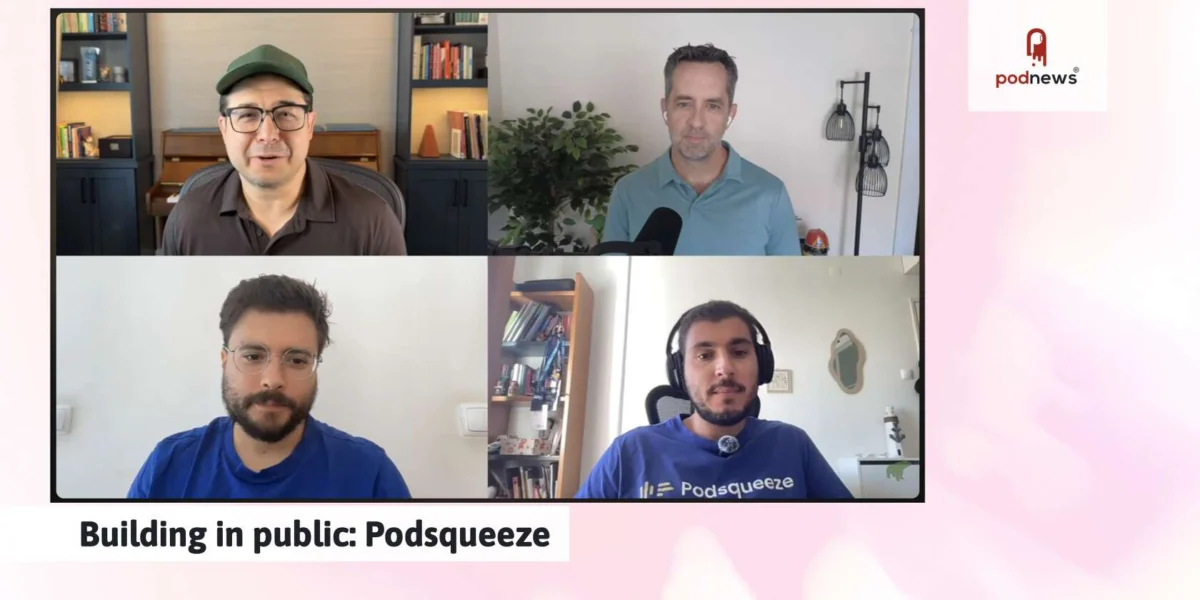
Industry leaders and creators have been vocal about the necessity of "building in public," a concept popularized by firms like Podsqueeze. By sharing the development process, challenges, and milestones, creators are fostering a deeper sense of transparency that listeners have begun to demand.

Anderson Cowan, co-host of The Film Vault, noted that the key to modern podcasting isn’t just content creation—it’s "content curation." By positioning his podcast as a guide for movies listeners might have missed, he is effectively turning his show into a service-based media product.
Similarly, the hosts of I Love Rugby have framed their move to Tapt Media not just as a financial decision, but as a "strategic alignment" that allows them to focus on the production quality of their weekly interviews, knowing that the complexities of ad sales are handled by specialists.

V. Implications: The Future of Audio
The current data and trends lead to three primary conclusions regarding the future of the industry:
1. The Rise of Niche Monetization
The era of the "generalist" podcast is waning. Advertisers are increasingly looking for high-intent, niche audiences. The success of shows like No Appointment Necessary and I Love Rugby suggests that sponsors are more willing to pay a premium for a focused, loyal demographic than for a vast, disengaged audience.

2. The Professionalization of Production
As independent podcasts continue to compete with corporate-backed media, the barrier to entry regarding production value has risen. Shows like Roots and Branches prove that even internal organizational podcasts are adopting professional host dynamics, high-quality audio engineering, and structured seasons to maintain listener interest.
3. Data-Driven Discovery
The fact that we can now identify the "Biggest Gainers" and "Highest New Entries" on a global scale—such as the growth in the Irish podcast market—highlights the increasing sophistication of podcast discovery tools. For creators, this means that data is no longer a luxury; it is a necessity for understanding which markets are ripe for expansion.

Conclusion
The podcasting industry has transitioned from its "Wild West" phase into a mature, data-informed media ecosystem. As platforms like Spotify and Apple continue to refine their charts and algorithmic recommendations, the onus is on the creator to provide not just content, but community and value.
Whether it is through the strategic hiring of ad-sales agencies, the focus on high-fidelity niche storytelling, or the commitment to sustainable, seasonal production, the most successful shows are those that understand their audience deeply. As we look toward the remainder of the year, the winners in this space will be the ones who manage to balance the technical demands of data-driven growth with the human-centric art of storytelling.

For those looking to enter the space or scale their existing projects, the message is clear: the data is there, the tools are accessible, and the audience is waiting. The only variable remaining is the quality of the narrative.