Main Facts
The audio landscape is no stranger to rapid innovation, but few brands have moved quite as aggressively as Topping. Founded in 2008, the Chinese audio manufacturer has quickly carved out a reputation for engineering feature-packed, budget-friendly desktop digital-to-analogue converters (DACs), headphone amplifiers, and accessories. Their latest offering, the Topping DX1 II, enters a fiercely competitive sub-$150 / £150 market as a compact, desktop-bound DAC and headphone amplifier.
Designed for personal audio enthusiasts, remote workers, and gamers alike, the DX1 II packs a surprising level of technical sophistication under the hood. It features high-resolution PCM support up to 32-bit/384kHz, native DSD256 decoding, a dual-DAC layout centered around ESS technology, and a fully balanced analogue architecture.
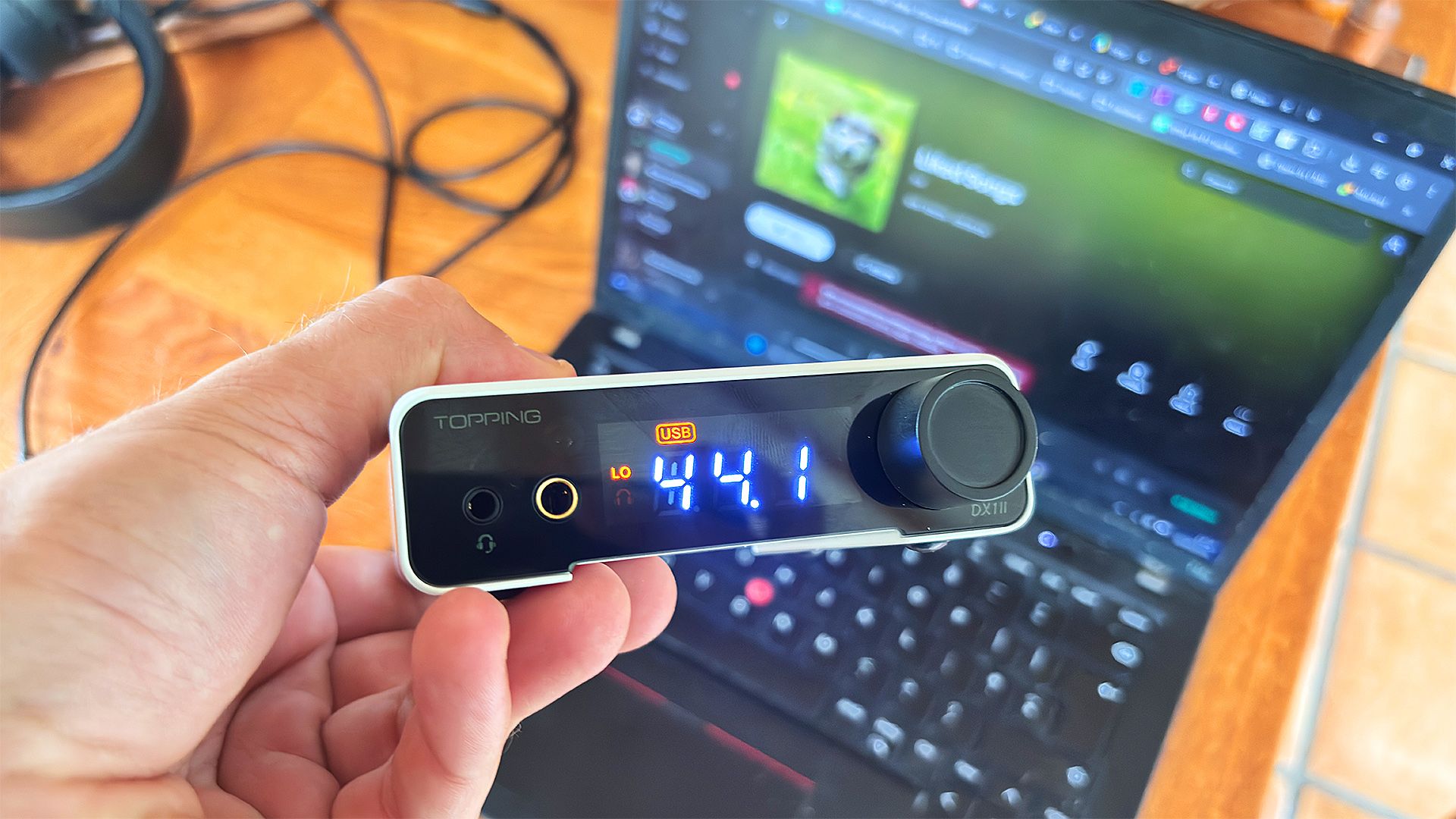
However, despite its impressive specification sheet and extensive customisation features—including eight digital filters and a 10-band parametric equaliser—the DX1 II struggles in execution. According to expert testing, the affordable device is ultimately held back by an overly safe, undramatic, and clinically flat sound signature that fails to inject life and rhythm into music.
Chronology and Market Context
To fully understand the positioning of the DX1 II, it is helpful to look at Topping’s trajectory over the past decade and a half. Entering the hi-fi scene relatively late in 2008, Topping initially focused on niche, highly technical components that appealed to head-fi purists and computer-audio hobbyists. Over time, the company expanded its catalog to encompass stereo amplifiers, network music players, preamplifiers, and high-end DACs.

Recent releases have shown signs of true sonic maturity. For instance, the premium Topping D900 DAC recently earned praise for its blend of bleeding-edge versatility and engaging audio performance, signalling that the brand was moving in the right direction.
The DX1 II arrives as a smaller, substantially more affordable sibling to units like the D900. Intended to act as a bridge between basic computer audio setups and true high-fidelity listening, the DX1 II was launched to capture the burgeoning market of consumers upgrading their desktop setups for remote work, high-res streaming, and gaming. Yet, as detailed in recent expert evaluations published in September 2026, launching a budget product with heavy technical specifications is only half the battle; translating those specs into genuine musicality remains the ultimate test.

Supporting Data and Technical Specifications
At first glance, the Topping DX1 II reads like a masterclass in value engineering. Physically, it measures a modest 3.2 x 10 x 10 cm and weighs just 275 grams. Top-down, it is barely larger than a standard wallet, positioning it comfortably between ultra-portable options like the iFi hip-dac 3 and larger desktop-class solutions.
Key Specifications:
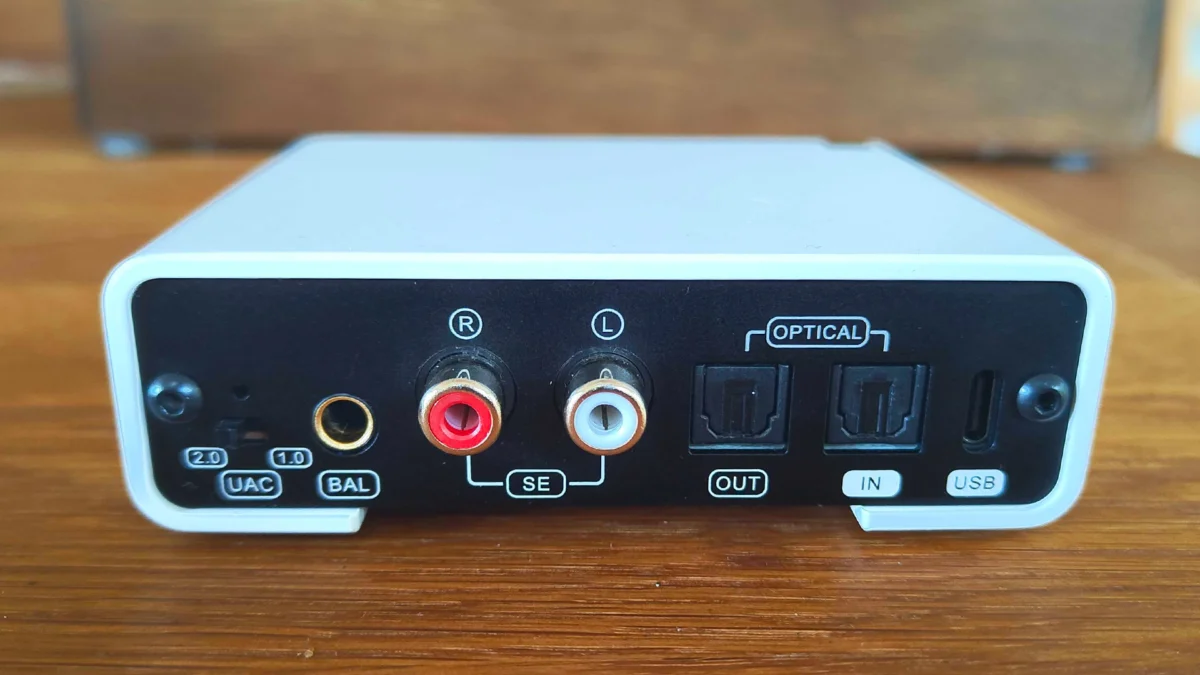
- Inputs: USB-C (dual-purpose for power and audio), Optical
- Outputs: Stereo RCA, Balanced 4.4mm line out, 3.5mm single-ended headphone out, 4.4mm balanced headphone out
- Bluetooth Connectivity: None
- Maximum File Support: 32-bit/384kHz PCM, DSD256
- Power Requirement: USB-C powered (Desktop use only; requires a wall adapter or powered host like a PC, PS5, or Nintendo Switch; cannot be powered by an iPhone alone)
- Digital-to-Analogue Conversion: ES9039Q2M ESS DAC chip (Dual-DAC architecture)
- Signal Processing: 16-core XU-316 XMOS chip
Inside, the dual-DAC architecture processes left and right audio channels independently, a design choice specifically implemented to lower noise floors and mitigate channel crosstalk. The analogue stage is fully balanced, while input-signal processing is managed by the robust XMOS chip.

Control over the unit can be exercised via the front-panel LED display and a responsive rotary dial, though users are largely steered toward the supplied remote control or the Topping Home Web control platform. By connecting the DAC to a computer, users can access an extensive suite of tools: switching between eight distinct digital filters (with the "Minimum Phase" filter offering the most forgiving profile), adjusting gain settings, and utilizing a 10-band parametric equaliser to map frequency, gain, and bandwidth across individual channels.
Performance and Official Review Findings
When put through its paces in dedicated test rooms using a variety of headphones—ranging from budget-friendly closed-backs like the Røde NTH-100 (£149 / $149) and open-backed Beyerdynamic DT 990 Pro X (£189 / $199) to high-end planar and dynamic over-ears—the DX1 II reveals a distinct character.

The Good: Precision and Clarity
When connected via USB-C to a laptop and paired with revealing headphones, the DX1 II immediately demonstrates a clear step up from standard motherboard audio chips. Playing alt-J’s Every Other Freckle at 16-bit/44.1kHz via Tidal, the DAC digs into complex textures with analytical precision. Fuzzy electronic hums, punchy synth pulses, and clattering percussion are laid bare across an uncluttered, well-ordered soundscape.
The Drawback: A Lack of Rhythm and Drama
Unfortunately, this clinical approach comes at a severe cost to musical engagement. When fed high-energy tracks such as Michael Jackson’s Billie Jean (DSD64) or Daft Punk’s Get Lucky (24-bit/96kHz), the DX1 II struggles to convey the infectious timing, dynamic snap, and effervescent energy embedded in the recordings.

Comparative listening tests against industry stalwarts highlight the Topping’s shortcomings. The five-star iFi hip-dac 3 (£149 / $149) provides a noticeably richer, smoother, and more rhythmically cohesive performance. Meanwhile, the portable AudioQuest DragonFly Cobalt (£179 / $200) injects significantly more sparkle and drive into the music. By comparison, the Topping DX1 II sounds mechanical, listless, and fundamentally detached from the emotional core of the performance.
Implications for Consumers and the Market
The arrival of the Topping DX1 II carries several broader implications for budget-conscious audiophiles and the desktop audio market at large:

- The Trap of Spec-Sheet Racing: Manufacturers often fall into the trap of prioritizing high-resolution numbers (such as 32-bit/384kHz and DSD256 compatibility) and complex menu systems (like 10-band EQs and eight digital filters) over core sonic fundamentals. The DX1 II proves that benchmark supremacy does not automatically translate to musical enjoyment.
- Stiff Competition at the Entry Level: At under £150 / $150, consumers have access to remarkably mature portable and desktop DACs. When built-in laptop outputs (such as modern MacBook Pros) or established rivals like iFi and AudioQuest offer superior mid-range expression and dynamic vitality, budget desktop units must fight harder to justify taking up physical desk space.
- A Warning for Casual Users: While advanced features like parametric equalisation will delight hardcore tinkerers, casual listeners may find the single rotary dial fiddly and the overall tuning suite needlessly complex for what is supposed to be a plug-and-play desktop upgrade.
Final Verdict
The Topping DX1 II is undeniably a versatile, compact, and feature-rich device that showcases the brand’s impressive manufacturing capabilities. However, its overly safe, flattened dynamics and poor sense of timing prevent it from earning a full recommendation. For listeners seeking technical clarity above all else, it remains a competent desktop tool; for those searching for rhythm, drama, and emotional connection, your money is better spent elsewhere.