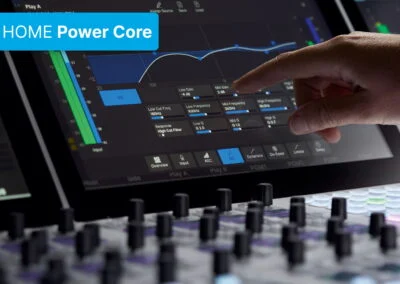
AMSTERDAM — As the broadcast, live production, and entertainment technology sectors converge at the RAI Amsterdam for the annual IBC exhibition, German audio and video networking pioneer Lawo is drawing significant attention. Exhibiting at Booth 8.B90, the company has staked its presence on a robust display of software-driven workflows, expanded third-party hardware interoperability, and sophisticated orchestration via its proprietary HOME management platform.
With the media industry continuing its accelerated migration toward IP-native, cloud-aligned, and software-defined infrastructures, Lawo’s latest releases for its flagship mc² production console family, Power Core processing engines, and infrastructure ecosystem illustrate how modern broadcasting is shifting from fixed, hardware-heavy routing to flexible, software-centric environments.
Main Facts: What Lawo is Unveiling at IBC 2026
At the heart of Lawo’s IBC 2026 showcase are two major software updates for its core product families, alongside deep architecture expansions designed to unify disparate broadcast systems under a single management umbrella.
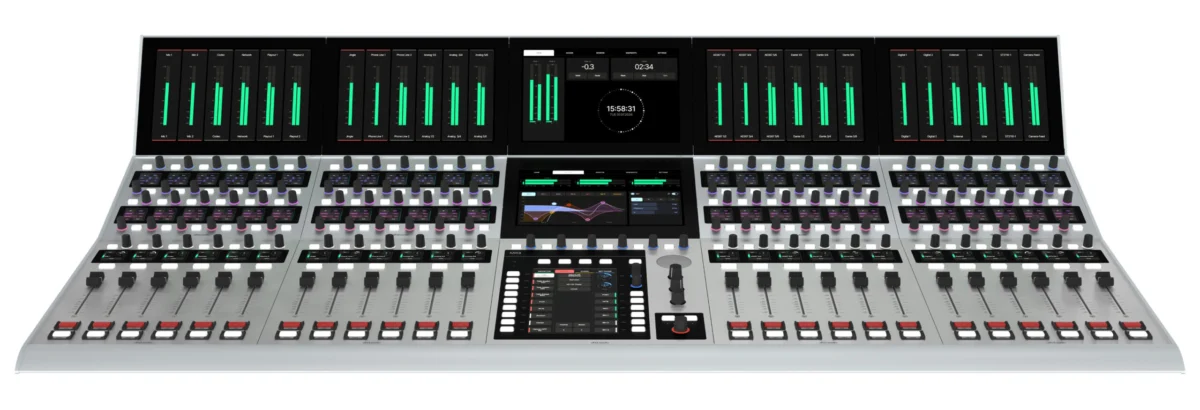
1. mc² Software Release 12.4
Now rolling out to users worldwide, version 12.4 introduces critical workflow refinements aimed at high-pressure live production and broadcast environments.
- Visual Signal Analysis: The inclusion of Real-Time Analyzer (RTA) support directly within the console workflow allows engineers to visually analyze audio signals without relying exclusively on external monitors or software tools.
- Streamlined Touchscreen Operation: New zoom module pop-ups provide faster, more tactile access to intricate channel controls, minimizing navigation time during fast-moving live broadcasts.
- Expanded Interoperability: Through updates to the HOME Application Programming Interface (API), mc² control systems and consoles can now read and command third-party lives@HOME equipment—most notably the DirectOut PRODIGY series.
- External Control and Security: Channel presets can now be triggered remotely via external Ember+ controllers. Furthermore, sample-based delay adjustments offer micro-timing precision, while new API-key authentication establishes secure, machine-to-machine connectivity between consoles, control systems, and the HOME ecosystem.
2. Preview of mc² Software Release 12.6
Looking ahead to future deployments, Lawo is offering an exclusive preview of version 12.6, which pushes cloud-style flexibility deeper into physical hardware control.

- Dynamic Resource Allocation: Physical console connections can now be dynamically assigned as logical devices to mc² control systems via HOME. This allows facilities to reallocate hardware resources on the fly, tailoring control surfaces to specific production scales instantly.
- Browser-Based Control: The introduction of the HOME mc² Control System app and browser-based mxGUI support enables complete operational configuration through standard web browsers, breaking free from dedicated client software installations.
- Live Production Enhancements: Version 12.6 adds refined auxiliary (AUX) bus assignments and dynamic Virtual Control Association (VCA) Leader meter displays, optimizing visibility during complex music and sports mixes.
3. Power Core Software Package 10.0 and HOME Power Core
For radio, television, and decentralized processing applications, Lawo is introducing Power Core Software Package 10.0.
- Software-Defined Alternative: Alongside traditional hardware units, Lawo is launching the HOME Power Core software alternative, shifting high-density DSP processing into virtualized or COTS (Commercial Off-The-Shelf) server environments.
- Advanced Equalization: Both the physical Power Core and the new HOME Power Core DSP App benefit from a redesigned six-band equalizer. This audio processing block combines four fully parametric bands with two specialized filter bands, giving audio engineers unprecedented tonal control.
Chronology: The Evolution of Lawo’s Software-Defined Strategy
To understand the significance of Lawo’s IBC 2026 announcements, it is helpful to trace the strategic trajectory that led the company to this point. For decades, Lawo built its stellar reputation on high-end, physically robust mixing consoles and routing matrices for opera houses, broadcast networks, and major sports venues. However, the industry’s digital transformation fundamentally altered client demands.
- 2019–2020 (The IP Pivot): Recognizing the industry-wide transition from SDI/MADI to ST 2110 IP standards, Lawo began developing its HOME management platform. The goal was to solve the immense configuration complexity of IP networks by automating device discovery, security, and stream routing.
- 2021–2023 (Consolidation of the Power Core & mc² Ecosystems): Lawo systematically decoupled its DSP processing from monolithic hardware frames, introducing scalable software licenses and expanding the mc² console lineup with compact, IP-native surfaces like the mc²36 mkII.
- 2024–2025 (The Push Toward Third-Party Open Standards): As broadcast facilities demanded multi-vendor ecosystems rather than closed proprietary loops, Lawo opened its HOME API. This allowed integration with external audio processing and conversion gear, laying the groundwork for the comprehensive third-party interoperability seen today.
- IBC 2026 (The Virtualization Milestone): With the introduction of the HOME Power Core software app and browser-based mxGUI configurations, Lawo has crossed a major threshold—moving past hardware-assisted IP networking into fully realized, software-defined broadcast architecture where physical boundaries matter less than ever.
Supporting Data & Hardware Portfolio Overview
While software updates command the headlines at IBC 2026, Lawo’s physical ecosystem remains a cornerstone of its market presence. The booth at RAI Amsterdam showcases a holistic hardware portfolio designed to scale from mobile flypacks to massive multi-studio broadcast complexes.
- Mixing Surfaces: The mc² production console family sits alongside the dedicated crystal and diamond on-air radio consoles, showcasing unified design languages and shared underlying IP logic.
- Processing Engines: The Power Core and A__UHD core processing platforms deliver ultra-low latency, high-density DSP capabilities required for massive surround-sound and immersive audio productions.
- I/O and Conversion Gateways: Hardware endpoints such as the A__Line series and the Edge One Converged Video & Audio Stagebox bridge the gap between legacy signals and modern ST 2110 networks.
All of these devices rely on open standards (such as SMPTE ST 2110, NMOS, and Ember+) and are orchestrated through the HOME platform. This open-standards foundation ensures that broadcasters are not locked into a single-vendor prison, offering long-term investment protection.
Official Responses and Industry Perspectives
Although formal executive press conferences are ongoing at the RAI Amsterdam, Lawo’s product management and engineering teams have emphasized the customer-driven nature of these updates.

Speaking ahead of the exhibition, Lawo representatives noted that modern broadcasters face twin pressures: the need to reduce capital expenditures (CapEx) through shared, flexible resources, and the demand to increase operational efficiency in live environments where mistakes are unforgiving.
"Our development focus has shifted squarely to removing friction in multi-vendor IP workflows," said a senior Lawo product strategist during a technical briefing. "By expanding the HOME API to embrace third-party hardware like DirectOut devices, and by bringing core DSP functions like the Power Core software alternative into virtualized environments, we are giving our clients the freedom to design facilities that match their exact operational philosophies—whether that requires a physical mixing surface in an OB van or a browser-based control GUI operating remotely from a cloud data center."
Industry analysts attending IBC 2026 have echoed these sentiments, pointing out that Lawo’s strategy addresses the real-world operational bottlenecks of modern media production. As broadcasters increasingly adopt remote production (REMI) models and distributed workflows, the ability to spin up DSP resources and manage permissions via secure, web-based HOME apps represents a vital evolution.
Implications for the Broadcast and Live Production Industry
Lawo’s announcements at IBC 2026 carry several profound implications for audio engineers, systems integrators, and broadcast facility owners:
1. The Blurring Lines Between Hardware and Software
The introduction of the HOME Power Core software alternative signals that dedicated DSP hardware boxes are no longer the only path to broadcast-grade audio processing. As COTS server technology and containerized applications mature, broadcasters gain the agility to scale audio channels up or down via software licenses rather than physical equipment purchases.

2. Deepening Multi-Vendor Integration
Historically, proprietary audio networks forced broadcasters to buy end-to-end ecosystems from a single manufacturer. By proactively integrating third-party equipment (such as the DirectOut PRODIGY series) directly into the HOME management framework, Lawo is championing a pragmatic, interoperable approach. This reduces integration headaches for system designers who mix and match best-of-breed hardware.
3. Democratization of Remote and Browser-Based Control
With features like browser-based mxGUI support and API-key machine authentication, the physical location of the mixing engineer or system administrator becomes secondary. Facilities can centralize their processing power in secure data centers while deploying lightweight, secure control points across multiple geographic locations.
4. Future-Proofing Through Open Standards
By maintaining strict adherence to open standards like ST 2110 and NMOS while layering intelligent orchestration on top, Lawo is helping clients protect their investments against rapid technological obsolescence. As artificial intelligence, automated mixing assistants, and cloud orchestration tools continue to infiltrate broadcast engineering, an open, API-driven infrastructure will be mandatory for survival.
Conclusion
Lawo’s presence at IBC 2026 at Booth 8.B90 demonstrates a clear vision for the future of media production. By bridging the gap between tactile, high-end physical hardware—such as the mc² consoles and Power Core engines—and fluid, software-defined environments orchestrated by HOME, the company is successfully guiding the broadcast industry through its next great transformation. For audio professionals navigating the complexities of modern live production, sports broadcasting, and performing arts, Lawo’s latest updates provide the precision, security, and flexibility required for tomorrow’s media landscape.