Main Facts
The home audio market is witnessing another major shift as Sonos expands its popular soundbar lineup with the introduction of the Sonos Beam Ultra. Building upon the immense success of the multi-award-winning Sonos Beam (Gen 2)—a staple in living rooms worldwide since its debut—the new Ultra model arrives with significant upgrades. Most notably, it incorporates true physical up-firing drivers, a redesigned center acoustic channel, and advanced multi-level AI speech enhancement features designed to tackle the eternal challenge of muddy dialogue in movies and television programming.
Despite the release of the flagship-tier Ultra, Sonos has made the strategic decision to keep the Beam (Gen 2) actively on sale. This has created an intriguing dilemma for home theater enthusiasts and casual consumers alike: should buyers invest a higher premium in the cutting-edge capabilities of the brand-new Ultra, or capitalize on the proven performance—and frequent retail discounts—of the older Gen 2 model?
While full, rigorous laboratory testing in acoustically treated rooms is still pending, early hands-on preview sessions have provided critics with a strong preliminary look at how the two soundbars compare on paper and in early listening environments.
Chronology of the Sonos Beam Evolution
To understand the positioning of the Sonos Beam Ultra, it is helpful to look back at the timeline of the product family and how home theater audio preferences have shifted over the last half-decade.
- October 2018: Sonos introduces the original compact Sonos Beam, establishing a new category for smart, space-saving soundbars that bridged the gap between TV audio and multi-room music streaming.
- October 2021: Sonos launches the Beam (Gen 2). Bringing virtualized Dolby Atmos processing to a compact form factor for the first time, it quickly earns universal critical acclaim and captures consecutive product-of-the-year awards. It redefines what consumers can expect from a single-unit soundbar lacking dedicated height drivers.
- Late 2024 / Early 2025: Rumors swirl regarding the next generation of Sonos home theater hardware, with leaks highlighting demands for physical up-firing drivers and deeper integration with the expanding Sonos ecosystem (including the Sonos Ace headphones).
- September (Current Launch Window): Sonos officially unveils the Beam Ultra, retailing at £699 / $699 / AU$1099. Concurrently, Sonos confirms that the Beam (Gen 2) will remain in the product catalog, maintaining its place as an accessible entry point into high-end immersive audio.
Supporting Data & Comprehensive Comparison
When evaluating these two devices side-by-side, several key metrics emerge across price, design, internal architecture, and feature sets.
Price and Market Positioning
- Sonos Beam Ultra: Launches at £699 / $699 / AU$1099.
- Sonos Beam (Gen 2): Originally launched at £449 / $449 / AU$649, though mature product lifecycles have frequently seen promotional discounts drop the price significantly lower (at times hitting historic lows around £299).
Winner on Price: Sonos Beam (Gen 2). For budget-conscious shoppers, the older model offers unmatched value, especially when sales events kick in.
Physical Design and Dimensions
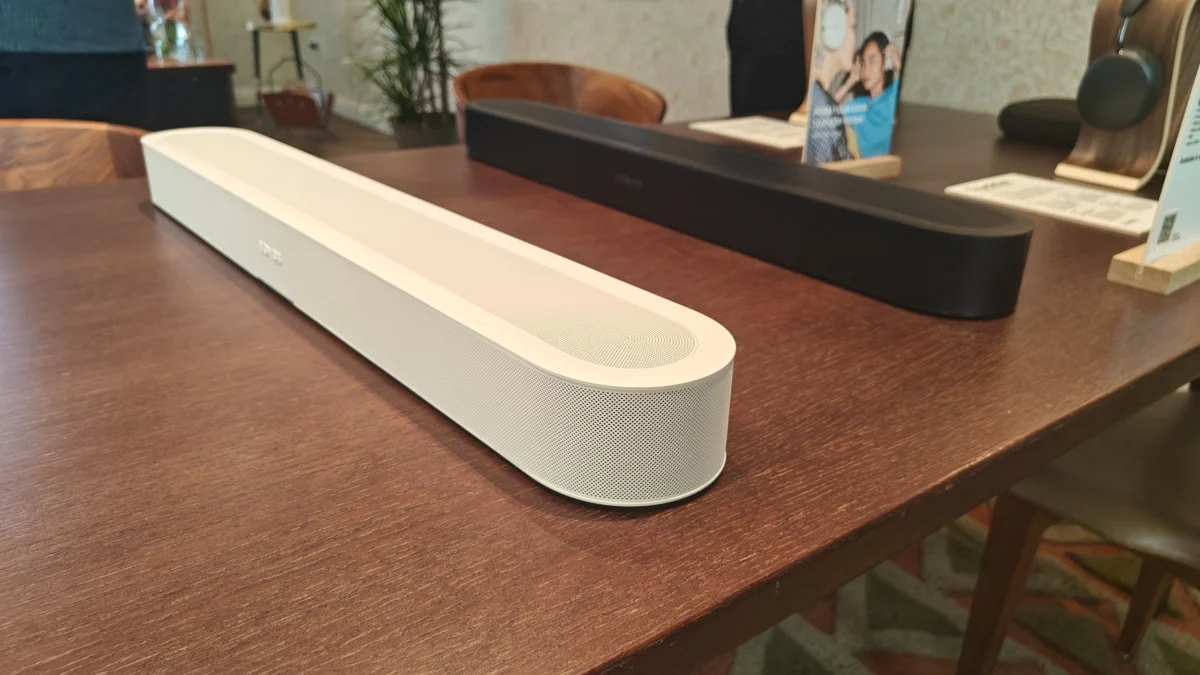
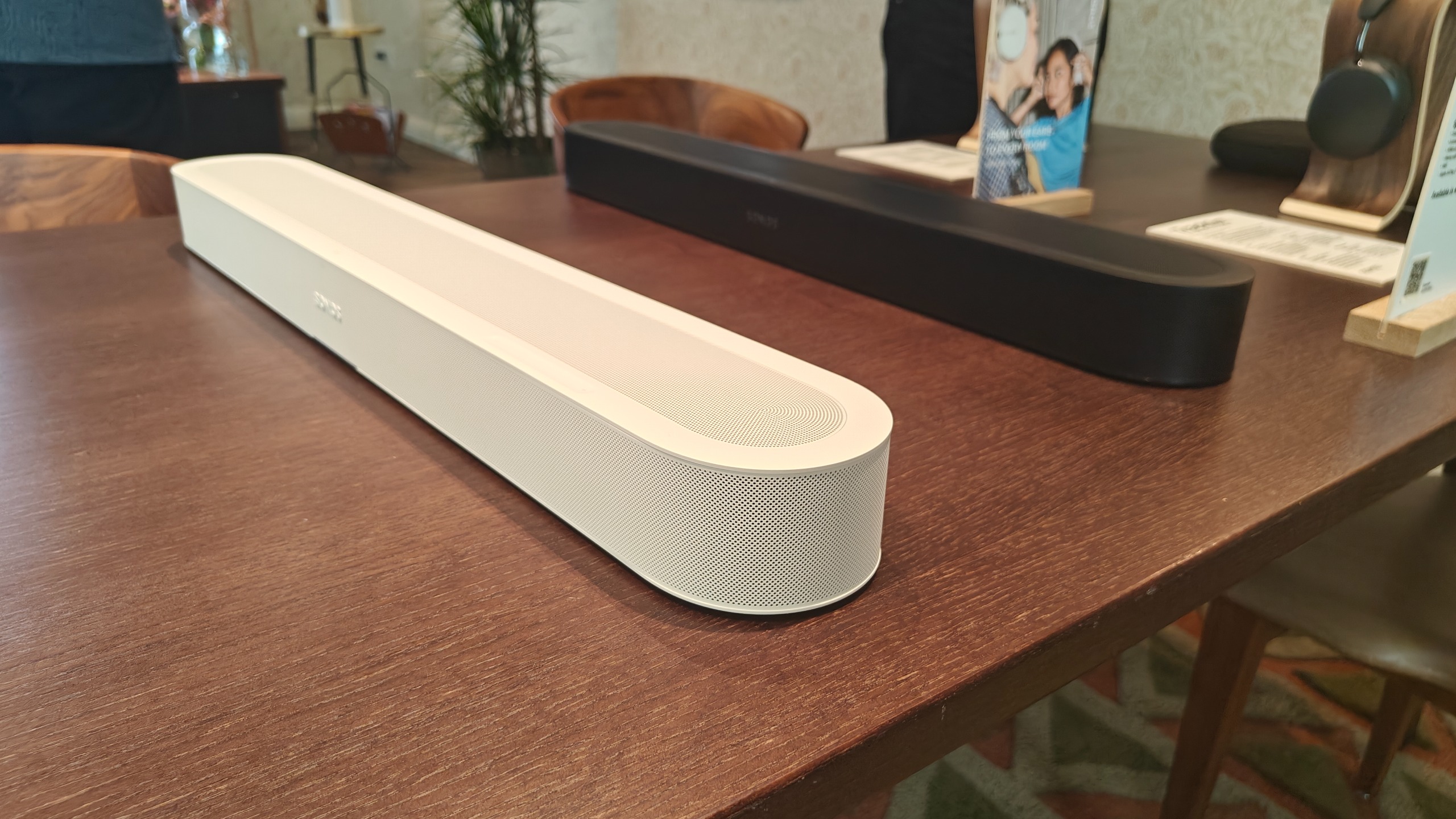
Both models retain the signature minimalist aesthetic that has defined Sonos hardware for years: a sleek, rectangular chassis with gently curved corners and a wrap-around acoustic grille.
- Sonos Beam Ultra: Measures roughly 75cm wide, making it approximately 10cm wider than its predecessor. It is slightly shorter in height, reducing the risk of blocking the lower bezel of a TV screen when placed on a low-profile media cabinet. It features an additional perforated grille on the top panel to accommodate the newly added up-firing height drivers. Depth sits at 10.5cm, and it weighs 2.88kg.
- Sonos Beam (Gen 2): Measures 65.1cm wide and 10cm deep, weighing the exact same 2.88kg. It lacks any top-firing grille.
Both units are available in standard matte black and white finishes, ensuring seamless integration into existing home decor or multi-room Sonos ecosystems.

Winner on Design: Sonos Beam Ultra (thanks to its lower profile preventing screen obstruction, despite its slightly wider footprint).
Internal Architecture and Features
- Acoustic Channels: The Beam Ultra steps up to a 7.1.2-channel configuration, powered by the inclusion of physical up-firing height drivers. In contrast, the Beam (Gen 2) utilizes a 5.1.2 virtualized channel layout, relying on sophisticated digital signal processing (DSP) to bounce sound effects off ceilings without physical drivers.
- Dialogue Clarity: While the Gen 2 features a single mode for speech enhancement, the Ultra introduces a robust four-level AI Speech Enhancement suite, giving users granular control over vocal clarity during complex movie mixes.
- Room Coverage: Sonos specs indicate the Beam Ultra is optimized for rooms measuring roughly 23 to 32.5 square meters, whereas the Gen 2 is recommended for spaces up to 250 square feet (~23 square meters).
- Connectivity: The Ultra adopts Wi-Fi 6, a generational upgrade over the Wi-Fi 4 standard found inside the 2021 Gen 2 model.
- Shared Ecosystem Features: Both soundbars support Sonos Trueplay acoustic room calibration, Night Sound modes, and TV Audio Swap capabilities when paired with compatible headphones like the Sonos Ace. Crucially, neither model supports DTS:X audio formats, a persistent omission across much of the Sonos home cinema lineup.
Winner on Features: Sonos Beam Ultra.
Sound Performance (Early Impressions vs. Proven Heritage)
While the Beam Ultra has not yet undergone full, exhaustive multi-week testing in a controlled acoustic lab, early trade-show listening sessions yielded exceptionally promising results. Early demonstrations showcased crisp detail and musicality—particularly demonstrated through a Dolby Atmos mix of Harry Styles’ Ready, Steady, Go!—alongside tight, controlled bass response that minimized distortion.
Meanwhile, the Sonos Beam (Gen 2) holds a legendary reputation. Even five years after its market debut, its ability to generate an expansive soundstage with tangible motion, depth, and spatial accuracy remains unmatched in its original price class. The seamless handover between audio drivers sets a high benchmark that the Ultra must live up to.
Winner on Sound: TBD (Pending final laboratory reviews, though the Gen 2 is already a proven industry champion).
Official Responses and Industry Context
Industry analysts have closely monitored Sonos’ strategy of maintaining older hardware lines alongside new releases. Speaking on the decision to keep the Beam (Gen 2) on sale, company representatives and independent audio critics alike have pointed out that consumer needs vary dramatically by room size and budget.
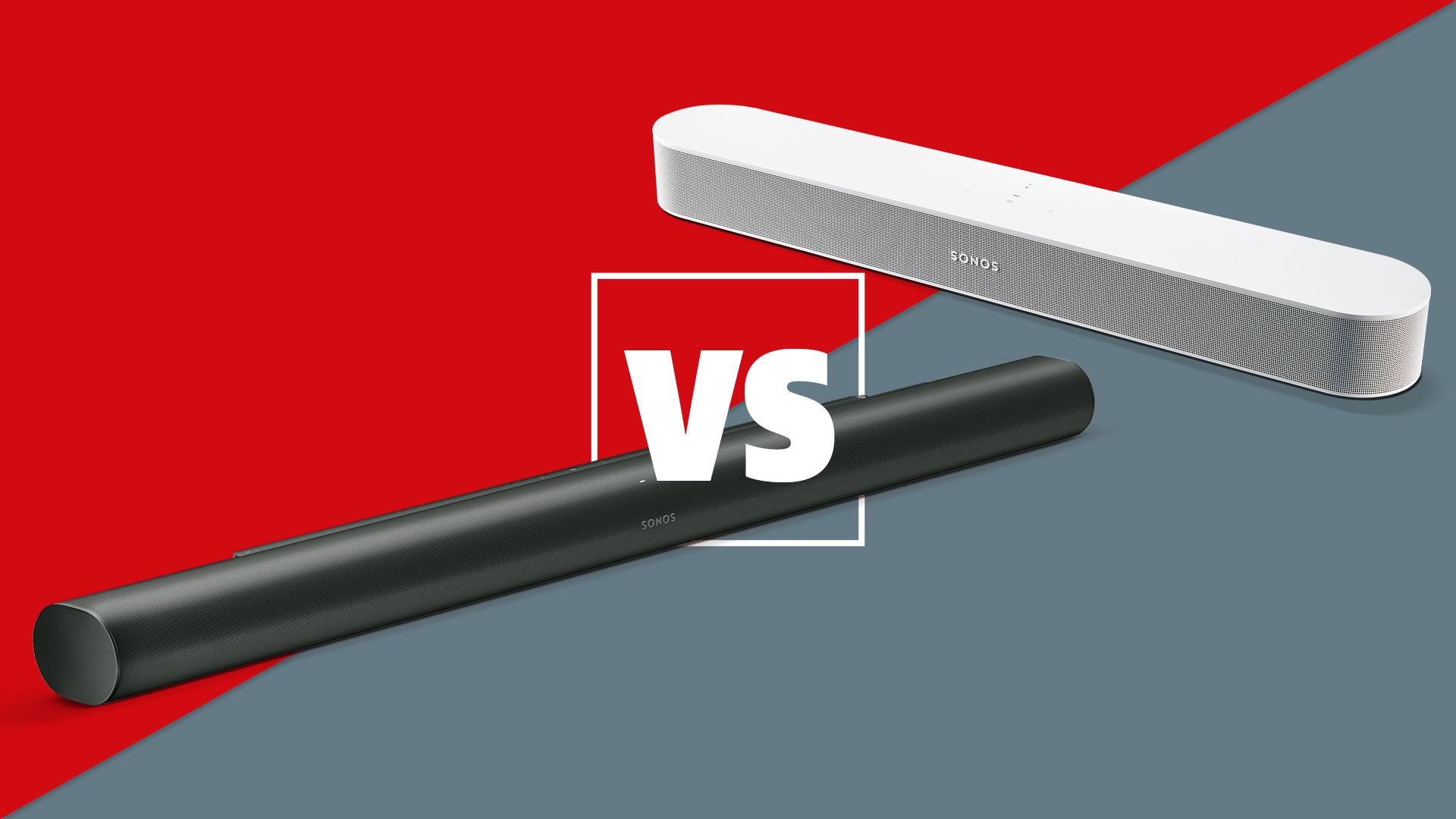
By keeping the Gen 2 available, Sonos ensures that users who do not require physical height channels—or those working with tighter spatial and financial constraints—aren’t forced into an upgrade path they don’t need. Conversely, the introduction of the Beam Ultra directly addresses high-end consumer demands for discrete height drivers and enhanced speech intelligibility without stepping up to the much larger and more expensive Sonos Arc family.
Implications for the Home Audio Market
The debut of the Sonos Beam Ultra and the concurrent retention of the Beam (Gen 2) carry several key takeaways for consumers and competitors alike:
- Democratization of Height Channels: True physical up-firing drivers are trickling down from ultra-premium soundbar tiers into more compact, living-room-friendly form factors. This signals that consumers increasingly expect genuine overhead immersion rather than purely virtualized effects.
- Addressing Dialogue Fatigue: The implementation of multi-level AI speech enhancement highlights how manufacturers are shifting focus toward accessibility and everyday usability, acknowledging that blockbuster movie mixes often drown out human dialogue.
- Strategic Consumer Choice: For buyers currently shopping for a compact soundbar, the market split is a win-win. Those with flexible budgets can target the cutting-edge feature set of the Beam Ultra, while value-driven shoppers can look for deep discounts on the still-formidable Beam (Gen 2) without feeling left behind by audio technology trends.